
Silica for Cannabis: What the Research Shows
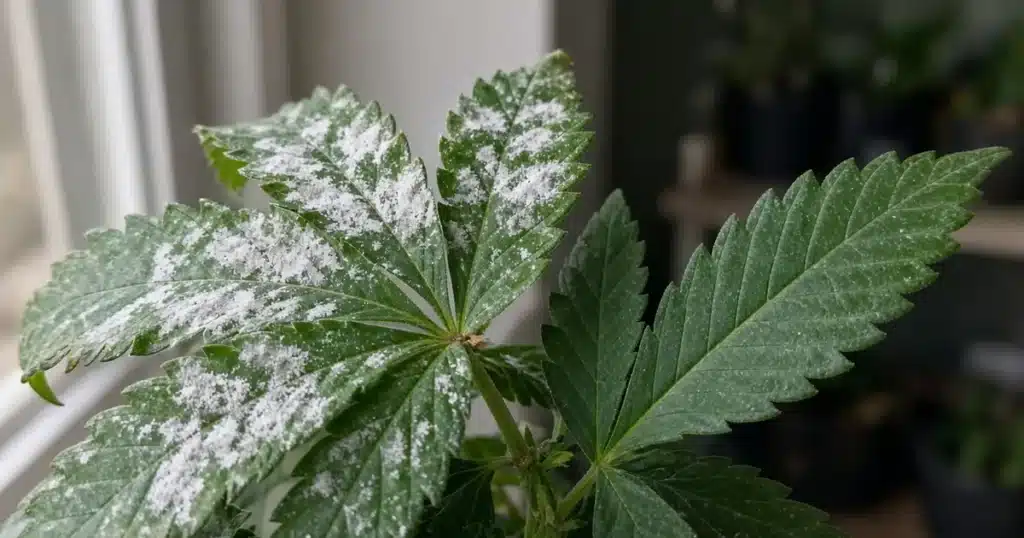
Silica supplements for cannabis add silicon, which plants take up and build into their tissues. In a University of Kentucky greenhouse trial on hemp, wollastonite worked into the potting mix reduced powdery mildew severity by 82.7% and 82.0% in two cultivars. The researchers framed silicon as one part of a mildew program, not a stand-alone cure.
What Does Silica Do for Plants?
University of Kentucky researchers summarize earlier work showing silicon can reduce powdery mildew on barley, cucumber, grape, pumpkin and rose. They also note reports that silicon improves plant strength and cell rigidity as silicic acid polymerizes in xylem tissue, and that it can change how plants respond to infection (University of Kentucky). Those are findings in other crops, not cannabis studies.

Does Root or Leaf Application Matter?
According to the Kentucky team, earlier research showed root applications of silicon are more effective at reducing powdery mildew than leaf applications. Their own trial therefore mixed silicon into a peat-based potting mix rather than spraying it (University of Kentucky). For how silicon fits with other feeds, see our nutrient basics.
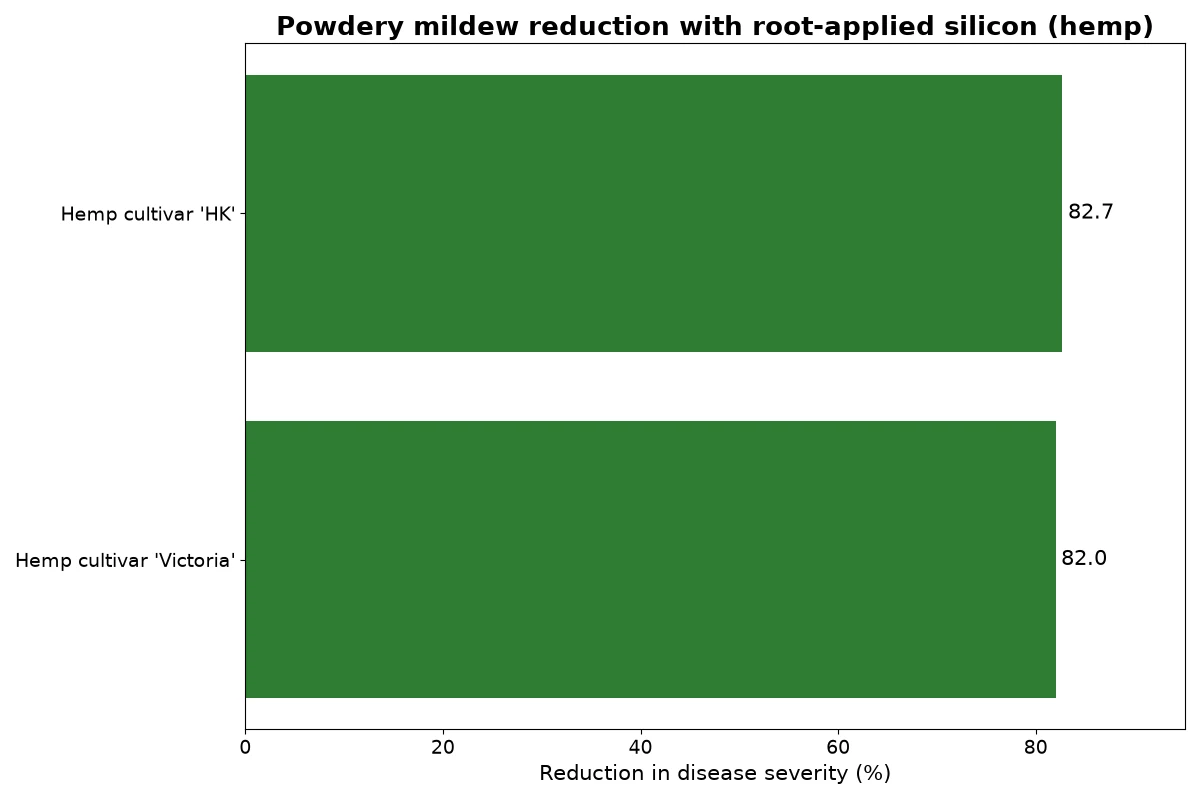
Greenhouse trial on hemp, University of Kentucky (PPRR-02). Silicon was mixed into a peat-based potting mix. Not a cannabis flower study.
Data for this chart:
| Cultivar | Reduction in disease severity | Setting | Source |
|---|---|---|---|
| Hemp cultivar ‘HK’ | 82.7% | Greenhouse, root-applied silicon | University of Kentucky PPRR-02 |
| Hemp cultivar ‘Victoria’ | 82.0% | Greenhouse, root-applied silicon | University of Kentucky PPRR-02 |
What Did Hemp Research Find About Silicon?
In a greenhouse trial on hemp, rates of 0, 300, 600 and 900 kg/ha silicon were tested on two cultivars. 300 kg/ha was enough to suppress mildew in the upper canopy, 600 kg/ha worked best for the mid canopy, and 900 kg/ha gave no extra benefit (University of Kentucky). These were per-hectare rates mixed into a peat-based potting mix in one hemp trial, and the report gives no per-pot equivalent. Dixon et al. 2022, the peer-reviewed paper on this work, also found that more silicon in leaf tissue went with less mildew per leaf area (Dixon et al.).
How Do Growers Add Silica?
The Kentucky trial used wollastonite, a calcium silicate with 24% silicon, mixed into the potting mix. The authors note that available silicon differs between products, so growers should check how much each one contains (University of Kentucky). Silicon content differs between products. Check the product label and local rules. To spot mildew early, see our powdery mildew guide.
Sources
Some sources below studied hemp or other crops, or give general garden guidance, rather than studying drug-type cannabis. Their findings are reported as results for those crops or settings.
- University of Kentucky Plant Pathology PPRR-02: Using Silicon to Suppress Hemp Powdery Mildew (PDF)
- Dixon et al. 2022, Plant Health Progress 23(3):260-264: Suppression of Hemp Powdery Mildew Using Root-Applied Silicon (LSU repository)
In this silica page, Kind Seed Co reports hemp greenhouse research as general growing information.
FAQ
What silicon source did the Kentucky trial use?
The University of Kentucky hemp trial used wollastonite, a calcium silicate containing 24% silicon, worked into a peat-based potting mix before planting. The authors say wollastonite holds more available silicon than most other silicate products, and that growers should note how much silicon a given product actually supplies.
What silicon rate worked best for hemp mildew?
In the Kentucky greenhouse trial, 300 kg/ha silicon suppressed powdery mildew in the upper canopy, while 600 kg/ha was needed for the mid canopy. The 900 kg/ha rate gave no further benefit. The authors called 600 kg/ha a good rate for soilless mixes in their hemp setting.
How long did silicon protect hemp from mildew?
The University of Kentucky team rated mildew weekly from week three to week six and reported that silicon reduced powdery mildew development for at least six weeks in hemp. Severity was measured as the percentage of leaf area affected, on two cultivars grown in a greenhouse.
Can silica replace a fungicide?
The research does not frame it that way. The Kentucky authors say silicon may be a viable option in an integrated disease management strategy, used alone or with other cultural practices or biopesticides. Dixon et al. call it a useful tool for integrated management of powdery mildew, not a replacement for a full program.


