
Armyworms on Cannabis: ID, Scouting and Natural Control
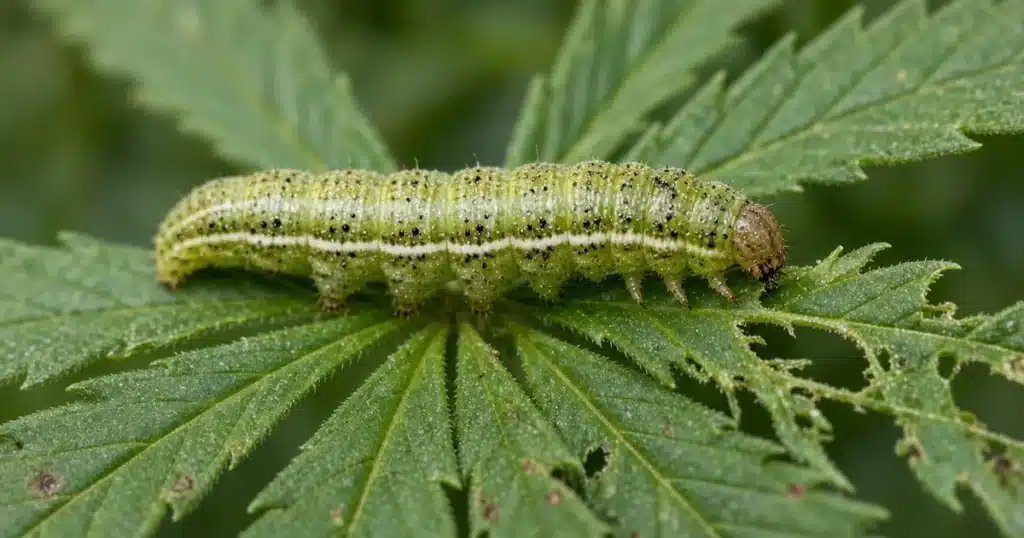
Ragged holes and skeletonized leaves on outdoor cannabis in midsummer often point to caterpillars. One group worth knowing is the armyworms, moth caterpillars that tend to feed in groups and can strip leaves quickly when numbers build. Utah State University Extension has found several armyworm species on field-grown hemp, and Colorado State University’s agricultural biology program describes how they live, feed and can be managed in gardens. Identifying armyworms on cannabis, scouting for them at the right time and keeping them in check with cultural and natural controls are the main jobs.
Which armyworms show up on cannabis
The name armyworm covers several moth species, many in the genus Spodoptera, according to Colorado State. Utah State Extension lists three on hemp:
- Beet armyworm.
- Bertha armyworm.
- Yellowstriped armyworm.
Colorado State adds the fall armyworm and the western yellowstriped armyworm as problem species in vegetable gardens. All of them feed on a wide range of hosts. Utah State Extension lists legumes, brassicas, leafy greens, cucurbits, root crops, tomato family crops and many herbaceous ornamentals alongside hemp. Colorado State notes the fall armyworm can feed on over 350 plant species.
These are leaf feeders. They are a different problem from stem borers, which tunnel inside stalks. That pest has its own page, European corn borer in hemp.
How to identify armyworm caterpillars
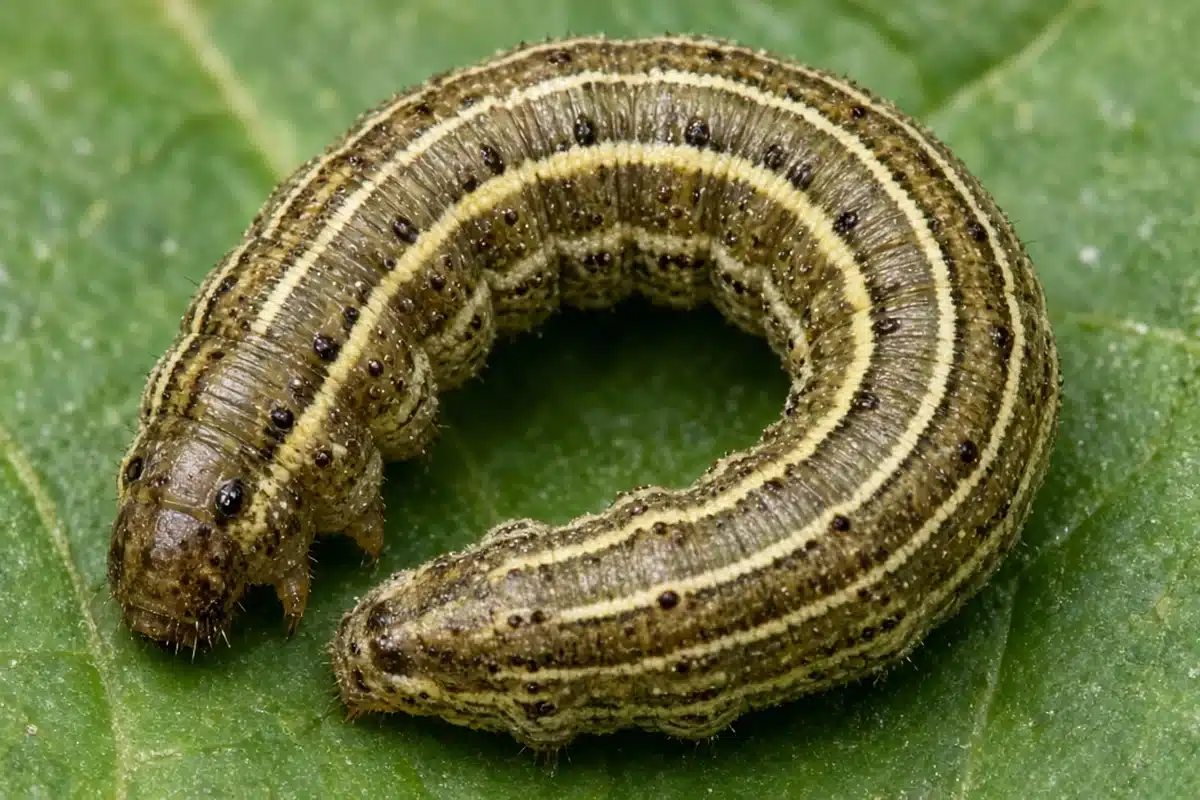
Utah State Extension describes the larvae as generally light green with thin green-yellow stripes running the length of the body. Each species has its own marks:
- Beet armyworm has a small black spot on each side of the second body segment behind the head.
- Yellowstriped armyworm ranges from green to black, with two yellow to orange stripes along the back, a dark spot on the side of the fourth segment and black triangles along the back.
- Bertha armyworm is green to black with a pale stripe on each side.
Colorado State notes that mature armyworm caterpillars share a distinct inverted Y shape on the head capsule, though it is not visible on young caterpillars. Mature fall armyworms reach up to 1.4 inches long and have four dark spots forming a square near the rear. Mature beet armyworms are about 1.25 inches long and lack hairs or spines.
Behavior helps too. Utah State Extension notes that larvae of all species curl into a C shape when disturbed. Colorado State adds that caterpillars tend to drop from plants when disturbed.
The adults are mottled gray and brown moths with light markings and a wingspan of about 25 to 45 mm, according to Utah State Extension. Colorado State notes the moths are mostly active at night, which makes them hard to spot.
Eggs and life cycle
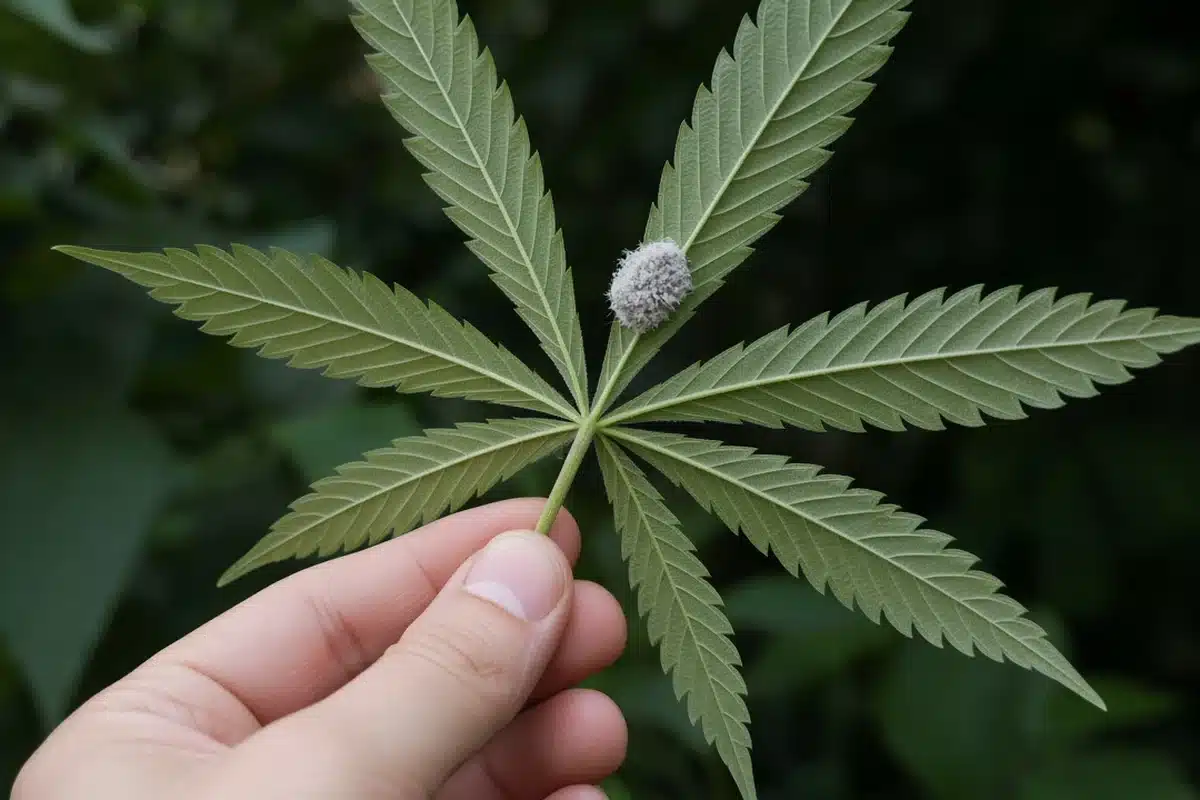
Utah State Extension describes the eggs as small, pale white to yellow and ribbed, laid in masses of 50 or more on the undersides of leaves and sometimes partly covered with moth hairs. Colorado State notes fall armyworm egg masses hold 100 to 200 eggs and beet armyworm masses hold 15 to 150. Masses are often covered in a fuzzy, cotton-like layer.
Utah State Extension outlines the yearly pattern on hemp. There are 2 to 3 generations per season. Armyworms overwinter as pupae in the soil. Moths emerge from March to July, mate and lay eggs in clusters on host plants. Larvae feed for 5 to 8 weeks before pupating in the soil. Second generation larvae may be active until early October.
The main time for concern, according to Utah State Extension, is July through September. First generation larvae in spring and early summer tend to do little damage. Second generation larvae can damage leaves and spread to flower buds.
What the damage looks like
Utah State Extension describes the feeding pattern. Young larvae feed in groups and skeletonize leaves. Older larvae feed alone and cause irregular holes, shredded leaves or defoliation. Silk webbing may be found with the damage. At high numbers, larvae may move into maturing buds.
Colorado State adds detail. Newly hatched larvae chew tiny pinholes, sometimes leaving a see-through window in the leaf. Young fall armyworms eat one side of the leaf and leave the other intact, then start making holes and feeding inward from the edge as they grow. Young beet armyworms often stick leaves together with webbing near the tips of new growth.
Group feeding is the main clue. Colorado State notes that feeding in groups sets armyworms apart from many other caterpillar pests in vegetable gardens. Colorado State also notes that older fall armyworm caterpillars can turn on each other, which tends to limit them to one or two per plant. So a plant with a crowd of small larvae on one leaf is likely an early infestation, while one or two large caterpillars point to a later stage.
How to scout cannabis for armyworms
- Start when plants go out. Utah State Extension advises scouting every two weeks from planting to harvest.
- Turn leaves over. Egg masses and groups of young larvae sit on leaf undersides.
- Check the center of the plant. Utah State Extension notes that maturing larvae may be found alone toward the plant’s center or in the soil.
- Look at the ground. Colorado State suggests checking plant debris on the soil surface for older caterpillars and pupae.
- Watch for fresh windows, pinholes and webbing at shoot tips.
- Step up checks from July on, when the second generation arrives.
Colorado State notes that pheromone traps exist for these species and can show when moth flights peak, but they will not predict injury, so plant checks are still needed.
Cultural controls that work at home
Colorado State notes that in gardens with low numbers, egg masses and caterpillars can be handpicked and destroyed. On a few home plants, this is often the simplest fix. Remove whole egg masses on the leaf they were laid on.
Weeds come up in both Extension sources. Utah State Extension advises keeping the crop area weed-free, and Colorado State recommends removing weeds along borders because they give caterpillars a refuge.
Both also suggest working the soil after harvest. Utah State Extension notes that tilling after harvest exposes overwintering pupae, and Colorado State says tilling right after harvest kills larvae and pupae in the soil. In a home bed, turning the soil after cleanup does the same job.
Natural enemies
Colorado State lists many natural enemies that suppress armyworms, including parasitic flies and wasps, ground beetles, predatory stink bugs, minute pirate bugs, birds, fungi, nematodes, viruses and bacteria. It advises checking found caterpillars for parasitoid eggs before destroying them.
Limiting insecticide use conserves these enemies, according to Colorado State, and keeping a variety of plants in the garden can help attract them. In seasons with good weather, natural enemies can hold armyworm numbers down. Cold, wet springs can limit them. Beneficial insects in general get their own Kind Seed Co post, the best bugs for a cannabis grow.
If sprays come into the picture
Colorado State notes that insecticide control is only warranted when cultural and biological controls are not enough. It also notes resistance is a major challenge with armyworms in some parts of the country. Both sources note that a bacterial insecticide for caterpillars must be eaten to work and is effective only on young caterpillars under about half an inch long. Colorado State adds that young beet armyworms often hide in webbed leaves, which shields them from contact sprays.
Utah State Extension rates the threat on hemp as low to medium. For most home growers, scouting, handpicking and conserving natural enemies will do most of the work. If you consider any product, read its full label first.
Troubleshooting armyworm damage
See-through windows on leaves but no caterpillars. Look on leaf undersides for clusters of tiny young larvae.
Holes appear overnight. Older larvae may hide in the plant center or on the soil by day. Check at dusk and in leaf litter.
Webbing at shoot tips. Young beet armyworms often tie leaves together there. Open the webbing and remove them.
Damage reaches the buds. High numbers can move into maturing flowers. Step up handpicking and scouting.
Caterpillars keep coming back each year. Clear weedy borders and work the bed after harvest to expose pupae.
Sources
- Utah State University Extension, Plant Health. Hemp Armyworms. https://extension.usu.edu/planthealth/ipm/notes_ag/hemp-armyworms
- Colorado State University, Agricultural Biology. Armyworms. https://agsci.colostate.edu/agbio/ipm-pests/armyworms/
FAQ
What do armyworms look like on cannabis?
Armyworm larvae are usually green to black with stripes running along the body, and mature ones have an inverted Y on the head. Beet armyworms have a small black spot behind the head. Utah State Extension notes that all species curl into a C shape when disturbed. Young larvae feed in groups on leaf undersides.
When do armyworms attack cannabis?
Utah State Extension names July through September as the main time for concern on hemp. Moths emerge from March to July and lay eggs on host plants. First generation larvae usually do little damage, but second generation larvae can damage leaves and move into flower buds. Scout every two weeks all season long.
How do I get rid of armyworms naturally?
Handpick egg masses and caterpillars when numbers are low, as Colorado State suggests. Keep weeds down around the bed, and work the soil after harvest to expose pupae. Limit insecticide use to protect parasitic wasps, ground beetles, birds and other natural enemies that keep armyworm numbers down in good seasons.
Do armyworms damage cannabis buds?
They can, but leaves are the usual target. Utah State Extension notes that at high numbers larvae may move into maturing buds, and Colorado State notes armyworms can bore into flower buds on other crops. Second generation larvae, active from midsummer on, carry the most risk, so keep scouting through the end of the season.


