Grape Black Rot: Mummified Berries and Sanitation
The short answer
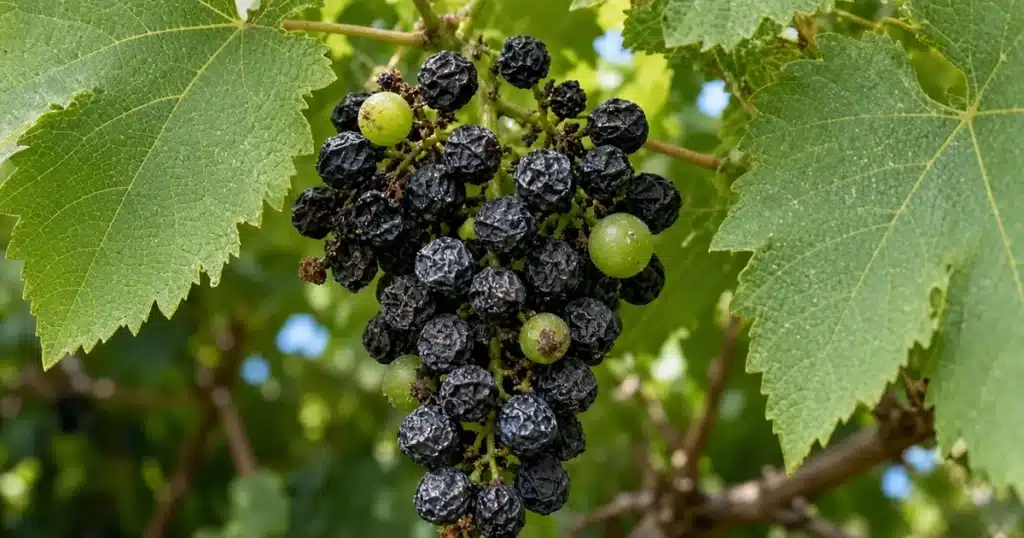
Grape black rot is a fungal disease that causes tan leaf spots and turns berries brown, then into hard, shriveled black mummies. The fungus survives on mummies left on vines and on the ground, so removing them is the main defense. Pruning for airflow and sun and clearing the area under the trellis limit new infections.
Black rot can wipe out a home crop in a wet year. Knowing its life cycle shows you where to break it.
What does grape black rot look like?
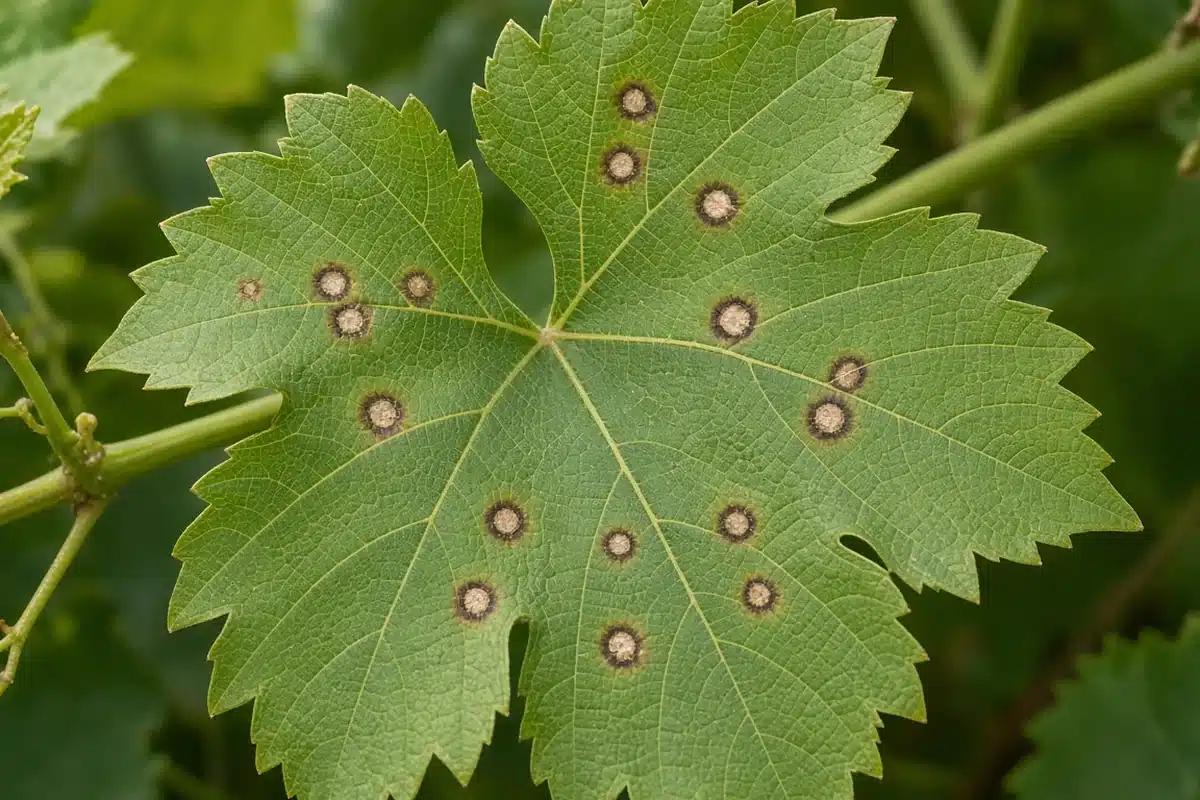
The Iowa State University Extension and Outreach encyclopedia entry on black rot of grape describes the first signs on leaves. Small tan or reddish brown spots appear in late spring. Each spot has a dark border, and tiny black dots form inside it. Those dots are the fungal structures that release spores.
On fruit, it shows up later. A berry first gets a small pale spot. Within days the whole berry turns brown and soft. It then shrinks into a hard, wrinkled black mummy covered in tiny dots. Mummies may cling to the cluster or drop to the ground.
Shoots and tendrils can get dark, sunken lesions too.
| Season | Task | Why |
|---|---|---|
| Winter | Remove mummies from vines and ground | Mummies hold the fungus over winter |
| Late winter | Prune for an open canopy | Airflow dries leaves faster |
| Spring | Watch new leaves for tan spots | Spots show infection has started |
| Early summer | Pull infected berries and leaves | Cuts spores during the most open season for infection |
| Summer | Pull weeds under the trellis | Lowers humidity near the fruit |
| Fall | Clean up fallen fruit and leaves | Leaves less fungus for next year |
Sources: Iowa State University Extension and Outreach, Michigan State University Extension.
Why do mummies matter?
Mummies are the main place the fungus spends the winter. In spring, rain splashes and wind carry spores from mummies to new leaves and young fruit.
The Michigan State University Extension resource on grape black rot explains that warm, wet weather in spring and early summer drives infection. The period from just before bloom through early fruit development is especially important for infection. Once berries start to ripen and color, they become much harder for the fungus to infect.
That is why sanitation pays off, and every mummy you remove is one less source of spores.
How do you limit black rot?
Start with cleanup. In winter, pull every mummy you can find from the vines, the trellis wires and the ground. Bag them and put them in the trash. Cut out shoots with lesions while you prune.
Next, prune. A dense canopy stays wet after rain, which gives the fungus more time to infect leaves and fruit. Thin shoots so light and air reach the clusters. Position shoots so they spread along the trellis rather than piling up.
Clean pruners between vines when you see infection. Our post on sanitizing pruning shears for cannabis covers simple ways to clean blades.
Site counts too. Vines in full sun with good air movement dry quickly and see less disease. Vines in shade or low spots stay damp longer.
Some growers use a spray program. Our post on homemade fungicide for plants covers common home options, though sanitation and pruning do the most work on a home scale.

Are some grapes less prone?
Grape types differ in how much black rot they get. Many wine grapes of European background are highly prone. Some American and hybrid types hold up better. Ask your local extension office which types do well in your area if you’re planting new vines.
Can stress make black rot worse?
Vines under stress from poor soil, drought or crowding are less vigorous and often have messier canopies. The Colorado State University Extension page on environmental disorders of woody plants covers how site stress weakens woody plants. Our post on the effects of environmental stresses on weed plants explains the same idea in garden terms.
How to: step by step
- Look for tan leaf spots with dark edges in late spring.
- Check berries for browning and shriveling from bloom into summer.
- Remove all mummies from vines and the ground.
- Prune vines for airflow and sun.
- Pull weeds under the trellis.
- Clean up fallen fruit and leaves each fall.
Troubleshooting
Black, shriveled berries. Black rot is likely. Remove mummies and infected clusters.
Leaf spots with dark borders. Infection has started. Pull spotted leaves and open the canopy.
Rot returns each year. Mummies were left behind. Remove all of them in winter.
Rot only on shaded clusters. The canopy is too dense. Thin shoots.
Spots on shoots. Prune out lesions during winter pruning.
Sanitation and airflow hold black rot in check on home vines. Kind Seed Co shares more fruit growing tips in outdoor growing.
Sources
- Black rot of grape, Iowa State University Extension and Outreach, Black rot of grape
- Grape black rot, Michigan State University Extension, Grape black rot
- Environmental disorders of woody plants, Colorado State University Extension, Environmental disorders of woody plants
FAQ
Are mummified grapes good for anything?
No. Remove them and bag them before disposal.
When do grapes get infected?
Mostly from bloom until a few weeks after fruit set.
Are some grapes resistant?
Some American and hybrid types get less black rot than European types.
Should you compost mummies?
No. Bag them so the fungus does not spread.
Does pruning help?
Yes. An open canopy dries faster and sees less infection.