
Grow Light for Gomphrena Seedlings: Warm Globe Amaranth
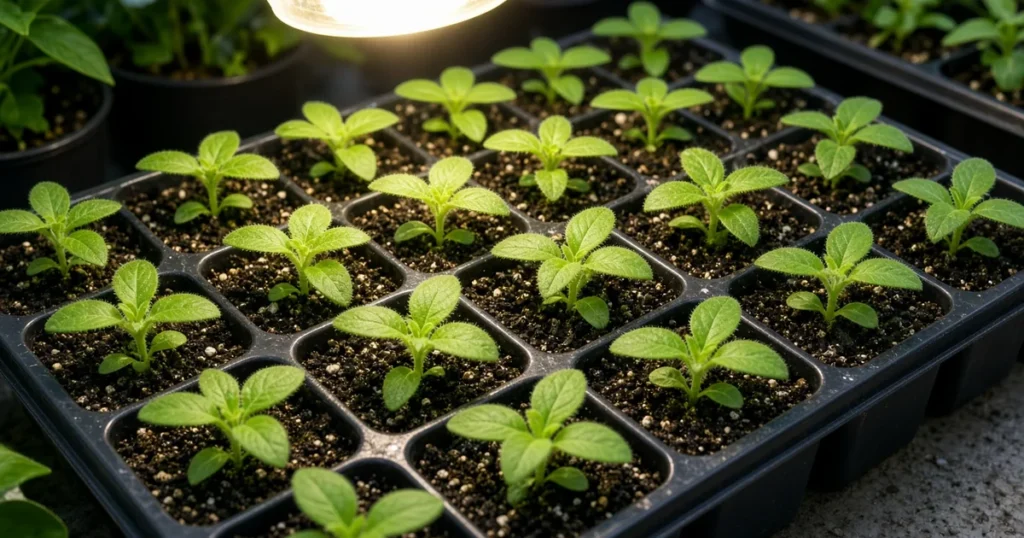
A grow light for gomphrena seedlings gives globe amaranth a bright start before the weather warms. NC State Extension notes that gomphrena is heat tolerant plus dry soil tolerant. Sow generously in a warm mix, hang lights close plus plant out once frost has passed.
The short answer
Start gomphrena indoors about 6 to 8 weeks before the last frost, as NC State Extension suggests, plus sow generously since germination can be low. Hang lights 2 to 4 inches above the seedlings for 12 to 16 hours a day, as University of Minnesota Extension advises. Warm the mix from below.
Why does gomphrena need warmth to sprout?
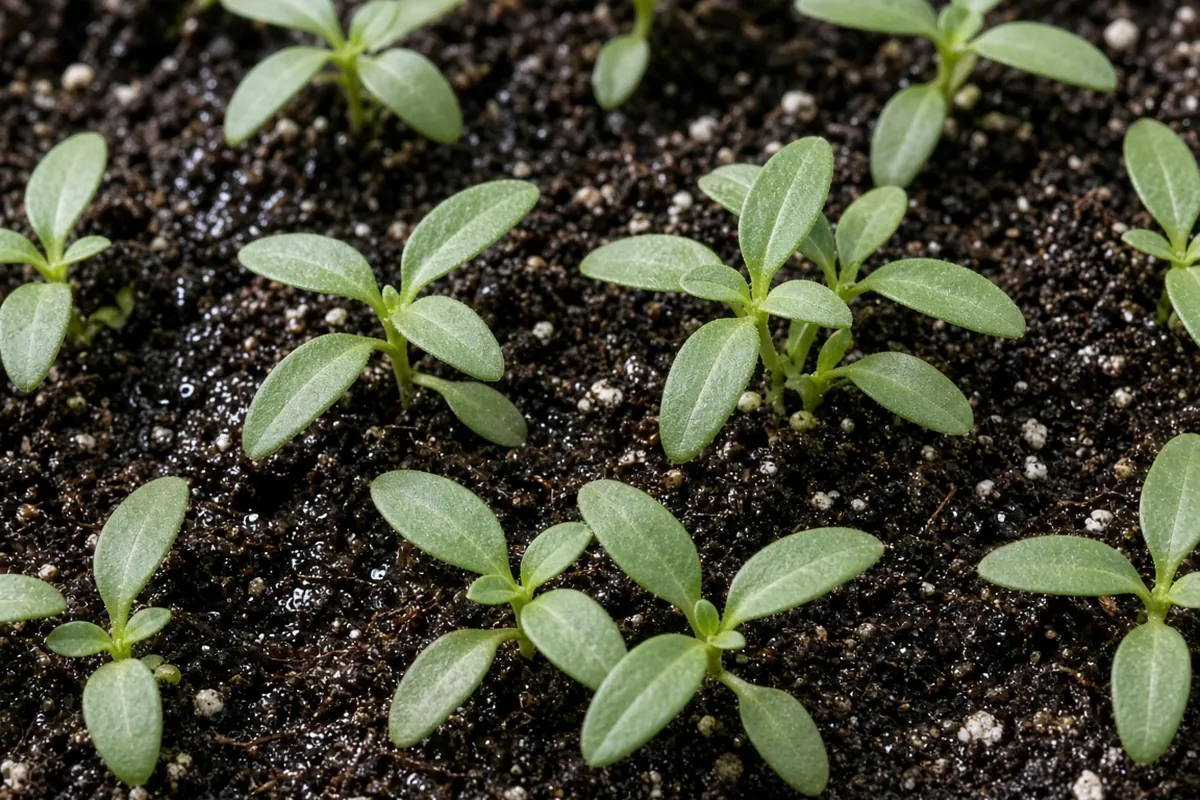
University of Minnesota Extension explains that seeds of most plants germinate sooner when the potting mix is warm. Bottom heat from a mat provides a constant heat source from underneath.
NC State Extension notes that gomphrena thrives in full sun plus is heat tolerant. University of Missouri Extension lists globe amaranth as frost free with good heat plus drought tolerance.
NC State Extension adds that the germination rate of this annual can be low. Generous sowing helps offset seeds that fail to sprout.
How close should lights hang?
University of Minnesota Extension advises lights no more than 4 inches above the tops of seedlings. As close as 2 inches is ideal.
Plants need 12 to 16 hours of light daily, the same source notes. Heat mats should stay off the light timer.
University of Maryland Extension notes that seedlings in window light usually stretch plus lean toward the light. Fluorescent lights are the easiest way to control growing conditions indoors.
| Setting | Guideline | Source note |
|---|---|---|
| Light height | 2 to 4 inches above seedlings | 2 inches is ideal |
| Light hours | 12 to 16 hours daily | Use a timer |
| Mix warmth | Warm from below | Seeds sprout sooner |
| Hardening off | Two weeks | Start in afternoon shade |
Source: University of Minnesota Extension plus University of Maryland Extension.
When should gomphrena move outside?
University of Missouri Extension notes that tender annuals should not be planted until the danger of frost has passed plus the soil has warmed in spring.
University of Minnesota Extension advises hardening off over two weeks before planting outdoors. Begin with a few afternoon hours in warm shade.
University of Missouri Extension notes that a cloudy day is ideal for transplanting. By the end of hardening off, seedlings can stay outside in a sunny area, University of Minnesota Extension adds.
How to: step by step
- Sow seed 6 to 8 weeks before the last frost.
- Sow thickly since germination can be low.
- Set the tray on a heat mat for bottom warmth.
- Hang lights 2 to 4 inches above the seedlings for 12 to 16 hours daily.
- Harden seedlings off over two weeks.
- Plant out after frost once the soil warms.
Troubleshooting
Few sprouts: low germination or a cool tray. Sow more seed plus add bottom warmth.
Stretched stems: lights too high. Lower them to 2 to 4 inches.
Damping off: cool mix. Add bottom heat.
For related reading see cannabis seedling light schedule, seedling heat mats for cannabis plus damping off cannabis seedlings. Kind Seed Co also stocks cannabis seeds.
Sources
- Gomphrena globosa (globe amaranth), NC State Extension Gardener Plant Toolbox
- Flowering annuals: characteristics plus culture (G6629), University of Missouri Extension
- Grow lights for starting seeds indoors, University of Maryland Extension
- Starting seeds indoors, UMN Extension
FAQ
Can gomphrena be direct sown?
Yes. NC State Extension notes that gomphrena seeds may be sown directly or started earlier indoors, about 6 to 8 weeks before the last frost. Direct sowing should wait until frost has passed plus the soil has warmed, since tender annuals do not tolerate cool weather.
How long does gomphrena bloom?
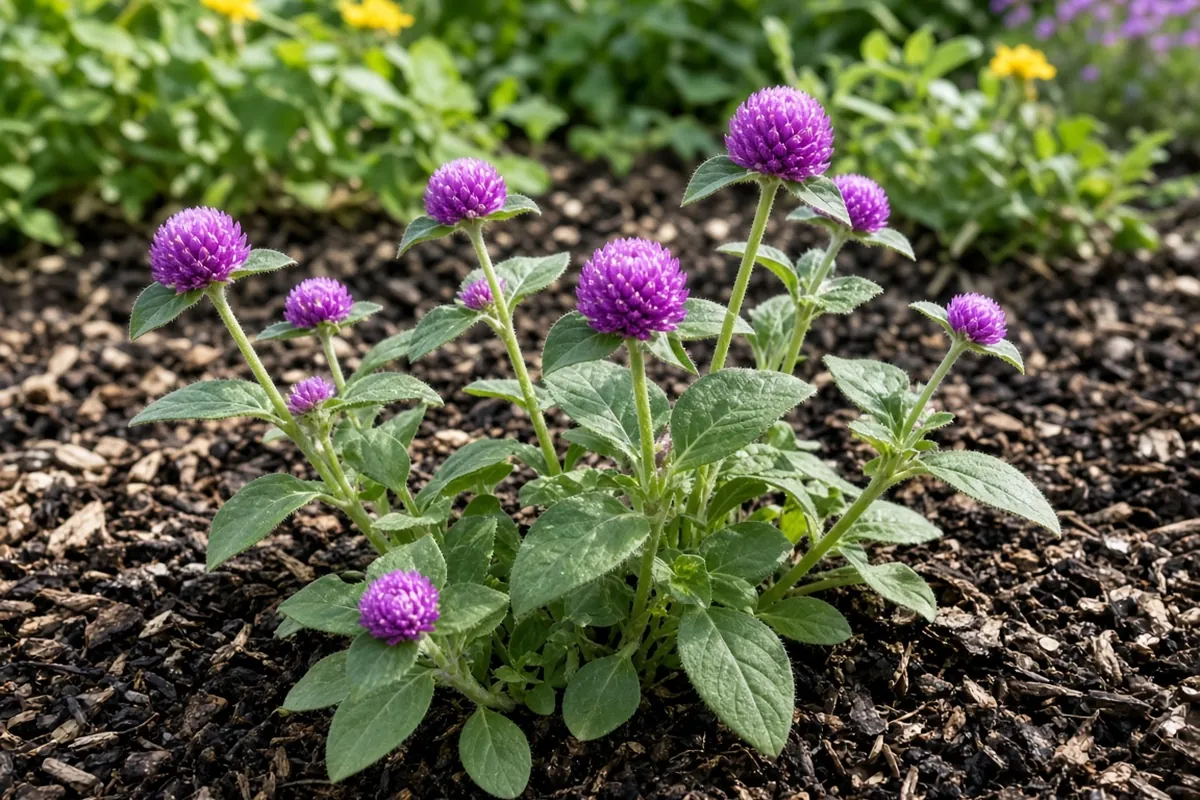
NC State Extension notes that gomphrena blooms from June until the first frost in the fall. The flower heads are made of colorful bracts, while the true flowers are tiny white to yellow trumpets. The plants also attract bees plus butterflies, according to the same source.
Do gomphrena flowers dry well?
Yes. NC State Extension lists gomphrena as good for cut flowers plus good for drying. The flower heads are 1 to 3 inches across in gold, pink, purple, lavender or white. University of Missouri Extension lists globe amaranth at 6 to 18 inches tall in full sun with good heat tolerance.
Why are gomphrena seedlings slow to grow?
Warmth plus light are the two things to check first. University of Minnesota Extension notes that seeds germinate sooner plus produce better roots when the mix is warm. The same source advises lights 2 to 4 inches above seedlings for 12 to 16 hours each day.
Why do gomphrena seedlings damp off?
University of Minnesota Extension describes damping off as the death of tiny seedlings due to pathogens at the surface of the potting mix. Bottom heat can help prevent it. Cooler soil temperatures can lead to seedling death due to disease, the same source adds.



