
Wireworms In Cannabis Soil: How To Spot And Stop Them
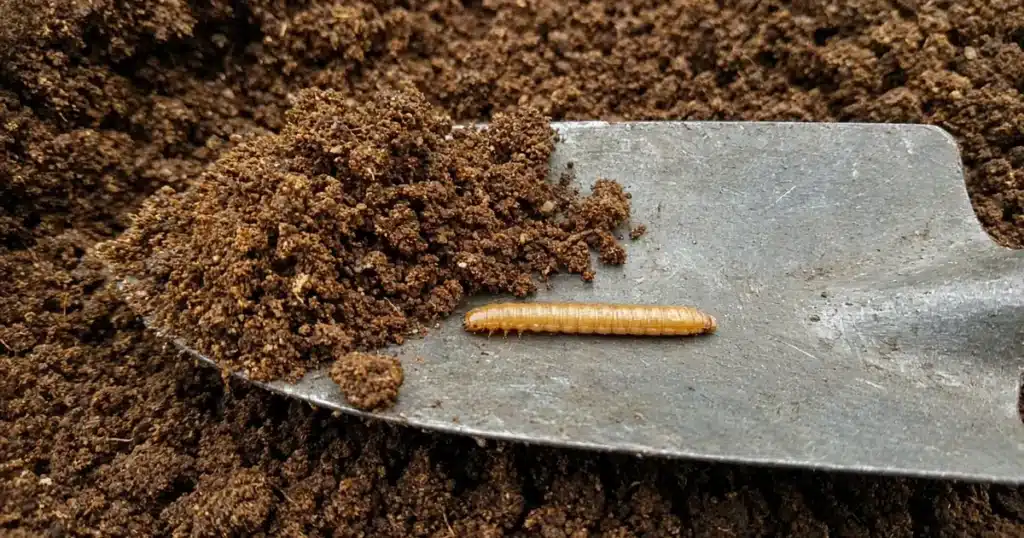
Quick answer: Wireworms in cannabis soil are the shiny, tan, hard-bodied larvae of click beetles. They live in soil for several years and chew into the roots and lower stems of young plants, which makes seedlings wilt and die. Bury carrots to check for them, and avoid planting straight into freshly turned lawn or sod.
What Are Wireworms?
Wireworms are the larval stage of click beetles (family Elateridae). The Pacific Northwest Insect Management Handbook describes the larvae as shiny white at first, then straw colored or light brown, wiry and about 1 inch long when mature.
The hard, shiny body and the three pairs of short legs behind the head set them apart from soft cutworm caterpillars and from millipedes. Adults are click beetles. They do little or no damage as they feed on flowers. The larvae do the root and stem feeding.
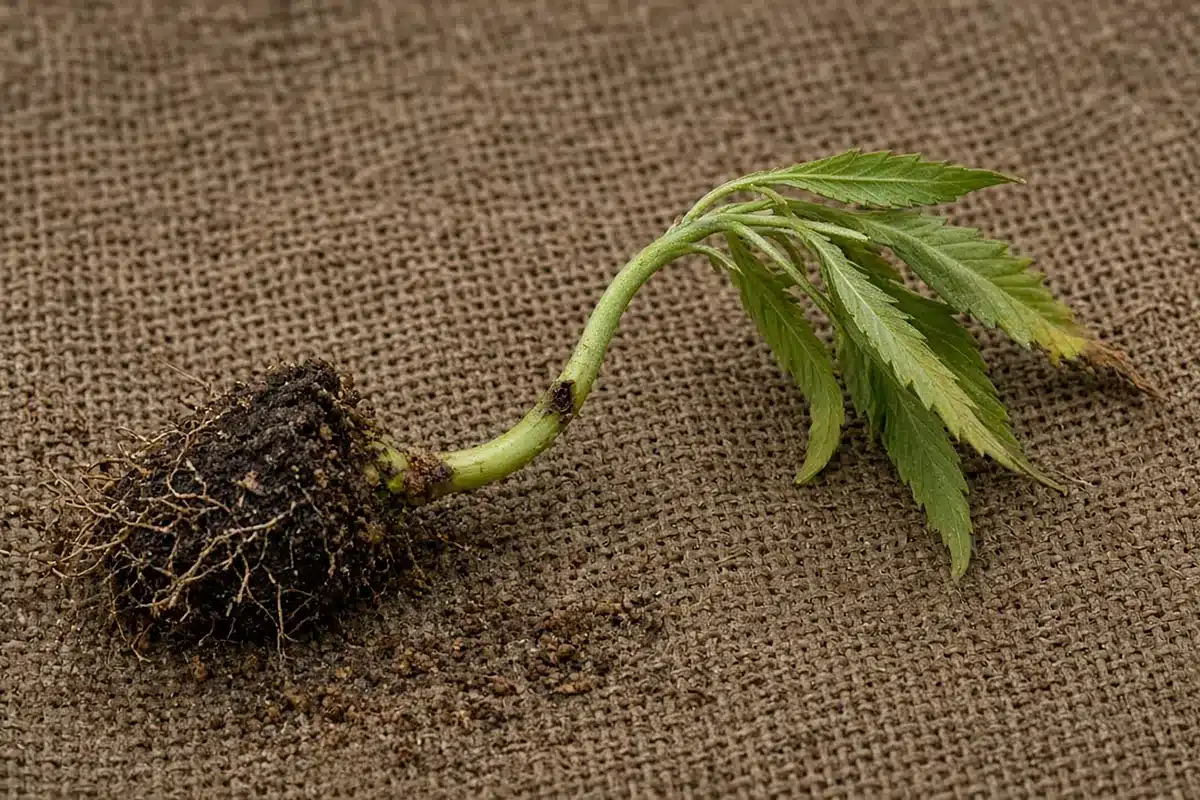
The Pacific Northwest Insect Management Handbook notes that wireworms can cause wilting in small hemp plants, especially in fields that follow pastures. UC IPM adds that the larvae bore into stems, so check young cannabis plants for the same wilting when larvae tunnel near the soil line.
A straight larva about one inch long with a hard shell will not curl the way a millipede does when you lift it. That stiff posture is a quick field check before you decide what you found.
Keep a small jar of rubbing alcohol or soapy water in the shed if you want a specimen to compare with photos later. Check the rest of the row right away.
Click Beetle Life Cycle
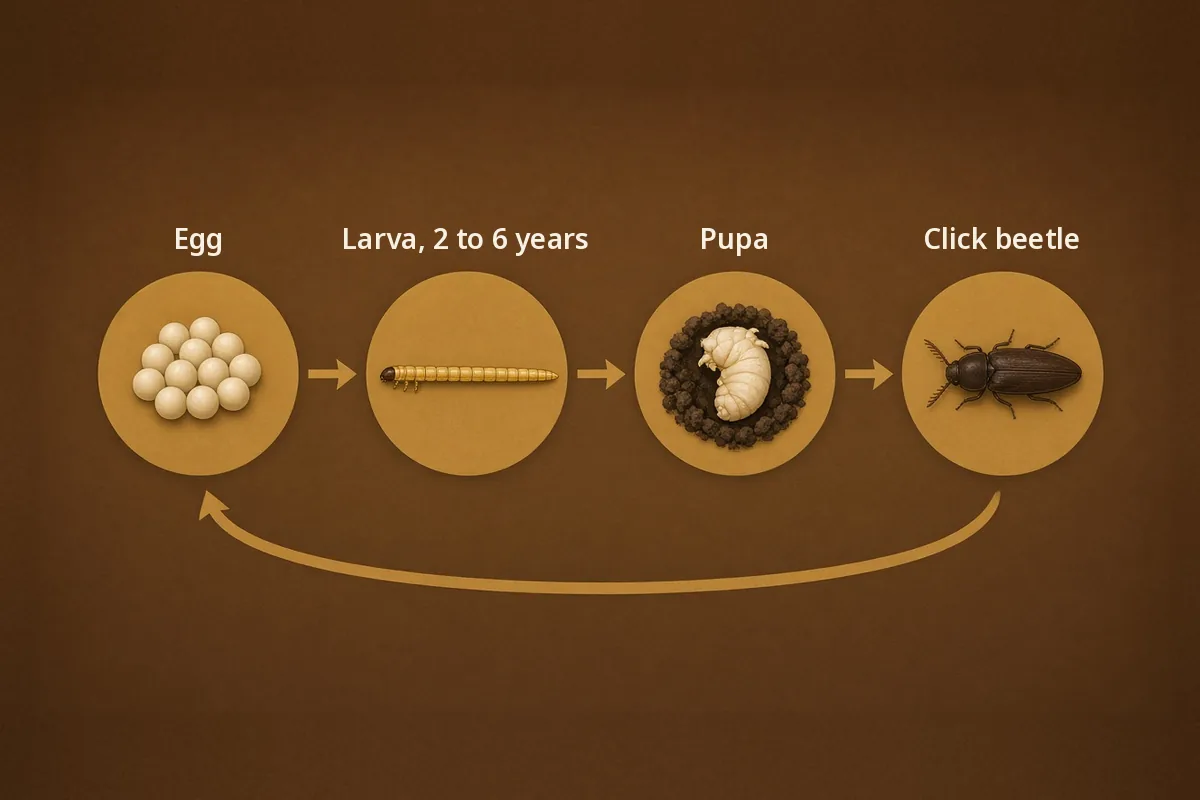
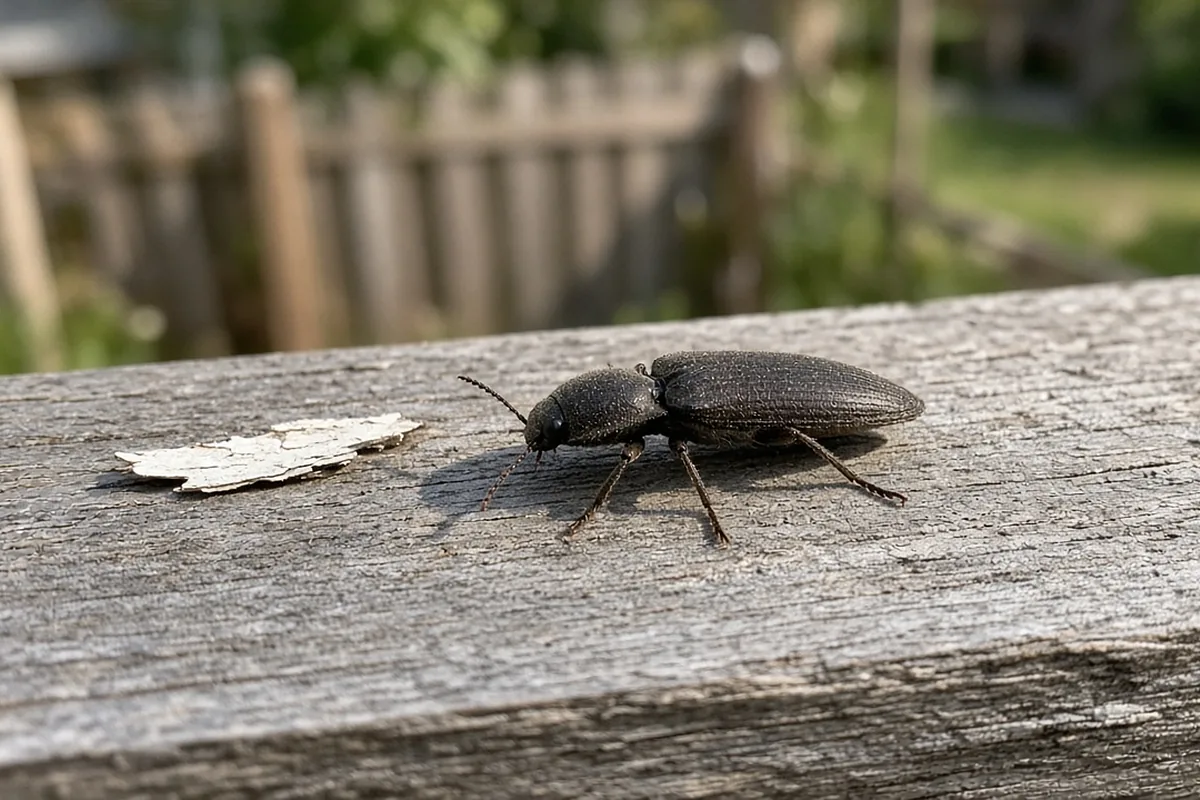
Depending on species, wireworms may require two to six years to mature, the Pacific Northwest handbook says. They overwinter 12 to 24 inches deep, then return near the surface in spring to feed. Mature larvae pupate in the soil. Adults stay in the soil until the following spring, when they emerge, mate and lay eggs. Female beetles fly very little, so infestations do not spread rapidly from field to field.
Soil temperature guides their depth. Larvae start to move upward in spring when soil at the 6-inch depth reaches 50°F. Later, when temperatures reach 80°F and above, larvae tend to move deeper than 6 inches and stay there until the next spring.
Because females fly little, a problem bed tends to stay a problem bed until you change the crop sequence or till when larvae are near the surface. Mapping which beds followed pasture or grain last year is as useful as any single dig.
UC IPM notes that mature larvae form a pupal cell of soil particles and may pupate right away or stay in the cell over winter and pupate in spring.
Cool springs keep larvae near the surface longer. Hot spells push them down. Timing transplants for warmer soil is one of the few levers a home grower controls without changing the whole crop plan.
Signs of Wireworm Damage on Young Plants
In hemp, wireworms can cause wilting in small plants, especially in fields that follow pastures, according to the Pacific Northwest handbook. On a cannabis bed, a seedling that wilts while the surface soil still looks damp is worth a root check.
Check the lower stem and the root zone. Bored or tunneled tissue near the soil line, plus a shiny wiry larva beside the plant, points to wireworms rather than simple dry soil. Cutworms leave a chewed stem at night and stay soft-bodied on the surface. Spot the difference early so you do not fight the wrong pest in the same bed.
Compare neighboring plants. Lift one wilted plant and inspect the stem base before you change your watering. Dry soil tends to wilt a whole container or a dry corner of a bed together, so a single wilted seedling beside healthy neighbors deserves a root check before you flood the bed.
If you grow hemp and cannabis in the same yard, handle a wireworm find in either crop as a bed-wide warning for the next short-rooted planting.
How to Check Soil for Wireworms

The Pacific Northwest handbook says the presence of wireworms should be determined before you act, and that density is hard to measure on large fields. In a home garden, UC IPM notes that carrots are especially attractive to wireworms, which makes them a simple check.
Place checks across the bed, not only next to one sick plant. Edges that sat in sod last year deserve extra spots. Record which holes turned up larvae so you can avoid the worst zones for the most tender transplants.
Pull the carrots every 2 to 3 days, as UC IPM suggests, and put them back after each look so the check keeps working.
Wear gloves when you sort through the carrots. The goal is a count of shiny larvae, not a handful of mixed soil life.
- Bury a nearly full-grown carrot every 2 1/2 to 3 feet across the bed.
- Mark each spot.
- Every 2 to 3 days, pull the carrots and look for shiny, wiry larvae in or beside them.
- Remove any larvae and replant the carrots to keep checking.
Fall tillage can turn wireworms up in the furrow where birds eat many of them, though that alone does not clear a heavy population.
Wireworms vs Cutworms, Millipedes and Earthworms
| Critter | Body | Where you find it | What it does |
|---|---|---|---|
| Wireworm | Hard, shiny, wiry, three pairs of legs near the head | In soil around roots and lower stems | Tunnels into roots and stems of young plants |
| Cutworm | Soft caterpillar | Soil surface at night | Chews stems off at the soil line |
| Millipede | Many short legs along a rounded body | Damp surface litter and soil | Mostly feeds on decaying matter |
| Earthworm | Soft, segmented, no hard shiny shell | Moist soil | Improves soil structure and does not bore stems |
Cutworms and other surface feeders are covered in our guide to protecting marijuana plants from pests and bugs.
How to Reduce Wireworms in Cannabis Soil
Crop sequence matters. Planting a susceptible crop such as hemp right after pasture, grass hay, red clover or grain is risky, the Pacific Northwest handbook says. Wireworms tend to build up in red and sweet clover and in small grains, particularly barley and wheat.
Rotation away from those sequences, fall tillage where it fits your soil plan and transplanting sturdy starts instead of sowing tiny seedlings into cold, wireworm-prone ground all reduce risk. Wait for soil at root depth to warm past the early spring window when larvae sit near the surface. Birds behind a plow help, but they are not enough alone in a heavy infestation.
Where you must use a former lawn strip, delay sowing and start plants in pots until soil at root depth is warm and you have run a carrot check. Sturdy transplants shrug off light feeding better than a thin seedling in cool soil.
Where pasture was tilled last fall, plan a less sensitive crop or a cover that wireworms like less before you put tender cannabis starts in that strip.
Keep notes by bed and year. Wireworms tend to increase rapidly in clover and small grains, the handbook notes. Pressure is slow to fade, so last season’s map is next season’s planting guide.
Sources
FAQ
What Do Wireworms Look Like?
Wireworms are shiny, hard-bodied, straw colored or light brown larvae about 1 inch long when mature. They look wiry and have three pairs of short legs behind the head. Young larvae start out shiny white. The adults are click beetles that do little damage as they feed on flowers.
Are Wireworms Harmful to Cannabis Plants?
Yes. The Pacific Northwest Insect Management Handbook notes that wireworm larvae cause major damage to seedlings and the underground parts of many annual crops, including hemp. In hemp they can cause wilting in small plants, especially in fields that follow pastures.
How Do I Know If I Have Wireworms in My Soil?
Look for wilted seedlings with bored lower stems, or dig near the plant and check for shiny, hard, wiry larvae. Before planting, bury carrots across the bed, mark the spots and pull them every 2 to 3 days to see whether wireworms have moved into them.
How Long Do Wireworms Live in the Soil?
Depending on the species, wireworms may need two to six years to mature, according to the Pacific Northwest Insect Management Handbook. They overwinter deep in the soil and return near the surface in spring to feed on roots and lower stems.


