Growing Hydroponic Calendula: Pot Marigold Blooms in Buckets
The short answer
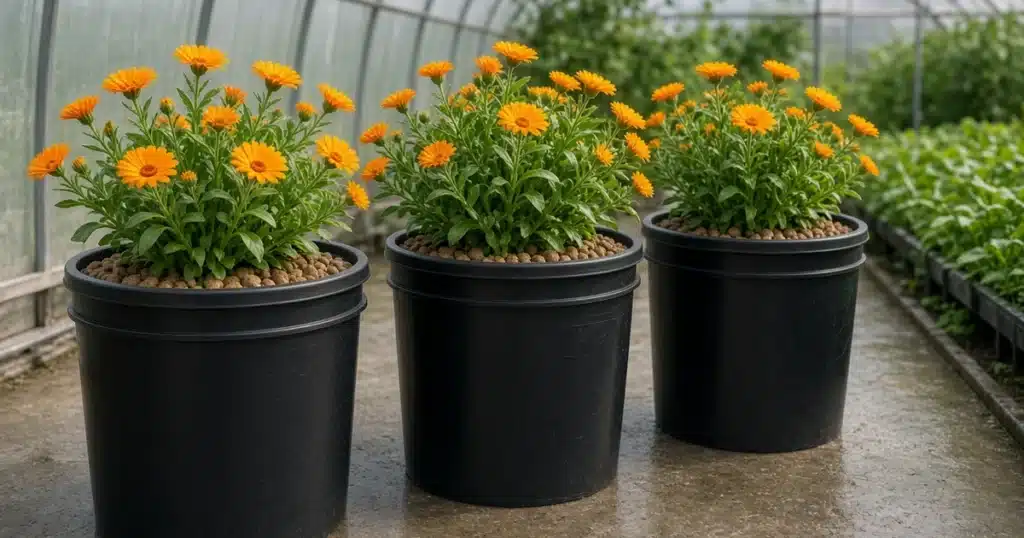
Hydroponic calendula, also called pot marigold, grows well in bucket systems that give each plant room and a steady solution. Extension guides describe calendula as an easy annual for full sun that goes on blooming when spent flowers come off. Give it bright light and mild temperatures, then harvest blooms when they are fully open.
Is calendula a good fit for hydroponics?
Calendula isn’t on the usual list of hydroponic crops, but it has traits that suit a simple setup. UMass Amherst describes hydroponics as a production method where plants are grown in a nutrient solution rather than in soil. It notes that although almost any crop can be grown hydroponically, the most common are leaf lettuce, tomatoes, peppers, cucumbers, strawberries, watercress, celery and some herbs.
NC State Extension lists Calendula officinalis as an annual that grows 1 to 2 feet tall and wide with a mounding habit. Its flowers come in gold, yellow, orange and red shades. A plant that size fits one per bucket, so the bucket method is a natural match.
The same source calls these plants easy to grow in average, moderately fertile soils. It also notes they don’t do well in hot summer weather or drought. Indoors, a mild room and a steady supply of solution answer both of those concerns. For a wider look at how plants can be anchored without soil, see hydroponic in different mediums.
How do you set up calendula in buckets?
A bucket system is a single container of nutrient solution with a lid or support that holds the plant above it. UMass Amherst notes that one key factor in system design for a particular crop is how it is supported in the nutrient solution. For calendula, that means a sturdy lid and a net pot or similar holder that can carry a plant up to 2 feet tall.
| Part | Job | Notes |
|---|---|---|
| Bucket | Holds the nutrient solution | Plants grow in solution rather than soil (UMass Amherst) |
| Lid and holder | Supports the plant | Support is a key design factor for each crop (UMass Amherst) |
| Light | Drives growth and blooms | Full sun outdoors, leggy in too much shade (NC State) |
| Seed start | Grows the young plant | Start indoors about 4 weeks before last frost (Colorado State University) |
| Harvest | Collects flowers | Pick when the bloom is fully open (Colorado State University) |
Sources: UMass Amherst, NC State Extension, Colorado State University Extension.
Once the plant is in place, light is the main need. NC State Extension lists full sun of six or more hours of direct light a day, with partial shade also tolerated. It also warns that marigolds become leggy in too much shade. Indoors, that points to a bright grow light set at the distance the maker suggests.
Pumps, tanks and lights add cost and upkeep. UMass Amherst lists a higher initial investment and higher energy costs among the drawbacks of hydroponics. A single bucket holds both down. Read caring for your hydroponic system for routine checks that apply to bucket setups too.
How do you keep calendula blooming?
Remove spent flowers. NC State Extension says to deadhead spent flowers to promote additional bloom, and to pinch plants back as they mature to encourage compact, bushy growth. Each bloom you pick for the kitchen counts as deadheading.
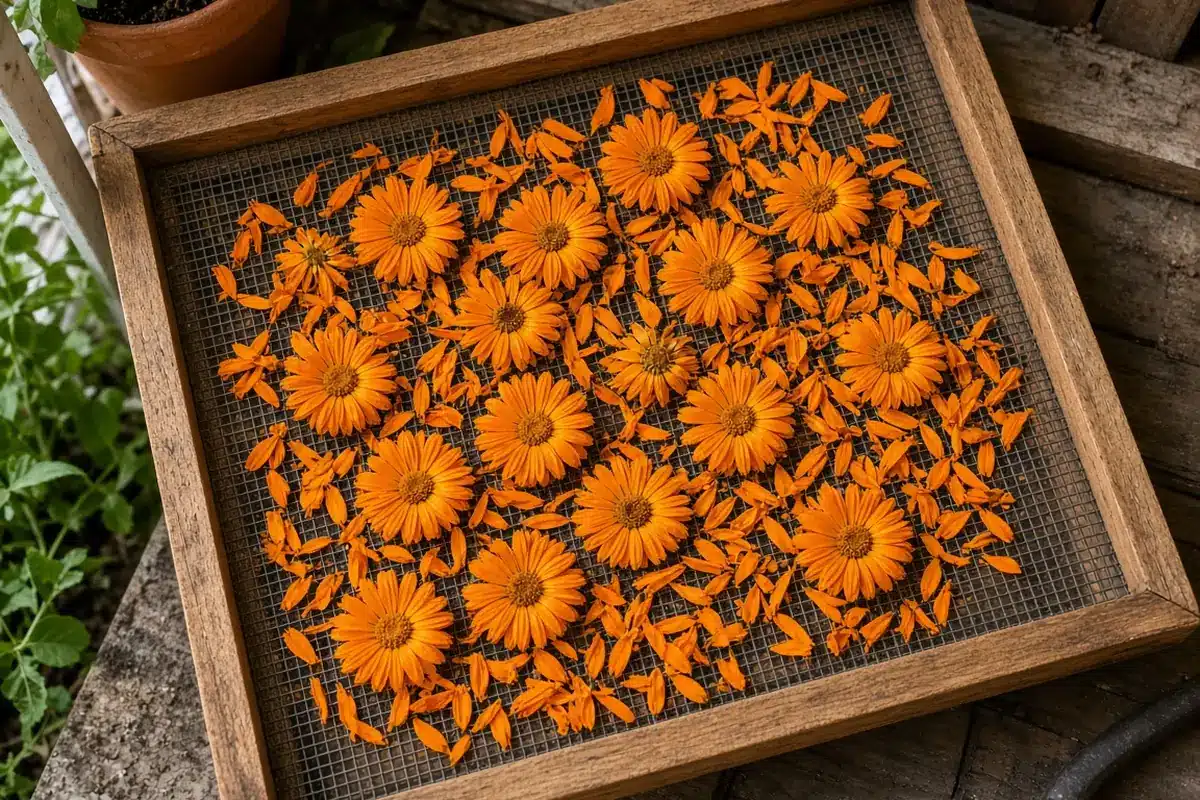
Colorado State University Extension gives clear harvest steps. Harvest flowers when the bloom is fully open. Cut the flower off the plant stem where it begins to branch. Collect flowers in the morning to avoid water loss. Then remove the petals, rinse them well and use them fresh or dried.
Air movement matters too. NC State Extension lists calendula as susceptible to powdery mildew. A room with gentle airflow and some space between plants makes it harder for that problem to settle in. For ideas on room conditions, see the right environment for a hydro setup.
How to: step by step
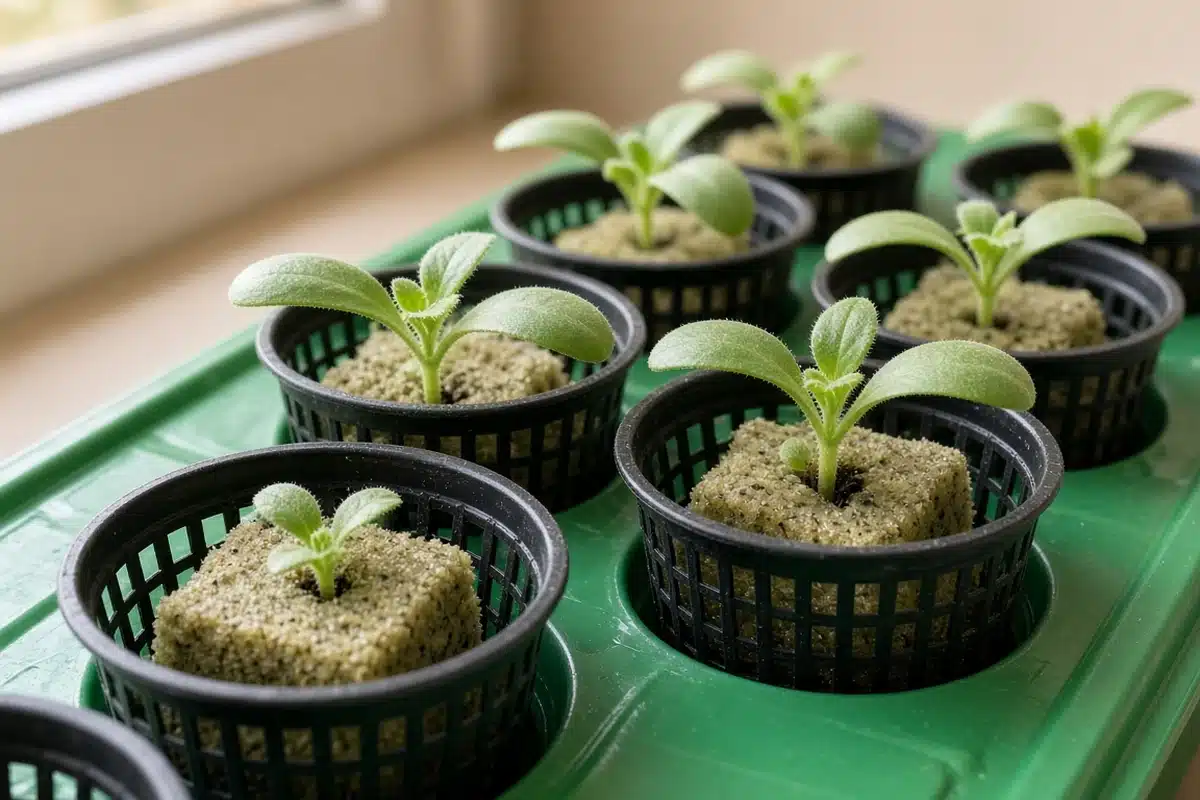
- Start seed in plugs or cubes.
- Move seedlings into buckets with a sturdy lid and holder.
- Support taller stems as they grow.
- Give bright light for compact plants.
- Pick flowers once they open fully.
- Remove spent blooms to keep buds forming.
Colorado State University Extension suggests sowing calendula indoors about 4 weeks before the last frost when growing for the garden. That gives a rough idea of how long seedlings need before moving.
Troubleshooting
Floppy stems: low light. NC State Extension notes these plants become leggy in too much shade. Move lights closer within maker guidance and pinch stems back.
Powdery leaves: NC State Extension lists powdery mildew as a problem for this plant. Add airflow and space plants apart.
Few blooms: old flowers left on. Deadhead often, since NC State Extension says this promotes more blooms.
Calendula in an indoor flower plan
Calendula brings bright color and a tangy, peppery petal to salads and other dishes, as NC State Extension describes. It pairs well with other easy flowers indoors. The Kind Seed Co blog has more on coco and hydro mixes for growers who want to try other soilless methods.
Sources
- Calendula officinalis, NC State Extension Gardener Plant Toolbox
- How to grow, harvest and eat 12 tasty edible annual flowers in Colorado, Colorado State University Extension
- Spice up the garden with edible flowers, University of Illinois Extension
- Hydroponic systems, UMass Amherst Center for Agriculture, Food and the Environment
FAQ
Is calendula the same as marigold?
Calendula is often called pot marigold, and NC State Extension lists pot marigold among the common names for Calendula officinalis. University of Illinois Extension notes that the proper scientific name should be listed when buying edible flowers, so check for Calendula officinalis on the seed packet to be sure you have the right plant.
Can you eat calendula petals?
Yes. NC State Extension says the flowers are edible with a slightly bitter, tangy, peppery flavor. University of Illinois Extension notes the petals are used more for color than flavor and make a nice garnish. Eat only flowers you know are edible and that have not been sprayed.
How big does calendula get in a bucket?
NC State Extension lists calendula at 1 to 2 feet tall and 1 to 2 feet wide. Plan on one plant per bucket and give each one room. Pinching stems as the plant matures, as the same source suggests, helps it stay compact and bushy rather than tall and floppy.
Does calendula reseed indoors?
NC State Extension notes that calendula reseeds in the garden, and its seeds ripen from August to November outdoors. Indoors, seed only forms if spent flowers stay on the plant. Most growers pick blooms often to keep new flowers coming, so few seeds form.
When should you pick calendula flowers?
Colorado State University Extension says to harvest when the bloom is fully open. Cut the flower where the stem begins to branch and collect flowers in the morning to avoid water loss. Then remove the petals, rinse them and use them fresh or dried.