
Growing Hydroponic Salad Burnet: Cucumber Flavored Leaves in Rafts

The short answer
Hydroponic salad burnet is Sanguisorba minor, a perennial in the rose family whose lacy leaves taste like cucumber. NC State Extension notes that the youngest leaves taste the nicest and that cutting the plant back brings new growth. On a raft it forms a low rosette you can cut again and again.
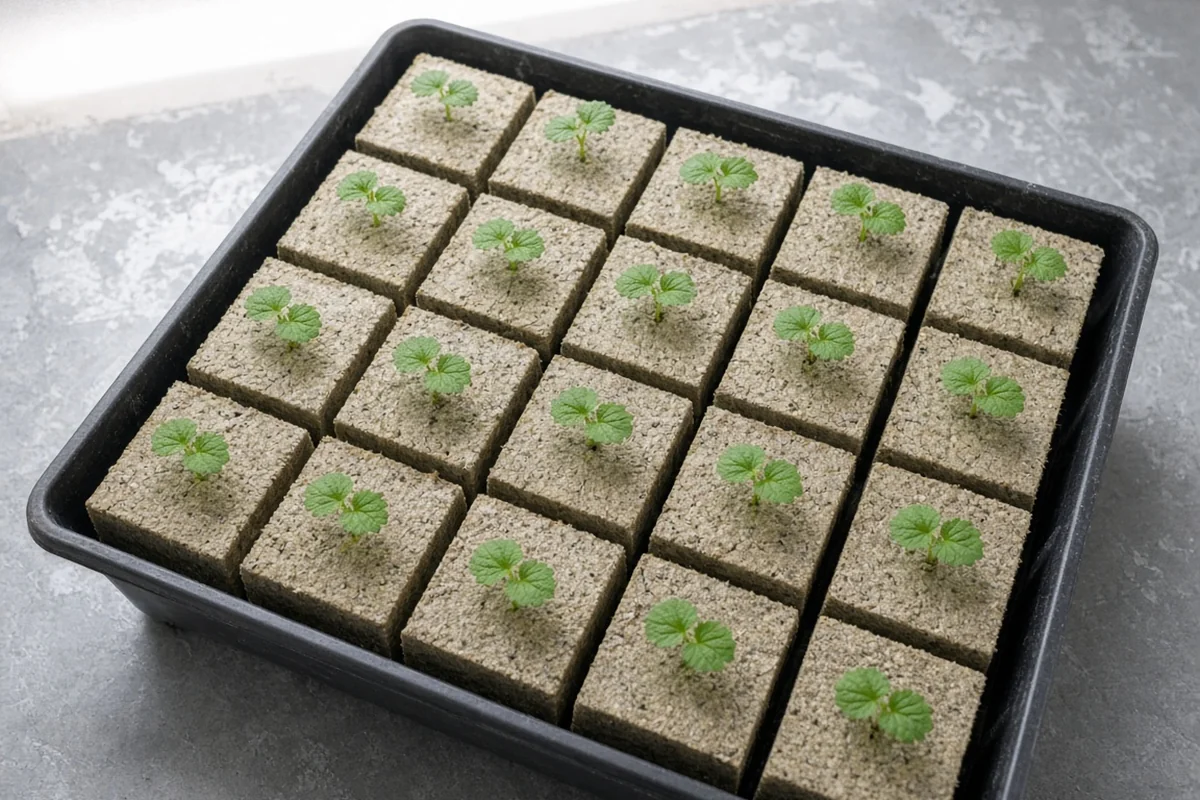
What is salad burnet?
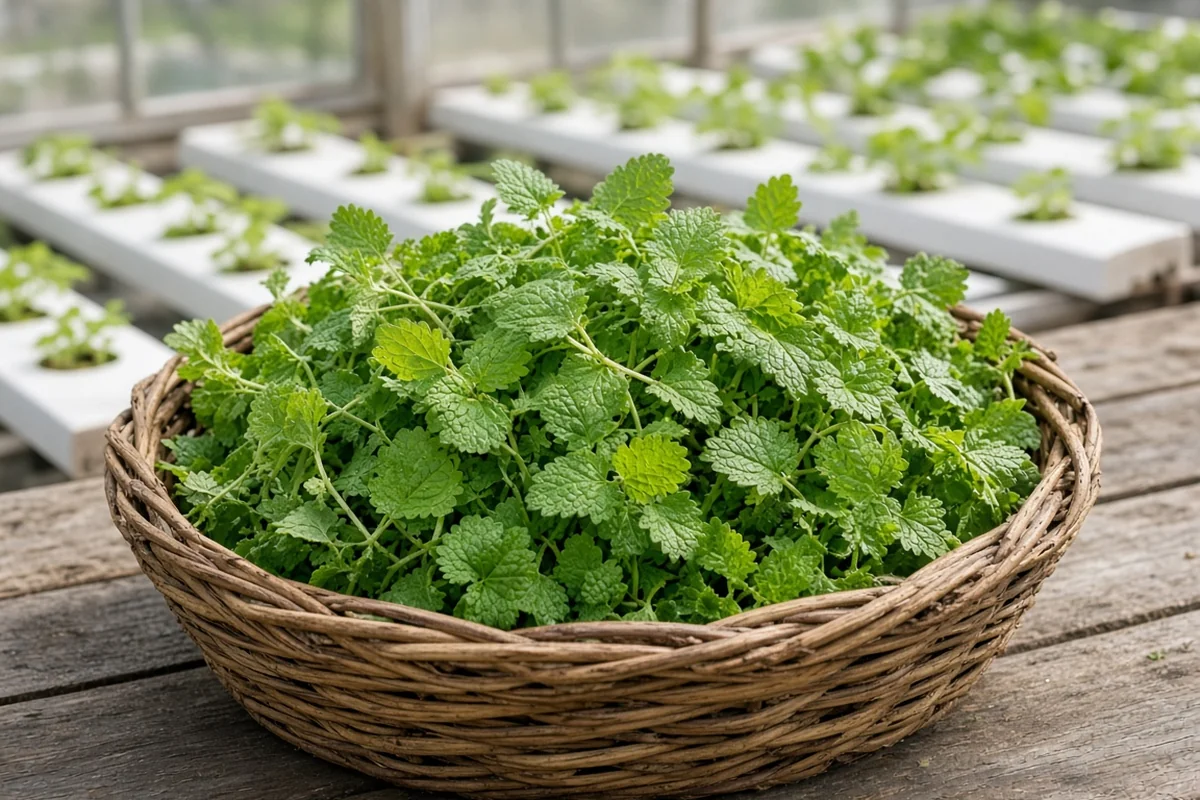
NC State Extension describes salad burnet as a perennial for zones 4 to 8 that grows 9 inches to 2 feet tall. Each leaf carries 4 to 12 pairs of rounded, toothed leaflets in a mounded rosette. The cucumber flavored leaves are used in salads, vinegar, butter and cheese spreads and as a garnish. It dislikes drought and shade, so give it steady water and plenty of light.
How do you grow it on rafts?
Rafts suit a low rosette crop. UF IFAS describes a floating foam raft with drilled holes for short term leafy crops, along with a liner, an aerator and an air stone. Virginia Cooperative Extension lists leafy greens and culinary herbs as DWC crops, with lettuce sites 8 inches apart on rafts.
Sow seed in rockwool, foam or coir plugs and feed a diluted solution after germination, as Virginia Extension advises. Move seedlings to net cups once roots push out the plug. The University of Minnesota Extension notes that net pots should sit only partly in the solution. Check pH and EC two to three times a week. See caring for your hydroponic system for routine upkeep.
Which leaves should you cut?
Cut young leaves first. NC State notes the youngest leaves are the tastiest and suggests cutting the plant back to encourage new growth. Remove flower stalks once they bloom to stop self seeding. Older leaves are tougher, so trim them to make room for new growth.
Salad burnet growing basics
| Stage | What to do | Notes |
|---|---|---|
| Start | Sow in plugs | Diluted feed after germination |
| Float | Net cups on a raft | About 8 inches between sites |
| Grow | Aerate and check pH and EC | Two to three checks a week |
| Light | Bright light | Intolerant of shade |
| Cut | Take young leaves, cut back often | Remove flowers |
Sources: NC State Extension, Virginia Cooperative Extension, UF IFAS Extension.
How to: step by step
- Sow salad burnet seed in plugs under light.
- Feed a diluted solution after germination.
- Move seedlings into net cups on a raft about 8 inches apart.
- Aerate the solution and check pH and EC often.
- Give bright light, since the plant does poorly in shade.
- Cut young leaves and remove flower stalks.
Troubleshooting
Tough, bitter leaves: leaves are old. Cut the plant back for new growth.
Sparse, stretched growth: light is too low, so add more.
Flowers forming: the plant is maturing. Remove flower stalks after bloom.
A cucumber note without the vine
Salad burnet brings cucumber flavor to salads from a small raft. Plan sowings with growing schedule for your hydroponics and compare root media in hydroponic in different mediums. Kind Seed Co shares more hydroponic herb notes on the blog.
Sources
- Sanguisorba minor (salad burnet), NC State Extension Gardener Plant Toolbox
- Hydroponic production of edible crops: deep water culture (DWC) systems (SPES 464), Virginia Cooperative Extension
- Small scale hydroponics, University of Minnesota Extension
- Growing lettuce in small hydroponic systems (HS1422), UF IFAS Extension
FAQ
Does salad burnet really taste like cucumber?
Yes. NC State Extension describes its leaves as cucumber flavored and lists uses in salads, vinegar, butter, cheese spreads and garnishes.
Is salad burnet perennial?
Yes. NC State Extension lists it as a perennial for zones 4 to 8. In a raft you can cut it back again and again for new leaves.
Can salad burnet grow with lettuce?
Often yes. Both are leafy crops that suit rafts, and Virginia Extension gives the same pH and EC ranges for many greens and herbs.
Why are my leaves bitter?
Older leaves taste less pleasant. NC State notes the youngest leaves are the tastiest, so cut the plant back to bring on new growth.
Should you remove the flowers?
Yes. NC State Extension suggests removing flowers once they bloom to discourage self seeding, which also turns growth back to leaves.



