
Growing Hydroponic Huauzontle: Mexican Broccoli Tops in Buckets
The short answer
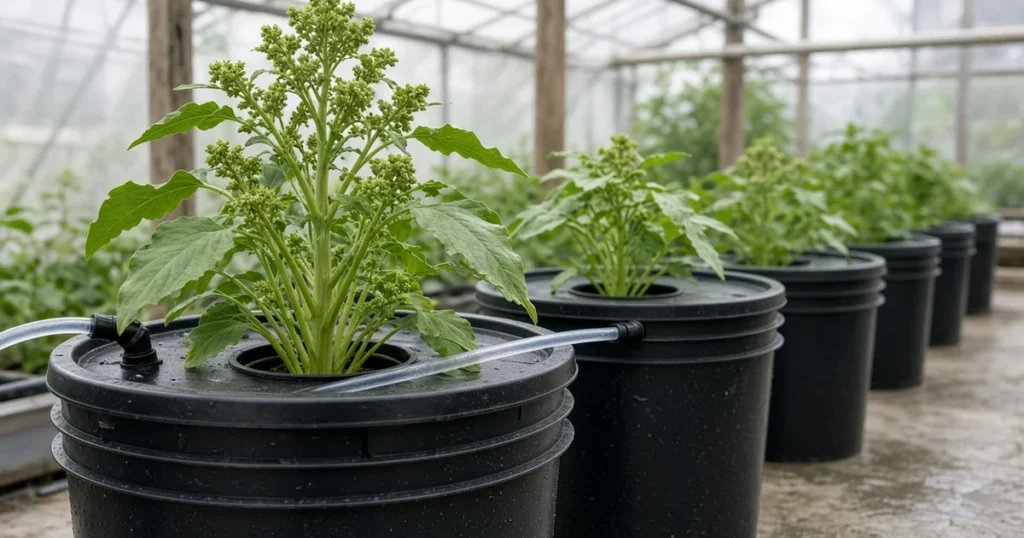
Hydroponic huauzontle is a goosefoot grown in Mexico for its flowering shoots and seed. Plants For A Future notes that the flower clusters are cooked and used like broccoli. The plant grows tall and dislikes shade, so one plant per bucket with bright light and a stake suits it. Cut the tops while green and tender.
What is huauzontle?
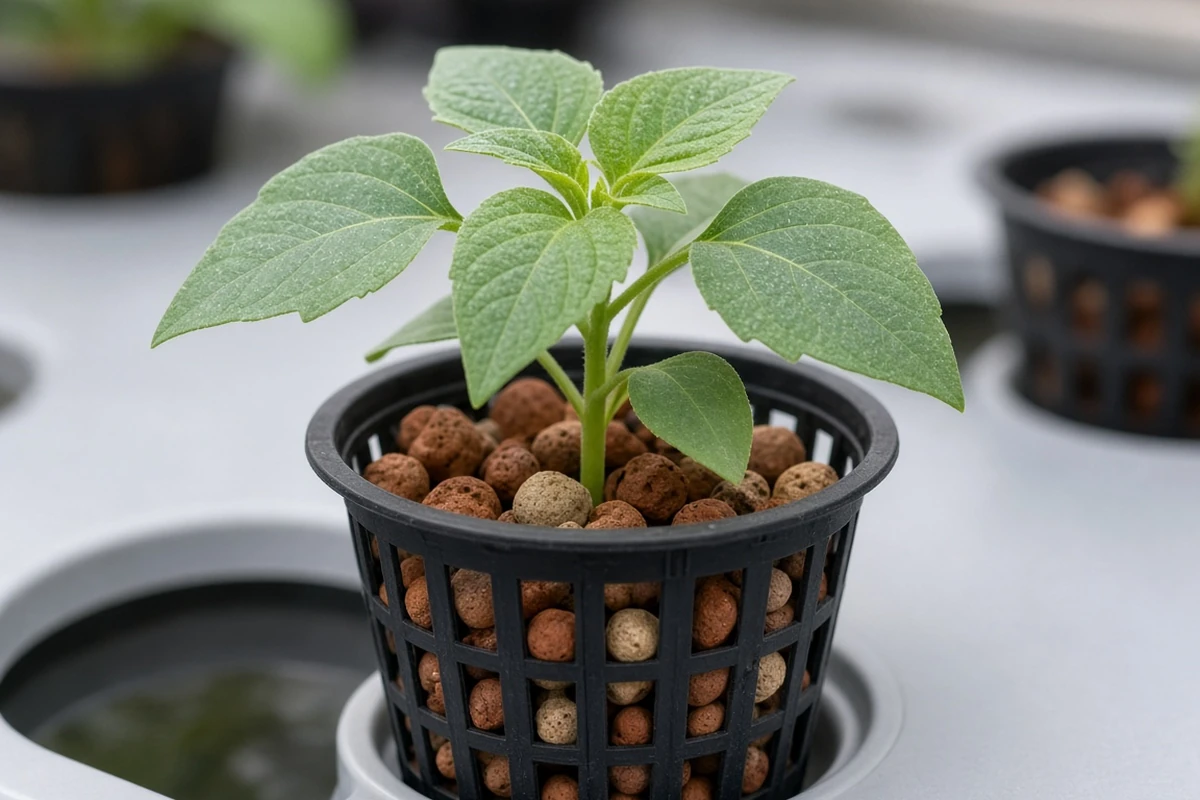
Plants For A Future lists huauzontle as Chenopodium nuttalliae, formerly cultivated in Mexico for its seed and flowering shoots and closely related to quinoa. Botanists sometimes classify it as a subspecies of Chenopodium berlandieri. Washington University in St. Louis notes that C. berlandieri has edible greens, flowers and seeds and is related to goosefoot crops of Mexico and South America, including quinoa.
You grow it for the flower bud clusters, which are cooked like broccoli. It dislikes shade, so give bright light from the start.
Why do buckets suit huauzontle?
Tall plants need root room and a firm base. The University of Minnesota Extension describes a 5 gallon bucket with a net pot set into the lid as a simple home system. One plant per bucket gives each root mass its own volume of solution.
Minnesota advises net pots that sit only partly in the solution, and an air stone helps when roots grow long. Top up with nutrient solution so about half the roots stay submerged. Virginia Cooperative Extension suggests checking pH and EC two to three times a week and gives pH 5.5 to 6.2 for most crops. Read caring for your hydroponic system for upkeep.
When are the tops ready to cut?
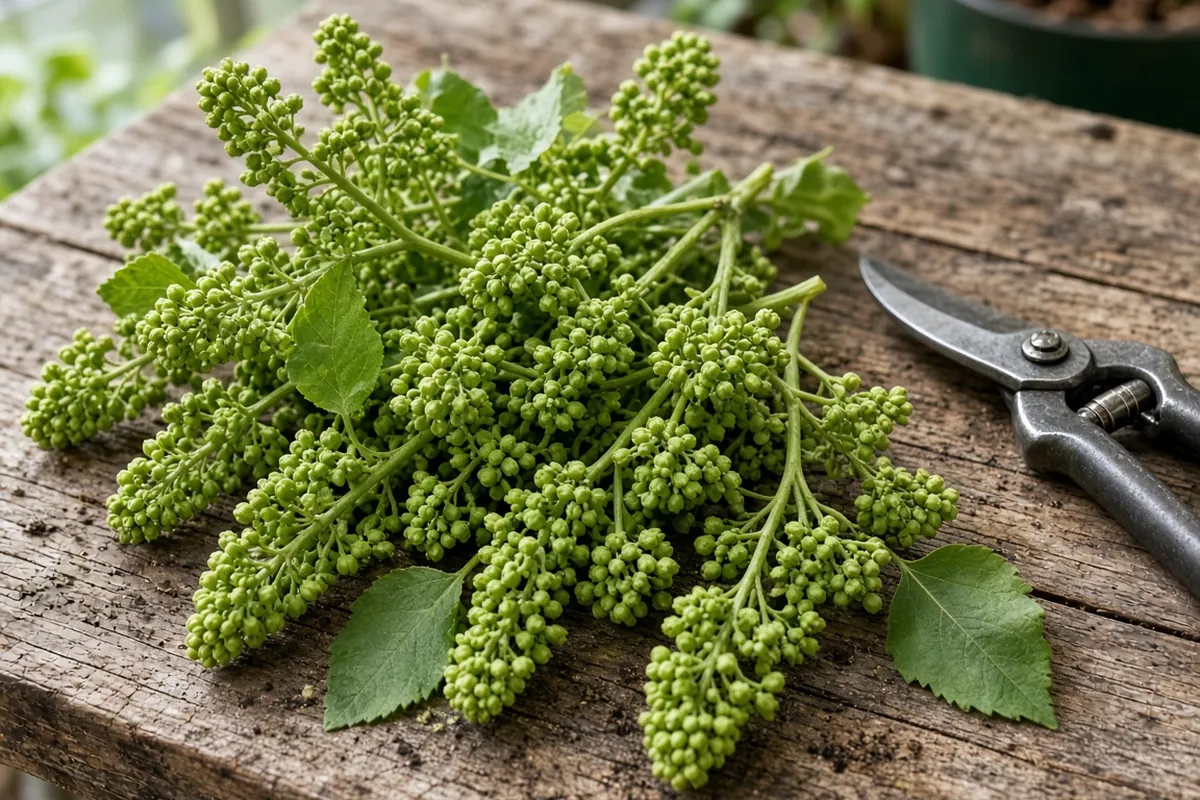
Cut the flower clusters while they are green and tender. Take a few inches of stem with each top. Side shoots may form new clusters for a later cut. Use a growing schedule for your hydroponics to stagger sowings so tops do not all come at once.
Huauzontle growing basics
| Stage | What to do | Notes |
|---|---|---|
| Start | Sow in plugs | Diluted feed after germination |
| Move | One seedling per bucket | Net pot set in the lid |
| Grow | Aerate and top up | About half the roots submerged |
| Light | Bright light | Dislikes shade |
| Cut | Take green, tender tops | Cook like broccoli |
Sources: Plants For A Future, Washington University in St. Louis, University of Minnesota Extension.
How to: step by step
- Sow huauzontle seed in plugs under light.
- Move one seedling into each bucket when roots show.
- Aerate the solution and top it up so about half the roots are submerged.
- Give bright light as the plant grows tall.
- Stake or tie the main stem.
- Cut flower tops while they are green and tender.
Troubleshooting
Plants tip over: the stem is tall and top heavy, so add a stake.
Tops turn hard: they were cut too late, so cut sooner.
Pale, stretched plants: light is too low. Add light.
A broccoli style crop from a bucket
Huauzontle makes an unusual crop for a home grow. Compare root media in hydroponic in different mediums. Kind Seed Co shares more hydroponic crop notes on the blog.
Sources
- Chenopodium nuttalliae (huauzontle), Plants For A Future
- Goosefoot guide, Washington University in St. Louis Lost Crops
- Small scale hydroponics, University of Minnesota Extension
- Hydroponic production of edible crops: deep water culture (DWC) systems (SPES 464), Virginia Cooperative Extension
FAQ
Is huauzontle related to quinoa?
Yes. Plants For A Future describes huauzontle as closely related to quinoa, and Washington University notes goosefoot crops of Mexico and South America share that family line.
How tall does huauzontle grow?
It grows tall enough to need a stake in a bucket. Give it headroom under the light and tie the main stem as it grows.
Can you eat the leaves too?
Yes, cooked. Plants For A Future lists the cooked leaves as a mild spinach substitute. Most growers raise huauzontle for its flower clusters.
How do you cook huauzontle tops?
Plants For A Future notes the flower clusters are cooked and used like broccoli. Cook them as you would broccoli florets.
Why grow huauzontle in a bucket?
A bucket gives one tall plant its own volume of solution and a firm base for a stake, as in the simple bucket systems University of Minnesota Extension describes.



