
Growing Hydroponic Wheatgrass: The Tray Method Step by Step
The short answer
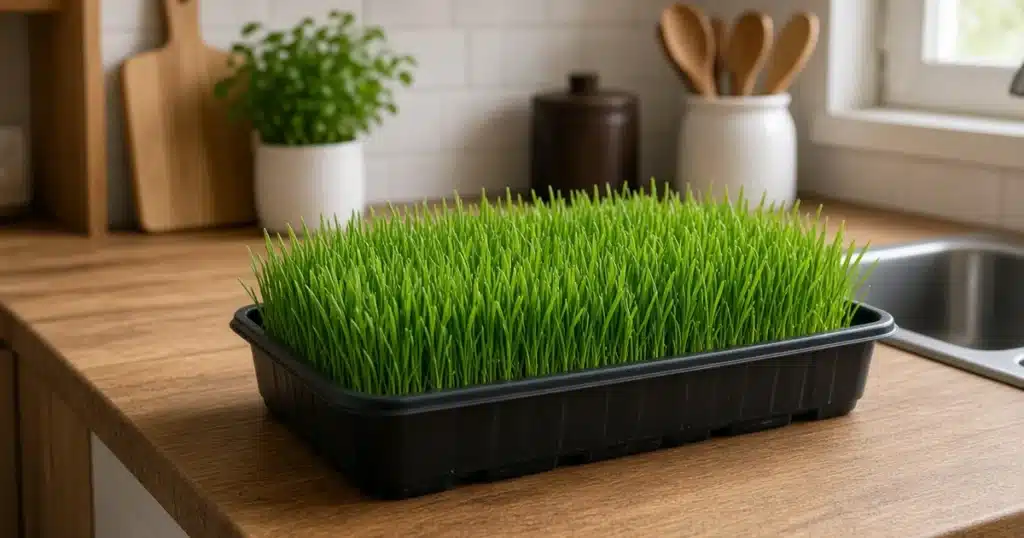
Hydroponic wheatgrass grows in shallow trays on a moist mat or a thin layer of media, with no soil needed. You soak wheat berries, spread them thick, hold them dark for a short time and then move them to light. Water from below, maintain airflow and cut the grass above the seed line.
Wheatgrass is a quick, easy indoor crop. It needs little gear and fits a windowsill or a small shelf with a light.
How do you grow wheatgrass in trays?
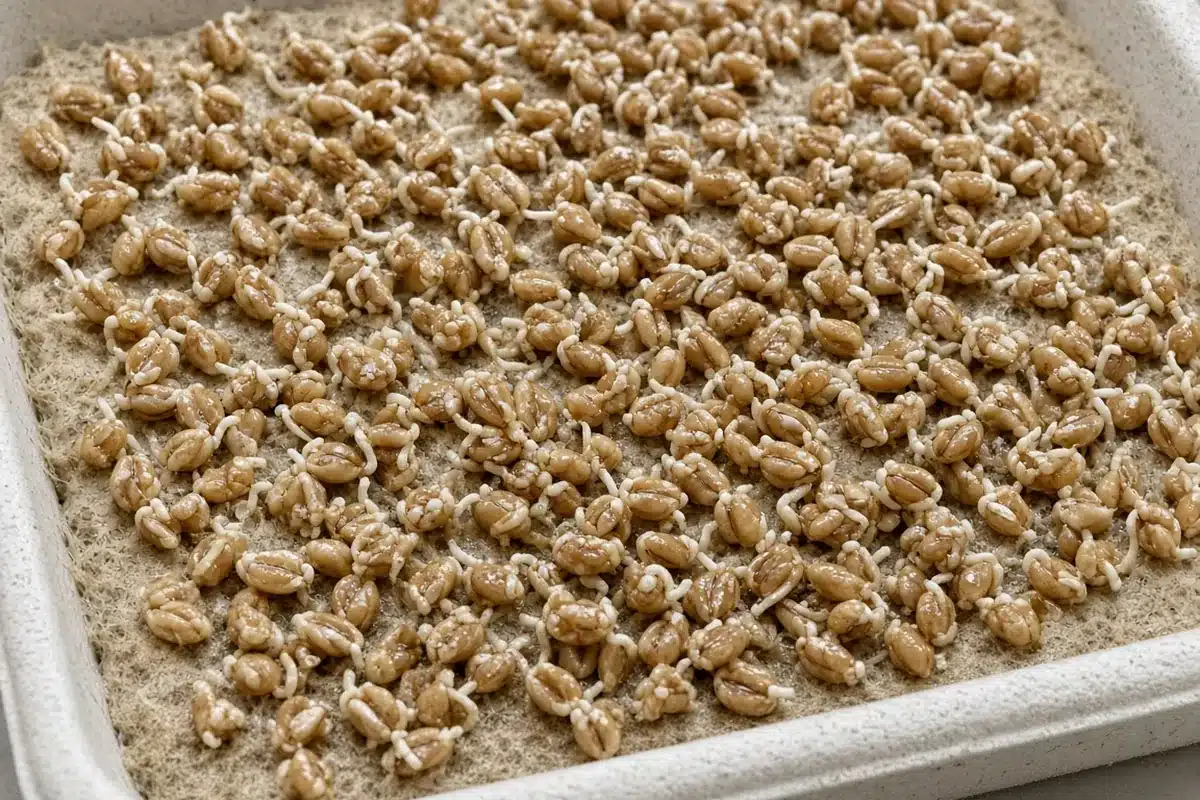
Wheatgrass is young wheat. The seeds are called wheat berries. You grow them densely so the blades come up thick and even.
The University of Maryland Extension guide to microgreens and baby greens explains how to grow dense trays of young greens indoors. It covers seed soaking, shallow trays, light and harvest. Wheatgrass follows the same pattern, though it’s usually grown a bit longer than most microgreens.
The Oregon State University Extension wheatgrass project sheet is written for kids, but its steps match what adults do. Soak the seeds, set them on a moist base, hold them damp and watch them sprout within days.
A tray system has three parts. There’s a shallow tray with drain holes, a solid tray under it to catch water, and a growing base. The base can be a hemp mat, a coco mat, a thin layer of coco coir or plain paper towel for a small run.
Our post on hydroponic in different mediums compares common soilless bases.
| Growing base | How it works | Notes |
|---|---|---|
| Grow mat | Thin fiber pad holds water under the seeds | Clean and easy to lift out at harvest |
| Thin coco layer | Loose fiber spread a short depth in the tray | Holds moisture well, a little messier |
| Paper towel | Damp sheet under seeds | Fine for a small kitchen run |
Sources: University of Maryland Extension, University of Tennessee Extension.
How do you prevent mold?
Mold is a common problem with dense trays. Seeds sit close together in a damp, warm spot, which is what mold likes.
The University of Tennessee Extension guide to leafy crops in small soilless systems stresses clean equipment, good airflow and steady watering for small leafy crops. Those habits help wheatgrass stay clean too.
Start with clean trays. Wash them with hot soapy water between crops and rinse well. Rinse the seeds before soaking and drain them well after.
Water from below when you can. Pour water into the lower tray and let the base wick it up. This stops the seed surface from staying soaked.
Maintain airflow. A small fan on low near the trays helps the surface dry between waterings. Still, humid air invites fuzzy growth.
Don’t confuse root hairs with mold. Young wheat roots grow fine white hairs that look fuzzy. Root hairs sit evenly along the roots and vanish when you mist them. Mold forms webby patches, often on seeds, and may smell musty.
When should you harvest wheatgrass?
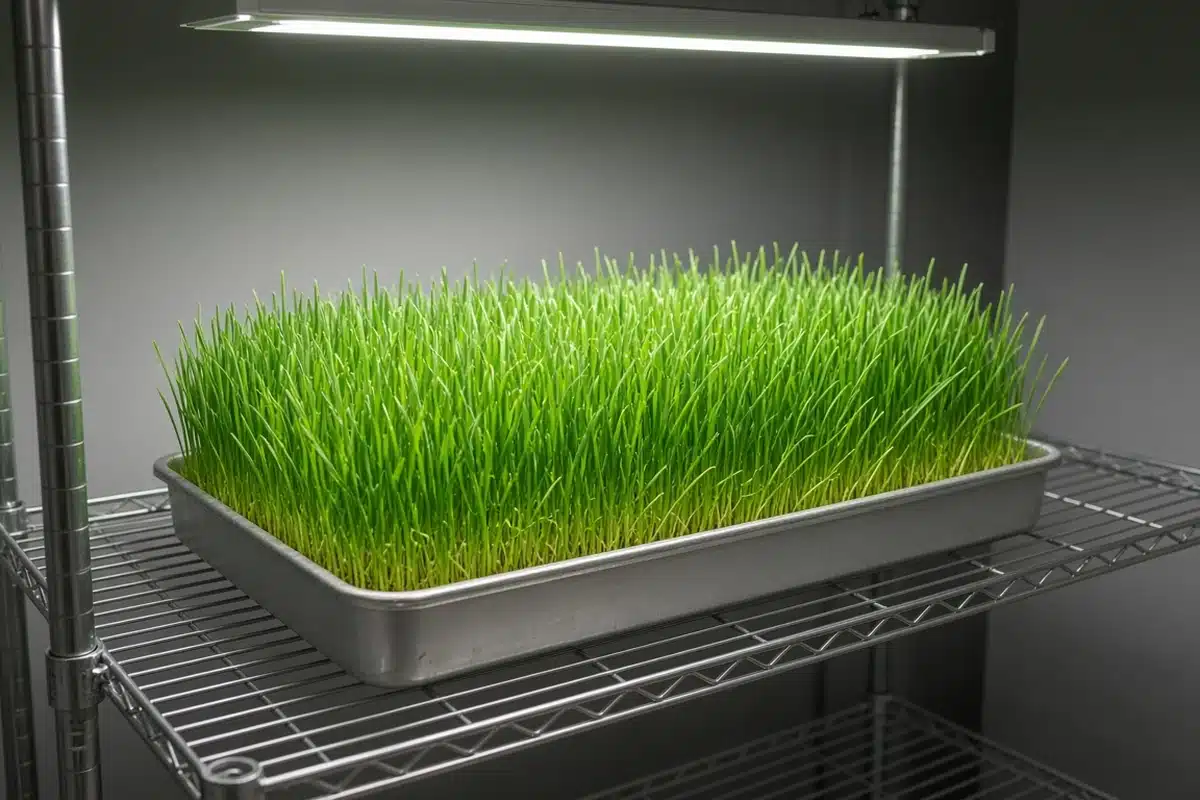
Cut wheatgrass when the blades are tall, green and upright. Most growers cut when a second leaf starts to show. Use clean scissors and cut above the seed line.
You can often get a second, smaller cutting from the same tray. After that, growth slows and the grass gets tougher, and most growers compost the mat and start a new tray.
Rinse the cut grass and store it in the fridge in a sealed container. It lasts a short time, so cut only what you plan to use.
How to: step by step
- Rinse and soak wheat berries.
- Spread seeds densely on a moist mat or thin media layer.
- Cover the tray for a short dark period.
- Move it to bright light once sprouts show.
- Water from below and maintain airflow.
- Cut the grass above the seed line.
Soak seeds in cool water for several hours, then drain. Some growers let them sprout in a jar for a day before spreading them.
Spread seeds in a single, tight layer. Seeds can touch, but they shouldn’t pile up. Piled seeds trap water and rot.
Cover the tray with another tray or a damp cloth for the first days. This holds seeds moist and dark while roots anchor. Once shoots push up, remove the cover.
Give the tray bright light. A sunny window works in spring and summer. A small LED fixture works year round. Our post on creating the right environment for your hydro setup covers light and air for indoor crops.
If you enjoy quick kitchen crops, our list of easy to grow herbs that will not get you high has more ideas.
Troubleshooting
White fuzz at roots. It may be root hairs or mold. Look closely and mist. Root hairs collapse, mold does not.
Mold on seeds. The tray is too wet and air is still. Water less from above and add a fan.
Leggy or pale grass. Light is too low. Move the tray to a brighter spot or closer to a light.
Uneven growth. Seeds were piled or watering was patchy. Spread seeds in one layer and water from below.
Sour smell or musty odor. Water may be pooling. Empty the lower tray and drain well.
Wheatgrass is a good first indoor crop because it gives fast results with simple gear. Kind Seed Co shares more garden projects in outdoor growing.
Sources
- Growing microgreens and baby greens indoors, University of Maryland Extension, Growing microgreens and baby greens indoors
- Directions for how to grow a wheatgrass pet pal, Oregon State University Extension, Directions for how to grow a wheatgrass pet pal
- Leafy crop production in small scale soilless and hydroponic systems (W 844-B), University of Tennessee Extension, Leafy crop production in small scale soilless and hydroponic systems (W 844-B)
FAQ
Does wheatgrass need soil?
No. It grows well on a damp mat, a thin coco layer or even paper towel. The seed holds enough food to get the grass started.
How long does wheatgrass take?
Seeds sprout within a few days. Most trays are ready to cut in about a week or a little more, depending on light and room warmth.
Can wheatgrass regrow after cutting?
Yes, but the second cutting is usually smaller and tougher. Most growers take one or two cuts and then start a fresh tray.
What tray size works well?
A standard shallow nursery tray suits most homes. Smaller trays work for a kitchen counter. Use one with drain holes over a solid catch tray.
Should wheatgrass seeds be covered?
Cover them for the first few days to hold them dark and damp. Remove the cover once shoots appear so they can green up.



