
Hydroponic Fodder Systems: Sprouted Barley for Homesteads
The short answer
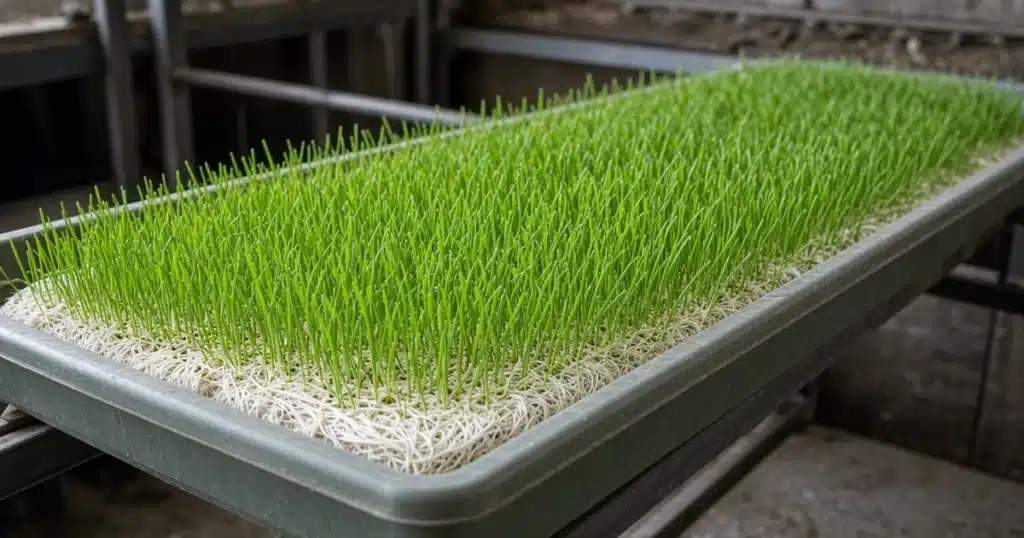
A hydroponic fodder system sprouts grain, most often barley, in trays without soil to make a fresh green feed mat for livestock. Seed is soaked, spread in draining trays and watered several times a day. After about a week the mat of roots and shoots is fed whole.
Fodder systems appeal to small homesteads because they turn grain into green feed in winter. They also need real care, and they do not replace pasture or a balanced ration.
What is a hydroponic fodder system?
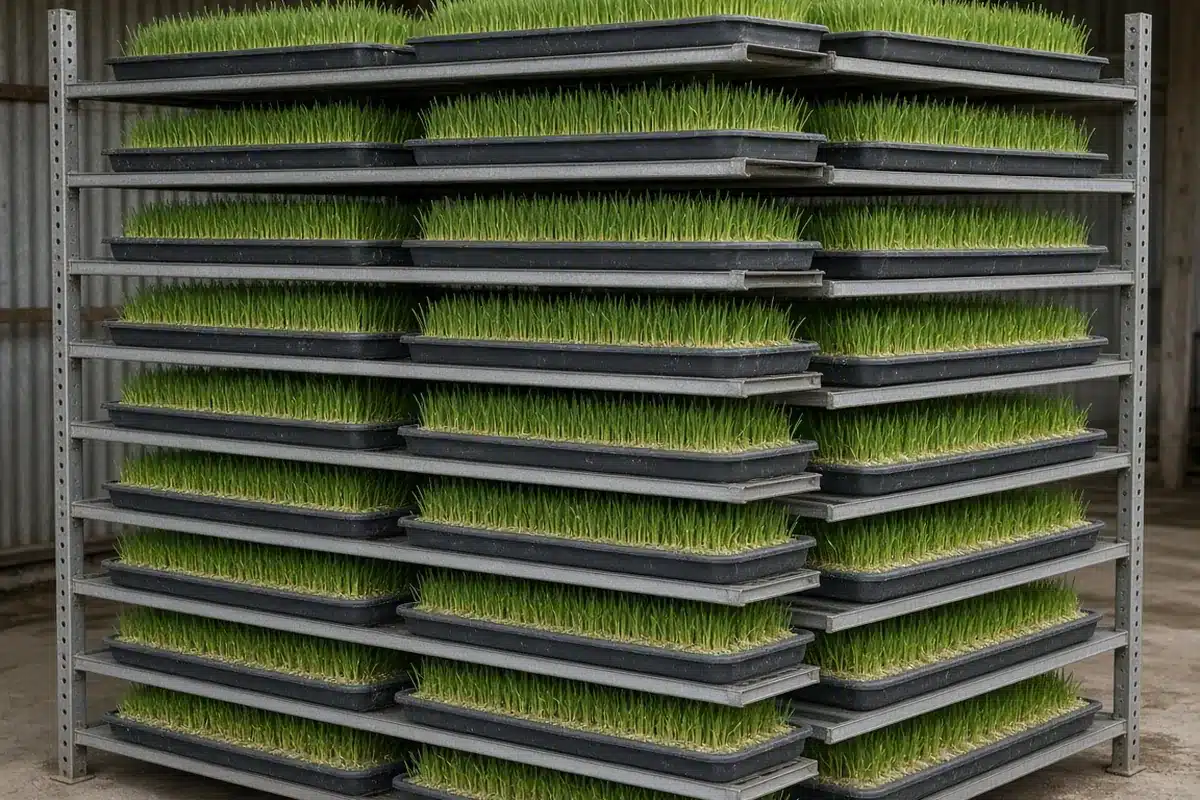
A fodder system is a rack of shallow trays in a cool room. Each tray holds a thin layer of soaked grain. Water runs over the trays on a schedule and drains out the low end. No nutrients are added in most systems, because the seed carries the food the sprout needs.
The UMN West Central Research and Outreach Center fodder page describes the center’s work with sprouted barley for dairy cows. It covers how the system runs and what the researchers looked at, from feed quality to cost.
The University of Vermont Extension fodder fact sheet looks at fodder on certified organic dairy farms. It covers how farms used the systems, what they liked and the problems they ran into.
| Feature | What it means | Notes |
|---|---|---|
| Grain | Barley is most common, other grains also used | Seed must be clean and untreated |
| Growing period | About a week from soak to harvest | Mat is fed whole, roots and all |
| Water | Trays watered several times a day | Drainage stops trays from going sour |
| Inputs | Seed, water, power and labor | Feed value depends on the grain used |
Sources: University of Vermont Extension, UMN West Central Research and Outreach Center.
How do you grow barley fodder?
Start with clean, untreated grain. Skip seed sold for planting, since it’s often coated. Feed grade barley meant for sprouting is the usual choice.
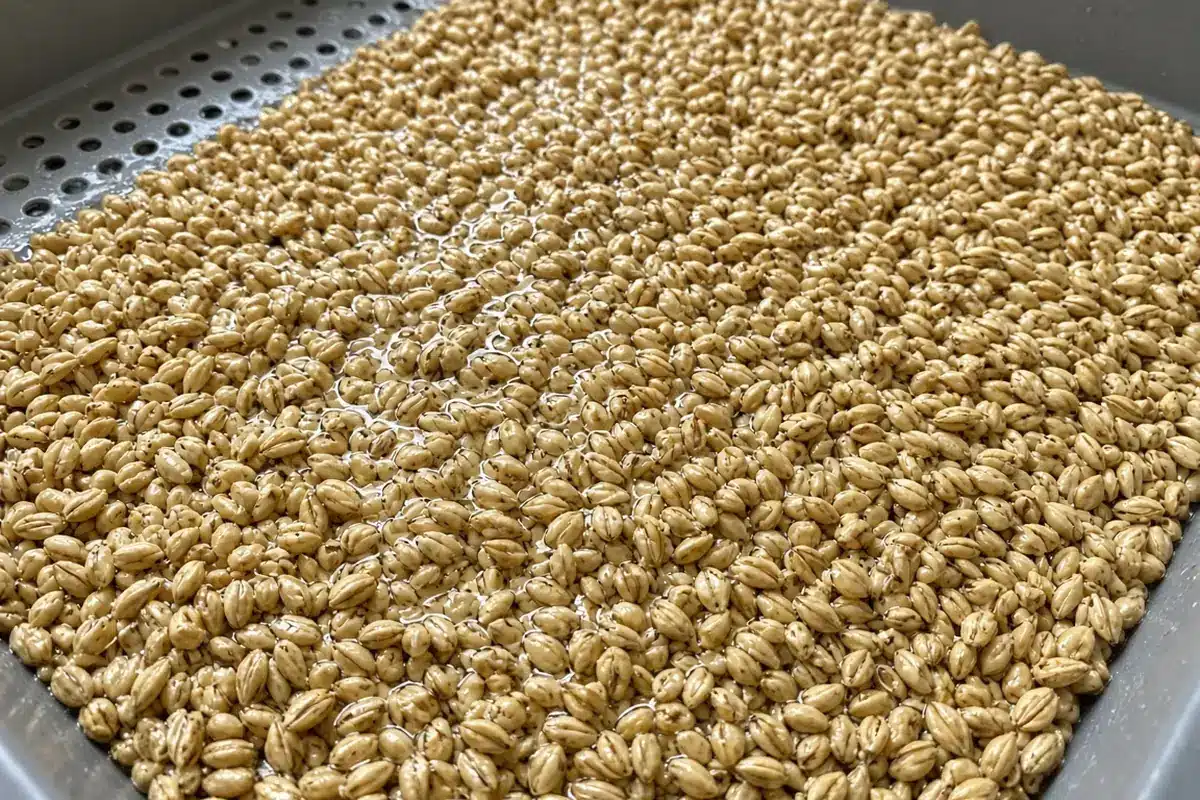
Rinse the grain to remove dust and broken kernels. Soak it in clean water for several hours so it starts to swell. Drain it well.
Spread the seed evenly in each tray. A thin, level layer lets water reach every kernel and drain away. Thick spots stay wet and start to sour.
Set trays on a slight tilt so water runs off. Water them several times a day with a timer or by hand. Hold the room cool and the air moving.
Within a day or two, white root tips appear. Green shoots follow. By about a week the tray holds a dense mat of roots topped with short green blades.
Our post on caring for your hydroponic system explains routine cleaning of trays, lines and tanks. Those same habits matter in a fodder room.
What are the limits of fodder?
Fodder isn’t a magic feed. The University of Maryland Small Ruminant Program page on hydroponic fodder reviews what research says. Sprouting changes the grain, but it doesn’t create extra dry matter. The fresh mat is mostly water, so animals eat a lot of weight to get a modest amount of feed.
Cost and labor count. Trays need daily care, seed must be bought and the room needs power for lights, pumps or climate control. The UVM sheet notes that farms weighed those costs against the value of green feed in winter.
Mold is the other big risk. Warm, still, damp trays grow mold fast. Moldy fodder means a failed batch. Strict cleaning and cool air are part of every system that works.
For most small farms, fodder is a supplement, and it can add fresh green feed in the cold months. It doesn’t replace hay, pasture or a ration balanced for the animal.
How should the fodder room be set up?
Pick a spot that stays cool and steady through the day. A spare room, an insulated shed or a corner of a barn can work. Avoid places that swing hot in the afternoon.
Put the rack where water can drain to a floor drain or a bucket. Trays shed water every time they’re watered, and standing water breeds mold and odor.
Light is optional. Some systems add low light so shoots turn green, while others grow in dim rooms. Fresh air matters more than light, so plan for a fan and a vent.
How to: step by step
- Buy clean, untreated feed grade grain.
- Rinse and soak the seed.
- Spread it evenly in draining trays.
- Water trays several times a day.
- Use a fan to maintain airflow, and avoid letting the room get warm.
- Harvest the mat after about a week.
Stagger trays so one is ready each day. Start a new tray as you pull the oldest.
Scrub trays between uses with hot water and a brush. Rinse well and let them dry.
Spread leftover roots and spoiled mats in the compost. Our post on composting cannabis garden waste covers how to build a pile that breaks down well. The same method works for fodder scraps.
Our post on hydroponic in different mediums compares growing bases if you want to try a mat under the seed.
Troubleshooting
Moldy trays. The room is warm and air is still. Clean trays, cool the room and add a fan.
Uneven growth. Seed was piled thick in spots. Spread it in one level layer.
Sour smell. Water is pooling. Increase the tilt and rinse trays more often.
Slow sprouting. Seed is old or the room is too cold. Try fresh seed and warm the room slightly.
Patchy germination. Some seed is dead or damaged. Buy better grain and rinse out broken kernels.
A fodder rack can add fresh green feed through winter if you plan for the work. Kind Seed Co shares more garden projects in outdoor growing.
Sources
- Fodder systems on the certified organic dairy farm, University of Vermont Extension, Fodder systems on the certified organic dairy farm
- Fodder production systems, UMN West Central Research and Outreach Center, Fodder production systems
- Hydroponic fodder, University of Maryland Small Ruminant Program, Hydroponic fodder
FAQ
Is fodder a complete feed?
No. Fodder is mostly water and works as a supplement. Feed options still matter, and you still need hay, pasture, or a balanced ration.
Which grains work for fodder?
Barley is the most common. Wheat, oats and other grains can sprout too. Always use clean, untreated seed meant for feed.
How much space does a fodder system need?
A small rack of trays fits in a cool room, shed or corner of a barn. Size depends on how many animals you feed.
Can fodder replace pasture?
No. Fodder does not add extra dry matter beyond what is in the seed. It can add green feed in winter but does not replace grazing.
How often should trays be cleaned?
Clean each tray after every harvest. Scrub, rinse and dry it before adding new seed to hold mold down.



