Hydroponic Micranthemum: Tiny Leaved Stems in Small Jars
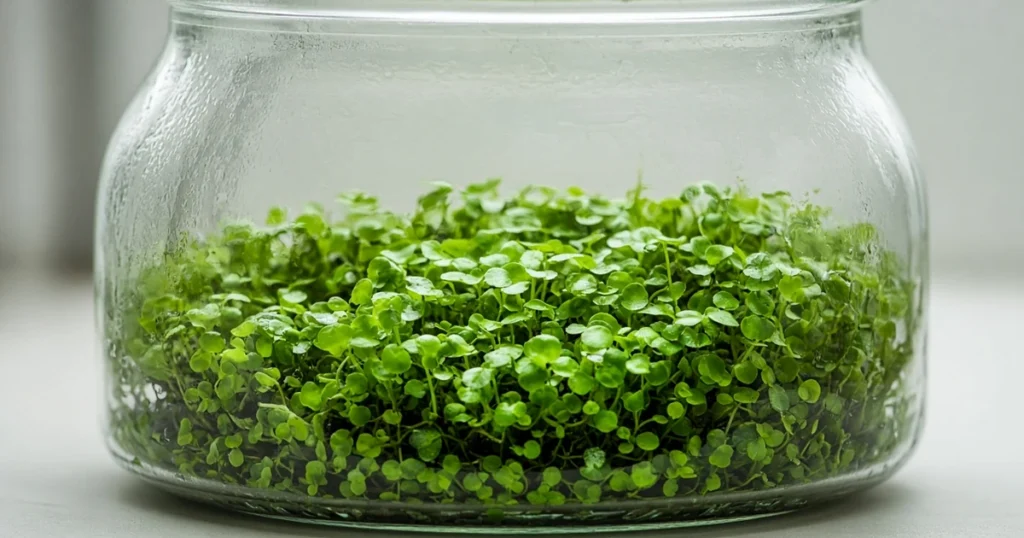
Hydroponic micranthemum means rooting the creeping, tiny leaved stems on wet inert media in a covered jar. UF/IFAS Extension notes micranthemum grows both on wet shorelines plus fully submersed, while University of California Master Gardeners list inert media for home hydroponics.
The short answer
Hydroponic micranthemum grows well on wet coir or vermiculite in a covered jar. UF/IFAS notes its creeping stems reach 6 to 8 inches with leaves about 1/4 inch long. It grows from deep shade to bright sun. Use low nutrient water, trim the mat plus shade the jar to limit algae.
Can micranthemum grow with leaves above water?
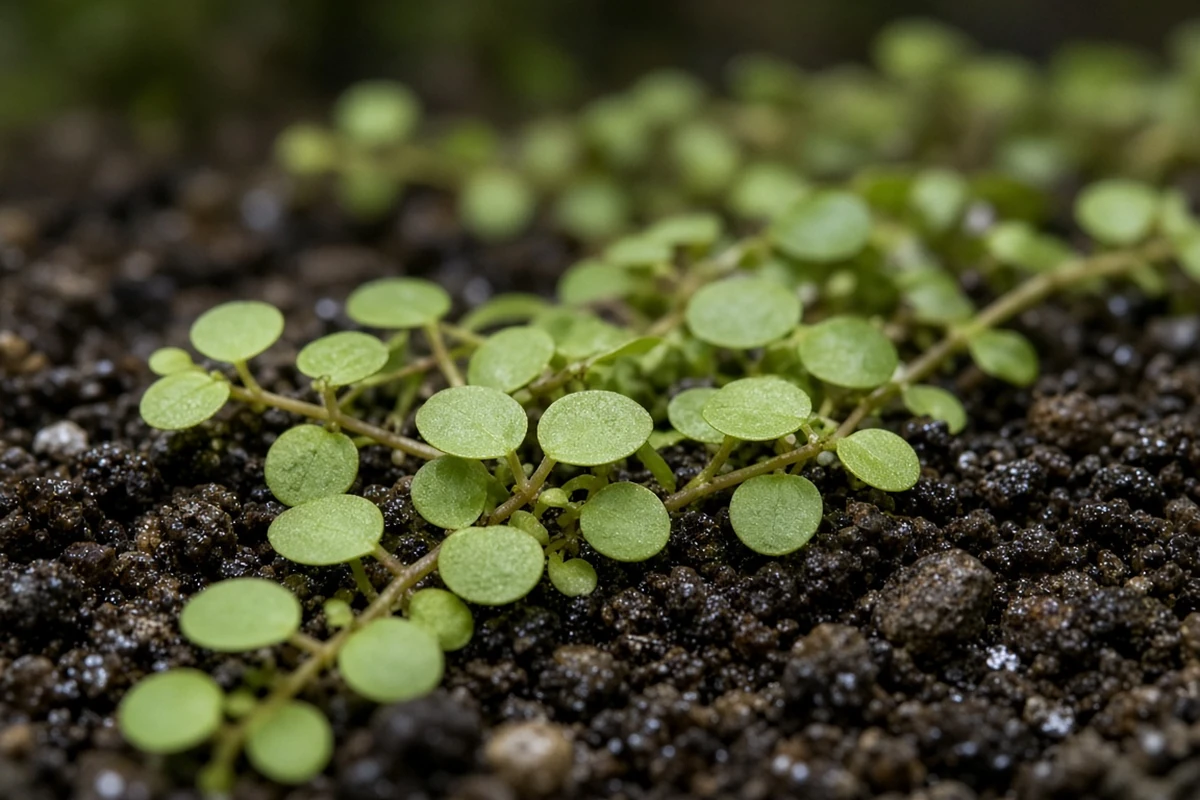
UF/IFAS notes micranthemum grows on wet shorelines as well as submersed. UF/IFAS describes some emergent aquatic plants as amphibious plus heterophyllous, which means their leaves look different above or below water. Leaves grown above water are sturdier than those formed underwater, it notes.
What setup suits emersed micranthemum?
University of California Master Gardeners list coir, perlite plus vermiculite as inert media. Colorado State notes peat plus perlite float in water, so coir or vermiculite suits a jar.
| Factor | Target | Tip |
|---|---|---|
| Stems | 6 to 8 inches, creeping | UF/IFAS |
| Leaves | About 1/4 inch | UF/IFAS |
| Light | Deep shade to bright sun | UF/IFAS |
| Media | Coir or vermiculite | Colorado State plus UC |
| Nutrients | Low | High levels feed algae, per UF/IFAS |
Source: UF/IFAS, Colorado State plus UC Master Gardeners.
How much light does emersed micranthemum need?
UF/IFAS notes micranthemum grows in deep shade to bright sun. Brighter light gives denser growth. Shade the sides of a clear jar so less light reaches the water, since UF/IFAS notes high nutrient levels lead to algae.
How to: step by step
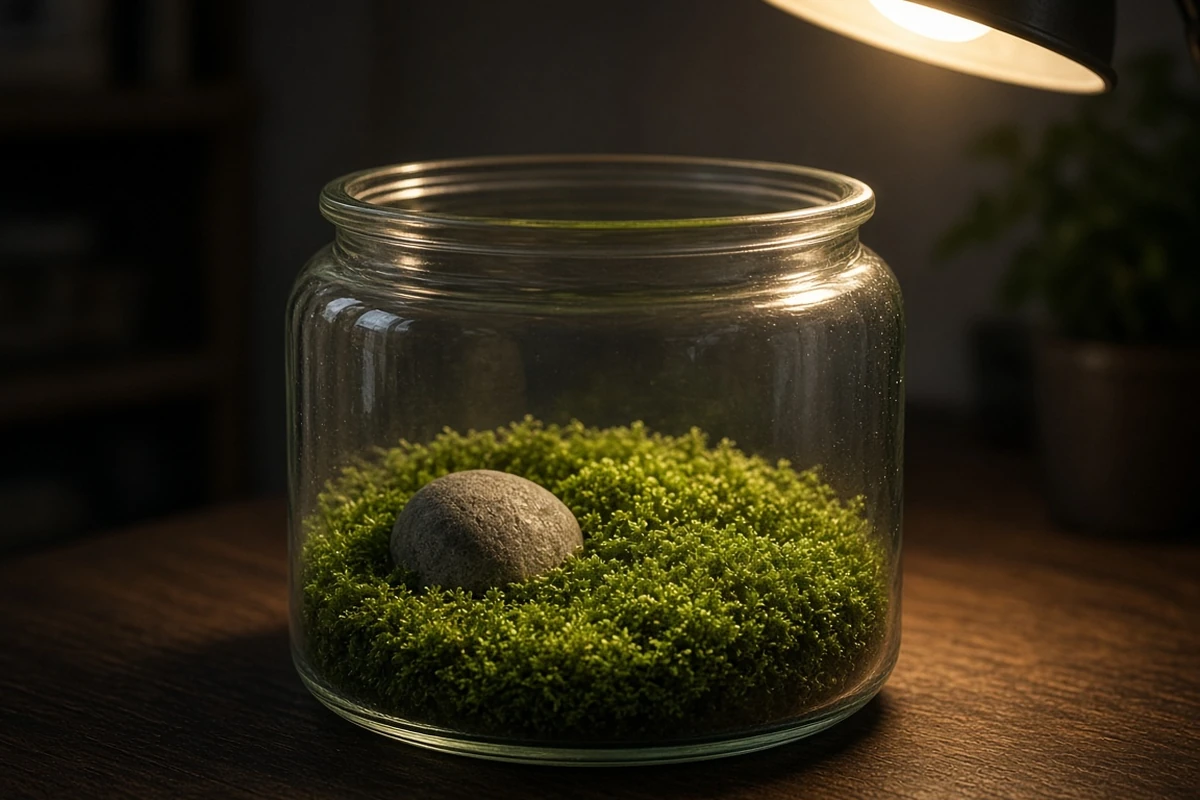
- Buy vigorous micranthemum from an aquarium shop.
- Separate stems into small clumps.
- Press them onto wet coir or vermiculite.
- Fill water to just below the surface of the media.
- Cover loosely to hold humidity.
- Place under bright light plus trim as stems spread.
Troubleshooting
Leaves melt after the move: new emersed leaves replace underwater ones, per UF/IFAS notes on heterophyllous plants. Fresh growth follows.
Slimy roots or a sour smell: stale water. Replace the water plus rinse the roots.
Brown patches under the mat: poor air flow under dense stems. Thin plus trim the mat.
For media plus water care see hydroponic in different mediums, caring for your hydroponic system plus aquarium water for cannabis. Kind Seed Co also stocks cannabis seeds.
Sources
- Micranthemum species (mudflower), UF/IFAS Center for Aquatic and Invasive Plants
- Freshwater ornamental aquatic plant production in Florida (FA251), UF/IFAS Extension
- Water gardens: planting aquatic plants (PlantTalk 1026), Colorado State University Extension
- Hydroponics for the home gardener, UC Master Gardeners of Orange County
FAQ
How fast does emersed micranthemum grow?
UF/IFAS notes micranthemum stems creep to 6 to 8 inches. Warmth plus bright light give quicker growth in a jar. Expect a pause after the move while stems replace underwater leaves with sturdier emersed ones, as UF/IFAS describes for amphibious aquatic plants.
Can emersed micranthemum go back underwater?
UF/IFAS notes micranthemum grows both on wet shorelines plus submersed, so it can make the switch. A plant moved back under water will likely shed emersed leaves plus grow new submersed ones. Make the change slowly plus give bright light while it adjusts.
Does micranthemum need fertilizer?
Very little. UF/IFAS notes high nutrient levels lead to algae, so it advises low nutrient water plus avoiding overfeeding. In a small jar or tray, a weak dose now and then is enough for micranthemum. Watch for green film on the media plus cut back if algae appears.
How often should the water be changed?
UC Master Gardeners advise checking nutrients, water level plus pH regularly in home hydroponics. Top up the water as it evaporates plus refresh it if it smells sour or turns cloudy. A full change every few weeks suits most micranthemum setups plus helps roots stay clean.
Where does micranthemum grow in the wild?
UF/IFAS notes micranthemum grows on wet shorelines plus submersed in water, with creeping stems 6 to 8 inches long plus leaves about 1/4 inch. It handles deep shade to bright sun. That range explains why it adapts to a humid jar plus forms a low mat of small leaves.