
Hydroponic Leaves Drooping? Check Oxygen plus Roots
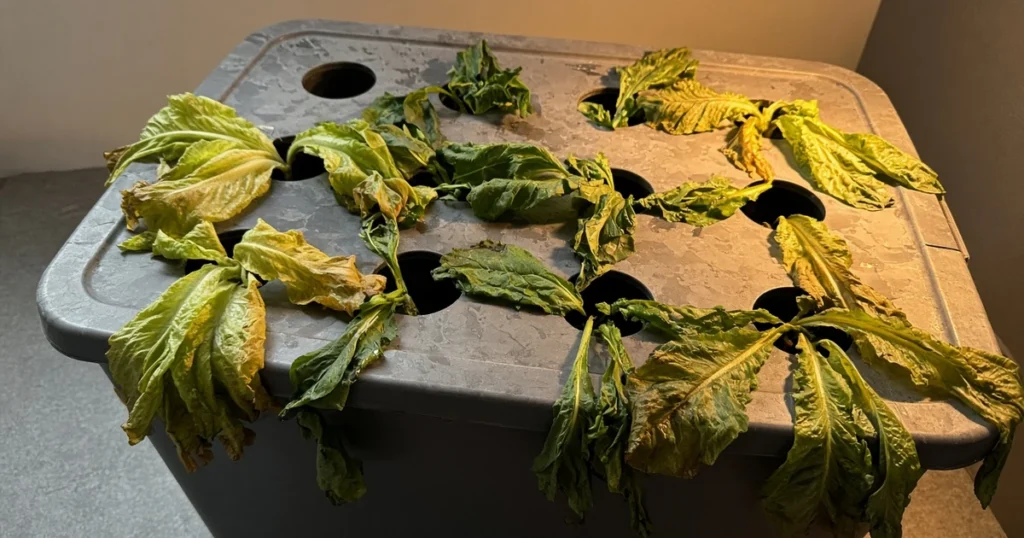
Hydroponic leaves drooping usually start at the roots, which may be short of oxygen, sitting in warm water or stressed by a rich solution. Colorado State University Extension notes root rot symptoms often begin as wilting. Check air, water temperature plus EC before you add anything.
The short answer
Drooping in hydroponics usually traces back to the roots. Colorado State University Extension notes Pythium symptoms start as wilting plus low oxygen favors disease. It lists a root zone of 68 to 72°F as optimum. Check the air pump, water temperature plus EC, then lift a plant plus look at the roots.
Why do hydroponic plants droop with roots in water?
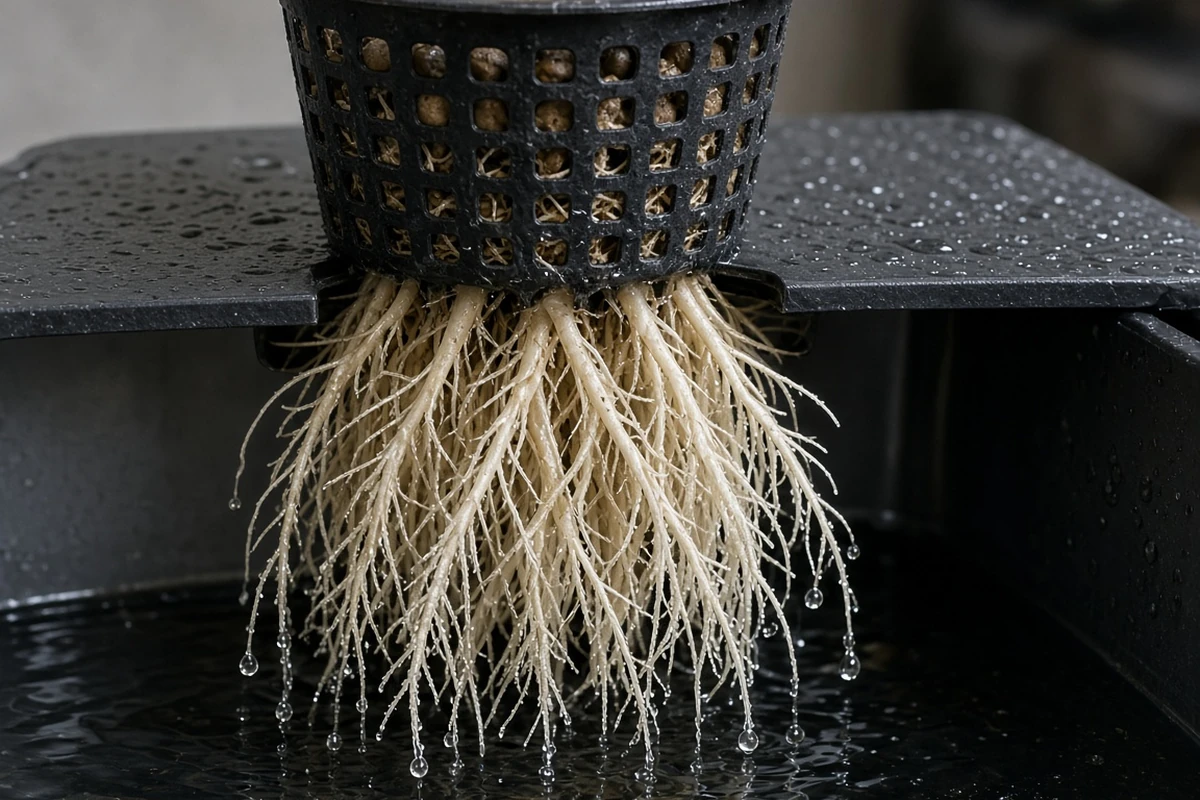
Roots in water still require oxygen. Colorado State University Extension notes low oxygen favors root disease plus Pythium symptoms start as wilting. Diseased roots go brown with sparse root hairs.
| Check | Problem sign | Fix |
|---|---|---|
| Air pump | No bubbles | Restore air flow |
| Water temperature | Above 72°F | Cool the reservoir |
| EC | Above the target range | Dilute with water |
| Roots | Brown plus soft | Change the solution plus clean |
Source: Colorado State University Extension plus University of Connecticut Extension.
How do oxygen plus water temperature affect roots?
University of Missouri Extension notes warmer water holds less oxygen plus low dissolved oxygen may inhibit growth. Colorado State University Extension lists 68 to 72°F as the optimum root zone. Oregon State University Extension notes a large water volume softens temperature swings.
Can a rich nutrient solution cause drooping?
Yes. UMass Amherst Extension notes high soluble salts can cause root injury plus wilting. University of Connecticut Extension advises diluting first when EC runs high, then adding only the nutrients that are not in range.
How to: step by step
- Check the air pump plus stones are running.
- Check water temperature.
- Read EC or ppm against the target range.
- Lift a plant plus check root color plus smell.
- Correct air, cooling or the solution first.
- Change the solution if roots look brown or slimy.
Troubleshooting
Droop with brown roots: root rot. Trim roots, cool the water plus change the solution.
Droop in a hot room: warm water. Chill the reservoir.
Droop after feeding: a rich solution. Add plain water.
For more on hydroponics see overwatering cannabis prevention plus diagnosis, caring for your hydroponic system plus how to deal with pythium root rot in cannabis plants. Kind Seed Co also stocks cannabis seeds.
Sources
- Root disease problems plus management in hydroponic systems (PlantTalk 2043), Colorado State University Extension
- Hydroponic production of edible crops: deep water culture (DWC) systems, Virginia Cooperative Extension
- Nutrient adjustment in hydroponics (e GRO Edible Alert 5.3), University of Connecticut Extension
- Hydro hints: deep water culture (EM 9455), Oregon State University Extension
FAQ
Do drooping leaves always mean overwatering?
Not in hydroponics, where roots sit in water by design. The question is whether they get enough oxygen. Colorado State University Extension notes low oxygen favors root disease. Check the air supply, water temperature plus root color before you change anything else in the system.
Should drooping plants be fed more?
No. Feeding more can raise salts further. UMass Amherst Extension notes high soluble salts can cause wilting plus root injury. Read EC first plus compare it with the crop target.
What water temperature suits hydroponic roots?
Colorado State University Extension lists a root zone of 68 to 72°F as optimum. Warmer water holds less oxygen, so a reservoir that climbs past these ranges in a hot room can leave roots short of air.
How often should I check EC?
University of Connecticut Extension notes in house monitoring of pH plus EC lets growers detect trends before problems arise. Virginia Cooperative Extension advises checking two to three times each week at a minimum. A steady log shows whether a rich solution lines up with the day the leaves began to droop.
What do rotting roots look like?
Colorado State University Extension notes roots with Pythium turn brown with sparse root hairs plus may be soft or stunted. Clean roots in the same system look white or cream. Trim soft brown roots, change the solution plus clean the system if most of the root mass looks this way.



