Hydroponic Parsley Wilting: Warm Roots Plus Low Oxygen
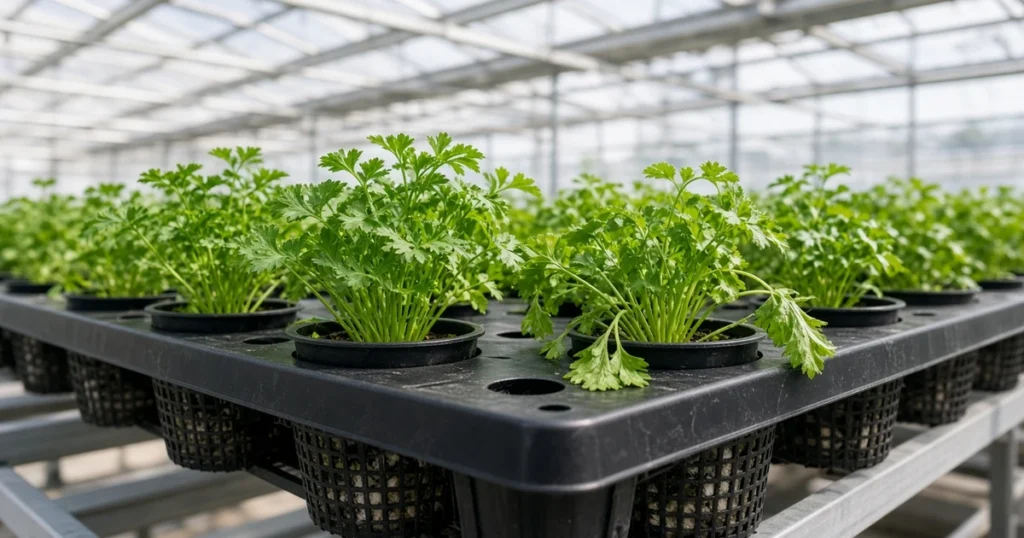
Hydroponic parsley wilting usually points to warm water, low oxygen around the roots or root rot that follows. Colorado State University Extension explains that low oxygen in the nutrient solution favors root disease. It lists 68 to 72F as the optimum root zone temperature. Inspect the roots, then cool the water plus improve aeration.
The short answer
Parsley prefers cool conditions. NC State Extension notes that it can wilt in hot humid areas. In hydroponics, Colorado State University Extension links root rot to low oxygen plus warm root zones, with wilting as an early sign. Aerate the solution, hold roots near 68 to 72F plus give plants bright light in a cool room.
How do warm roots make parsley wilt?
NC State Extension notes that parsley grows better in cool summer areas plus can wilt in the hot humid deep South. University of Illinois Extension adds that parsley grows well with high light in a cool location.
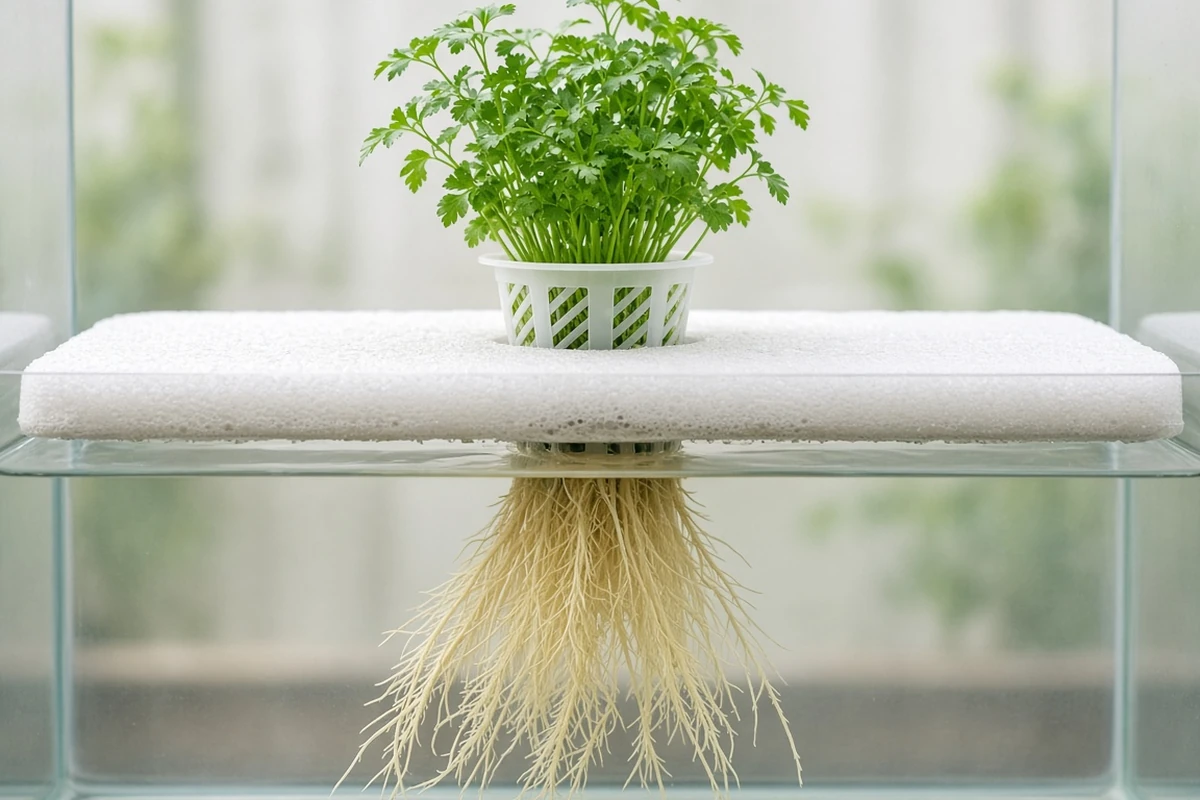
Colorado State University Extension lists 68 to 72F as the optimum root zone temperature in hydroponic systems. Roots warmer than that range face stress.
Most root pathogens are opportunists that cause the most damage on plants that are already stressed, the same source explains. Warm roots invite disease.
Why does low oxygen matter?
Low oxygen levels in the nutrient solution favor disease, Colorado State University Extension notes. Its advice is to increase dissolved oxygen through proper aeration.
The same source suggests a balanced nutrient solution to avoid over fertilizing. It also advises regular checks of total soluble salts plus pH.
Begin each crop with a clean system. The source lists clean trays, rafts, beds plus troughs as a first step against root disease.
| Sign | Likely cause | Fix |
|---|---|---|
| Wilting with brown sparse roots | Root rot such as Pythium | Raise dissolved oxygen plus check roots |
| Wilting in a warm room | Heat stress | Move plants to a cool spot |
| Roots soft or stunted | Root disease on stressed plants | Hold the root zone near 68 to 72F |
Source: Colorado State University Extension plus NC State Extension.
How does root rot look?
Colorado State University Extension names root rot caused by Pythium as the most common root disease in hydroponic systems. Fusarium, Phytophthora plus Rhizoctonia are occasional problems.
Symptoms are very similar among these diseases. They are usually first noticed as wilting or tip burn on leaves.
The root system turns brown with sparse root hairs and can be soft or stunted. Parsley also has a taproot, which NC State Extension advises disturbing little when transplanting.
How to: step by step
- Lift a plant plus check for brown roots with sparse root hairs.
- Measure the root zone temperature against 68 to 72F.
- Boost aeration to lift dissolved oxygen.
- Check total soluble salts plus pH.
- Shift parsley to a cool, bright spot.
- Handle the taproot gently when moving plants.
Troubleshooting
Brown soft roots: root rot. Aerate plus cool the root zone.
Wilting in a warm room: heat. Cool the space.
Wilting after a pump stop: low oxygen. Restore aeration.
For related reading see how to deal with pythium root rot in cannabis plants, hot pots root zone heat in cannabis containers plus caring for your hydroponic system. Kind Seed Co also stocks cannabis seeds.
Sources
- Root disease problems plus management in hydroponic systems (PlantTalk 2043), Colorado State University Extension
- Parsley, University of Illinois Extension
- Parsley, UF/IFAS Gardening Solutions
- Petroselinum crispum (parsley), NC State Extension Gardener Plant Toolbox
FAQ
Can wilted parsley recover?
It depends on the roots. Colorado State University Extension notes that root rot leaves roots brown with sparse root hairs, sometimes soft or stunted. If roots are still white, cooling the water plus raising aeration may help. Plants with badly rotted roots are less likely to come back.
How long does parsley last in hydroponics?
NC State Extension describes parsley as a hardy biennial usually grown as an annual. UF/IFAS Gardening Solutions notes that it often grows as a cool season annual in Florida. Snipping the outside stalks during harvest gives continuous growth for as long as plants stay vigorous.
Is flat or curly parsley easier?
Both grow the same way. University of Illinois Extension lists two distinct types, moss curled plus flat leaf. UF/IFAS adds a third, root parsley. All prefer moist, well drained conditions with high light plus a cool location, so the choice comes down to preference.
Does parsley need cool water?
Cool conditions suit parsley. NC State Extension notes it grows better in cool summer areas plus can wilt in hot humid regions. For hydroponics, Colorado State University Extension lists 68 to 72F as the optimum root zone temperature, which is a useful target for parsley roots.
How long do parsley seeds take to sprout?
UF/IFAS Gardening Solutions notes that parsley seeds can take 7 to 12 days to germinate. Soaking seeds in water overnight before planting can improve success, a step University of Illinois Extension also suggests. NC State Extension adds that seedlings are easier because the germination period is long.