Hydroponic Pepper Leaves Falling Off? Roots plus Nutrients
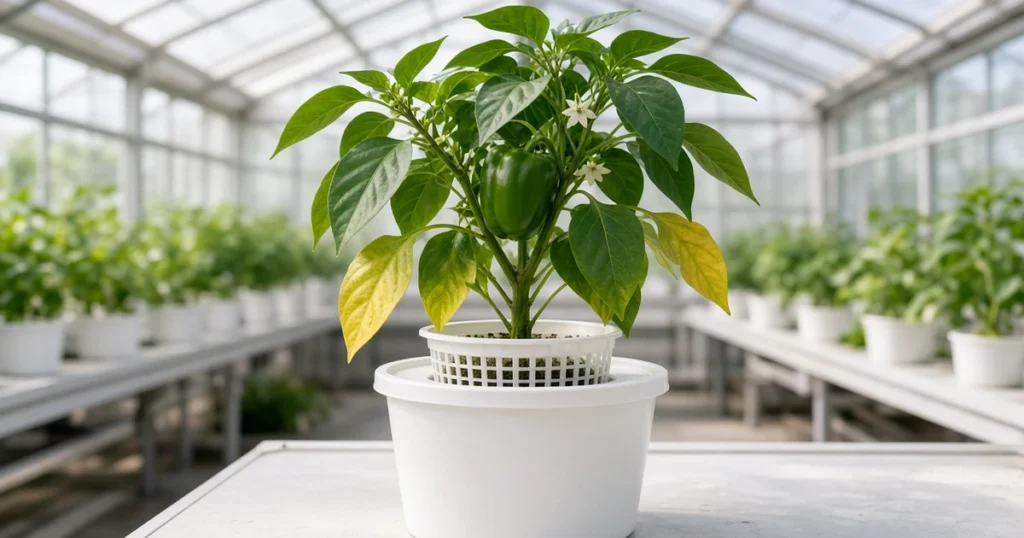
Hydroponic pepper leaves falling off usually point to the root zone. Colorado State University Extension notes root rot from Pythium is the most common hydroponic root disease, first seen as wilting or tip burn, with brown roots plus sparse root hairs. Low oxygen favors it, plus 68 to 72 F root zones are optimum.
The short answer
Pull a plant plus look at the roots. Brown roots with few hairs suggest rot, so raise aeration plus hold the root zone near 68 to 72 F. Then watch EC plus pH. University of Connecticut Extension lists a typical pepper EC of 1.8 in open systems plus 1.3 in closed systems, with pH checks daily or every other day.
Why do warm roots cause leaf drop?
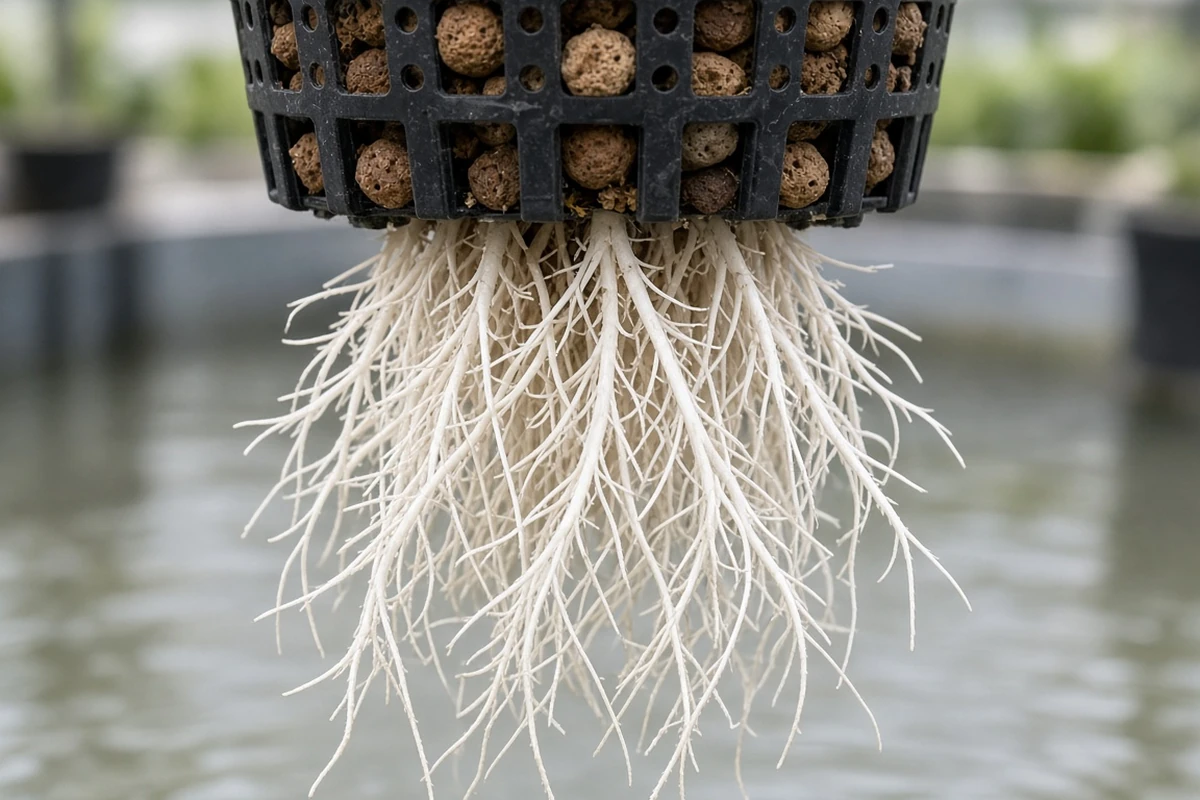
Colorado State University Extension notes low oxygen in the nutrient solution favors root disease, plus suggests a root zone of 68 to 72 F. Diseased roots turn brown with sparse hairs, then leaves wilt or burn at the tips.
| Factor | Target | Source |
|---|---|---|
| Root zone temperature | 68 to 72 F optimum | Colorado State University Extension |
| Dissolved oxygen | Raise with aeration | Colorado State University Extension |
| Pepper EC, open system | 1.8 | University of Connecticut Extension |
| Pepper EC, closed system | 1.3 | University of Connecticut Extension |
| pH checks | Daily or every other day | University of Connecticut Extension |
| Recycled solution analysis | Every 7 to 14 days | University of Connecticut Extension |
Source: Colorado State University Extension plus University of Connecticut Extension.
How do nutrient swings affect peppers?
University of Connecticut Extension notes plants respond rapidly to good plus bad fertilizer choices, plus EC shows overall nutrient level but not which elements are missing or high. When EC falls outside the target range in a small system, it suggests replacing the solution with a fresh mix. Utah State University Extension notes over fertilizing peppers drives excess foliage.
Which deficiencies drop older leaves?
UC Statewide IPM notes nitrogen deficient plants turn older leaves uniformly pale green to yellowish, grow slowly plus may drop foliage prematurely. It notes zinc deficiency can also make older leaves drop early. UC IPM adds that anything harming roots, such as waterlogging or salt damage, can trigger deficiency symptoms.
How to: step by step
- Lift a plant plus examine the roots.
- Clip brown, soft roots.
- Boost aeration in the reservoir.
- Hold the root zone near 68 to 72 F.
- Check pH daily or every other day plus watch EC.
- Replace a small reservoir with fresh solution when EC drifts.
Troubleshooting
Lower leaves yellow then drop: possible nitrogen shortage. UC IPM notes older leaves fade first.
Many leaves drop with brown roots: root rot. Colorado State University Extension suggests aeration plus a 68 to 72 F root zone.
Leaves drop as EC drifts: off target solution. University of Connecticut Extension suggests replacing a small reservoir with fresh solution.
For related reading see caring for your hydroponic system, hot pots root zone heat in cannabis containers plus how to spot 8 common cannabis plant deficiencies by leaf symptoms. Kind Seed Co also stocks cannabis seeds.
Sources
- Root disease problems and management in hydroponic systems (PlantTalk 2043), Colorado State University Extension
- How to grow peppers in your garden, Utah State University Extension
- Common nutrient deficiency symptoms, UC Statewide IPM Program
- Adjusting nutrients in hydroponics (e GRO Alert 5.3), University of Connecticut Extension
FAQ
What root temperature suits hydroponic peppers?
Colorado State University Extension lists 68 to 72 F as the optimum root zone temperature for limiting root disease in hydroponic systems. It notes low dissolved oxygen in the nutrient solution also favors disease, so proper aeration matters as much as temperature. Brown roots with sparse hairs signal a problem.
What EC do hydroponic peppers need?
University of Connecticut Extension lists a typical pepper EC of 1.8 mS/cm in open systems plus 1.3 in closed systems, noting actual EC may vary by cultivar or crop stage. It adds that EC reflects overall nutrient level but does not show which elements are missing or present at high levels.
How often should pH be checked?
University of Connecticut Extension suggests measuring plus adjusting nutrient solution pH daily or every other day. It notes regular meter readings of pH plus EC let growers spot trends plus irregularities before problems arise. Colorado State University Extension also advises regular checks of soluble salts plus pH.
How do I clean a system after root rot?
Colorado State University Extension suggests starting with a clean system by cleaning trays, rafts, beds plus troughs before replanting. It notes low dissolved oxygen in the nutrient solution favors root disease, so aerate the fresh solution well. Brown roots with sparse hairs signal the problem has returned.
When should a recycled solution be analyzed?
University of Connecticut Extension advises sending recycled nutrient solution for complete analysis every 7 to 14 days, or right away when plants look abnormal. It suggests diluting first if needed, then adding only the nutrients out of range, plus topping off with fresh solution once the mix is balanced.