
Hydroponic Roots Turning Orange: Stain or Root Decline
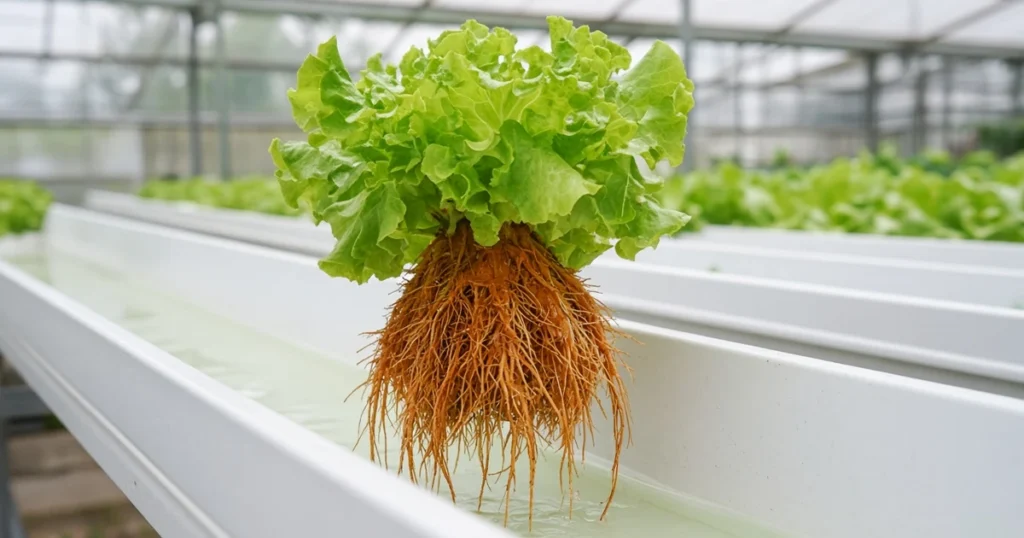
Hydroponic roots turning orange can be a color change from the nutrient solution or an early sign of decline. University of Missouri Extension notes that some fertilizers contain a dye that changes the color of the water. Colorado State University Extension describes diseased roots as brown with sparse root hairs, sometimes soft or stunted.
The short answer
Check texture before color. Colorado State University Extension notes that diseased hydroponic roots turn brown with sparse root hairs and can be soft or stunted, often with wilting or tip burn above. Firm roots with plenty of root hairs are less of a worry. Some fertilizers carry a dye, so check what is in the solution too.
Can the solution change root color?
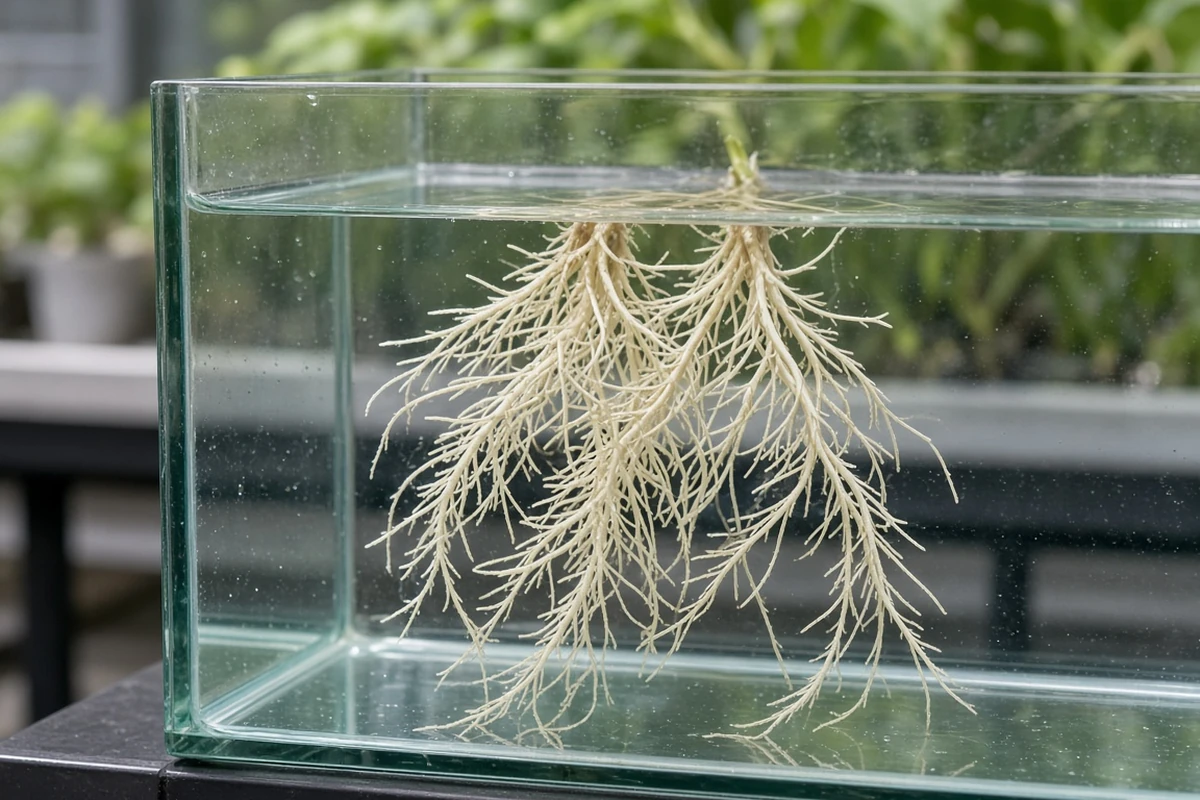
University of Missouri Extension notes that some fertilizer formulations come with a dye that changes the color of the water. The dye signals that a fertilizer is mixed.
The same guide explains that mixing the wrong formulations together can form insoluble particles that sink to the bottom of the tank. Calcium reacts with phosphorus plus sulfate to make them.
Missouri Extension lists source water limits of iron under 1 ppm plus manganese under 1 ppm. A water analysis reveals which minerals reach the roots.
What do declining roots look like?
Colorado State University Extension names root rot caused by Pythium as the most common root disease in hydroponic systems. Fusarium, Phytophthora plus Rhizoctonia are occasional problems.
Symptoms are very similar among these diseases. They are usually first noticed as wilting or tip burn on leaves.
The root system turns brown with sparse root hairs. Roots may also turn soft or stunted. Soft orange roots that lose root hairs fit this pattern better than a simple tint does.
| Root sign | What it suggests | Next step |
|---|---|---|
| Color change but firm with root hairs | Tint from the solution is possible | Check the fertilizer for dye |
| Brown with sparse root hairs | Root rot such as Pythium | Raise dissolved oxygen |
| Soft or stunted roots | Root disease | Hold the root zone near 68 to 72F |
Source: Colorado State University Extension plus University of Missouri Extension.
What conditions lead to decline?
Low oxygen in the nutrient solution favors disease, Colorado State University Extension explains. Its target root zone temperature is 68 to 72F.
UF/IFAS Extension notes that the solution should be monitored for temperature plus held between 65 and 80F in small lettuce systems. Virginia Cooperative Extension calls meters for EC, pH plus dissolved oxygen necessary for deep water culture.
Missouri Extension adds that warmer water holds less oxygen. Water chillers can cool the solution plus raise the oxygen it holds.
How to: step by step
- Squeeze the roots for firmness plus look for root hairs.
- Check whether the fertilizer includes a dye.
- Measure pH, EC plus dissolved oxygen with meters.
- Check solution temperature against the 68 to 72F root zone target.
- Add aeration if dissolved oxygen runs low.
- Start the next crop in a clean system.
Troubleshooting
Orange but firm roots: likely a tint. Watch for change.
Orange plus soft roots: decline. Cool plus aerate.
Roots with few root hairs: root rot. Raise oxygen plus check temperature.
For related reading see how to deal with pythium root rot in cannabis plants, cannabis root hairs plus caring for your hydroponic system. Kind Seed Co also stocks cannabis seeds.
Sources
- Root disease problems plus management in hydroponic systems (PlantTalk 2043), Colorado State University Extension
- Hydroponic production of crops: deep water culture (DWC) systems (SPES 464), Virginia Cooperative Extension
- Growing lettuce in small hydroponic systems (HS1422), UF IFAS Extension
- Hydroponic nutrient solutions (G6984), University of Missouri Extension
FAQ
Do tinted roots harm plants?
A color change alone is not listed as a disease sign. Colorado State University Extension describes diseased roots as brown with sparse root hairs, sometimes soft or stunted, often with wilting or tip burn above. If roots stay firm with plenty of root hairs, watch them closely before making changes.
What do diseased roots look like?
Colorado State University Extension notes that the root system of a diseased hydroponic plant turns brown with sparse root hairs. Roots may also be soft or stunted. The first signs above the waterline are usually wilting or tip burn on leaves, and symptoms look alike across root diseases.
How warm should the solution be?
Colorado State University Extension lists 68 to 72F as the optimum root zone temperature. UF/IFAS Extension notes that solution temperature in small lettuce systems should be held between 65 and 80F. University of Missouri Extension adds that warmer water holds less oxygen.
Why does dissolved oxygen matter for roots?
Low oxygen levels in the nutrient solution favor disease, according to Colorado State University Extension. University of Missouri Extension lists dissolved oxygen over 6 ppm as optimum. Virginia Cooperative Extension notes that a venturi or an air pump with a diffuser can raise oxygen in deep water culture.
Can roots recover after rot?
Colorado State University Extension notes that root rot management relies heavily on encouraging vigorous plant growth. Most root pathogens hit stressed plants hardest. Improving oxygen plus root zone temperature helps new roots form, though roots that are already soft or stunted may not recover.



