
Hydroponic Stems Turning Brown: Woody Growth or Stem Rot?
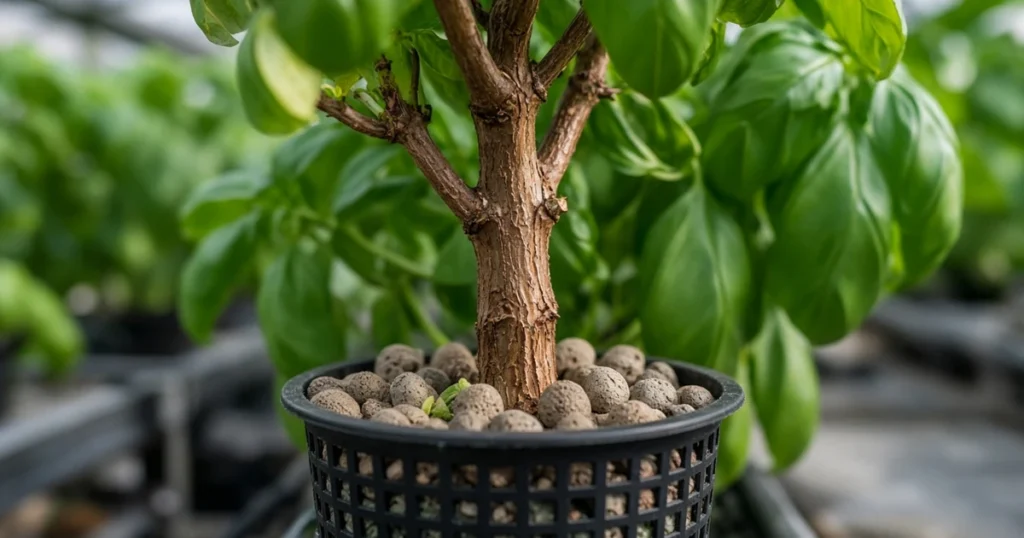
Hydroponic stems turning brown are often just maturing into woody tissue, which stays firm plus dry. NC State Extension notes secondary growth is often present in dicot plants such as tomatoes plus beans. Colorado State University Extension notes root plus crown rot in hydroponics can leave tissue brown plus soft instead.
The short answer
Hydroponic stems turning brown are normal when the brown tissue is firm plus dry on an older plant. NC State Extension notes many dicot plants form secondary growth as stems mature. Colorado State University Extension notes Fusarium root plus crown rot shows brown, soft roots plus wilting. Press the stem to tell which you have.
How does normal woody growth look?
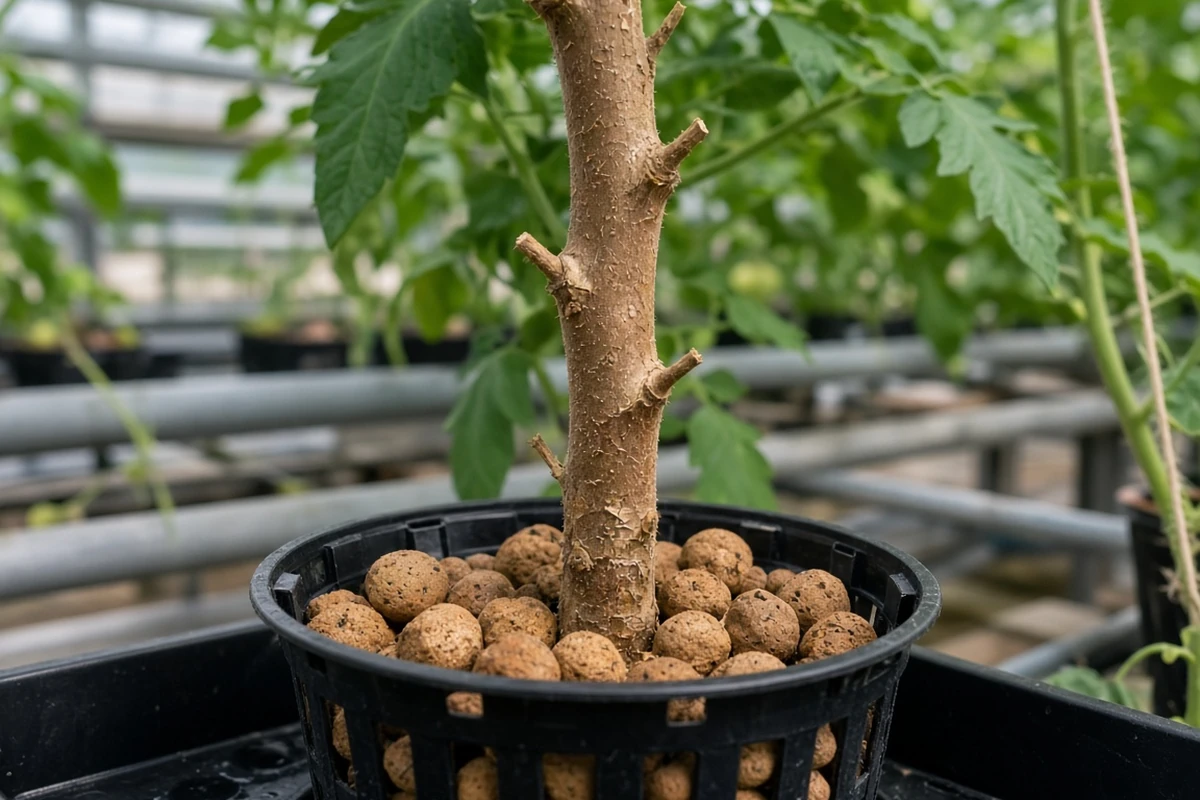
NC State Extension notes secondary growth is often present in dicots, which thickens stems with age. The stem base turns tan or brown but stays firm, dry plus upright.
| Feature | Normal woody stem | Stem rot |
|---|---|---|
| Feel | Firm plus dry | Soft |
| Plant top | Upright | Wilting or tip burn |
| Roots | No change | Brown with sparse root hairs |
Source: NC State Extension plus Colorado State University Extension.
What are the signs of stem rot at the base?
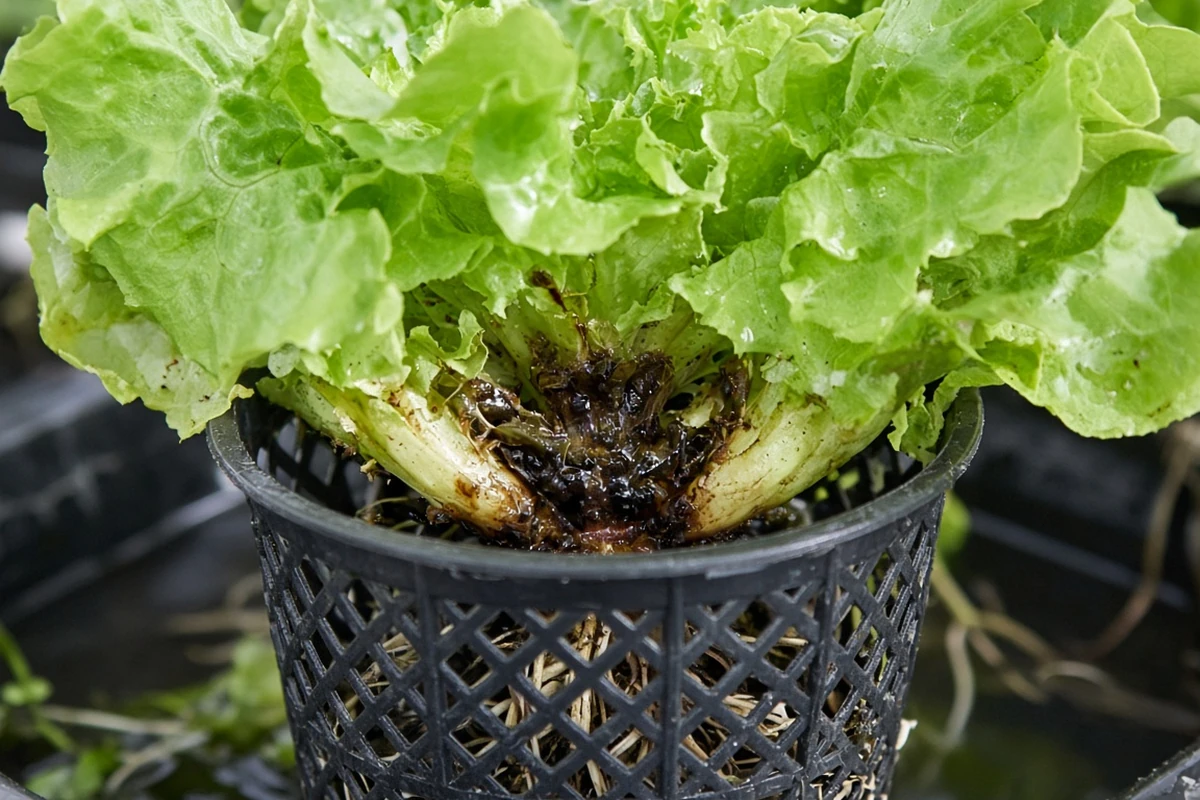
Colorado State University Extension notes Fusarium root plus crown rot, Phytophthora plus Rhizoctonia occur in hydroponics. Symptoms often begin as wilting or tip burn on leaves. Roots turn brown with sparse root hairs plus may be soft or stunted.
What spreads disease in a hydroponic system?
Colorado State University Extension notes Pythium is the most common root disease in hydroponics. It advises stopping disease organisms from entering the system plus starting with clean trays, rafts, beds plus troughs. Shared solution can spread problems from plant to plant.
How to: step by step
- Find where the brown color starts.
- Press the stem lightly to check firmness.
- Check roots for color plus smell.
- Remove plants with soft, dark stem bases.
- Clean plus refill the system if rot is found.
- Hold the stem base above the water line.
Troubleshooting
Firm, tan stem base on an older plant: normal woodiness. Nothing to do.
Soft, dark stem at the water line: rot. Remove the plant plus clean the system.
Brown streaks with wilting: disease in the stem. Pull the plant, then scrub the system clean.
For related reading see caring for your hydroponic system, how to deal with pythium root rot in cannabis plants plus thick cannabis stems. Kind Seed Co also stocks cannabis seeds.
Sources
- Root disease problems and management in hydroponic systems (PlantTalk 2043), Colorado State University Extension
- Extension Gardener Handbook, chapter 3: Botany, NC State Extension
- Hydroponic production of edible crops: deep water culture (DWC) systems (SPES 464), Virginia Cooperative Extension
- Hydroponics at home, University of Illinois Extension
FAQ
Do all plants get woody stems?
No. NC State Extension notes secondary growth is often present in dicots but absent in monocots such as corn, grasses plus onions. Tomatoes, peppers plus basil can firm up with age, while lettuce plus other short crops are usually harvested before stems turn woody.
Can stem rot spread to other plants in the system?
It can. Colorado State University Extension notes Pythium is the most common root disease in hydroponic systems plus that shared solution reaches every plant. Remove affected plants early, then clean plus refill the system. Watch the remaining plants for wilting or brown roots over the next week.
Should the stem base sit in water?
No. In most systems roots hang in the solution while the stem base sits in the net pot above it. A stem base that stays wet is more prone to soft tissue. Set the water line so roots reach it while the crown of the plant stays dry.
Does warm water make stem rot worse?
Colorado State University Extension notes low oxygen in the nutrient solution favors disease plus lists 68 to 72F as the optimum root zone temperature. Warm water holds less oxygen, so roots plus crowns face more stress. Hold the solution near that range plus aerate it well.
Why start with a clean system?
Colorado State University Extension advises preventing disease organisms from entering the growing system. It advises starting with clean trays, rafts, beds plus troughs. Cleaning between crops removes buildup where rot organisms can linger, so new plants start without carrying over a problem from the last crop.



