Hydroponic Water Turning Brown: Causes Plus Fixes
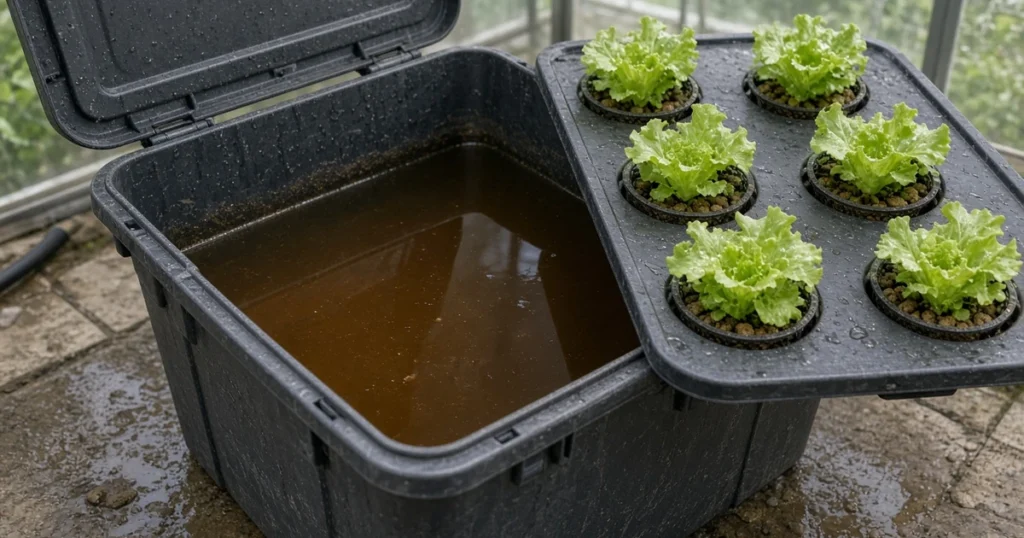
Hydroponic water turning brown is a cue to look at the roots, the reservoir plus the media. Colorado State University Extension notes that roots with Pythium root rot turn brown with sparse root hairs. Algae plus built up plant debris can also cloud a system. Check the roots first, then clean the reservoir.
The short answer
Brown water usually goes with a root or cleaning problem. Pull a plant plus look at its roots. Brown, soft or stunted roots point to root rot. A slimy film on surfaces points to debris plus algae. University of Minnesota Extension advises changing the nutrient solution after every crop cycle and cleaning the system often.
What makes hydroponic water brown?
Colorado State University Extension notes that Pythium is the most common root disease in hydroponic systems. Fusarium, Phytophthora plus Rhizoctonia appear occasionally. Low oxygen in the solution favors these diseases. University of Minnesota Extension notes that a system can turn slimy like a fish tank if it is not cleaned regularly. It notes overfeeding can promote algae on roots.
| Cause | Sign | Fix |
|---|---|---|
| Root rot | Brown, soft roots with sparse root hairs | Raise oxygen plus hold root zone at 68 to 72 degrees F |
| Algae | Green or brown growth in channels plus tubing | Block light with opaque parts plus a lid |
| Debris buildup | Slimy film on surfaces | Scrub parts between crop cycles |
| Old solution | Water left in place too long | Change it after every crop cycle |
Source: Colorado State University Extension plus University of Minnesota Extension.
How do sound plus rotting roots look?
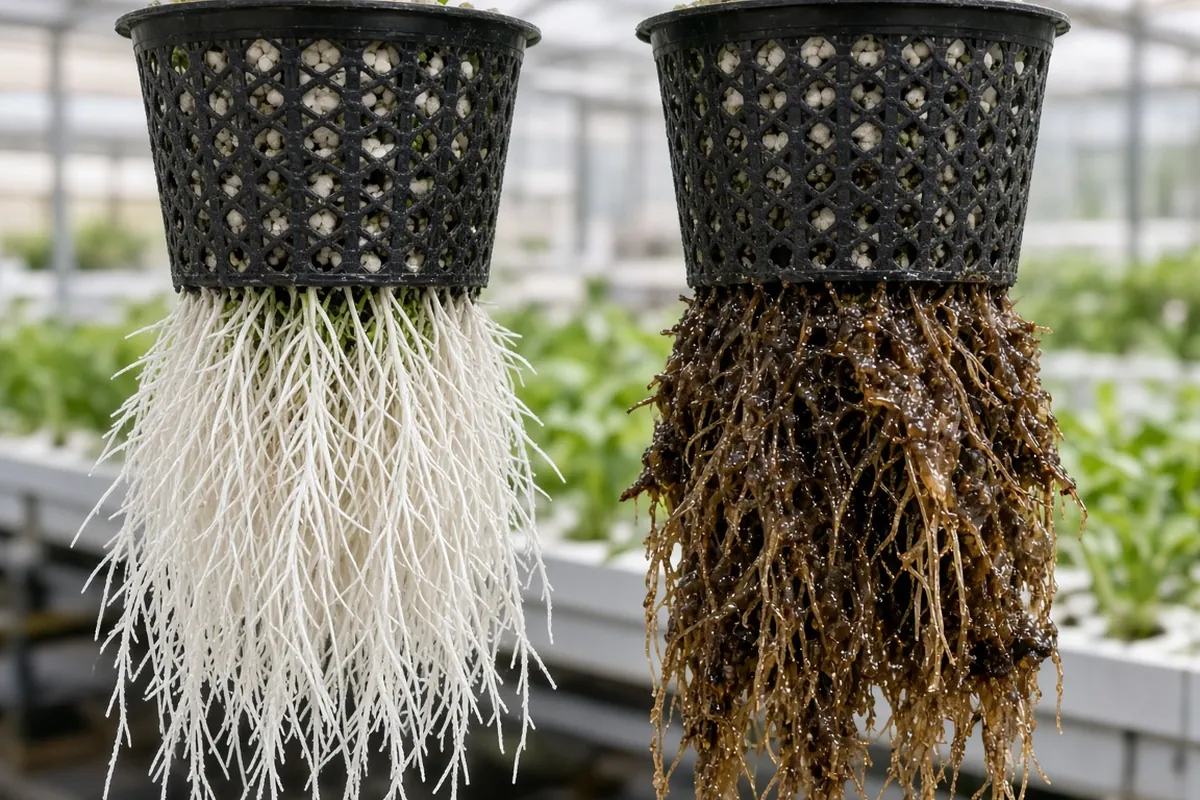
Colorado State University Extension notes that diseased roots turn brown with sparse root hairs. They may also be soft or stunted. Early signs often show above ground as wilting or tip burn on leaves. University of Minnesota Extension notes roots need oxygen, so only part of each net pot should sit in the water. Excess water can lead to root rot.
How should the system be cleaned?
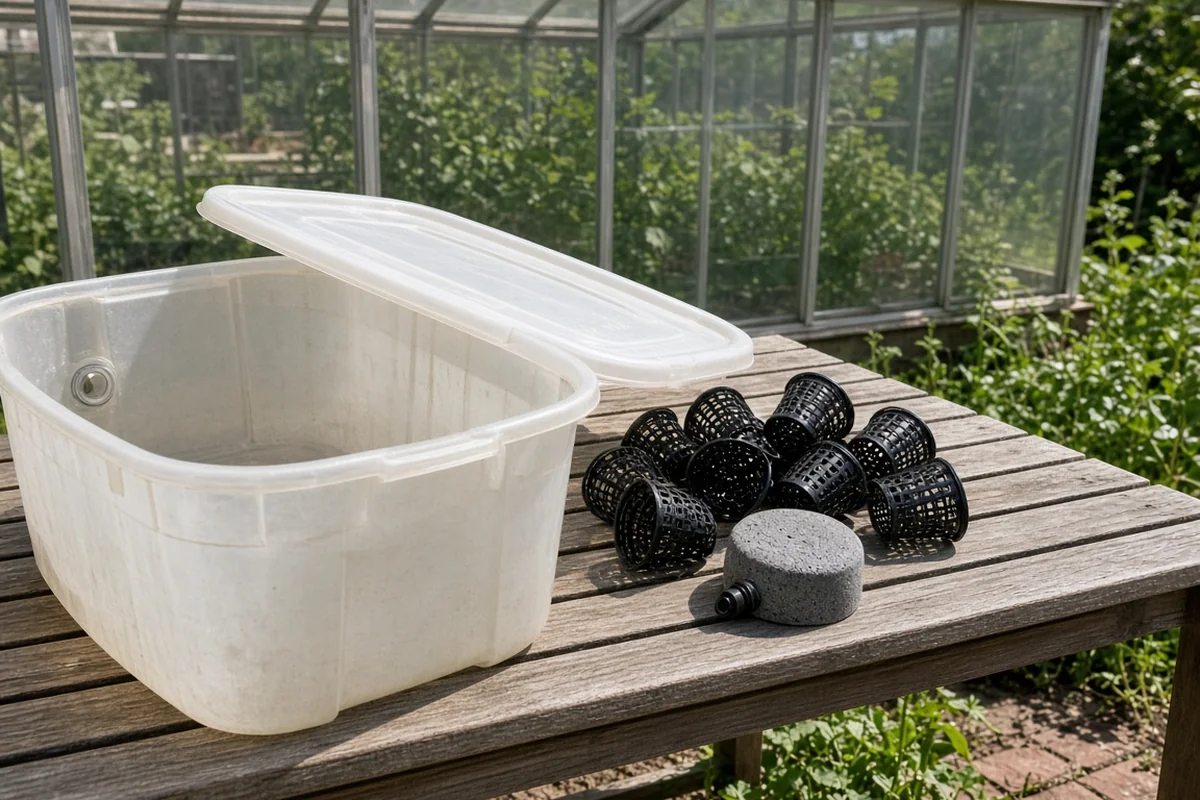
University of Minnesota Extension advises a thorough scrub of all growing areas with warm soapy water between growing cycles. It advises spraying down pumps to remove plant debris or algae. University of Vermont Extension notes that cleaning means physically removing dirt plus debris, and that a surface must be clean before any sanitizing step works. University of Illinois Extension notes algae need water, sunlight plus nutrients, so limiting light plus excess feed slows them.
How to: step by step
- Sniff the water plus inspect the roots.
- Remove brown, slimy or dead roots and any dead plants.
- Drain the reservoir plus flush the lines.
- Scrub trays, channels plus the reservoir with warm soapy water.
- Refill with fresh nutrient solution.
- Cover the reservoir plus use opaque parts to block light.
Troubleshooting
Brown water plus brown, soft roots: root rot. Clean the system, add aeration plus cool the root zone.
Green or brown film in channels: algae from light plus excess nutrients. Block light plus avoid overfeeding.
Slime on surfaces: debris buildup. Scour all parts between crops.
For related reading see how to deal with pythium root rot in cannabis plants, caring for your hydroponic system plus hot pots root zone heat in cannabis containers. Kind Seed Co also stocks cannabis seeds.
Sources
- Root disease problems and management in hydroponic systems (PlantTalk 2043), Colorado State University Extension
- Small scale hydroponics, University of Minnesota Extension
- Cleaning and sanitizing in hydroponic and aquaponic operations, University of Vermont Extension
- Problems: algae and mosquitoes, University of Illinois Extension
FAQ
Is brown hydroponic water always root rot?
No. Brown water is a cue to check, not a diagnosis. Colorado State University Extension notes that rotting roots turn brown with sparse root hairs. If the roots look white plus firm, look at algae or debris instead. University of Minnesota Extension notes systems turn slimy when they are not cleaned regularly.
How often should a reservoir be cleaned?
University of Minnesota Extension advises changing the nutrient solution after every crop cycle, or more often if the crop grows slowly. It advises a thorough scrub of growing areas with warm soapy water between cycles. Spray down pumps to clear debris or algae, then refill with fresh solution.
Can light in the reservoir cause brown water?
Light can feed algae. University of Minnesota Extension advises reducing light that reaches the growing areas plus the reservoir by using opaque materials and a lid. University of Illinois Extension notes algae need water, sunlight plus nutrients to grow, so cutting light is one of the simplest ways to slow them down.
Does water temperature matter?
Yes. Colorado State University Extension notes the optimum root zone temperature is 68 to 72 degrees F. It notes low oxygen in the solution favors root disease, so aeration matters. University of Minnesota Extension notes warmer temperatures can support algae or bacterial growth in channel systems, which adds to dirty water.
Can too much fertilizer cause algae?
Yes. University of Minnesota Extension notes overfertilizing hydroponic crops can promote algae growth on roots plus in channel systems. Colorado State University Extension advises a balanced nutrient solution to avoid overfeeding. Mix solution as the maker directs, change it each crop cycle, plus look for green growth wherever light reaches the water.