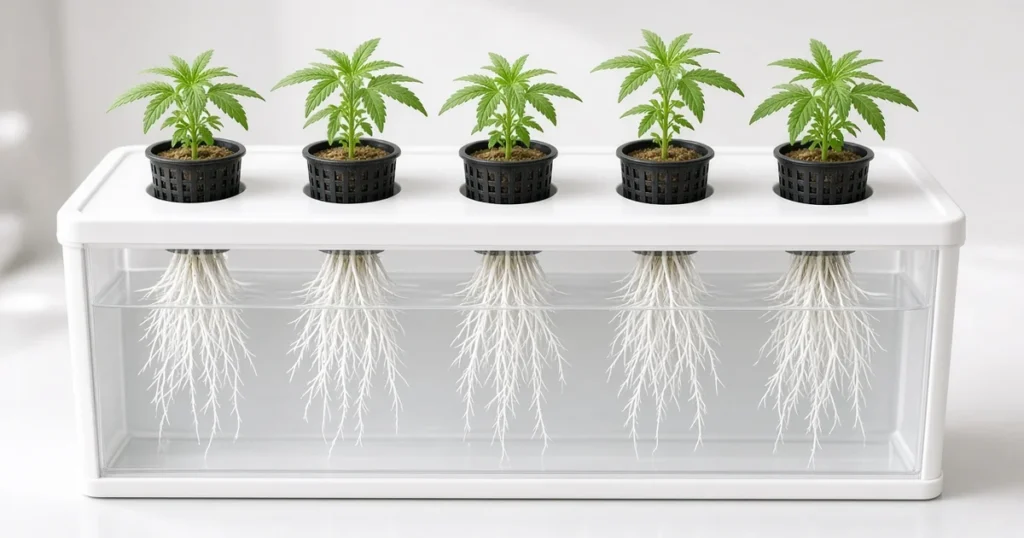
Oyster Shell Flour for Cannabis: Calcium and Soil pH
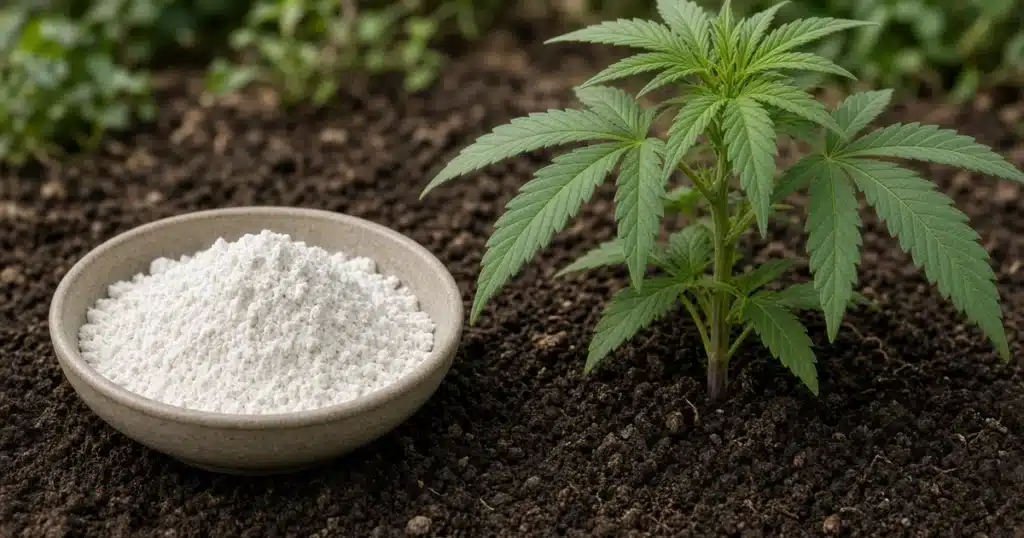
Quick answer: Oyster shell flour is oyster shell ground into a fine powder. It is mostly calcium carbonate, so it supplies calcium and works as a liming material that raises soil pH over time. An Iowa State Extension chart lists oyster shells at 33.5 percent calcium, and Oregon State Extension says shells must be ground as fine as regular limestone to work well. For cannabis, oyster shell flour is useful in acidic soil or in mixes that need a gentle pH buffer. Shell flour cannot quickly fix a sudden calcium shortage in a plant that already shows signs.
What Is Oyster Shell Flour?
Oyster shells are almost entirely calcium carbonate, the same compound found in agricultural limestone. Seafood processors and shell suppliers dry, clean and grind the shells. Coarse grades end up as poultry grit or decorative path material. Only the finest grades, ground to the texture of flour, go into bags for soil.
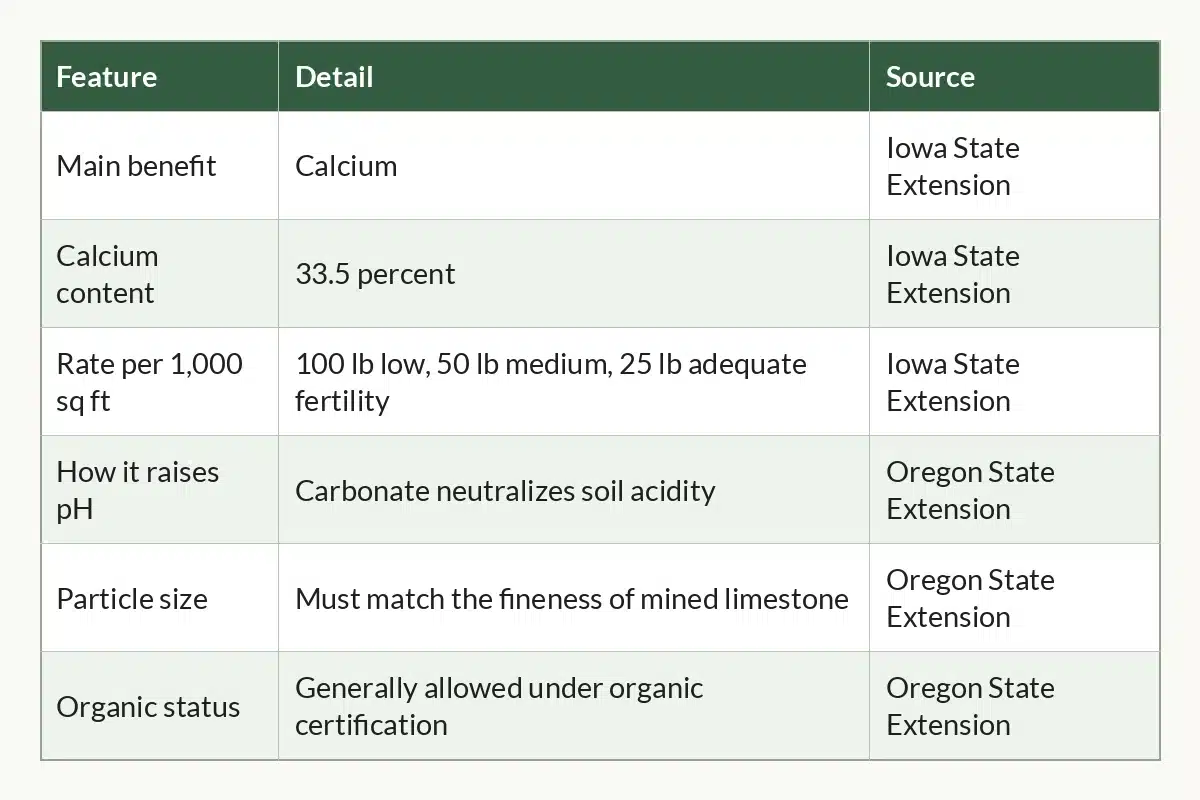
The Iowa State Yard and Garden table of organic fertilizers lists oyster shells with calcium as the primary benefit and an analysis of 33.5 percent calcium. That places them in the same family as aragonite and calcitic limestone, which the same table also counts as calcium sources and pH balancers.
Shell flour is bright white to pale gray and feels like baking flour between the fingers. It does not dissolve in water, which is why it acts slowly and steadily in soil rather than all at once. Organic growers tend to favor oyster shell because it comes as a natural byproduct. Oregon State notes in a publication on applying lime to raise soil pH that mined limestone, dolomite, oyster shell and similar natural liming products are usually accepted for certified organic growing. Growers who sell certified produce should still confirm with their certifier.
Oyster shell flour conditions soil pH more than it feeds, a theme our page on soil amendments versus fertilizers covers.
How Does Oyster Shell Flour Change Soil pH?
Lime raises pH because of the carbonate, not the calcium. The Oregon guide explains that liming materials contain a base such as carbonate that reacts with soil acidity and neutralizes it. Calcium alone does not raise pH. Gypsum, for example, contains calcium but no carbonate, so it leaves pH unchanged.
Particle size controls speed. Oregon State shows that very fine lime passing a 100 mesh screen can change pH within weeks or months, while coarse lime of 8 to 20 mesh reacts much more slowly. The guide states plainly that oyster shell only works when it is ground as fine as standard mined limestone. Grit sized pieces barely react in a growing season.
Oregon State also explains how screens are measured. Mesh refers to the number of wires per inch of screen, so a higher number means smaller openings and a finer product. A 20 mesh screen has openings of about 0.03 inch, while a 60 mesh screen has openings near 0.01 inch. That is why the flour grade matters. Fine shell powder exposes far more surface area to soil water and acidity. Coarse shell chips might last for years with little benefit to plants in the meantime.
Shell flour also works gently. Because its calcium carbonate dissolves only as soil acidity reacts with it, the effect tapers as pH rises, which leaves less room for a sudden jump than with quicklime or hydrated lime. Cannabis in soil generally grows best in slightly acidic to near neutral conditions. If a test shows a low pH, oyster shell flour can nudge it upward. Our guide to garden lime for cannabis compares oyster shell with standard aglime and dolomite.
Oyster Shell Flour at a Glance
| Feature | Detail | Source |
|---|---|---|
| Main benefit | Calcium | Iowa State Extension |
| Calcium content | 33.5 percent | Iowa State Extension |
| Rate per 1,000 sq ft | 100 lb low, 50 lb medium, 25 lb adequate fertility | Iowa State Extension |
| How it raises pH | Carbonate neutralizes soil acidity | Oregon State Extension |
| Particle size | Must match the fineness of mined limestone | Oregon State Extension |
| Organic status | Generally allowed under organic certification | Oregon State Extension |
Does Cannabis Need Extra Calcium?
Cannabis uses a lot of calcium for cell walls, root tips and new leaves. Most soils and quality potting mixes already hold enough, especially if they contain lime. Shortages tend to show up in acidic soils, in very sandy beds that leach, or in soilless mixes with no added lime.
Our overview of calcium and cannabis plants explains why the nutrient matters and how uptake depends on steady watering. Calcium moves with water through the plant, so dry spells and erratic watering can cause shortage signs even when the soil holds plenty.
That distinction decides whether oyster shell flour helps at all. If the soil is low in calcium and acidic, shell flour addresses both. If calcium is adequate but the plant still shows spotting on new leaves, the real cause may be watering, pH or root problems, and more shell will not help. The article on fixing calcium deficiency in cannabis plants walks through those other causes and the order to check them.
A University of California Master Gardener note on improving garden soil in fall and winter gives a regional example. It says foothill soils are likely to be short on calcium and that agricultural limestone or oyster shell lime can help there. That advice belongs to those particular soils, yet it shows the typical use case: a known shortage confirmed for the area.
How Much Oyster Shell Flour Should You Use?
Iowa State offers rates tied to soil fertility. For every 1,000 square feet, it suggests 100 pounds where fertility is low, 50 pounds for medium fertility and 25 pounds where fertility is already adequate. Those figures assume a soil test has been done. The table notes that rates should be used together with a lab assessment, your own observations and the needs of your crop.
Oregon State adds a broader point. Lime recommendations in its publications assume a standard lime score, and products that are coarser or wetter need higher rates to give the same effect. Bagged shell flour that is very fine and dry acts more like quality aglime.
Raised beds and containers react faster than open ground because the soil volume is small and easier to change. A rate that suits a field can overshoot in a pot. Overliming a pot is easy to do. Pushing pH too high locks up iron, manganese and other micronutrients. For containers, a small amount mixed through the potting soil before planting is usually plenty. For beds, follow the soil test and avoid repeat doses without retesting.
How to Use Oyster Shell Flour on Cannabis
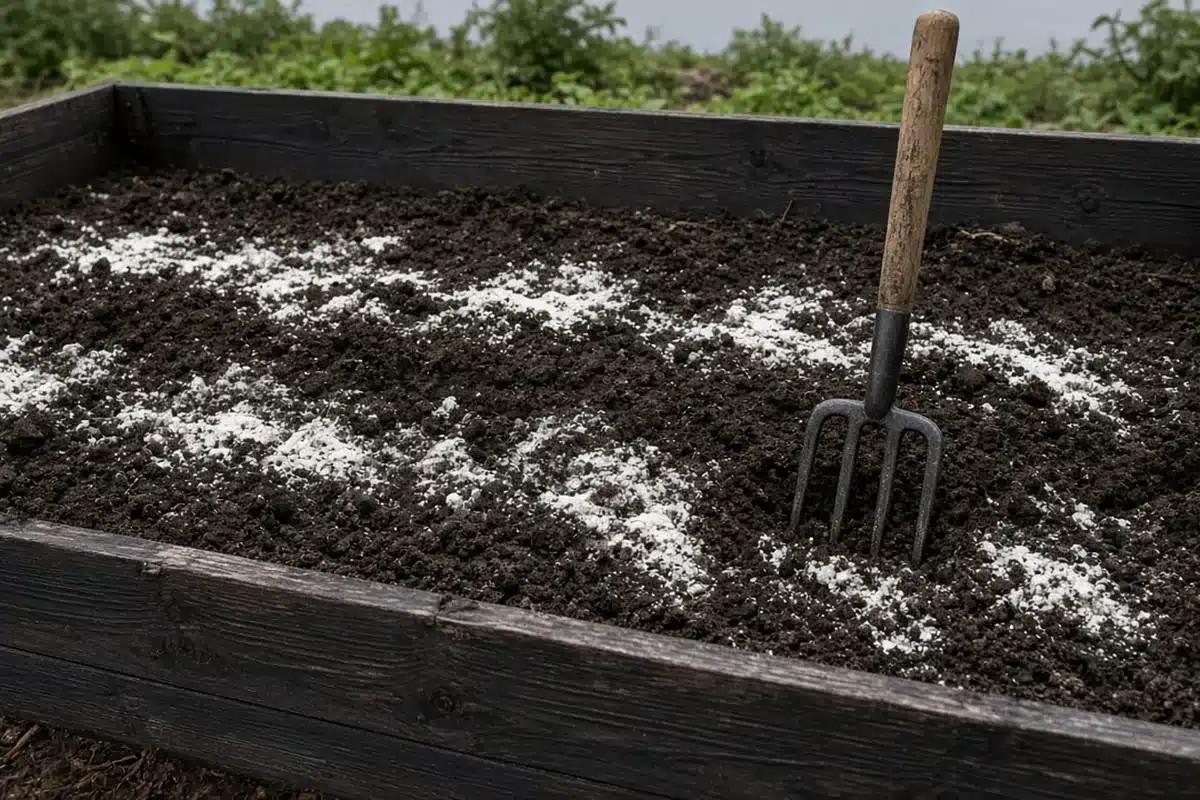
- Test pH and calcium. Only add shell flour if the soil is acidic or calcium is low.
- Buy a fine grade. Look for flour or powder, not grit. Fineness decides how fast it works.
- Calculate the rate. Use your soil test result or the Iowa State fertility based rates as a starting point.
- Apply early. Spread it several weeks to a few months before planting so it has time to react.
- Mix it in evenly. Work it into the root zone rather than leaving it on top.
- Water it in. Moisture starts the reaction between carbonate and soil acidity.
- Retest before adding more. Check pH the next season to avoid overshooting.
Troubleshooting Oyster Shell Flour Problems
pH did not change. The grade may be too coarse, or not enough time has passed. Fine powder and a few months usually show a shift.
pH climbed too high. Too much was added. Stop applying lime and use acidifying organic matter such as peat while you wait for it to settle.
New leaves still show spotting. Check watering, root condition and pH first. Calcium may be present but not moving into the plant.
White specks remain in the soil. Coarse particles break down slowly. They are harmless but contribute little.
Container mix turns alkaline over time. Hard tap water plus shell flour can stack up. Test runoff pH and skip shell in the next mix.
Sources
- Iowa State University Extension and Outreach, Selecting and Using Organic Fertilizers: https://yardandgarden.extension.iastate.edu/how-to/selecting-and-using-organic-fertilizers
- Oregon State University Extension, Applying Lime to Raise Soil pH for Crop Production (Western Oregon), EM 9057: https://extension.oregonstate.edu/sites/extd8/files/documents/em9057.pdf
- University of California Master Gardeners, How to Improve Your Soil in Fall and Winter: https://ucanr.edu/sites/default/files/2023-12/391635.pdf
FAQ
Is oyster shell flour the same as garden lime?
Both are mostly calcium carbonate and both raise pH. Shell flour comes from oyster shells, while garden lime is usually mined limestone.
How fast does oyster shell flour work?
Fine powder can shift pH within weeks to months. Coarse grit takes much longer.
Can I add oyster shell flour to potting soil?
Yes, in small amounts before planting, especially in peat based mixes that start acidic.
Will oyster shell flour fix calcium shortage signs fast?
No. It reacts too slowly for that, so check watering and pH first.
Does oyster shell flour add magnesium?
Very little. Dolomite lime is the usual choice when magnesium is also low.