Pill Bugs On Cannabis: Are Roly Polys Bad For Your Plants?
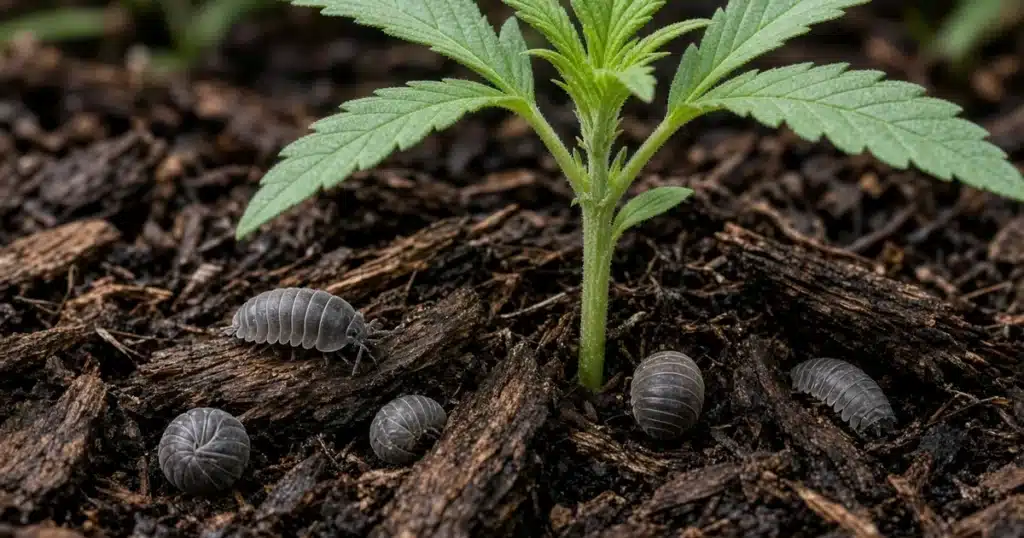
Quick answer: Pill bugs on cannabis are usually a minor problem. These small gray roly polys feed mainly on decaying plant material and are important decomposers. They occasionally chew seedlings, new roots and lower leaves that touch damp soil. Drier soil surfaces, less debris and a little space between mulch and stems keep most gardens out of trouble.
What Are Pill Bugs?
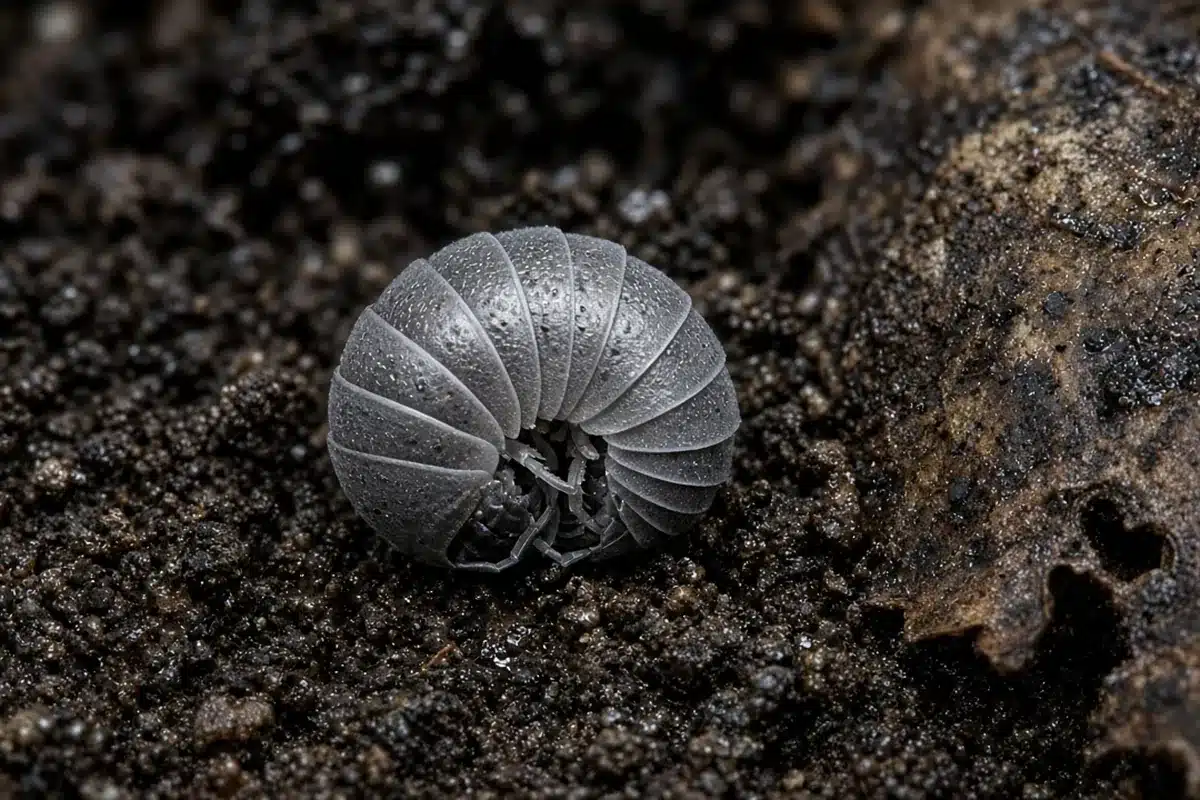
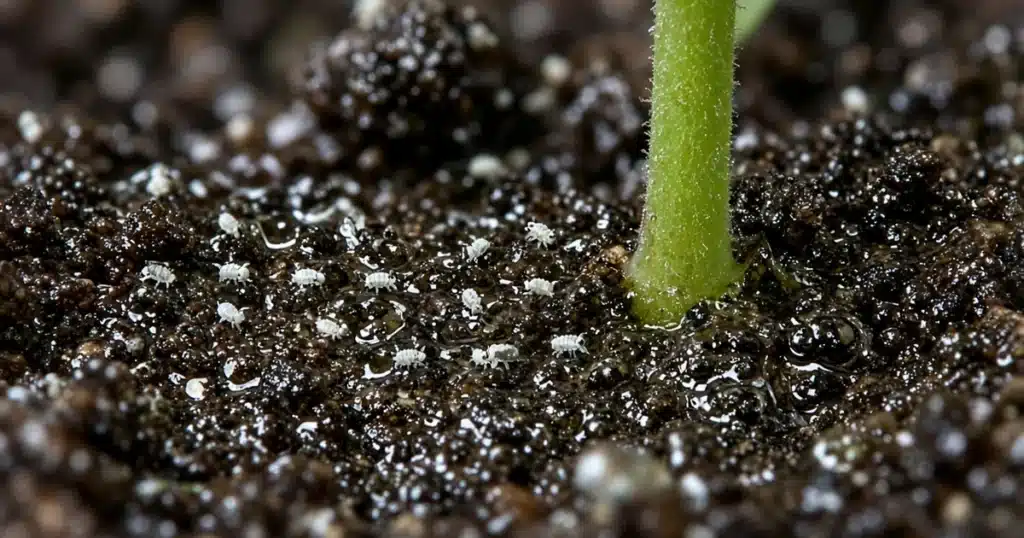
Pill bugs, also called roly polys, are not insects. The UC Statewide IPM Program says pillbugs and sowbugs are soil dwelling crustaceans in the order Isopoda. Purdue University’s Vegetable Crops Hotline describes them as crustaceans that live on land, which makes them closer relatives of lobsters, crabs and shrimp than of beetles.
Pill bugs roll into a tight ball when you disturb them. Sowbugs look similar but cannot roll up. Both hide under organic litter, boards and low leaves during the day and come out when it is damp and dark.
What Do Pill Bugs Eat?
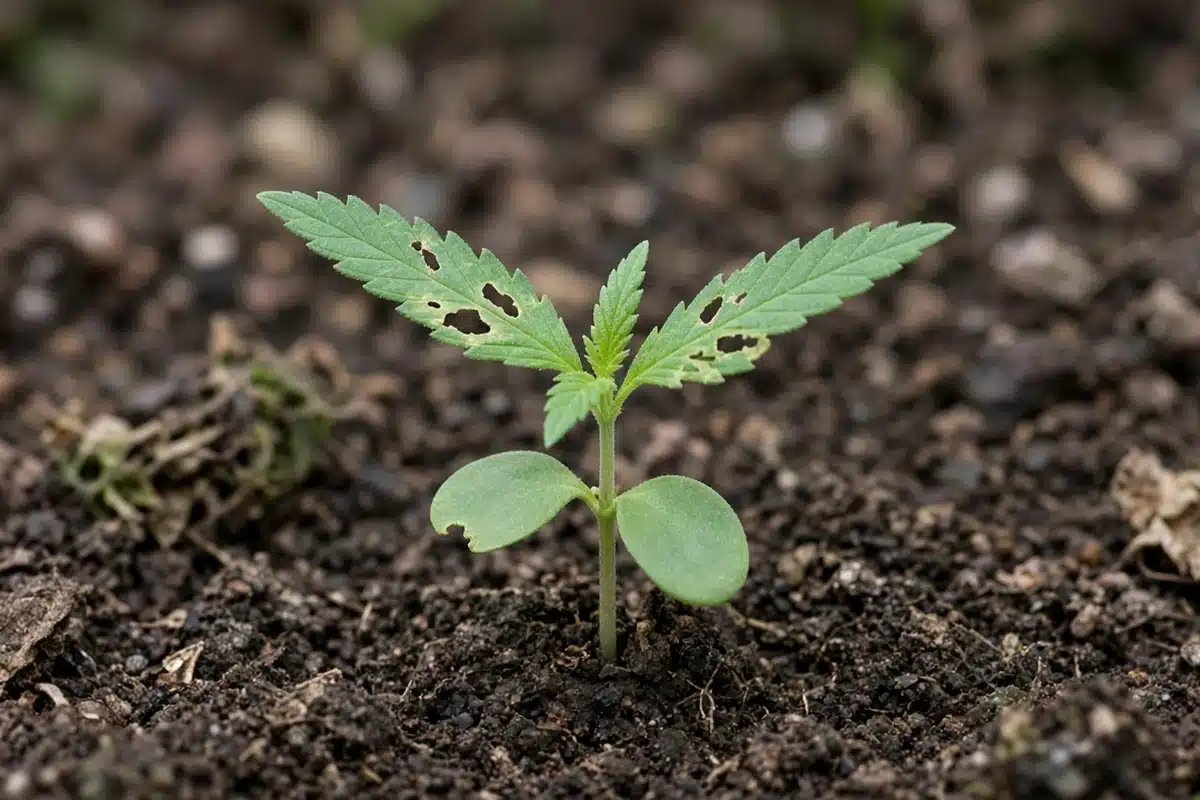
For the most part, pill bugs eat decaying plant matter. UC IPM says they feed primarily on decaying plant material and are important decomposers of organic matter. However, they occasionally feed on seedlings, new roots, lower leaves and produce touching the soil.
Utah State University Extension describes them as opportunistic feeders that often follow disease, slug and other pest damage. That means a chewed cannabis seedling with pill bugs nearby may have been injured by something else first.
Are Pill Bugs Bad for Cannabis?
Usually not. Utah State University calls pill bugs and sowbugs minor pests that occasionally become numerous enough to damage roots, seedlings and foliage. Mature cannabis plants with woody stems are rarely at risk. The danger window is the seedling stage and the first weeks after transplanting, when stems are soft and close to damp soil.
Purdue notes that pill bug feeding damage can resemble nibbling from mice, caterpillars or slugs, and that most of it happens at night at the soil level. Night or early morning checks help you confirm who is really feeding.
Why Pill Bugs Show Up Around Cannabis
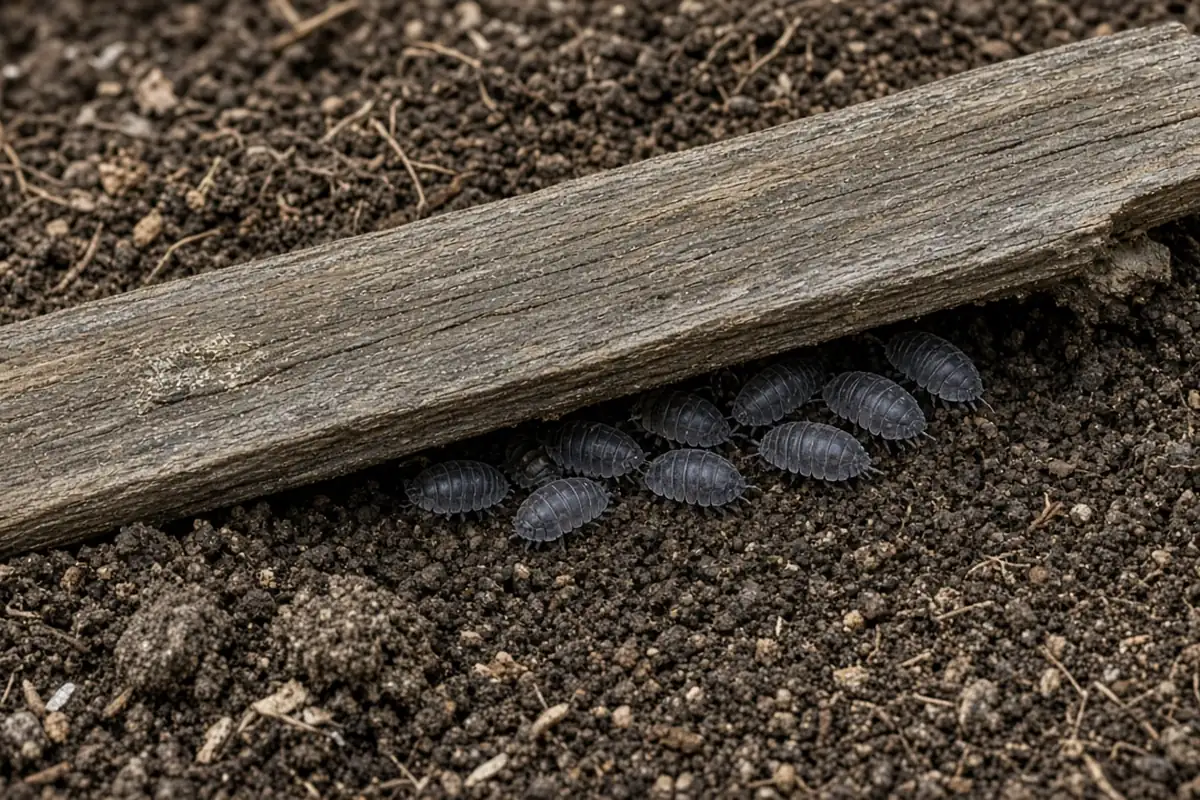
Above all, pill bugs need moisture. Purdue says they are likely to be most problematic in damp, undisturbed soil with high organic matter levels. Thick mulch against stems, fallen leaves, boards and wet soil surfaces all give them shelter.
The UC Statewide IPM Program says raised beds or planting boxes, plastic mulch instead of organic material, and drip irrigation instead of sprinklers usually keep pillbugs and sowbugs from becoming serious problems. Outdoor beds with heavy organic mulch and overhead watering see the most activity. Before you plant cannabis outdoors, check your state’s home grow law.
How to Protect Cannabis Seedlings From Pill Bugs
- Clear debris. UC IPM says to reduce the amount of decaying organic matter on the soil, so rake away dead leaves and plant scraps near seedlings.
- Pull mulch back from stems. UC IPM advises keeping compost and mulch back from plants. Leave a ring of bare soil around each young stem.
- Water early in the day. UC IPM recommends irrigating early so surfaces are drier by evening, when pill bugs feed.
- Set board traps overnight. Purdue says wooden boards placed in a planting gather pill bugs during the day so you can count them.
- Move the catch away from your plants. Purdue suggests tapping the boards to dislodge pill bugs in a new area, such as a compost pile away from vulnerable crops.
- Use collars on young stems. A cup with the bottom cut out, pushed into the soil around a young stem, works as a simple barrier.
- Recheck at night with a flashlight. Purdue recommends scouting at night or early in the morning to confirm that pill bugs are the ones feeding.
Pill Bug Facts at a Glance
| Topic | What research shows | Source |
|---|---|---|
| Group | Crustaceans in the order Isopoda | UC IPM, Purdue |
| Main food | Decaying plant material | UC IPM |
| Occasional damage | Seedlings, new roots, lower leaves | UC IPM |
| Pest status | Usually minor, occasionally numerous | Utah State University |
| Life cycle | About a year to mature, 1 to 2 generations a year | Utah State University |
| Best tools | Less debris, drier surfaces, board traps | UC IPM, Purdue |
Utah State University Extension says it takes about a year for young pill bugs to mature into adults, with one to two generations a year in Utah, which is why a damp, sheltered bed can hold a steady population year after year.
Troubleshooting
Seedlings are clipped overnight but you find few pill bugs. Pill bugs often follow other damage, Utah State University says, so check for slime trails and look at our guide to slugs and snails on cannabis.
Pill bugs keep turning up in your cannabis pots. They are seeking moisture and shelter. Check whether pots sit on wet saucers or damp mulch, and see our guide to overwatering cannabis if the mix stays soggy.
Damage continues after you cleaned up the bed. Utah State University calls pill bugs opportunistic feeders after disease damage. If seedlings collapse at the soil line, read our guide to common diseases of weed seedlings.
Board traps fill up every morning. That shows a large resident population. Keep relocating catches, reduce mulch depth and switch to drip watering where you can.
Pill bugs are in the compost pile. That is where they do useful work. UC IPM calls them important decomposers, so keep the pile, but keep it away from seedlings.
For other garden pests, see our guide to protecting marijuana plants from pests and bugs.
Frequently Asked Questions
Are pill bugs bad for cannabis plants?
Usually not. Utah State University calls pill bugs minor pests that occasionally become numerous enough to damage roots, seedlings and foliage. UC IPM says they feed mainly on decaying plant material. Most risk falls on young seedlings and fresh transplants with soft stems near damp soil, so protect those first.
What do pill bugs eat in a cannabis garden?
Mostly dead and decaying plant matter, such as fallen leaves and old mulch. UC IPM says pill bugs are important decomposers but occasionally feed on seedlings, new roots, lower leaves and produce touching the soil. Utah State University adds that they often feed where disease or slugs have already caused damage.
Do roly polys feed on cannabis roots?
Sometimes, near the surface. UC IPM says pill bugs occasionally feed on new roots. Purdue notes that it is currently unclear whether and to what extent they feed on roots below the soil surface. Healthy, established roots are rarely the problem, so focus on protecting seedlings and young transplants.
Why are there pill bugs in my cannabis pots?
Pill bugs look for damp, sheltered spots with organic matter. Pots on wet saucers, mixes rich in decaying material and mulch piled against the stem all attract them. UC IPM advises minimizing wetness of the soil surface and keeping compost and mulch back from plants to make pots less inviting.
How do you keep pill bugs off cannabis seedlings?
Keep the soil surface drier, clear debris and pull mulch back from young stems, as UC IPM advises. A collar made from a cup with the bottom cut out can also shield young stems. Purdue suggests boards to gather pill bugs so you can move them away.
Sources
- UC Statewide IPM Program, Pest Notes: Pillbugs and Sowbugs: https://ipm.ucanr.edu/home-and-landscape/pillbugs-and-sowbugs/
- Utah State University Extension, Pill Bug and Sowbug: https://extension.usu.edu/planthealth/ipm/notes_ag/veg-pill-bug
- Purdue University Vegetable Crops Hotline, Are Pillbugs Pests? How Can They be Managed?: https://vegcropshotline.org/article/are-pillbugs-pests-how-can-they-be-managed/