Root Aphids: How To Spot, Confirm And Stop Them On Cannabis
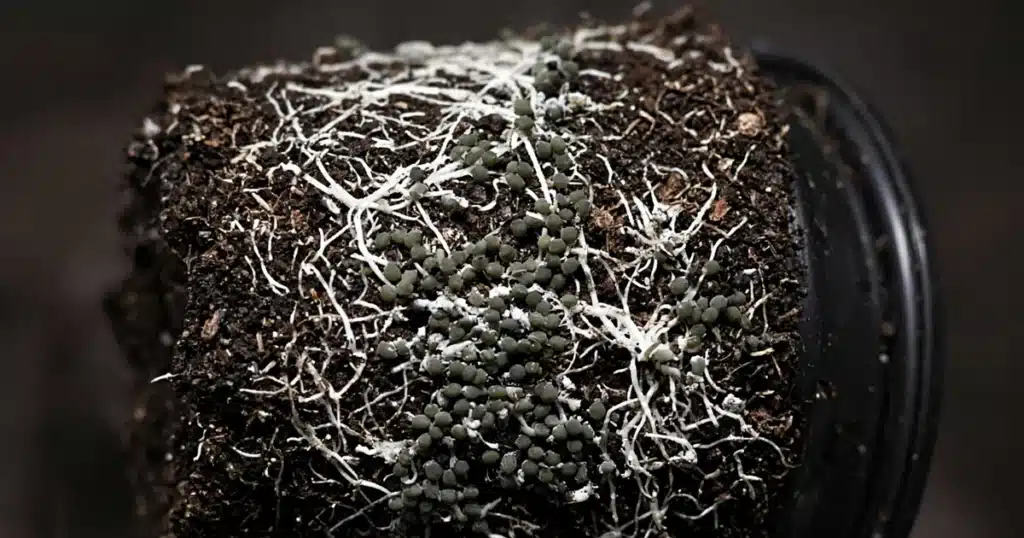
Quick answer: Root aphids are small, soft aphids that live and feed on roots instead of leaves, so most of the colony stays hidden below the soil line. The most common one in indoor cannabis is the rice root aphid, a dark olive green aphid with a round body. Heavy feeding leaves plants wilting, yellowing and slow to grow. To confirm root aphids, slide the plant out of its pot and look at the root ball.
What Are Root Aphids?
Root aphids are aphids that spend most of their lives on roots. Utah State University Extension describes the rice root aphid as a dark, olive green insect with a round body. Wingless forms stay on the roots and in the soil around the plant, and winged forms sometimes turn up on the parts above ground.
Colorado State University says reproduction is entirely asexual. No males are produced, and females give live birth to daughters. Young aphids mature in about 9 to 10 days, and adults live for about a month while producing several new daughters each day.
Root Aphid Life Cycle and Why Numbers Climb So Fast
The root aphid life cycle explains why a small problem can turn into a big one so quickly. Colorado State University reports that at 73°F, an optimal temperature, rice root aphid populations can double every 1.6 days. Under warm indoor conditions, it reproduces year round as long as host plants are available.
Most of the colony stays wingless on the roots. From time to time winged adults form, emerge through cracks in the soil and fly to new plants. Colorado State University notes that these winged aphids are most often seen after they get trapped by the hairs on the upper surfaces of leaves.
Signs of Root Aphids on Cannabis
Root aphids feed out of sight, so the first clues tend to show up above the soil. Utah State University lists reduced vigor, slow growth, wilting and leaf yellowing as the result of root feeding. Colorado State University adds that very high populations can reduce growth and that the small wounds they make may help root rot organisms get started.
Look for these signs of root aphids:
- Plants that wilt or droop and stay slow even when the rest of the room looks fine
- Yellowing leaves with no clear cause in the rest of your routine
- Dark winged aphids stuck to the upper sides of leaves
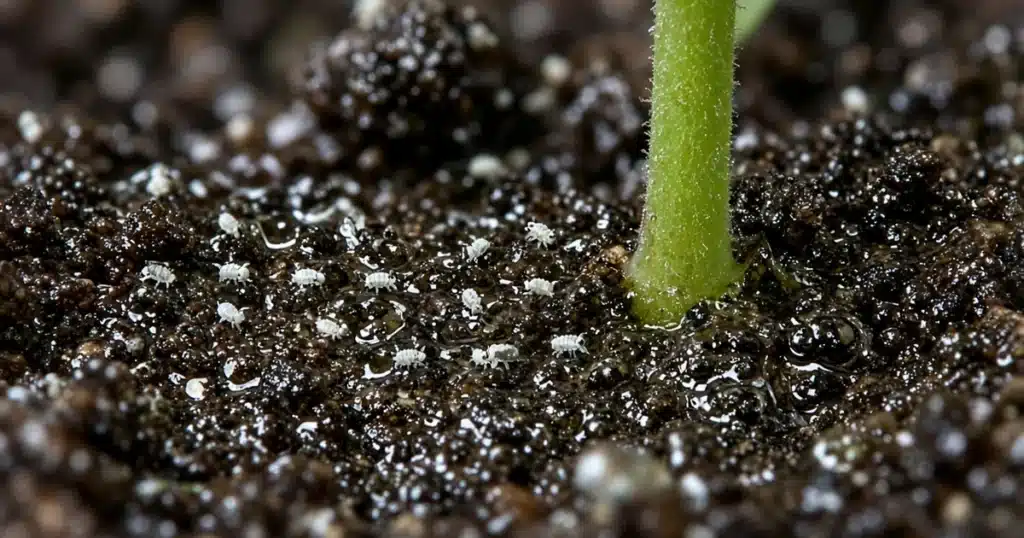
- Dark aphids in the soil at the base of the stem
- Clusters of small aphids on the outside of the root ball where roots press against the pot
Wilting and yellowing have many causes, so in the end a root check is the only way to know for sure.
Quick Confirm Test
This is our own simple tip, not an Extension method. Water one suspect pot over a white tray and watch the runoff and the soil surface for a few minutes. Small dark aphids crawling on the white surface are a strong hint. Follow up with a full root check before you make any big decision.
How to Check Roots for Root Aphids
- Pick a plant that shows symptoms. Start with the weakest plant in the group.
- Slide it out of its pot. Tip the pot on its side and ease the root ball out in one piece.
- Look at the outside of the root ball. Root aphids cluster where roots press against the pot wall.
- Use a hand lens. A small magnifier makes the round, dark bodies easy to tell apart from soil specks.
- Check the stem base and the leaves. Utah State University advises examining the soil at the base of the plant and the leaf surfaces for dark winged aphids throughout the year.
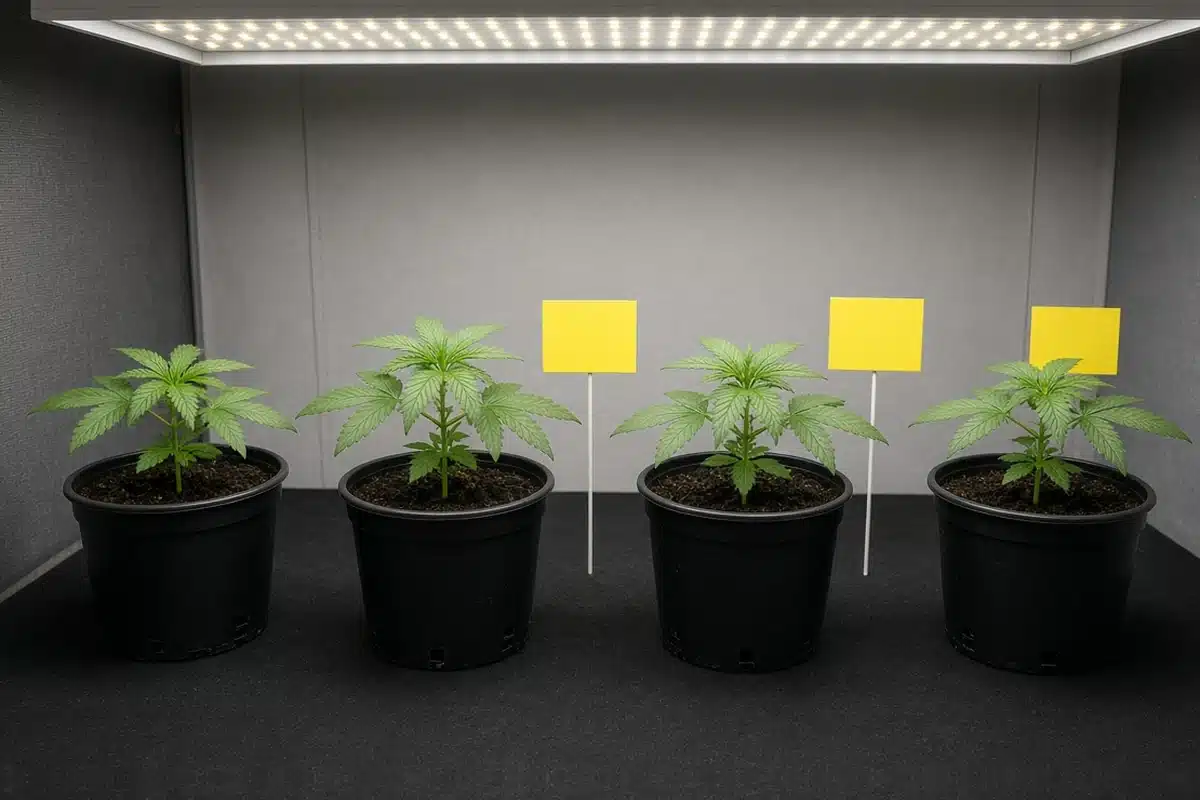
- Hang yellow sticky traps. Utah State University recommends yellow sticky traps to show whether winged aphids are present.
Root Aphids vs Look Alikes in the Root Zone
| Pest | What you see | Where to read more |
|---|---|---|
| Root aphid | Small, round, dark olive green aphids on roots | This guide |
| Fungus gnat larva | Shiny black head and a whitish, legless body (UC IPM) | fungus gnats in cannabis pots |
| Root mealybug | Fine white wax on roots and in crevices of the mix | mealybugs on cannabis |
The UC Statewide IPM Program describes fungus gnat larvae as having a shiny black head and an elongated, whitish to clear, legless body, which is a quick way to rule them out.
How Root Aphids Get Into a Grow
Colorado State University says infested plants are the likely route through which most indoor spaces pick up rice root aphids. Aphids may also enter through vents, and plants that are taken outdoors can be colonized by winged forms. Before you plant cannabis outdoors, check your state’s home grow law.
The same aphid lives on the roots of many grasses, including wheat and barley, so grassy areas near a grow can be a source too.
How to Get Rid of Root Aphids
- Isolate. Move any plant with confirmed root aphids away from healthy plants.
- Inspect every root ball. Check each nearby plant, because winged forms spread to new plants.
- Discard heavily infested plants and their mix. Bag them and remove them from the room.
- Clean pots and trays. Wash every pot and tray before you reuse it.
- Leave the space host free for a week. Colorado State University says rice root aphid can be eradicated with a brief host free period. The aphids live only a few days without living host plants and do not produce a lasting egg stage indoors, and a one week period should be enough for all of them to die out after plants are removed.
- Restart with clean plants. Inspect the root ball of every new plant before it joins the room.
- Keep sticky cards up. Yellow cards show if winged aphids return.
- Quarantine new clones. Keep them apart until you have checked their roots.
Predators and Other Options
Colorado State University explains that most aphid predators, such as green lacewings, lady beetles and most parasitic wasps, feed above ground. For root aphids, it says soil dwelling generalist predators such as Stratiolaelaps scimitus are likely to be most effective in soil, while no commercially available predators are likely to suit hydroponic root zones. Our guide to beneficial insects for cannabis covers these soil mites.
Colorado State University also says the insect parasitic fungus Isaria fumosorosea may help against soil dwelling aphids, but formulations of it are not allowed in cannabis production in Colorado. Follow the product label, and check that any pesticide is allowed for cannabis in your state. Colorado State University adds that contact sprays are unlikely to have any effect except on exposed winged forms.
Troubleshooting
Root aphids came back after the host free week. A plant may have stayed in the room, or a new plant arrived infested. Recheck every root ball, including mother plants, and repeat the week with no plants at all.
Sticky cards catch winged aphids, but the roots look clean. Check more plants, because colonies can be patchy. Winged forms also enter through vents, according to Colorado State University, so look at cards near openings.
One plant is infested and the rest look fine. Isolate that plant first, then check every plant that shared a tray, a bench or runoff water with it.
The plant still wilts after you removed the aphids. Root feeding leaves damage behind. Colorado State University notes that the wounds may help root rot get started, so read our guide to pythium root rot if roots look brown or soft.
You only see a few aphids. With a doubling time of 1.6 days at 73°F, a few can become many quickly. Act on the first confirmed find.
Frequently Asked Questions
What do root aphids look like?
Utah State University describes the rice root aphid as a dark, olive green insect with a round body. Most are wingless and live on the roots and in the soil. Winged adults form from time to time and are often found stuck to the upper sides of leaves, where leaf hairs trap them.
How do root aphids get into a grow?
Colorado State University says infested plants are the likely route for most indoor spaces. Winged aphids can also enter through vents, and plants that spend time outdoors can be colonized by winged forms. Inspect the root ball of every new plant and keep yellow sticky cards near vents and other openings.
Do root aphids fly?
Some do. Most rice root aphids stay wingless on the roots, but Colorado State University says winged forms are produced from time to time. They emerge through cracks in the soil and fly to new plants. Yellow sticky traps hung near your plants are a simple way to catch them early.
How do you check roots for root aphids?
Slide a plant that shows symptoms out of its pot and look at the outside of the root ball, where roots press against the pot wall. Use a hand lens to confirm small, round, dark aphids. Utah State University also advises checking the soil at the stem base and hanging yellow sticky traps.
How do you get rid of root aphids between grows?
Remove every plant and leave the space empty for about a week. Colorado State University says rice root aphids live only a few days without a host and do not produce a lasting egg stage indoors, so one host free week should let them die out. Clean pots and trays, then restart with checked plants.
Sources
- Utah State University Extension, Rice Root Aphid: https://extension.usu.edu/planthealth/ipm/notes_ag/hemp-rice-root-aphid
- Colorado State University, Rice Root Aphid extra information (PDF): https://webdoc.agsci.colostate.edu/hempinsects/PDFs/Rice%20Root%20Aphid%20extra%20info.pdf
- UC Statewide IPM Program, Pest Notes: Fungus Gnats: https://ipm.ucanr.edu/home-and-landscape/fungus-gnats/