
Garden Layout Planning for an Outdoor Cannabis Garden
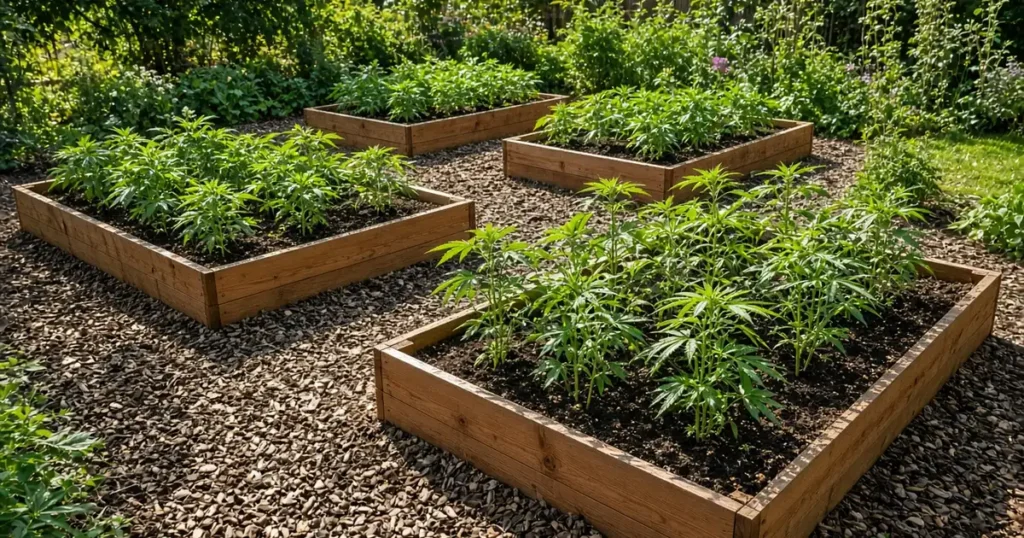
A good outdoor season starts long before the first plant goes in the ground. Where you put your garden, how you arrange beds and paths and how you get water to your plants all shape how easy the season will be. Washington State University Extension names four things every garden site needs: full sun, access to water, protection from wind and soil with good tilth. University of Maryland Extension recommends drawing a map of your garden before you plant. The plan below covers garden layout planning for an outdoor cannabis garden, from choosing a site to putting your plan on paper.
Start with the site
Before you think about beds, pick the right spot. Extension advice points to several things to look for.
Sunlight comes first. University of Maryland Extension recommends a site that gets at least six hours of sun a day, with nothing blocking the south side. Washington State University Extension notes that most summer crops need at least eight hours of full sun. Cannabis is a sun-loving plant, so aim for the sunniest spot you have. How light affects your plants is explained in understanding sunlight with your cannabis plants.
Level ground helps. University of Maryland Extension prefers a level site and suggests terracing a slope if that is the only option.
Keep away from trees and shrubs. University of Maryland Extension advises against a site bordered by trees or shrubs, which compete for light and water.
Think about convenience. Washington State University Extension suggests choosing a spot that is easy to reach so you visit it often, with a gate wide enough for a wheelbarrow or cart.
Every yard has warmer, cooler, wetter and windier spots. Before you settle on a site, read the Kind Seed Co post on garden microclimates for cannabis to find them.
Making the most of the light you have
If your best spot gets less sun than you would like, Washington State University Extension offers a few ideas. You can prune branches that shade the garden, replace a solid fence with an open post and rail fence or paint nearby walls white to reflect more light onto plants. Watch your site through a full day before you commit. A spot that looks sunny at noon may sit in shade all morning.
Plan for water
Water access is easy to overlook until you are dragging a hose across the yard every evening. University of Maryland Extension recommends a site with easy hose access, and Washington State University Extension suggests putting a spigot near the garden if one is not there already.
Think about how you will water when you draw your layout. Rows and beds that run in straight lines are easier to fit with ground-level watering. Planning on emitters? Start with drip irrigation for cannabis.
Protect against wind
Washington State University Extension notes that strong wind can blow plants over and damage leaves by blasting them with soil. It suggests a windbreak that blocks wind without shading the garden. Tall outdoor cannabis plants can catch a lot of wind late in the season, so check which direction the strongest wind comes from on your site. Options are compared in more detail in windbreaks for outdoor cannabis.
Check the soil
Good soil makes every other part of the plan work better. University of Maryland Extension recommends testing the soil before you plant. It describes good garden soil as crumbly and quick to drain after rain, and suggests adding compost to improve it. Washington State University Extension calls this good tilth.
To check drainage, look at the site after a heavy rain. If water sits in puddles for a long time, consider raised beds or a different spot.
Keep wildlife out
Deer, rabbits and other animals can undo a season of work in one night. University of Maryland Extension recommends fencing the garden if wildlife is a problem. Washington State University Extension notes that where deer are present, a fence about eight feet tall may be needed. Plan the fence line at the same time as your beds, so the gate lines up with your main path.
Plan paths and beds
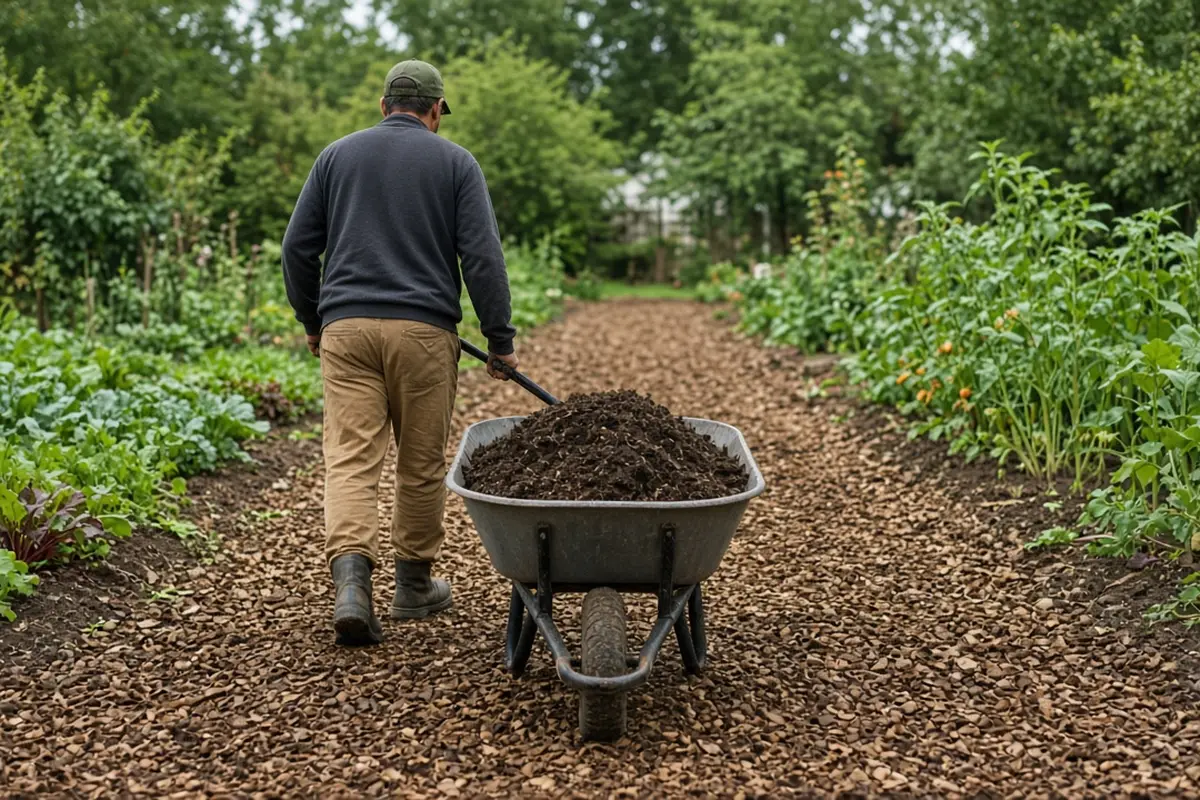
Paths are part of the layout, not leftover space. University of Maryland Extension suggests including paths on your plan that are wide enough for a garden cart. Washington State University Extension recommends making main paths at least three feet wide so a wheelbarrow fits easily.
For beds, Washington State University Extension says raised beds suit gardens with limited space, and that beds should be narrow enough to reach the middle from the path. Working from the path keeps you from stepping in the bed and compacting the soil. WSU also suggests covering paths with mulch, such as wood chips or straw, to control weeds and keep your feet dry.
Arrange plants by height
Tall plants cast shade. University of Maryland Extension recommends placing tall plants on the north and west sides of the garden so they do not shade shorter ones. Mature outdoor cannabis plants can grow tall and wide, so give them that end of the plan and put any shorter companions or herbs on the south side.
University of Maryland Extension also suggests growing vertically where you can and planting in succession, so space freed up early in the season can be used again.
How far apart to set each plant depends on its size and the space you have. For plant counts, read how many cannabis plants you can grow per square metre.
How to draw your garden map, step by step
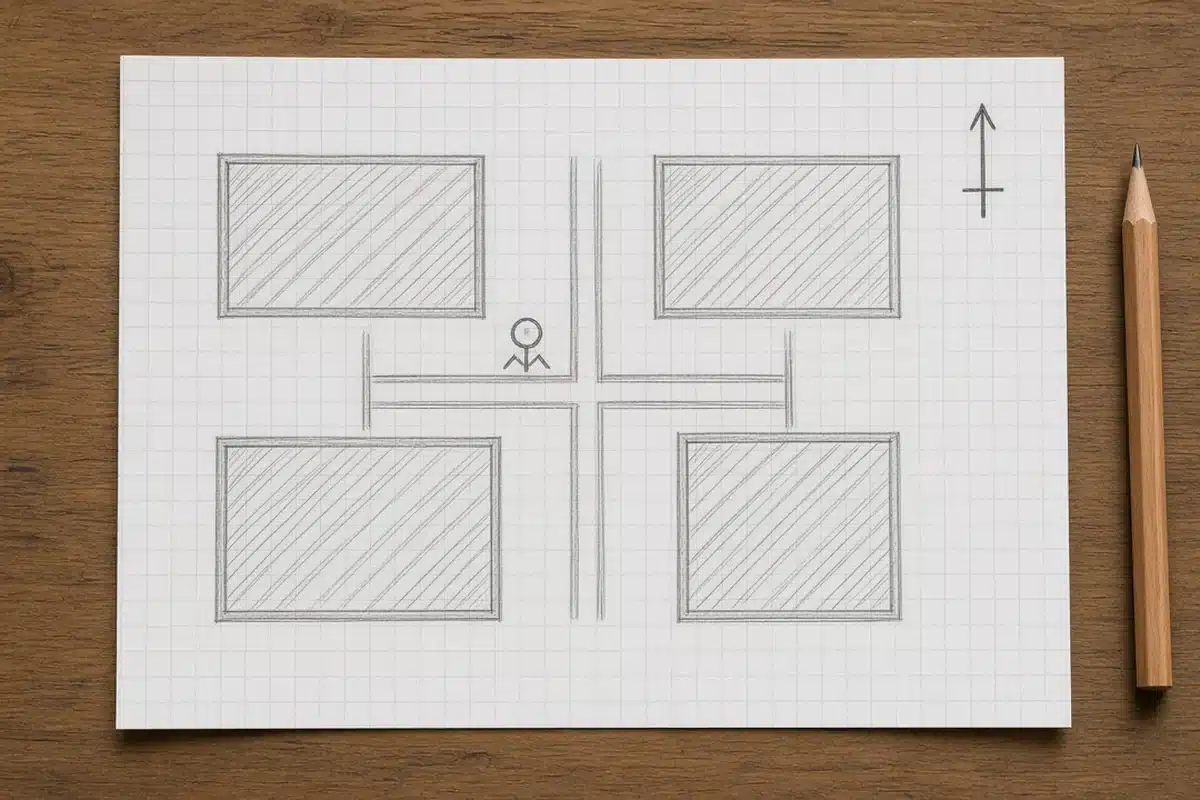
Washington State University Extension suggests putting your design on paper so you have a record of what you planted and where. Here is a simple way to do it:
- Measure the garden area and draw its outline to scale on graph paper.
- Mark north with an arrow so you can track sun and shade.
- Add fixed features such as fences, walls, trees, buildings and the spigot.
- Mark the sunniest areas and any spots that stay shaded or wet.
- Draw the main paths first, at least three feet wide.
- Fit beds or rows between the paths, keeping beds narrow enough to reach the middle.
- Place tall plants on the north and west sides.
- Mark where the water lines or hoses will run.
- Note the fence line and gate.
- Keep the map and update it as the season goes on.
A map from this year makes next year’s planning much faster. You can see what worked, where plants struggled and how to rotate beds.
Plan for the whole season
A layout that works on planting day may feel cramped by late summer. Small transplants take up little room, but outdoor cannabis plants fill out quickly once the weather warms. Draw your plan with mature plant size in mind, not the size of the plants you are setting out. Leave room to walk around each plant, reach the base for watering and get a cart through when it is time to harvest.
Chores deserve a thought too. Put the compost pile, tool storage and water source where you can reach them without crossing beds. A layout that saves a few steps every day adds up over a long season.
Troubleshooting
Plants on one side grow slowly. They may be in shade for part of the day. Watch the site through a full day and move beds or trim shading branches.
Tall plants shade shorter ones. Move tall plants to the north and west sides of the garden.
Watering takes too long. The garden may be far from water. Add a spigot nearby or lay a permanent ground-level line.
Paths are muddy or full of weeds. Widen them and cover them with wood chips or straw.
Plants lean or snap in storms. The site may be exposed to wind. Add a windbreak that does not shade the garden.
Water pools in beds after rain. The soil may drain poorly. Add compost, try raised beds or choose a better drained spot.
Sources
- University of Maryland Extension. Planning a Vegetable Garden. https://www.extension.umd.edu/resource/planning-vegetable-garden-0
- Washington State University Extension. PNW Gardener’s Handbook, Chapter 7: Vegetable Gardening. https://extension.wsu.edu/pnw-gardeners-handbook/chapter-7-vegetable-gardening/
FAQ
How much sun does an outdoor cannabis garden need?
Choose the sunniest spot you have. University of Maryland Extension recommends at least six hours of sun a day for vegetable gardens, and Washington State University Extension notes most summer crops need at least eight. Cannabis is a sun-loving plant, so more direct sun is generally better for strong growth.
How wide should garden paths be?
Washington State University Extension recommends main paths at least three feet wide so a wheelbarrow fits easily. University of Maryland Extension suggests paths wide enough for a garden cart. Covering paths with wood chips or straw helps control weeds and keeps your feet dry while you work in wet weather.
Where should tall plants go in a garden layout?
University of Maryland Extension recommends placing tall plants on the north and west sides so they do not shade shorter ones. Outdoor cannabis can grow tall and wide, so give it that end of the plan and put shorter herbs or companions toward the south side.
Why should I draw a garden map?
Washington State University Extension suggests putting your design on paper as a record of what you planted and where. A map helps you plan paths, beds, water lines and fencing before you dig. It also makes next season faster, because you can see what worked and what to change.


