
Preparing Garden for Storms: Outdoor Cannabis Guide

Summer storms can arrive fast. Strong wind, heavy rain and sudden downpours can knock over pots, flatten plants and leave beds sitting in water. A little preparation before the weather turns, and a calm plan for afterward, makes a big difference to how well an outdoor cannabis garden recovers. Kansas State University Extension notes that wind and water can both cause plants to lean, and that heavy rain can crust the soil and cut off oxygen to roots. University of Minnesota Extension offers a simple recovery plan for yards and gardens after a storm. You will find what to do before a storm, how to protect plants briefly when one is coming and how to clean up and check plants afterward. It does not cover hail injury. Read hail damage on cannabis for that.
Why storm prep matters
Most storm damage in a home garden comes from three things. Wind pushes plants and containers over. Heavy rain pounds the soil and fills low spots with water. Flying debris and loose supports hit plants. You cannot control the weather, but you can reduce how much of each a storm can do. A few minutes spent tying, moving and clearing before a storm usually saves far more time in cleanup.
Watch the forecast
Storm prep starts with knowing what is coming. Check the forecast often during storm season, and pay attention to warnings for high wind and heavy rain. Kansas State Extension notes that storm season can bring high winds, excessive rainfall and hail. As general guidance, plan to finish your prep while the weather is still calm, since working outside once a storm arrives is not safe.
How to prepare your garden before a storm, step by step
Work through the garden in this order:
- Check every plant support. Make sure cages, posts and ties are firm. Tighten loose ties with soft material so they do not cut into stems.
- Tie in loose branches. Long branches that move freely in wind can snap. Gently secure them to the existing support.
- Move containers. Carry potted plants to a sheltered spot, such as against a wall on the side away from the wind, or into a garage or shed if the storm is severe.
- Group pots together. Pots set close together are less likely to blow over than pots standing alone.
- Lay tall pots on their side if they cannot be moved and are likely to tip. Wedge them so they do not roll.
- Clear drainage. Make sure gutters, downspouts and garden drains are clear so water can run away from beds.
- Put away loose items. Tools, buckets, hoses and light furniture can blow into plants.
- Check the windbreak. If your garden has one, make sure it is secure. Tips on building one are in windbreaks for outdoor cannabis.

Covering plants briefly
Some growers cover plants just before a storm. Kansas State Extension notes that buckets, large pots, old blankets or tarps can be used to cover plants ahead of severe weather. Any tarp should be secured at the edges. It also warns that any cover must be sturdy, because strong winds can dislodge covers and cause more damage to plants.
As general guidance, only cover plants when a storm is close, and remove covers as soon as it passes so plants get light and air. Weigh down or tie the edges of any cover. A loose tarp in high wind can do more harm than the storm itself. Covers are mostly practical for smaller plants. Large outdoor plants are often better served by strong supports.
Right after the storm: safety first
Before you check your plants, check your yard. University of Minnesota Extension recommends starting with a safety check for downed power lines, broken branches and unstable trees. It suggests taking photos for insurance and leaving major tree work to professionals. Stay well away from any downed line and report it.
Drain standing water
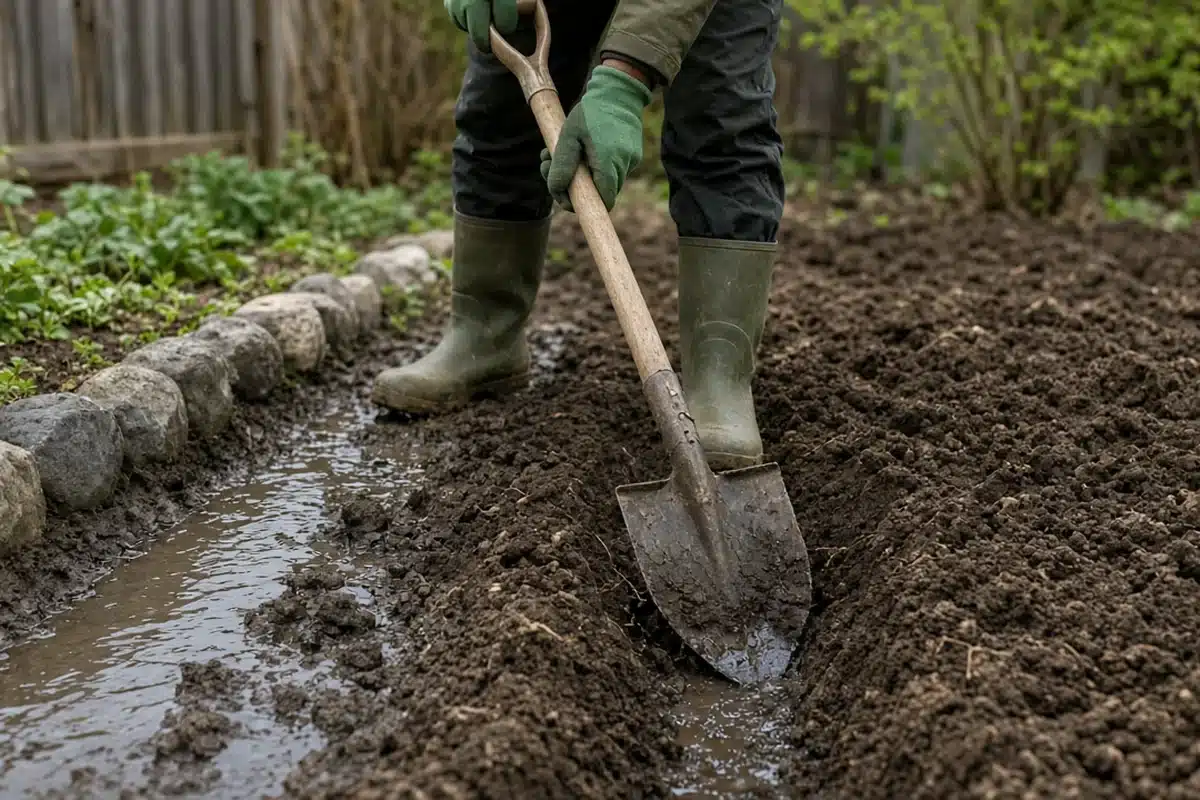
Standing water is one of the biggest threats after heavy rain. Kansas State Extension explains that standing water cuts off oxygen to roots and can damage plants if it does not drain quickly. It notes that plants can sometimes handle about a day of standing water, but hot weather after the rain can heat the water enough to damage plants in only a few hours.
Kansas State says there is little to be done except dig a channel to let water drain away. University of Minnesota Extension also recommends redirecting standing water with shovels or hoses. Work from the edges of beds and paths, not from inside them.
Containers need checking too. Tip out any water sitting in saucers, and make sure drainage holes are not blocked.
Stay off wet soil
After a storm you may want to get straight into the beds, but walking or working on wet soil does lasting harm. University of Minnesota Extension advises avoiding walking on wet soil to prevent compaction. Kansas State Extension agrees, saying to wait until soils have had a chance to dry before cultivating, because working wet soil causes compaction and damages soil structure.
The force of heavy rain can leave a thick crust on the soil that blocks oxygen from reaching roots, Kansas State Extension notes. Once the soil has dried, a shallow cultivation can break the crust. It cautions against deep tilling, which can damage young roots.
Check stems and plants
Once it is safe and the soil has drained, walk the garden and look closely at each plant. University of Minnesota Extension notes that shredded leaves and snapped stems can look alarming, but many plants recover quickly with some pruning.
Look for:
- Leaning plants. Kansas State Extension says plants pushed over by wind or water should start to straighten on their own after a few days. It does not recommend bending them back, because stems often break easily.
- Broken branches. Cut cleanly below the break.
- Split stems. Support them gently with a stake and soft ties, and watch how they recover over the next few days.
- Loose supports. Re-tie plants with soft ties or reset cages. University of Minnesota Extension suggests soft ties or cages to support toppled plants.
Restore mulch and clean up
University of Minnesota Extension notes that storms often scatter mulch and expose roots. It suggests raking mulch back or adding fresh straw, bark or wood chips to protect the soil and prevent erosion. Choosing mulch is its own topic in mulch for cannabis.
Minnesota Extension also recommends composting healthy storm debris, but throwing out any that shows signs of pests or disease.
If floodwater flowed through the garden, take extra care, and contact your local extension office for advice before using anything floodwater reached.
Watch for delayed damage
Not every problem shows up right away. University of Minnesota Extension recommends watching plants for a few days after a storm for wilting, cracks or unusual growth. Waterlogged roots in particular may take a few days to show stress.
Learn for next time
University of Minnesota Extension suggests noting what held up well in the storm and using that when you plan for next season, whether that means stronger supports or adding windbreaks. Write down what failed and fix it while the weather is calm. For sturdy support ideas, try the Kind Seed Co post on plant cages for cannabis.
Troubleshooting
A container blew over. Stand it up, check the root ball and top up with mix if any washed out. Move it somewhere sheltered next time.
Plants are leaning after the storm. Give them a few days to straighten on their own. Do not force them upright.
Water is pooling around plants. Dig a shallow channel to lead it away. Work from the edge of the bed.
The soil surface has a hard crust. Let it dry, then break it with a shallow cultivation. Avoid deep digging.
A cover blew off and damaged plants. Tie or weigh down covers firmly, or skip them in very high wind.
Plants wilt days after the rain. Roots may have been waterlogged. Improve drainage and let the soil dry before watering again.
Sources
- Kansas State University Extension. Tips on Protecting Gardens During Storm Season. https://extension.k-state.edu/news-and-publications/news/stories/2026/05/horticulture-storm-season.html
- University of Minnesota Extension. Weathering the Storm: Helping Your Garden Bounce Back. https://extension.umn.edu/about/our-stories/news/yard-and-garden-news/weathering-the-storm-helping-your-garden-bounce-back
FAQ
How do I protect outdoor plants before a storm?
Check that supports and ties are firm, tie in loose branches and move containers to a sheltered spot. Clear drainage so water can run off, and put away loose tools and furniture. Kansas State Extension notes that covers can help briefly, but only if they are sturdy and secured against wind.
What should I do with standing water after a storm?
Dig a shallow channel to lead it away as soon as it is safe, working from the edges of beds. Both Kansas State and University of Minnesota Extension suggest draining it this way. Kansas State Extension explains that standing water cuts off oxygen to roots, and hot weather makes it more damaging.
Should I straighten plants that lean after a storm?
Usually not. Kansas State Extension says plants pushed over by wind or water should start to straighten on their own after a few days, and it does not recommend bending them back because stems break easily. Support them gently with soft ties or cages if needed and give them time.
When can I work in the garden after heavy rain?
Wait until the soil has dried. University of Minnesota Extension advises staying off wet soil to prevent compaction, and Kansas State Extension says working wet soil damages its structure. Once it dries, a shallow cultivation can break any crust left by pounding rain, but avoid deep digging near roots.


