
Raccoons and Cannabis Gardens: Stop Digging and Night Raids
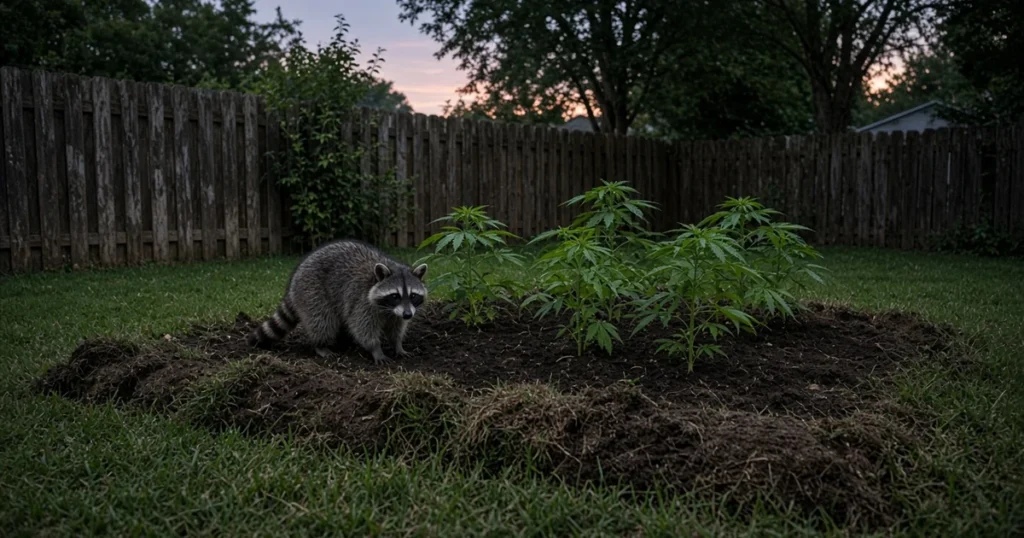
Quick answer: Raccoons rarely eat cannabis leaves, but they visit gardens at night for food and can dig up beds, tip over pots and break stems while they search for grubs, worms, fruit and scraps. UC IPM, the pest program run by the University of California, and Iowa State University Extension both say the best defense is to take away the food and shelter that draw them in and then keep them out with a low two wire electric fence. Ordinary fences rarely stop them.
Do Raccoons Eat Cannabis Plants?
Usually not, and the damage tends to be collateral. UC IPM describes raccoons as omnivores that eat fruits, berries, nuts, grain, insects, frogs, snails and much more. Neither source lists cannabis as a food, so harm to a cannabis plant usually comes from what the animal does nearby.
Iowa State notes that raccoons dig up insects in yards and roll up turf in search of grubs. They also raid compost piles and garbage cans, UC IPM says. In a cannabis garden, that behavior can mean soil flung out of containers, roots exposed in fresh beds and young transplants snapped or uprooted. If grubs are what they are after, our post on white grubs in cannabis soil explains how to check for them.
What Signs Show a Raccoon Visited?

Look for tracks and smudges first. Iowa State lists distinctive front and hind footprints around gardens and buildings, plus muddy paw smudges on walls and downspouts. Its guide says prints are easiest to spot in soft soil near garden crops.
Other things to watch for, including what Iowa State describes in sweet corn, half eaten ears with husks torn back and stalks snapped in several places:
- Sod or fresh turf rolled back in strips
- Compost piles and trash cans tipped or opened
- Pet food bowls emptied overnight
- Screeching in late winter and early spring during mating season
- Chirping from dens in chimneys or tree hollows in spring and summer
Raccoons are mostly active at night, so UC IPM says they may be around for some time before anyone notices. Cone shaped holes dotted across a lawn point to a different animal. UC IPM says raccoons do not usually dig those small holes, and that such holes are more likely the work of skunks.
Why Are Raccoons Coming Into Your Garden?
Food and shelter bring them in. UC IPM says gardens and homes attract raccoons because they offer meals and places to den. Iowa State adds that pet food, birdseed, garden produce and trash give raccoons around homes a steady supply all year, and that this helps them keep higher numbers in towns than in the wild.
Shelter matters too. UC IPM lists woodpiles, brush, overgrown shrubs, decks, sheds and crawl spaces as common den sites. A cannabis patch next to a woodpile and a compost bin offers a raccoon everything it wants within a few steps.
How to Keep Raccoons Out of Cannabis Beds
- Remove easy food. UC IPM advises bringing pet food in before dark, picking up fallen fruit and nuts often and never feeding raccoons on purpose.
- Lock down trash and compost. UC IPM suggests metal cans with secure lids held by a bungee cord or wire. Iowa State recommends clamping bin lids at night. Our guide to composting cannabis garden waste covers bin setups.
- Thin hiding spots. UC IPM recommends removing woodpiles where possible and thinning dense shrubs to cut cover.
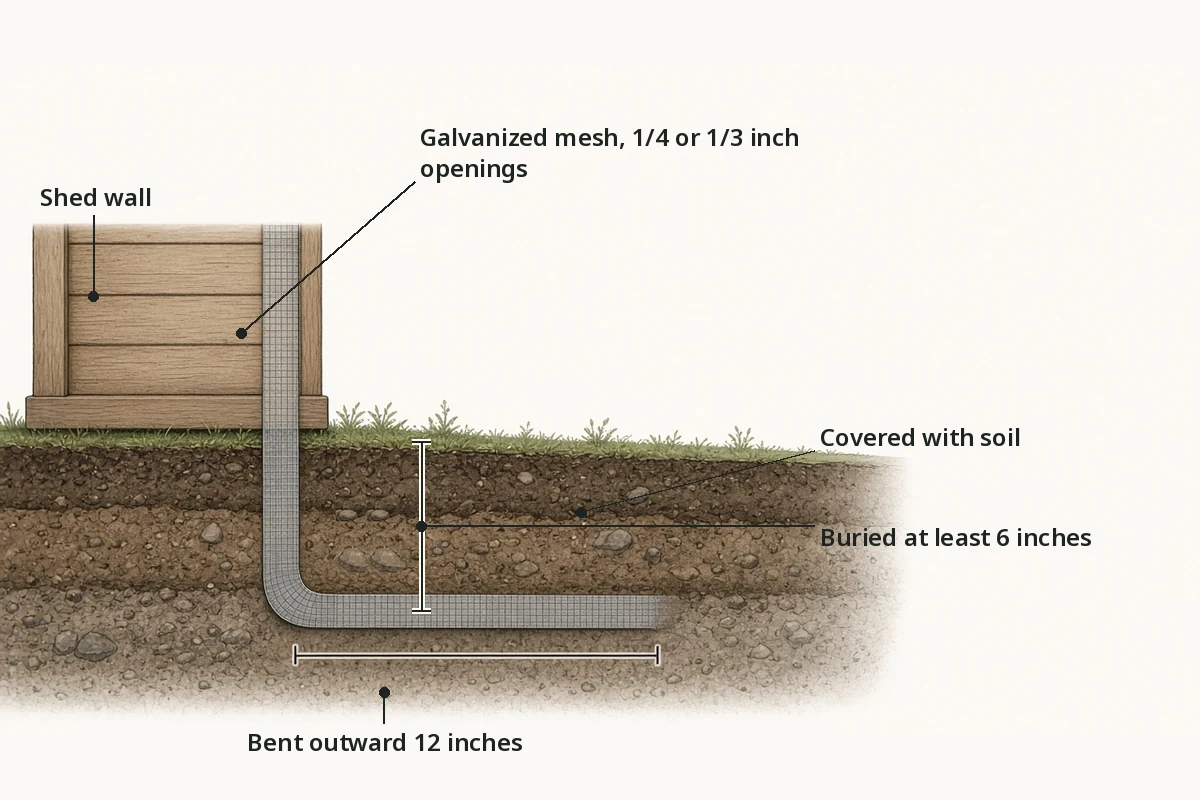
- Screen under decks and sheds. UC IPM calls for galvanized hardware mesh with 1/4 or 1/3 inch openings with the bottom edge buried at least 6 inches, bent outward 12 inches and covered with soil.
- Add a low electric fence. UC IPM describes two wires on wooden posts, one 6 inches and one 12 inches above the ground. Iowa State says to switch it on at dusk and off around sunrise.
- Mark electric fences with warning signs. UC IPM says they must be installed correctly and always signed.
- Check for weak spots. UC IPM warns that raccoons find gaps fast, rip off loose boards and widen holes in wire fences.
- Call a professional for trapping. UC IPM advises most homeowners to hire a licensed wildlife control operator.
Raccoon Fence Options Compared
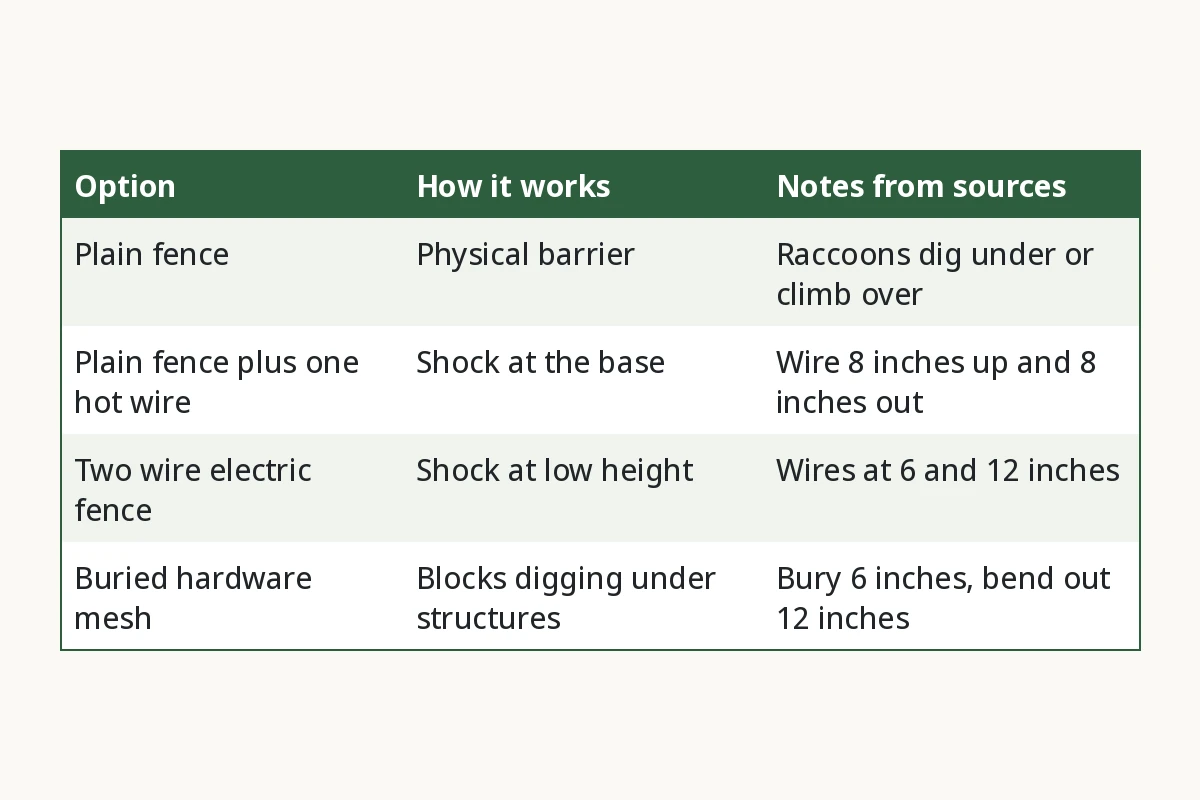
| Option | How it works | Notes from sources |
|---|---|---|
| Plain fence | Physical barrier | Raccoons dig under or climb over |
| Plain fence plus one hot wire | Shock at the base | Wire 8 inches up and 8 inches out |
| Two wire electric fence | Shock at low height | Wires at 6 and 12 inches |
| Buried hardware mesh | Blocks digging under structures | Bury 6 inches, bend out 12 inches |
UC IPM says the charger only needs to run from dusk to dawn, and it notes that a low two wire fence can protect newly laid sod as well as garden crops. For seedlings that need protection from smaller animals at the same time, see our guide on row covers for cannabis.
Do Repellents and Scare Devices Work on Raccoons?
Mostly no. UC IPM states that none of the few commercial wildlife repellents on the market have worked for raccoons, and that mothballs, blood meal and other home remedies have failed because raccoons adapt quickly. Iowa State warns against using mothballs, naphthalene or other fumigants and toxicants, which are not approved for raccoons and endanger the health of people, pets and livestock.
Scare devices buy a little time. UC IPM says motion lights, noise makers, water sprayers, radios and spinning flags may work for a few days before raccoons learn they pose no threat. Iowa State notes that coyote urine is the one scent shown to bother raccoons consistently, but it describes using it near dens in buildings, not in gardens. Keep any scent product off plants you plan to harvest.
Is It Safe to Handle Raccoon Droppings?
Use real caution. UC IPM warns that raccoons carry diseases and internal parasites, including raccoon roundworm. It explains that people can be infected by accidentally swallowing or breathing in roundworm eggs from raccoon feces, and that young children are thought to be most at risk. UC IPM adds that raccoons also carry rabies and distemper, so keep pets vaccinated.
If you find droppings in a bed, wear gloves, bag them for the trash and wash your hands well. Keep children away from raccoon latrine spots. Never corner a raccoon. UC IPM notes they are powerful and can turn vicious when trapped.
Can You Trap and Move a Raccoon?
It depends on your state, so check the rules first. UC IPM says California prohibits releasing raccoons elsewhere without written permission from the state wildlife department. Iowa State says a captured raccoon can be released on land where the owner has given prior permission. Rules vary, so contact your state wildlife agency before setting a trap.
UC IPM lists a cage trap of at least 10 by 12 by 32 inches and says larger is better. It suggests baits like marshmallows, grapes or peanut butter to avoid catching cats, setting traps at night and closing them in the morning. A professional can also tell whether a trapped female is nursing young, which UC IPM stresses so babies are not left behind.
Troubleshooting Raccoon Problems
Pots are tipped over every morning. Raccoons may be digging for insects or worms in the mix. Move containers inside a hot wire fence or onto a secure deck, and check the soil for grubs.
The fence is up but damage continues. Check the wire heights against the 6 and 12 inch spacing UC IPM describes, confirm the charger works at night and clear weeds that touch the wires.
Scare lights worked for a week, then stopped. That matches what UC IPM reports. Switch to exclusion rather than adding more gadgets.
A raccoon family lives under the shed. Iowa State says to confirm no animals are inside before sealing anything, and notes the mother usually moves her young out within a few weeks. Iowa State recommends exclusion work in early winter before raccoons give birth.
Raccoons climb a nearby tree to reach the garden. UC IPM suggests wrapping a tree trunk with electrified wire to discourage climbing. A licensed operator can install this safely.
Compost keeps getting scattered. Switch to a closed bin with a latched lid and stop adding meat or other food scraps that draw scavengers.
Sources
- UC Statewide IPM Program, University of California, Pest Notes: Raccoons: https://ipm.ucanr.edu/home-and-landscape/raccoons/
- Iowa State University Extension and Outreach, Raccoons: Damage Management: https://naturalresources.extension.iastate.edu/encyclopedia/raccoons-damage-management
FAQ
Will a regular garden fence stop raccoons?
No. UC IPM says raccoons dig under or climb over ordinary fences, but adding a single hot wire 8 inches up and 8 inches out from the base can make a plain fence work.
What time of night do raccoons visit gardens?
Most visits come after dark or around dawn and dusk, the hours Iowa State gives for raccoon activity, which is why a fence on a dusk to dawn timer is a good fit.
Do raccoons attack dogs?
Some do. UC IPM notes that outdoor dogs may scare raccoons off but that some raccoons will fight back and hurt dogs badly.
Does blood meal keep raccoons away?
No. UC IPM lists blood meal among home remedies that have not worked on raccoons.
What is the best season to raccoon proof a property?
Winter. Iowa State recommends sealing buildings early in winter, before females pick spots to give birth in spring.


