
Voles in Cannabis Gardens: Runways, Traps and Wire Fences
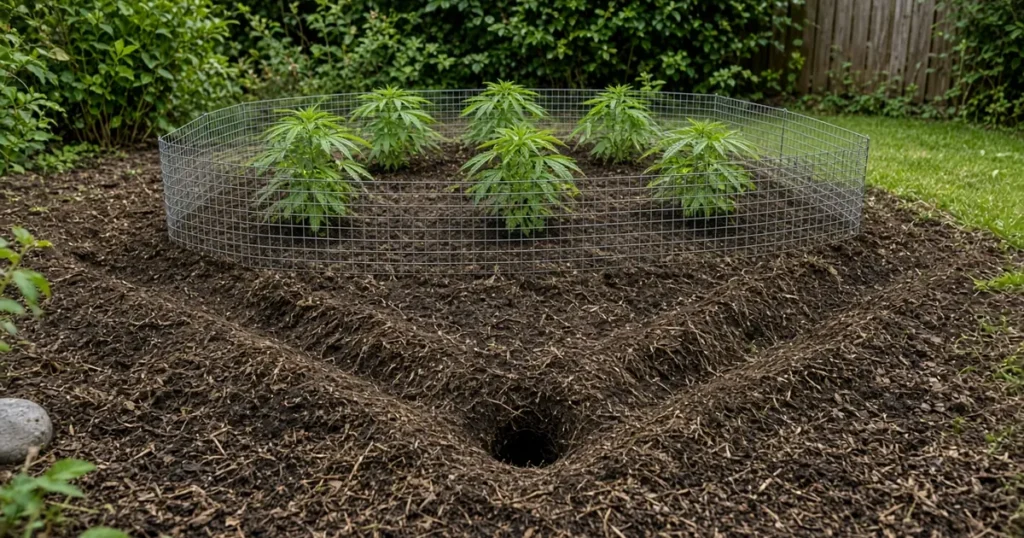
Quick answer: Voles are small, stocky rodents that live in dense grass, weeds and mulch and feed on garden plants close to the ground. The clearest sign is a network of narrow surface runways linking small open burrow holes. The UC Statewide IPM Program, known as UC IPM, says the most reliable fixes are removing the cover they hide in, fencing beds with fine wire mesh buried in the soil and setting mouse snap traps across their runways.
What Are Voles?
Voles are mouselike rodents, sometimes called meadow mice or field mice. UC IPM describes them as having a heavy, compact build with short legs, a short tail covered in fur, small eyes and ears that are partly hidden in the fur. Counting the tail, adults measure about 5 to 8 inches, and their coarse fur runs from blackish brown to grayish brown.
Colorado State University Extension notes that voles are pudgy with blunt faces, and it separates them from mice by their stockier build, very short ears and generally shorter tails. That matters because vole problems start in outdoor cover, not indoors. UC IPM points out that voles are poor climbers and rarely enter homes.
Do Voles Damage Cannabis Plants?
Yes, they can. Neither source lists cannabis by name, but both describe voles as plant eaters that feed on a wide range of garden crops. UC IPM lists vegetables such as beets, carrots, lettuce, spinach, tomato and sweet potato, and it notes that voles also gnaw bark and roots. Colorado State adds that voles prefer young, succulent plants but will change their diet when food runs short.
For a cannabis grower, the risk is highest on young transplants and on the base of the main stem. UC IPM says vole gnawing on trunks usually happens from a few inches above the ground to a few inches below it. A plant chewed all the way around near the soil line can lose its flow of water and nutrients. UC IPM calls this girdling. Voles may also chew through drip lines, which UC IPM says can cause leaks and costly repairs.
How Can You Tell Voles Are Present?
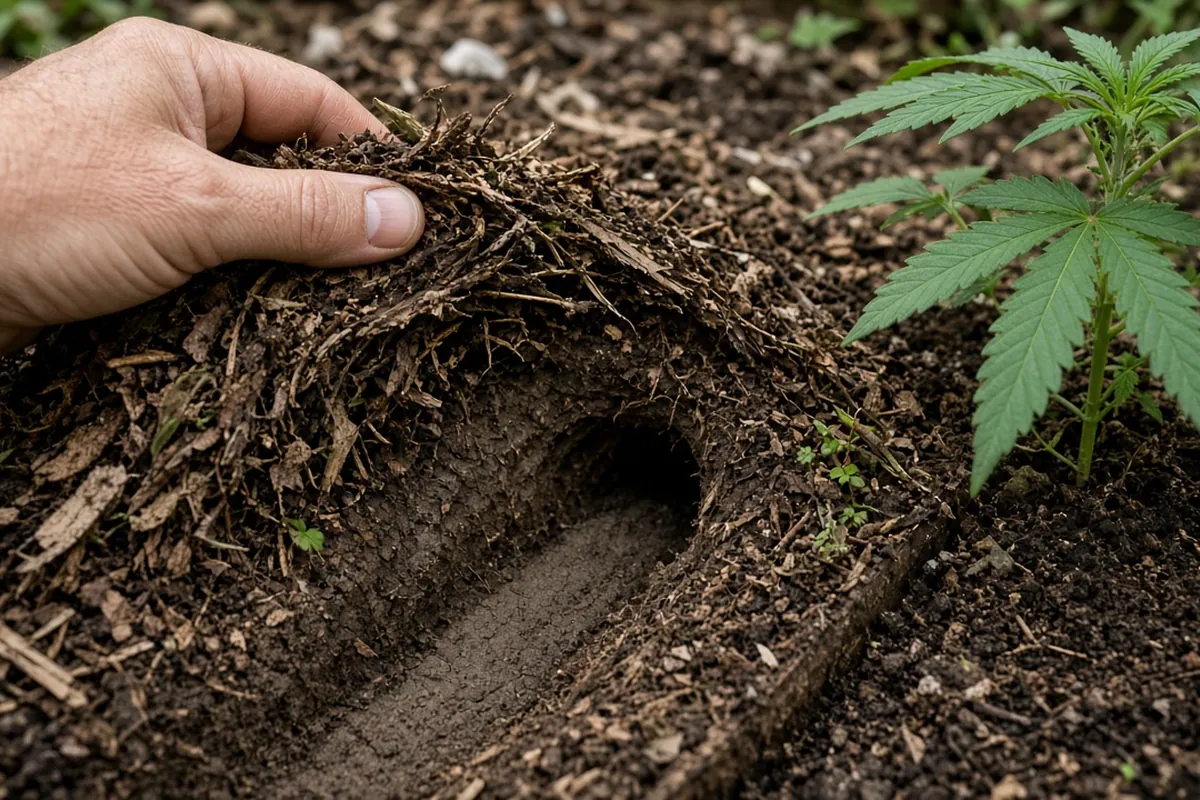
Look for runways first. UC IPM calls the well traveled surface runways connecting burrow openings the clearest sign of voles. They are usually hidden under grass, mulch or other ground cover, so pull back the cover to find them. Colorado State describes these runways as 1 to 2 inches wide through matted grass.
Other clues from the two sources:
- Open burrow holes about 1 1/2 to 2 inches across, often near the runways
- Fresh clippings of green grass in the runways
- Droppings about 3/16 inch long that start greenish and turn brown or gray with age
- Irregular gnaw marks about 1/8 inch wide in patches at different angles
- Spongy soil from burrowing, which Colorado State lists as another sign
Telling voles from other animals helps. UC IPM notes that vole holes stay open, while pocket gopher mounds are closed. Colorado State explains that rabbits clip stems at a smooth 45 degree angle and leave wider gnaw marks, while deer leave a rough, jagged edge. Moles tunnel for insects rather than feeding on plants, and our post on moles in cannabis gardens covers that animal. If clean angled cuts appear on stems, read about rabbits and cannabis instead.
When Are Voles Most Active?
All year. UC IPM says voles stay active at all hours and in every season, and Colorado State adds that they do not hibernate. Both sources note that numbers can swing widely. UC IPM says some populations peak every 3 to 6 years, and Colorado State gives a range of 14 to 500 voles per acre with peaks every three to five years.
Breeding is fast. Colorado State reports litters of three to six young, with three to 12 litters in a year, with most breeding in spring, summer and fall. UC IPM adds that females mature in 35 to 40 days. A few voles in spring can become many by midsummer, so early action pays off.
Damage often rises in cold months. Colorado State says most damage to trees and shrubs happens in winter, when voles travel under snow, and UC IPM notes that damage under snow often goes unnoticed until it is too late. For a cannabis bed, that means checking perennial borders and fall cover in spring before you plant.
How to Get Rid of Voles in a Cannabis Garden
- Confirm the animal. Pull back grass and mulch near damaged plants and look for runways, open holes and green droppings, as UC IPM describes.
- Remove their cover. UC IPM says weeds, heavy mulch and dense ground cover give voles food and shelter, and taking it away makes their numbers drop. Mow grassy edges short and pull weeds around beds. Our guide to weed control in outdoor cannabis has methods.
- Clear a bare ring. UC IPM suggests keeping a 4 foot circle free of vegetation around the base of young trees and vines, because voles avoid feeding in the open. The same idea can work around large cannabis plants.
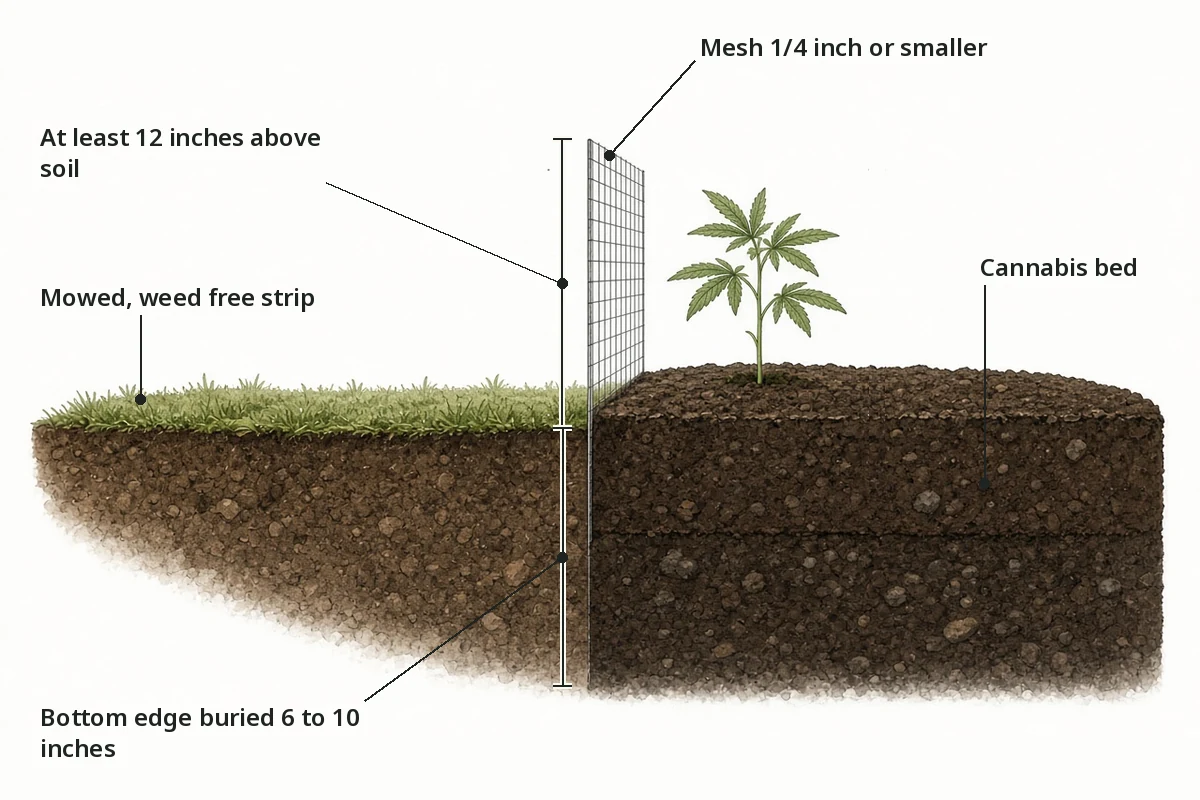
- Fence the bed. UC IPM recommends wire fence or aluminum flashing at least 12 inches high with mesh of 1/4 inch or smaller, with the bottom edge buried 6 to 10 inches deep.
- Guard single plants. Colorado State suggests encircling plants with 1/4 inch hardware cloth that rises 18 inches above the ground and goes 3 to 6 inches below the surface. It notes that vegetable and flower beds can be protected this way too.
- Trap along runways. Set standard mouse snap traps at right angles to the runway with the trigger end in the path. UC IPM says a small garden probably needs at least a dozen traps.
- Check traps daily. UC IPM advises removing catches and resetting traps each day, and moving traps 15 to 20 feet once they stop catching voles.
- Break up old runways. UC IPM suggests destroying old runways and burrows with a shovel so new voles are less likely to move in.
Vole Barriers at a Glance
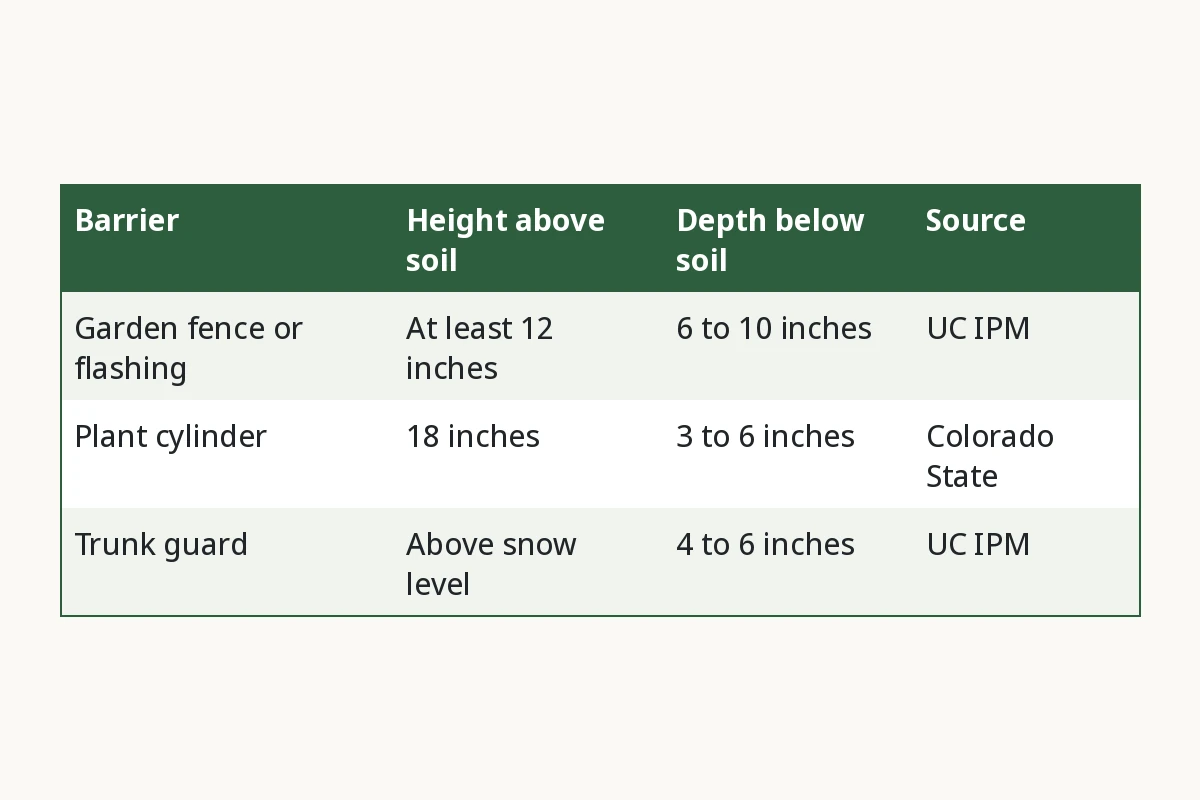
| Barrier | Height above soil | Depth below soil | Source |
|---|---|---|---|
| Garden fence or flashing | At least 12 inches | 6 to 10 inches | UC IPM |
| Plant cylinder | 18 inches | 3 to 6 inches | Colorado State |
| Trunk guard | Above snow level | 4 to 6 inches | UC IPM |
UC IPM adds that a weed free strip outside the fence makes it work better. It also warns gardeners to check guards often, since voles can dig under or gnaw through and then hide inside while they feed. For a sturdy frame you can adapt, see our post on plant cages for cannabis.
Is Trapping Safe Around Pets and Kids?
It can be, with care. UC IPM advises keeping pets and small children away from the traps. Traps can be left unbaited because voles cross them as they run, but if you do bait them with a peanut butter and oat mix or apple slices, UC IPM advises covering the trap so birds are not caught. A piece of gutter laid over the trap along the runway works as a cover.
UC IPM also warns that voles can carry pathogens and parasites. Wear rubber gloves, or slip a plastic bag over your hand, when you remove them. Bury dead voles or bag them for the trash.
Do Repellents or Predators Work?
Not reliably. Colorado State says little data exist on how well vole repellents work, and that they are fairly expensive, give short term protection and wash off in rain. UC IPM describes the effect of vole repellents as questionable. Use only products labeled for your crop and state, and never apply any repellent to flowers or buds on a plant you plan to harvest.
Predators help but rarely solve the problem. UC IPM lists hawks, owls, coyotes, foxes, weasels and cats among vole predators, yet notes they cannot usually keep numbers below damaging levels near homes and gardens. Colorado State adds that voles are an important food source for wildlife. Toxic baits carry real risk to pets and wildlife. UC IPM says the only toxicant for voles in residential settings is restricted use, so most home growers should stick with habitat changes, fencing and traps.
Troubleshooting Voles
Plants keep wilting even with fences up. Voles may be tunneling under the barrier. Check that the mesh is buried at least 6 inches, as UC IPM advises, and look for gaps at corners and gates.
Traps are not catching anything. The traps may be off the runway. UC IPM notes that voles rarely leave their runways. Set each trap squarely across a fresh path with the trigger end inside it.
Damage appears after mulching. Thick mulch can shelter voles. UC IPM lists heavy mulch and weed cloth among the protective cover voles favor. Pull mulch back from stems and keep it thin near the base of plants. Our post on mulch for cannabis covers depth.
Drip lines are leaking. Chewed tubing is a known vole problem, according to UC IPM. Replace damaged sections and keep the ground around lines clear of dense cover.
Numbers seem to explode in one season. That fits the cycles both sources describe. Step up trapping early in spring and widen the mowed buffer around beds.
You find vole sign in spring after a snowy winter. Colorado State notes the worst damage often comes in years of heavy snowfall. Inspect stems and nearby shrubs as soon as the snow melts and rebuild guards before planting.
Sources
- UC Statewide IPM Program, University of California, Voles (Meadow Mice), Home and Landscape: https://ipm.ucanr.edu/home-and-landscape/voles/
- Colorado State University Extension, Managing Voles in Colorado: https://extension.colostate.edu/resource/managing-voles-in-colorado/
FAQ
Are voles the same as moles?
No. Voles are rodents that eat plants, and they use open holes and surface runways. Moles tunnel for insects and worms. UC IPM also notes that voles look somewhat like pocket gophers, but gophers leave closed mounds.
How big a mesh do I need to keep voles out?
UC IPM and Colorado State both call for mesh of 1/4 inch or smaller. Bury the bottom edge so voles cannot tunnel under it.
Can I protect a raised bed from voles?
Yes. Colorado State says vegetable and flower beds can be protected with 1/4 inch hardware cloth barriers. Our guide to raised beds for cannabis explains bed building.
What bait works best in vole traps?
UC IPM suggests a peanut butter and oat mixture or apple slices, and Colorado State suggests a little peanut butter or rolled oats. Traps often work unbaited when set across a runway.
When should I set vole traps?
Fall is a strong choice. Colorado State suggests trapping then, before most damage occurs. In a cannabis garden, also trap in early spring before transplants go out.
Will a cat solve a vole problem?
Probably not on its own. UC IPM lists cats among vole predators but notes that predators rarely keep vole numbers low enough near gardens.


