
Skunks in Cannabis Gardens: Holes, Grubs and Safe Removal
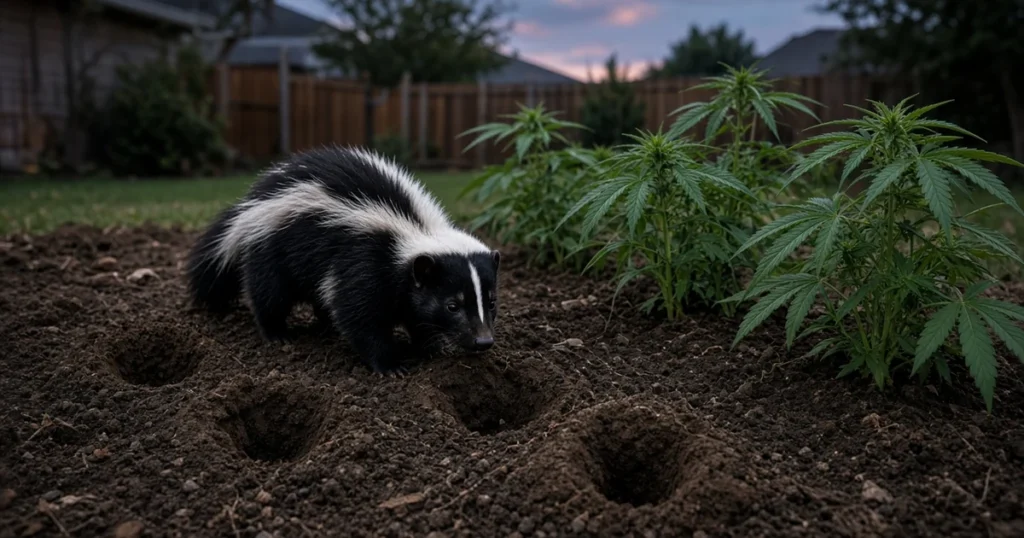
Quick answer: Skunks seldom eat cannabis, but they dig small cone shaped holes in beds and lawns while hunting grubs and other insects, and they may move in under nearby decks or sheds. UC IPM, the integrated pest program in California, and University of Maryland Extension both say the best approach is to remove food, water and shelter, then close off den openings with 1/4 inch hardware cloth once the animal is gone. Trapping is a job for licensed professionals in most cases.
Do Skunks Damage Cannabis Plants?
Not directly, in most cases. University of Maryland Extension states plainly that skunks pose no threat to landscape plants. The trouble is digging. Both sources say skunks tear up sod and dig small pits while they search for grubs. In a cannabis bed, that digging can loosen young transplants, expose shallow roots and scatter mulch.
UC IPM notes that skunks eat a very mixed diet that includes insects, grubs, earthworms, small rodents, mushrooms, berries, fruit, pet food and garbage. They also like ripening berries and fallen fruit. A garden with fruit trees, a compost pile and a grub problem in the lawn is an easy target.
What Do Skunk Diggings Look Like?
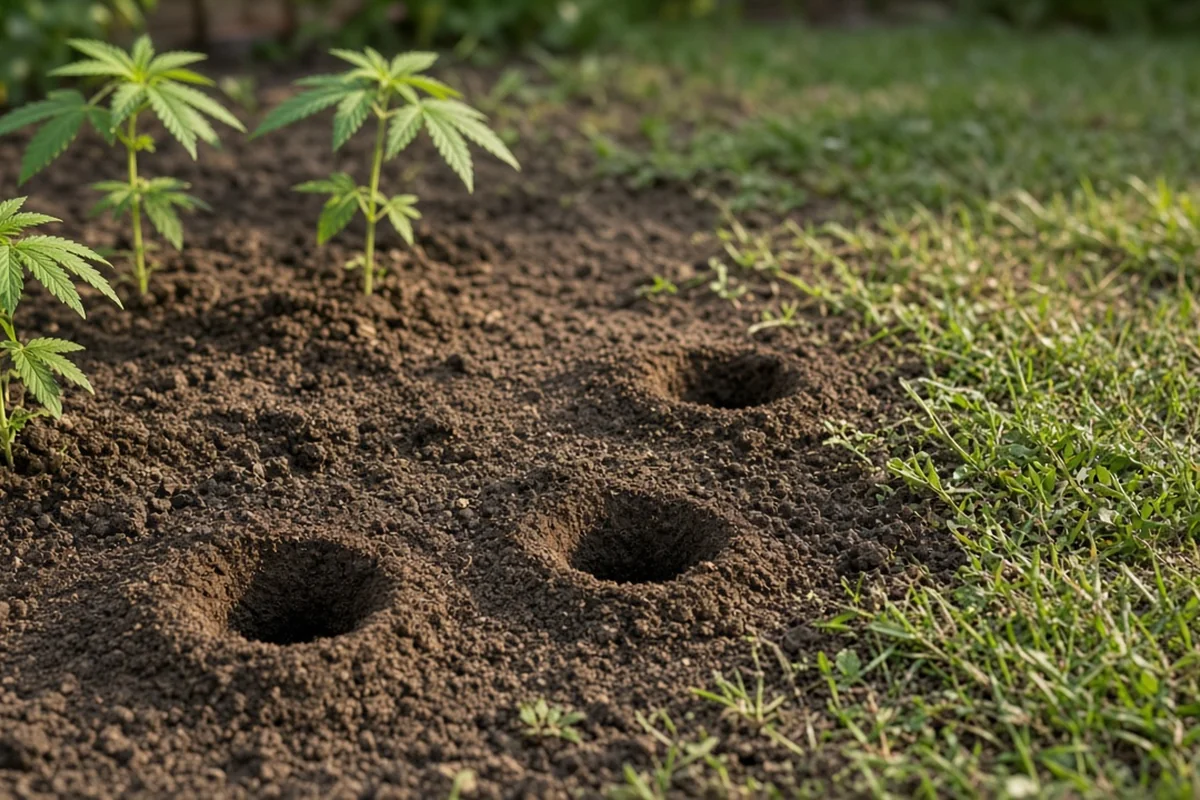
Skunk diggings are small cone shaped pits. UC IPM describes small pits or cone shaped depressions about 3 to 5 inches across. Maryland Extension gives a similar size, roughly 3 inches wide and 3 inches deep. Raccoons tend to roll back sod in strips instead, and UC IPM says skunks sometimes do that too.
More signs to check:
- A faint skunky smell along regular travel routes, even without a spray
- Dogs barking at night, then a strong odor after a confrontation
- Spraying odors in late winter, when males fight during breeding season
- Burrows under porches, low decks and sheds
UC IPM notes that most people never see skunks because they travel at dawn, dusk and night. If you need to rule out other diggers, our posts on moles in cannabis gardens and squirrels and chipmunks in cannabis gardens describe their signs.
Why Do Skunks Come Into Gardens?
They follow food, water and shelter. UC IPM says those three things draw skunks to residential areas. Maryland Extension lists pet food, bird feeders, uncovered trash and compost piles as outside food sources to remove.
Grubs are a big lure. UC IPM suggests that keeping lawn grubs and insects in check can shrink the skunk food supply and in theory discourage digging. Our guide to white grubs in cannabis soil explains how to check a bed for them.
How to Keep Skunks Out of a Cannabis Garden
- Pick up food daily. UC IPM advises removing fallen fruit and spilled bird seed often and bringing pet food in by nightfall.
- Fix the compost. Keep food scraps out of compost bins and use a hot compost method, as UC IPM recommends. Our post on composting cannabis garden waste explains how to build heat.
- Close the trash. UC IPM calls for garbage cans with tight lids. Maryland Extension notes skunks will raid garbage left outside in plastic bags.
- Reduce cover. UC IPM suggests cutting back overgrown shrubs and stacking firewood tightly, ideally at least 18 inches off the ground.
- Clear ground debris. UC IPM says to remove boards, rocks and debris on the ground because the insects skunks eat hide underneath.
- Control rodents. UC IPM adds that keeping mice and rats in check removes another food source.
- Screen den sites. UC IPM recommends 1/4 inch mesh hardware cloth over openings under sheds, porches and decks, buried at least 6 inches where there is soil.
- Confirm the den is empty first. See the next section before sealing any opening.
Skunk Exclusion Steps at a Glance
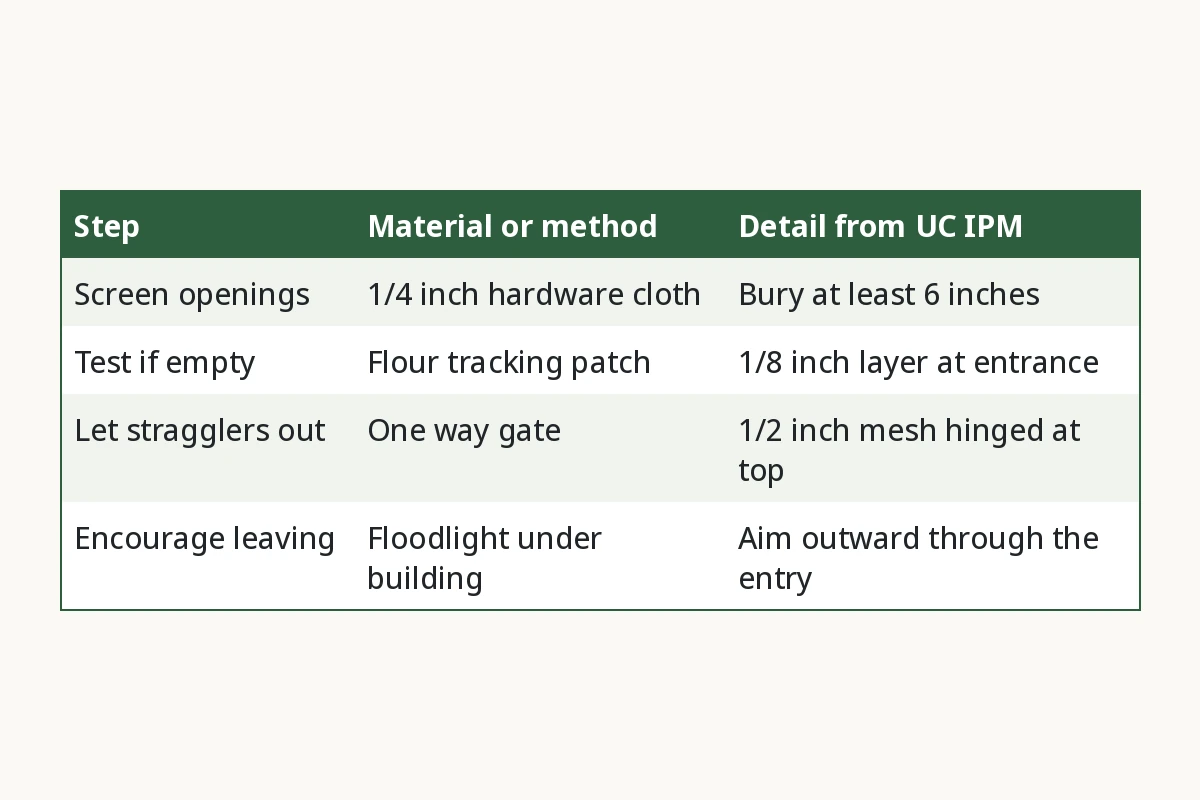
| Step | Material or method | Detail from UC IPM |
|---|---|---|
| Screen openings | 1/4 inch hardware cloth | Bury at least 6 inches |
| Test if empty | Flour tracking patch | 1/8 inch layer at entrance |
| Let stragglers out | One way gate | 1/2 inch mesh hinged at top |
| Encourage leaving | Floodlight under building | Aim outward through the entry |
UC IPM explains that a one way gate must be larger than the opening so it only swings outward. It warns that the gate will not help if kits are too young to walk.
How Do You Get a Skunk Out From Under a Shed?
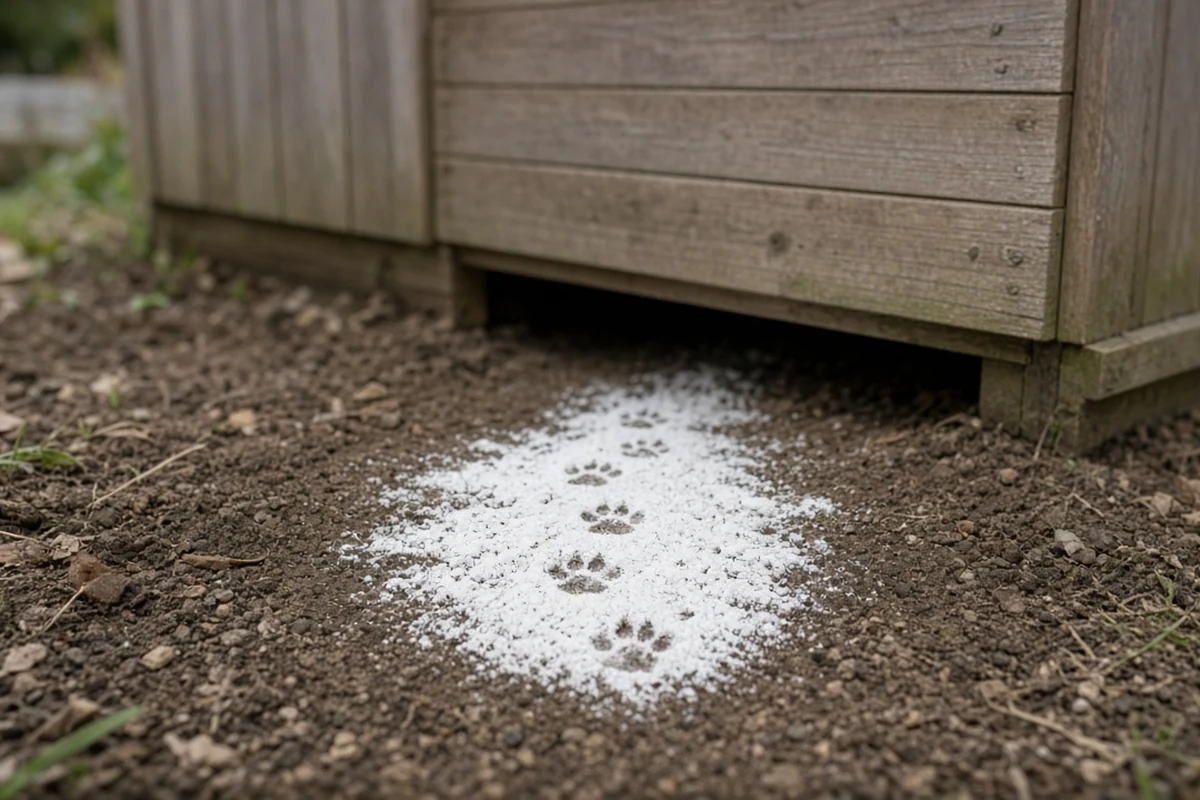
Wait until it leaves, then seal the opening. UC IPM suggests spreading a smooth layer of flour about 1/8 inch thick in front of the entry and checking it soon after dark. Footprints leading out mean the animal has left. If you are not sure all skunks are out, UC IPM describes a one way gate that lets them exit but not return.
Timing matters. UC IPM says striped skunks usually breed in February and March, and litters of 4 to 6 kits follow their mother after 2 to 3 months. Sealing a den in spring can trap young inside. UC IPM notes that spray odors in late winter are a signal to block nesting sites before pregnant females move in.
Maryland Extension mentions rags soaked in household ammonia as a repellent under porches. UC IPM cautions against placing ammonia or other strong odor products under an occupied building because fumes can get inside.
Is It Safe to Trap a Skunk Yourself?
Usually it is better to hire help. UC IPM says people with no skunk trapping experience should hire a professional wildlife control operator, who is much less likely to get sprayed. Maryland Extension encourages contacting the state nuisance wildlife hotline or a licensed operator.
Moving a skunk is often illegal. UC IPM says California prohibits relocation without a permit and that rabies makes a permit unlikely. Maryland Extension says skunks are a rabies vector species there and cannot be relocated after capture. Check your own state rules before doing anything.
UC IPM also warns that rodent poison baits must never be used on skunks. No toxicants are registered for them, and misuse can poison pets.
How Do You Avoid Getting Sprayed?
Move slowly and give space. UC IPM says skunks are mild tempered, prefer to flee and usually spray only when startled, cornered or hurt. They warn first by stamping their front feet, hissing and raising the tail. UC IPM notes they can hit a target 6 to 10 feet away and that the spray can burn the eyes.
If a person or pet is sprayed, UC IPM reports a home remedy mixed fresh from 1 teaspoon of liquid soap, a quarter cup of baking soda and 1 quart of 3% hydrogen peroxide. It must not be stored in a bottle, and it must be kept out of the eyes. For pets, UC IPM advises calling your veterinarian for current washing advice. Never apply this mix to cannabis plants.
Troubleshooting Skunk Problems
New holes appear every morning. Grubs are likely drawing the skunk. Check the soil and nearby lawn for grubs, and remove fallen fruit and pet food.
The smell lingers around the yard. UC IPM says a faint odor along travel routes is common even without a spray. Look for a den under a deck, porch or shed.
A skunk is out in daylight acting strangely. Maryland Extension says aimless wandering, aggression, poor coordination or unusual tameness can signal rabies. Keep away and call animal control.
You sealed a den and the digging got worse. An animal may be trapped inside. Reopen the hole and use a flour patch or one way gate as UC IPM describes.
Ammonia rags stopped working. UC IPM says commercial skunk repellents are not very effective. Focus on exclusion and food removal.
Transplants keep getting knocked loose. Firm soil around the stems, water them in and add a short wire collar until roots settle.
Sources
- UC Statewide IPM Program, University of California, Pest Notes: Skunks: https://ipm.ucanr.edu/home-and-landscape/skunks/
- University of Maryland Extension, Skunks: https://www.extension.umd.edu/resource/skunks
FAQ
How big are skunk holes?
They are small cone shaped pits. UC IPM puts them at 3 to 5 inches across, and Maryland Extension says about 3 inches across and 3 inches deep.
Are skunks dangerous to people?
Healthy skunks are not aggressive, as UC IPM describes it. The main risks are spray and rabies, so never handle a skunk that acts oddly.
Do skunks hibernate?
No. UC IPM says skunks do not hibernate, though they may share dens in cold weather.
Will a dog keep skunks away?
Not reliably. UC IPM notes skunks often spray dogs that bark and rush at them.
What bait do skunk trappers use?
UC IPM lists sardines, canned cat food, tuna and bacon, plus sweet baits like peanut butter or apples that may catch fewer cats.
Should I use mothballs or poison?
No. UC IPM warns that rodent baits must never be used on skunks, and repellents work poorly.


