
Row Covers for Cannabis: Types, Weights and Setup
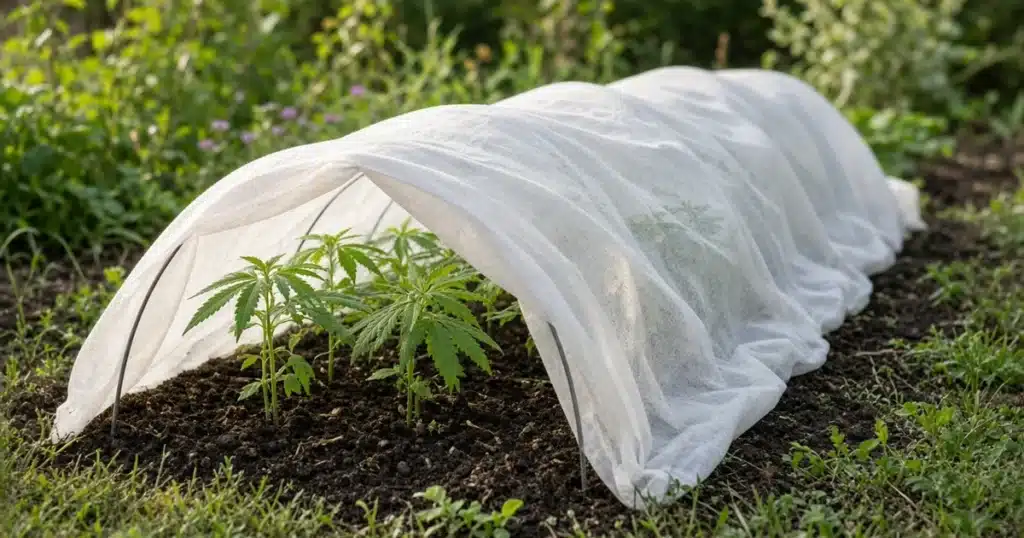
Row covers for cannabis are light fabric sheets laid over young plants or stretched across hoops to shield them from cold nights, wind, hard rain and many insect pests. They are cheap, reusable and simple to set up, which makes them a practical tool for outdoor growers who plant out early or want to protect transplants through their first weeks. What follows covers the types of row cover, how fabric weight changes light and frost protection, how to set covers up, and when to vent or remove them.
What is a row cover?
University of Maryland Extension describes row cover as a white, lightweight, non-woven fabric made from spun-bonded polyester or polypropylene. It looks gauzy and lets air, sunlight and water pass through. Gardeners use it to raise temperature and humidity around plants in spring and fall, to extend the season with 2 to 8°F of frost protection, and to keep out insects and larger animals.
Utah State University Extension adds that row covers can be made of polyester, polypropylene or polyethylene. The fabric types are usually spunbonded or non-woven, while woven options include thicker fabric and plastic insect mesh. Covers can be vented or unvented, and they can lie directly on the plants or ride on hoops.
What types of row cover are there?
- Floating row cover. Fabric laid straight onto the plants. University of Maryland Extension explains that with enough slack, the growing plants push the cover upward on their own.
- Hoop-supported cover, or low tunnel. Fabric or plastic stretched over wire, metal or PVC hoops. Utah State Extension lists 3/4-inch bendable PVC, metal hoops and small wire hoops as common supports.
- Insect netting. A woven mesh made mainly for pest exclusion. It traps less heat than fabric, which makes it the better choice in summer.
- Clear or pigmented plastic. Used over hoops or trenches to warm soil and plants early in the season. It does not breathe like fabric, so it needs close watching for heat.

How does fabric weight change protection?
Weight is given in ounces per square yard. Heavier fabric holds more heat but lets less light through. That trade-off decides which weight fits each job.
| Grade | Weight (oz per sq yd) | Light transmittance | Frost protection |
|---|---|---|---|
| Lightweight | 0.45 | 90 to 95% | About 2°F |
| Medium-weight | 0.5 to 1.0 | 70 to 85% | 4 to 6°F |
| Heavyweight | 1.5 to 2.2 | 30 to 50% | Up to 8°F |
Source: University of Maryland Extension, Vegetable Garden Weather and Pest Protection (vegetable crops, not cannabis-specific).
University of Maryland Extension notes that the lightweight grade is sold mainly as an insect barrier and can stay on some crops for their whole life. It recommends a support structure for medium and heavy covers, since their weight can press on plants. Cannabis needs strong light to grow well, so heavy covers are best kept to short cold spells rather than left on for days.
How do you choose the right cover?
Match the cover to the main threat:
- Cold nights after planting out. Medium-weight fabric on hoops gives useful frost protection while letting most light through. Add a heavier layer only on the coldest nights.
- Insects on young plants. Lightweight fabric or insect netting, sealed tightly at the edges.
- Wind and heavy rain. Any fabric weight helps. University of Maryland Extension notes that covers shield new plantings from damaging winds and intense rainfall.
- Animals. Covers also keep out rabbits, deer and birds while they are in place. Longer-term options for the first of those pests are in rabbits and cannabis.
Utah State Extension adds that mesh size decides which insects are kept out. Thrips, whiteflies, aphids and spider mites need the finest mesh, while larger openings stop moths, stink bugs and squash bugs. Check the mesh rating against the pest you are targeting.
How do you set up a row cover, step by step?
- Plant or transplant first, then cover right away. University of Maryland Extension advises installing covers as soon as possible after planting, both for weather protection and so pests do not get in first.
- Inspect plants and soil before covering. Utah State Extension warns that pests already on the plants or in the soil will be sealed in with them.
- Set hoops every few feet along the bed if you are using medium or heavy fabric. Leave room for the plants to grow upright.
- Cut the fabric with scissors, allowing extra width and length to reach the ground on all sides and cover both ends.
- Lay the fabric over the hoops and clip it in place.
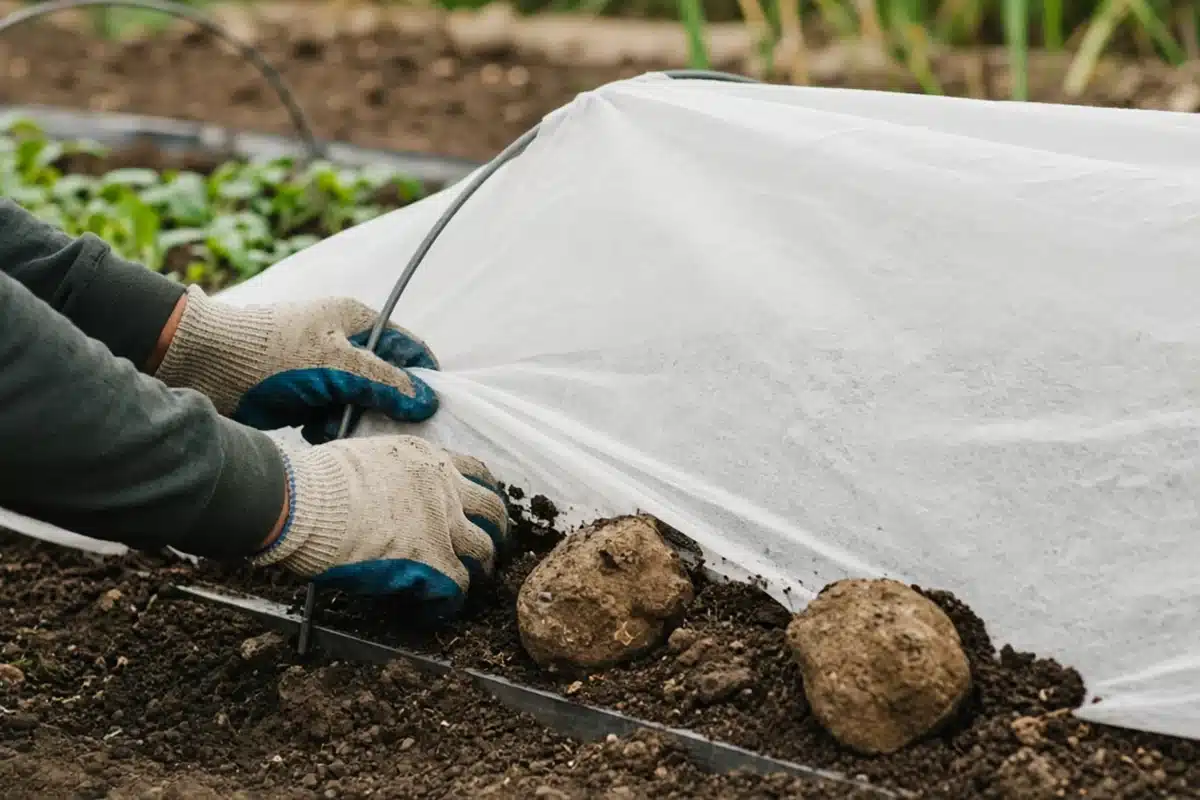
- Secure the edges with soil, rocks, boards or sandbags. Utah State Extension suggests weighting the edges about every 3 feet to block pests and keep wind from lifting the cover. Landscape staples work but can tear the fabric.
- Run drip line or a soaker hose under the cover if you can. Rain passes through fabric, but University of Maryland Extension suggests pulling the cover back when hand-watering.
Build the frame to last. University of Maryland Extension points out that the same frames can carry clear plastic in cold weather or shade cloth in hot, full sun, so one set of hoops can serve the bed through most of the season. Utah State Extension adds that PVC pipe and rebar frames can last at least 10 years.
When do you vent or remove the cover?
Heat is the biggest risk. University of Maryland Extension reports that in summer, temperatures under a row cover can run 5 to 15°F higher than outside, which can lead to heat stress. For crops such as tomatoes and peppers, it notes flowers can drop when daytime temperatures top 90°F. Cannabis has its own limits, but the same rule applies: check under the cover on warm, sunny days.
- Open the ends or pull back one side on warm afternoons, then close it again before evening if a cold night is forecast.
- Swap fabric for insect netting once nights stay mild and pests are the main concern.
- Remove covers once plants are well rooted and the weather is settled, or once plants outgrow the hoops.
- Remove covers before plants are crowded against the fabric. University of Maryland Extension notes that repeated rubbing in wind can damage stems and leaves, and that covers are hard to use over tall plants.
Plants kept under covers have had a softer start. Give them a few days of gradual exposure, as you would in hardening off cannabis seedlings, before full removal.
What problems can row covers cause, and how do you fix them?
| Problem | Likely cause | Fix |
|---|---|---|
| Wilting or scorched tips on warm days | Heat buildup under fabric | Vent or switch to netting |
| Pests found under the cover | Pests sealed in, or a gap at the edge | Remove cover, deal with pests, reseal edges |
| Fast weed growth | Same warmth that helps plants | Pull back cover and weed |
| Torn fabric | Wind, rocks, staples or abrasion | Patch or replace, use hoops and smooth weights |
| Pale, stretched growth | Too little light under heavy fabric | Use lighter fabric, or remove during the day |
Troubleshooting guide drawn from the University of Maryland and Utah State row cover guidance cited below.
Utah State Extension notes that pests that get under a cover can build up fast without natural enemies, so check under covers often. University of Maryland Extension adds that higher humidity and less air movement may raise disease risk, although research on that has been inconclusive.
What changes by stage?
Seedlings and fresh transplants. This is when covers do the most good. Use medium-weight fabric for cold nights and lightweight fabric or netting for pests.
Early vegetative growth. As days warm, vent more often and move to lighter covers. Watch closely for heat on sunny afternoons.
Later vegetative growth. Most plants outgrow low tunnels. Remove covers or raise them on taller frames, and keep shade or wind protection for extreme weather. A related tool for heat and strong sun gets its own write-up, shade cloth for cannabis.
Late season. A heavy cover over a frame can help on the occasional cold night, but take it off in the morning to restore full light. Plants that get hit by cold anyway can still be helped, and Kind Seed Co lays out next steps in frost damage on cannabis.
How do you store and reuse covers?
University of Maryland Extension says row cover can be reused for 2 to 3 years and that its useful life is usually 1 to 3 years, depending on weight, use and weather. Lightweight fabric wears out sooner. Utah State Extension suggests hosing covers clean, letting them dry completely, and storing them indoors in sealed bags or bins, since mice will nest in stored fabric.
What are common mistakes?
- Leaving covers closed on hot, sunny days.
- Covering plants that already have pests on them.
- Leaving gaps at the edges where insects can crawl in.
- Using heavy fabric for long periods and starving plants of light.
- Letting plants grow tight against the fabric.
- Pulling covers off all at once without letting plants adjust.
Sources
- University of Maryland Extension. Vegetable Garden Weather and Pest Protection. https://www.extension.umd.edu/resource/vegetable-garden-weather-and-pest-protection
- Utah State University Extension. Row Covers. https://extension.usu.edu/planthealth/research/row-covers
FAQ
Do row covers protect cannabis from frost?
Yes, within limits. University of Maryland Extension reports 2 to 8°F of frost protection, depending on fabric weight. Lightweight fabric gives about 2°F and heavyweight up to 8°F. That can carry young plants through a light frost, but it will not save them from a hard freeze.
What weight of row cover should I use?
Use medium-weight fabric for cold nights, since it blocks some cold while letting most light through. Use lightweight fabric or insect netting for pest protection in mild weather. Keep heavyweight fabric for the coldest nights only, because it can cut light by half or more.
Can I leave a row cover on during hot weather?
It is risky. Temperatures under fabric can run 5 to 15°F higher than outside, according to University of Maryland Extension. On warm, sunny days, open the ends or pull back one side. If pests are still a concern, switch to insect netting, which traps far less heat.
How do I keep wind from blowing off a row cover?
Weight the edges every few feet with soil, rocks, boards or sandbags. Utah State Extension suggests about every 3 feet. Use hoops so the fabric is not rubbing on plants, and avoid sharp weights that can tear the fabric during gusts.


