
How to Regrow Green Onions in Water: From Kitchen Scraps to a System
The short answer
You can regrow green onions by standing the white root ends in a little water on a bright sill. New shoots appear within days. Change the water often. Water alone holds no nutrients, so the shoots get thinner over time. Move the bulbs to soil or a hydroponic system for longer harvests.
Green onions are the easiest kitchen scrap to bring back to life. All you need is a jar, some water and a window.

How do you regrow green onions in water?
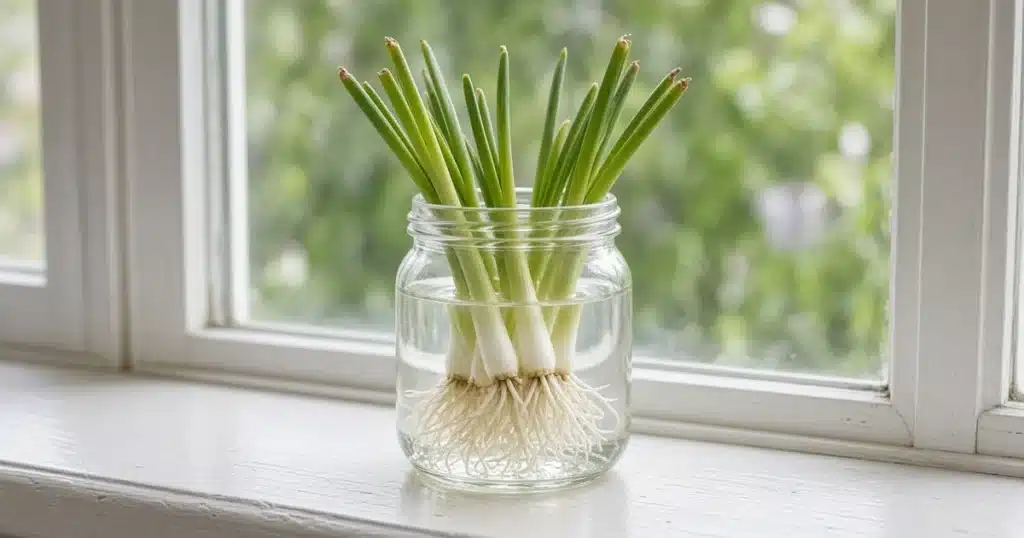
Start with the white ends you would normally throw out. Save about an inch or two of the white part with the roots attached.
The Iowa State University Extension guide to growing vegetables from kitchen scraps lists green onions as one of the simplest scraps to regrow. Stand the ends roots down in a small glass. Add enough water to cover the roots but not the whole bulb.
Set the glass in a bright, warm window. Green shoots will push up from the center of each bulb. Within a week or so you can snip them for cooking.
The University of Illinois Extension guide to regrowing scrap veggies adds that fresh water helps the roots stay healthy. Change it every few days, or at least once a week. Cloudy or smelly water means it’s time for a change.
Rinse the bulbs gently when you change the water, which removes any film that forms on the roots.
How long does water regrowth last?
Water regrowth does not last forever, as each bulb relies on the energy stored in its white base. Plain water adds no nutrients to replace it.
The first regrowth is usually the strongest. Later shoots tend to be thinner and paler. After a few rounds, growth slows and the bulb may soften.
That is normal. Water regrowth is a quick way to stretch one bunch of onions. It’s not a long term growing method.
The UF/IFAS Gardening Solutions page on grocery store starts notes that many grocery store plants can be moved to the garden. Green onions are a good example. Once roots are well grown, they settle well in soil.
| Stage | What to do | Source |
|---|---|---|
| Save scraps | Save the white ends with roots | Iowa State University Extension |
| Water start | Stand roots in shallow water, change it often | University of Illinois Extension |
| Snip shoots | Cut green tops as they grow | Iowa State University Extension |
| Move on | Plant rooted bulbs in soil or a system | UF/IFAS Gardening Solutions |
When should you move onions to soil or a system?
Move bulbs once the roots are long and the shoots start to thin. This often happens after a couple of harvests.
For soil, use a pot with drainage holes and a light potting mix. Plant the bulbs so the white part sits below the surface. Water well and set the pot in bright light.
Outdoors, green onions grow in a sunny bed or container. Space them a few inches apart. They tolerate cool weather and grow through much of the year in mild regions.
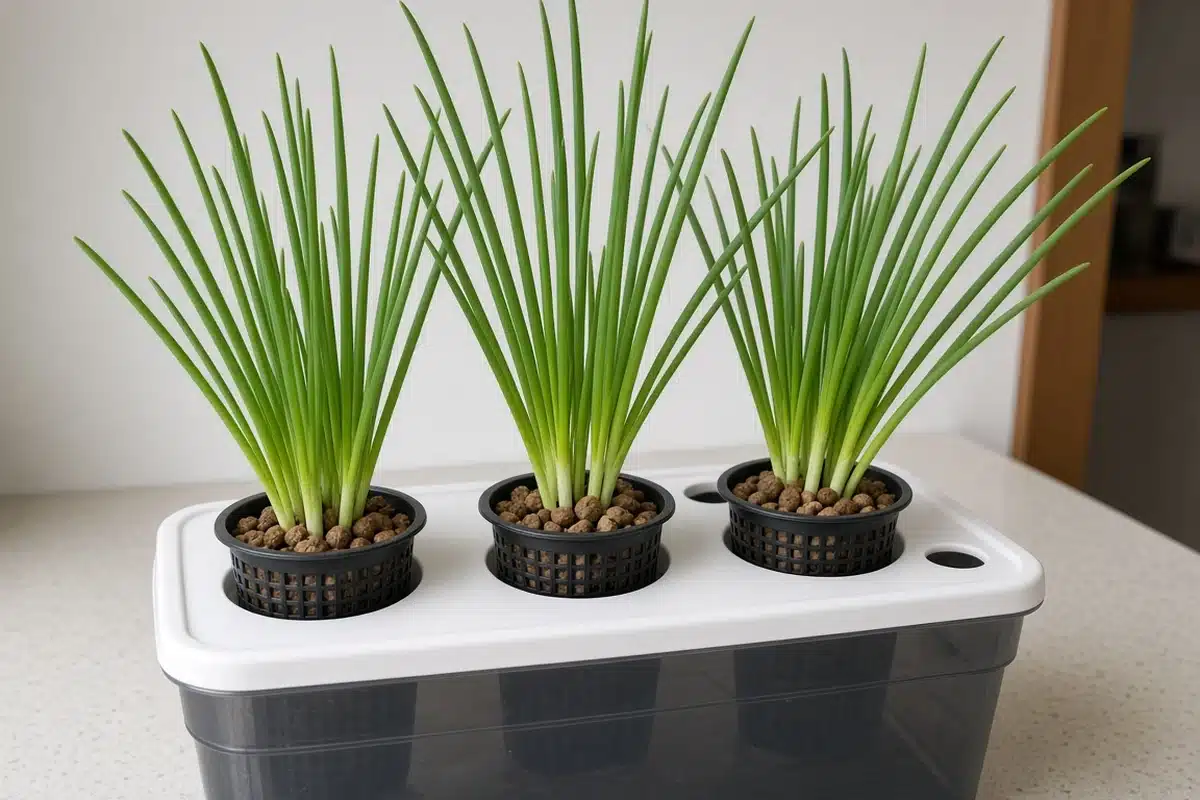
A hydroponic system is another choice. Set each bulb in a net pot filled with clay pebbles or another inert medium. Let the roots reach the nutrient solution. Our post on hydroponic in different mediums compares the options.
In a system, green onions go on growing for months. The nutrient solution replaces what plain water lacks. Stay on top of water changes and cleaning. Our post on caring for your hydroponic system covers the basics.
What else can you regrow from scraps?
Green onions are only the start. The same guides list several other kitchen scraps that regrow.
Celery bases sprout new stalks from the center. Romaine lettuce bases push out a few new leaves. Leeks regrow much like green onions.
Herbs such as basil and mint root from cuttings in water. Once rooted, they grow well in pots. See our list of 10 easy to grow herbs that wont get you high for ideas.
Not every scrap gives a full crop, but many give a small bonus harvest. That’s still a fun way to learn how plants grow.
How do you get the most from each bunch?
Buy bunches with healthy white roots still attached. Firm bulbs regrow faster than soft ones.
Use the green tops first, then set the bases in water the same day. Fresh scraps root quickly.
Have a few glasses going at different stages. That way you always have shoots ready to cut.
How to: step by step
- Save the white ends with roots attached.
- Stand them roots down in a jar with shallow water.
- Set the jar in a bright, warm window.
- Change the water at least once a week.
- Snip new shoots as needed.
- Move bulbs to soil or a simple hydroponic setup for longer growth.
Use clean scissors when you cut. Leave an inch or so of green above the bulb so it can continue growing.
Troubleshooting
Slimy bulb base. The water is stale. Change it more often and rinse the roots.
Thin pale shoots. Light is too low. Move the jar to a brighter window.
Shoots stop growing. The bulb has used its reserves. Replant it in soil or a system.
Bad smell. Bacteria are growing in old water. Rinse the jar and start with fresh water.
Bulbs fall over. The jar is too wide. Use a narrow glass or bundle the bulbs with a band.
Regrowing green onions turns one grocery bunch into weeks of fresh tops. Kind Seed Co shares more garden ideas in outdoor growing.
Sources
- How to grow vegetables from kitchen scraps, Iowa State University Extension, Yard and Garden, How to grow vegetables from kitchen scraps
- Regrowing scrap veggies, University of Illinois Extension, Regrowing scrap veggies
- Grocery store starts, UF/IFAS Gardening Solutions, Grocery store starts
FAQ
How many times can green onions regrow?
In water, most bulbs give a few good harvests before they weaken. In soil or a system with nutrients, they can go on growing for months.
Can you regrow onions from the grocery store?
Yes. Store bought green onions with roots attached regrow well. Save the white base and stand it in a little water.
Do regrown onions taste the same?
Yes, the flavor is much the same. Later shoots grown in plain water may be thinner and milder.
Can you regrow other vegetables this way?
Celery, romaine, leeks and some herbs also regrow from scraps. Most give a smaller bonus harvest rather than a full crop.
Should the whole bulb sit under water?
No. Cover the roots and the lower part of the base. A dry top helps prevent rot.



