
Semi Hydroponics for Houseplants: Inert Media and Reservoir Pots
The short answer
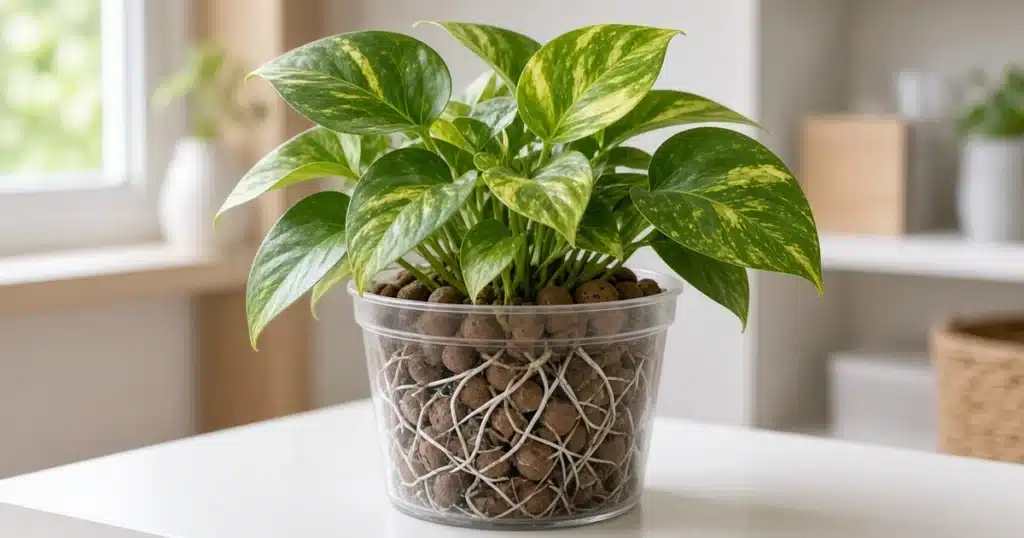
Semi hydroponics grows houseplants in inert media such as expanded clay or pumice, with a small reservoir that wicks water up to the roots. There is no pump. The media holds air and water but no food, so plants need a dilute nutrient solution. Many tropical houseplants adapt well once new roots form.
Semi hydro, as many growers call it, sits between soil and full hydroponics. It is simple, clean and easy to read at a glance.
How does semi hydroponics work?
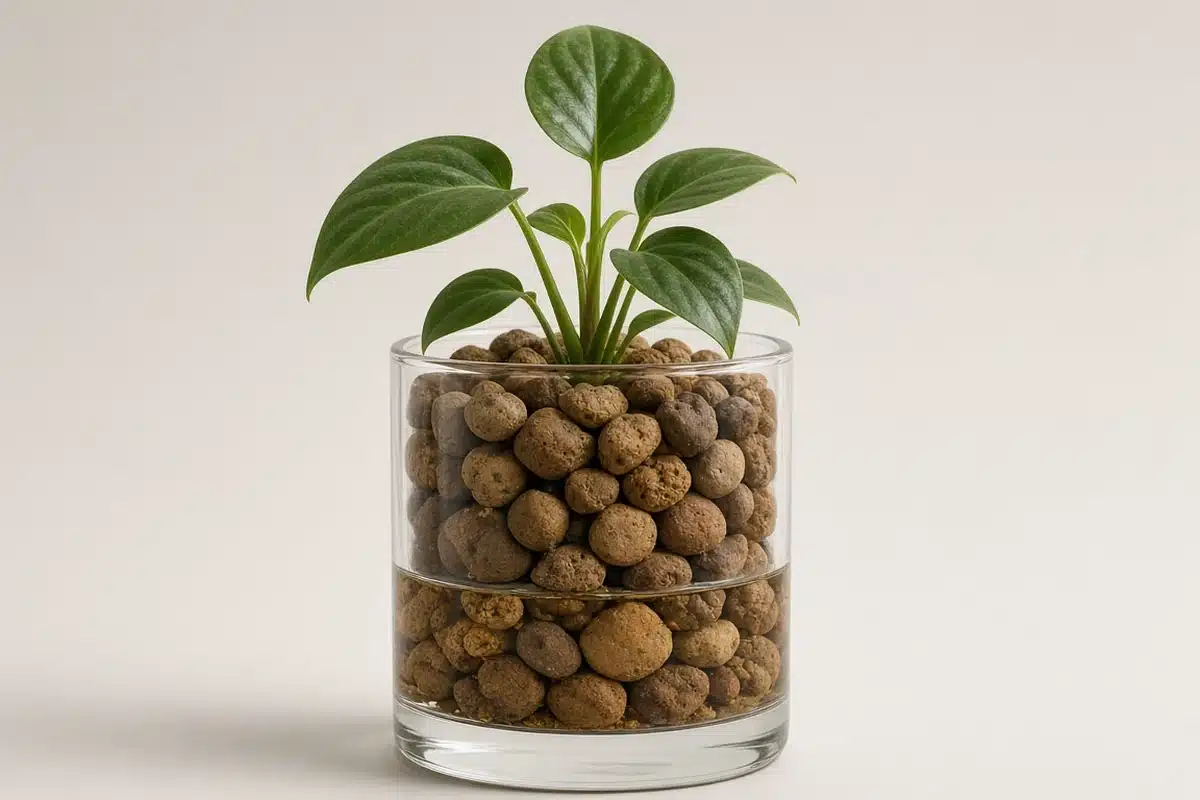
A semi hydro pot has two parts. The inner pot holds the plant in loose inert media and has holes near the bottom. The outer pot holds a shallow pool of nutrient solution.
Water moves up through the media by wicking. The UC Agriculture and Natural Resources Master Gardener handout on wicking hydroponics explains this passive style. A porous medium draws solution upward from a reservoir to the roots. No pump, timer or air stone is needed.
The lower part of the pot stays wet. The upper part stays moist and airy, and roots find the zone that suits them and grow there.
Because the media is inert, it adds no nutrients. The University of Illinois Extension home hydroponics handouts note that soilless growing depends on a complete nutrient solution. Every feeding has to supply what the plant needs.
| Media | Traits | Notes |
|---|---|---|
| Expanded clay pebbles | Light, airy, reusable | Wicks less than finer media |
| Pumice | Porous mineral, holds some water | Heavier, very stable |
| Lava rock | Rough and porous | Rinse well before use |
| Perlite | Very light, holds air | Can float when watered |
Sources: UC Agriculture and Natural Resources, University of Illinois Extension, University of Minnesota Extension.
Which houseplants adapt well?
Many common tropical houseplants switch to semi hydro without much trouble. Pothos, philodendrons, peace lilies and many aroids are popular choices.
Plants that like steady moisture tend to do well, and their roots handle the damp lower zone of the pot.
Succulents and cacti are harder. They prefer to dry out fully, and the constant reservoir can leave them too wet.
Orchids are a special case, and some growers grow them in semi hydro with good results. Others find the switch stressful. Start with a healthy plant and a type you already know.
How do you move a plant from soil?
The switch is the riskiest step. Soil roots and water roots are not quite the same. Many plants drop a few soil roots and grow new ones suited to the wet media.
Start with a healthy plant in active growth. Spring and early summer are good times.
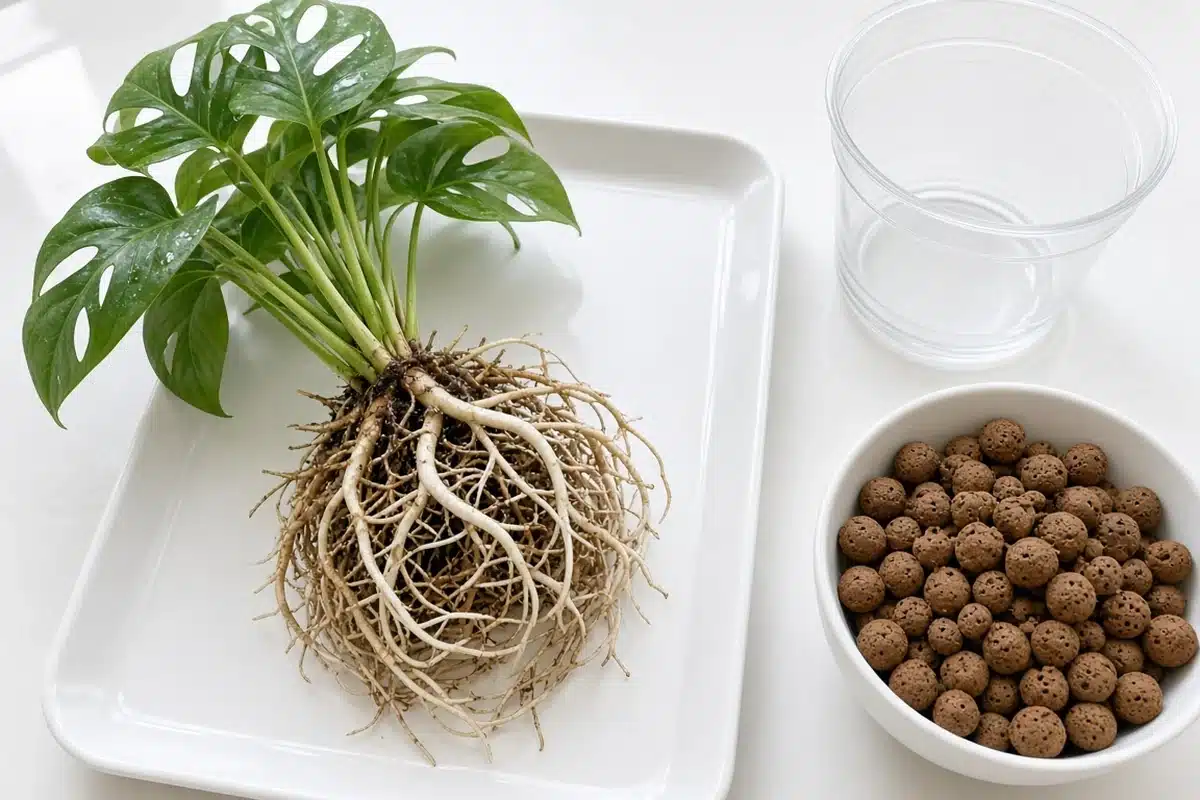
Wash every bit of old soil off the root ball. Any soil left behind can break down and foul the reservoir.
Trim dead or mushy roots with clean scissors. Leave firm white or tan roots in place.
Rinse the media well before potting. Dust from new clay or pumice can clog the pot.
Set the plant in the inner pot and fill around the roots with media. Place it in the outer pot with a low pool of plain water or dilute solution at first.
Expect a pause in growth for a few weeks. Some lower leaves may yellow. Once new roots appear, growth picks up again.
How do you feed and flush semi hydro pots?
Use a complete hydroponic nutrient mixed weaker than the label rate for houseplants. Plants in semi hydro drink steadily, so dilute feeding works well.
The University of Minnesota Extension guide to small scale hydroponics notes that soilless systems need regular checks of the solution. Salts build up as water evaporates.
Flush the pot with plain water from time to time. Pour water through the top and let it drain out fully, which rinses away salt crust on the media.
Hold the water level low. Fill only the bottom part of the outer pot. Let the level drop before you refill.
Our post on hydroponic in different mediums compares clay, rockwool and other options in more detail.
Where should semi hydro pots sit?
Light needs don’t change when you switch to semi hydro. Place each plant where it grew well in soil.
Clear outer pots let you see the water line, which is handy. They let light reach wet media, which can encourage algae. Many growers use a clear inner pot inside an opaque outer pot.
Warm rooms speed up water use. Check the reservoir more often in summer and near heaters.
How to: step by step
- Choose a healthy plant with active roots.
- Rinse all soil from the roots.
- Trim any dead or mushy roots.
- Transplant the plant into rinsed inert media in a pot with holes.
- Set it in an outer pot with a low reservoir.
- Feed with a dilute nutrient solution once new roots grow.
Self watering pots work on a similar idea. Our post on self watering pots for cannabis explains how reservoir pots move water to roots.
Troubleshooting
Leaf drop after switching. The plant is changing root types. Hold conditions steady and wait for new roots.
Root rot. The reservoir is too high. Lower the water line so the upper roots get air. Our post on overwatering and plant growth covers the signs.
Pale new leaves. The plant lacks nutrients. Add dilute solution at each fill.
White crust on media. Salts are building up. Flush the pot with plain water.
Algae on top. Light reaches wet media. Use an opaque outer pot.
Semi hydro takes a little patience at the start and then becomes easy to manage. Kind Seed Co shares more garden ideas in outdoor growing.
Sources
- Wicking hydroponics: a soilless growing method, UC Agriculture and Natural Resources, Master Gardeners, Wicking hydroponics
- Home hydroponics handouts, University of Illinois Extension, Home hydroponics handouts
- Small scale hydroponics, University of Minnesota Extension, Small scale hydroponics
FAQ
Is semi hydroponics the same as hydroponics?
It is a passive form of hydroponics. Roots grow in inert media and draw water by wicking, with no pump or air stone.
Do orchids grow in semi hydro?
Some do well. Results vary by type and plant health. Start with a vigorous plant and a low reservoir.
How often do you flush the pot?
Flush whenever you see white crust or every few fills. Pour plain water through the media and let it drain out.
Can you reuse the media?
Yes. Clay and pumice can be rinsed, soaked and reused. Remove old roots before you repot.
How long does the switch take?
Most plants need a few weeks to grow new roots. Growth slows during that time, then picks up again.



