Rice Water for Cannabis: What It Adds
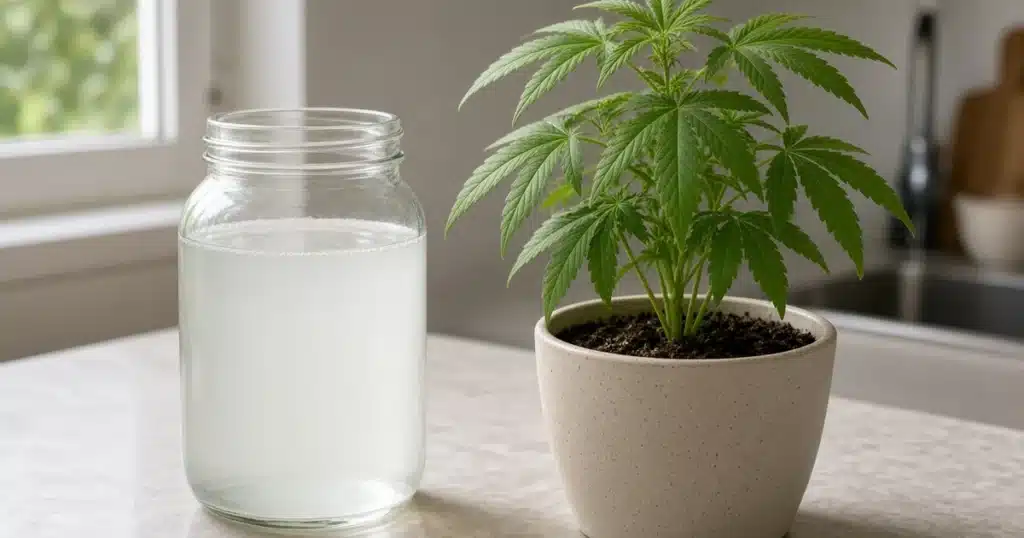
Quick answer: Rice water, the cloudy liquid left after rinsing or cooking rice, carries small amounts of plant nutrients, but nobody can say how much. Maryland Extension experts, answering through Ask Extension, say the nutrient content varies too widely to give a recommendation and suggest a fertilizer with a known analysis instead, especially for potted plants. A University of Hawaii Extension study of fermented rice water found a mixed bag of bacteria and no evidence for many online claims. For cannabis, rice water is at best a small extra. Use it sparingly, if at all, and keep feeding with a measured fertilizer.
What Is Rice Water?
Rice water is simply the water used to rinse raw rice or the water left after cooking it. It looks milky because it holds starch and fine particles washed off the grains. Online gardening tips often promote it as a free fertilizer.
It is easy to see the appeal. Many people cook rice often, and pouring the rinse water on plants feels less wasteful than sending it down the drain.
Does Rice Water Contain Plant Nutrients?
Some, yes. The UMD Extension reply on rice water fertilizer notes that rice rinse and cooking water may hold some nutrients plants can use, though research on it is thin.
UMD explains that nutrient amounts vary greatly with rice variety, where the rice was grown, how it was cooked and the soil it is applied to. Because of that, the Extension experts would not give a specific rate or schedule.
UMD points readers to one recent study that found some benefit in certain conditions. That study used field soil, not soilless potting mix, so UMD cautions that the results may not apply to container plants, which drain differently and hold nutrients differently.
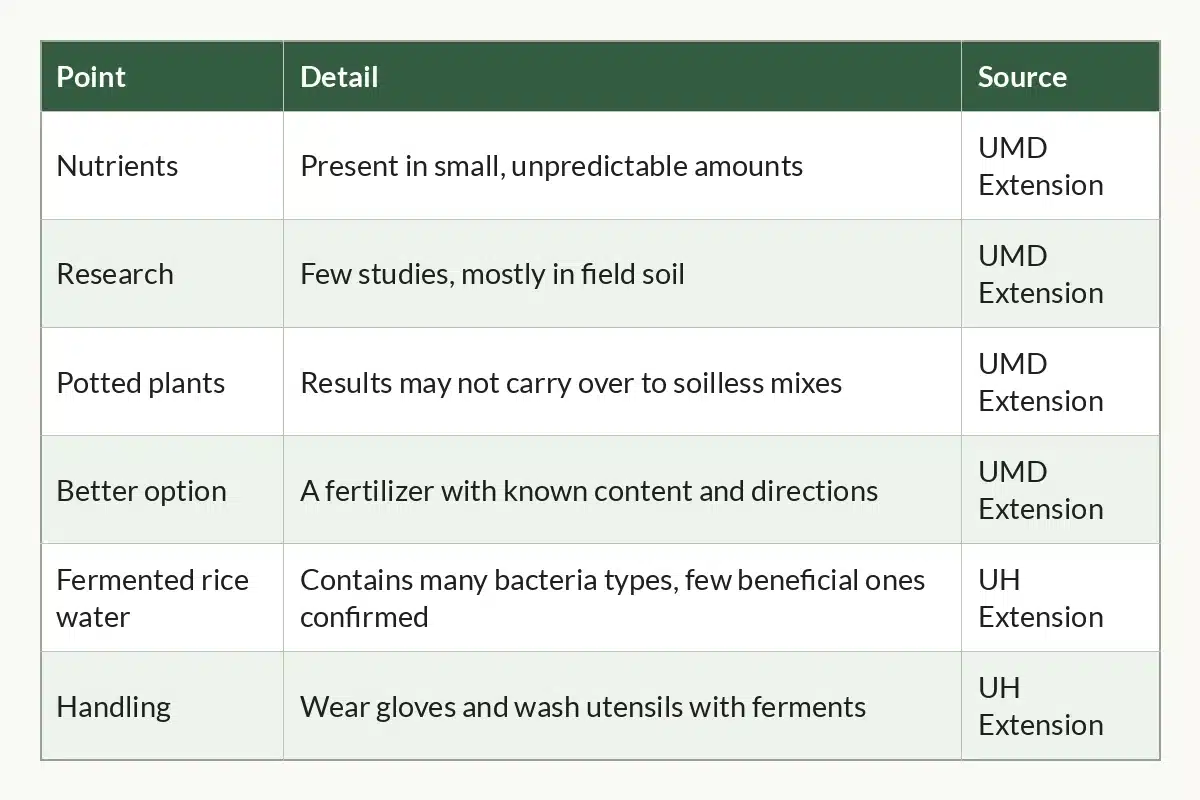
Rice Water at a Glance
| Point | Detail | Source |
|---|---|---|
| Nutrients | Present in small, unpredictable amounts | UMD Extension |
| Research | Few studies, mostly in field soil | UMD Extension |
| Potted plants | Results may not carry over to soilless mixes | UMD Extension |
| Better option | A fertilizer with known content and directions | UMD Extension |
| Fermented rice water | Contains many bacteria types, few beneficial ones confirmed | UH Extension |
| Handling | Wear gloves and wash utensils with ferments | UH Extension |
What Happens When You Ferment Rice Water?
Many online recipes call for letting rice water sit two or three days until it smells sour, sometimes mixing it with milk. These ferments are promoted as sources of helpful bacteria for plants.
A University of Hawaii Extension study of fermented rice water and milk tested that idea. The researchers noted that online sources showed no evidence that the helpful bacteria were actually present, and lacked documentation that the cultures improved plant growth.
In that study, only 3 of the 16 bacteria identified in the ferment, or 18.75 percent, were the lactic acid bacteria the recipes claim. Many of the others were types the authors flagged as a concern for people handling the liquid. They advised wearing disposable gloves and washing hands and utensils thoroughly when working with the ferment.
For a cannabis grower, the takeaway is simple. Fermented rice water is not a proven plant booster, and it calls for careful handling.
Is Rice Water Good for Cannabis?
There is no research on rice water and cannabis specifically. Going by Extension guidance, rice water probably will not hurt a plant in small amounts. It probably will not feed one in any meaningful way either.
Cannabis is a hungry crop. During fast growth it needs steady supplies of major nutrients and secondary minerals in amounts that a splash of rinse water cannot reliably provide. Relying on rice water in place of fertilizer risks underfeeding.
UMD’s advice fits cannabis well: for indoor plants and food crops, a fertilizer with a known nutrient content and dosing directions is simpler and more reliable. Reading the three numbers is easier with our fertilizer label guide.
What Are the Risks of Rice Water?
Rice water carries a few downsides worth weighing:
- Unknown dose. UMD notes that nutrient content swings widely, so you cannot plan feeding around it.
- Starch on the mix surface. Starch left on top of potting mix can feed mold and attract fungus gnats.
- Smell. Rice water that sits around turns sour quickly, especially in warm rooms.
- Bacteria in ferments. The Hawaii study found many bacteria types in fermented rice water and advised gloves and careful washing.
- Rice grown in polluted soil. UMD points out that rice plants readily take up heavy metals from contaminated soils, and that levels vary by region.
None of these make rice water dangerous to a plant in small, occasional doses, but together they suggest keeping expectations low.
How Does Rice Water Compare With Other Kitchen Inputs?
Rice water belongs to a family of kitchen tips, alongside molasses, banana peels and coffee grounds. Most of them share the same problem: nutrient levels are low or unknown. Our article on why growers use molasses for cannabis looks at another popular kitchen extra.
A compost pile is often a better home for kitchen scraps and leftover rinse water. Poured over the pile, the starch feeds the microbes that break down food waste, and you skip the risk of mold on your pots. Composting breaks food waste down into a stable soil amendment, without starch or sour smells near your plants.
If You Want to Try Rice Water on Cannabis
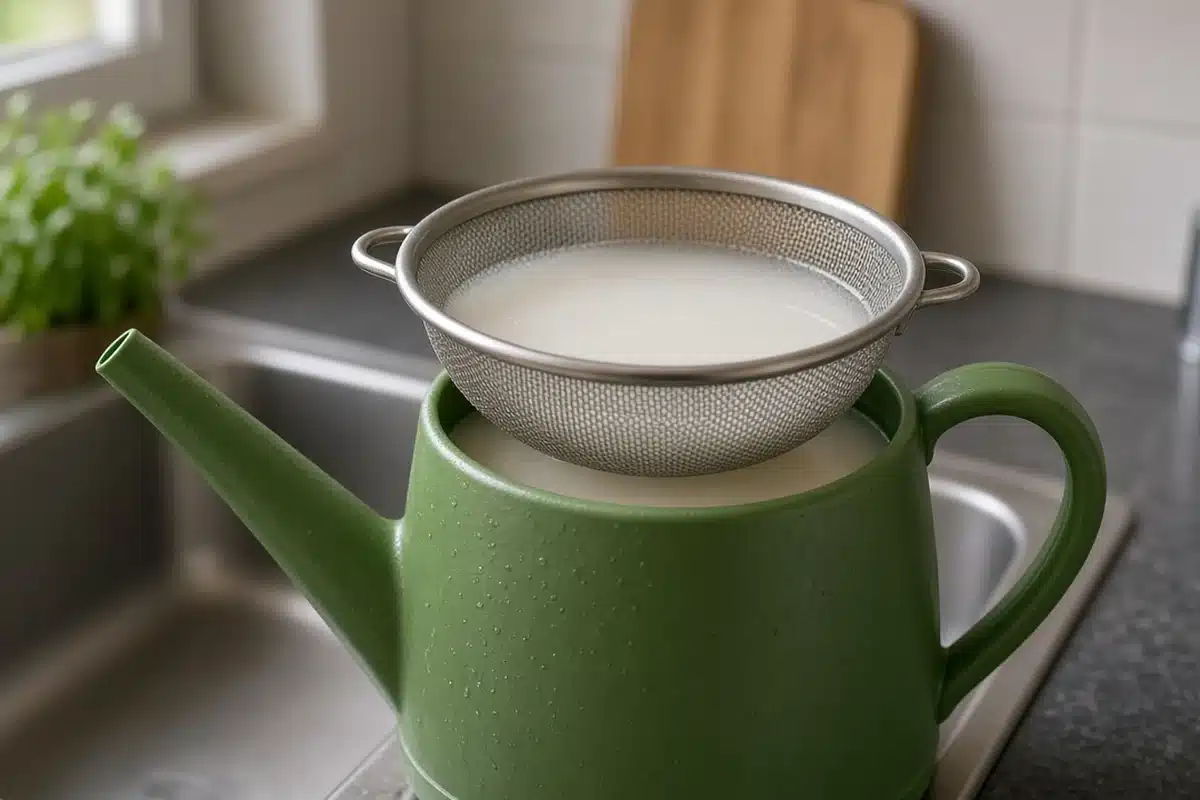
- Use plain rinse water. Skip cooking water with salt, oil or seasoning.
- Use it fresh. Apply within a day, before it sours.
- Dilute it. Mix with plain water to reduce starch on the mix surface.
- Water the soil only. Keep it off leaves.
- Use it occasionally. Count it as a small extra, not a feeding plan.
- Keep fertilizing. Continue with a measured fertilizer at label rates.
- Watch the mix surface. Stop if you see mold or gnats.
- Skip ferments. The Hawaii study gives little reason to brew them.
Troubleshooting Rice Water Problems
White fuzz on the mix surface. Starch is feeding mold. Stop using rice water and let the surface dry.
Fungus gnats appear. Damp, starchy mix attracts them. Give the mix more time to dry between waterings.
Sour smell from pots. Rice water soured before use. Use only freshly made rice water.
Plants look pale. They may be underfed. Return to a complete fertilizer.
No visible change. No surprise there. Rice water adds very little.
Why Do Online Rice Water Tips Spread So Fast?
Kitchen hacks travel well on social media because they cost little, take no effort and feel natural. A short video of a lush plant next to a jar of rice water can reach millions of viewers, even though it shows nothing about what caused the growth. The Hawaii researchers made a similar point, noting that online sources lacked systematic records of plant results.
When you see a claim like this, ask a few questions. Was there a comparison plant grown without the input? Were the plants otherwise fed and watered the same way? Did anyone measure the nutrients? Most rice water posts cannot answer these, which is why Extension experts stay cautious.
Does Rice Water Change Soil pH?
Fermented rice water turns sour as bacteria grow, which means it becomes more acidic. The Hawaii researchers tracked pH daily during fermentation for that reason. Their rice water started at pH 5.50 on day one and fell to 4.25 as it fermented. Small occasional doses are unlikely to shift the pH of a pot much, but frequent use of soured water could nudge an already acidic mix lower. If you use it, check runoff pH now and then.
How Should You Water Cannabis Instead?
The basics matter far more than kitchen extras. Water thoroughly, let the mix partly dry and feed with a fertilizer that suits the growth stage. Our guide to watering marijuana plants covers timing and amounts.
If reducing waste is the goal, use rice rinse water on ornamental plants outdoors, where UMD suggests it might be fine, or add it to compost.
Sources
- UMD Extension via Ask Extension, Rice Water Fertilizer (#862689): https://ask.extension.org/kb/faq.php?id=862689
- University of Hawaii CTAHR Extension, Identification of Bacteria in Fermented Cultures of Rice Water and Milk (SA 23): https://www.ctahr.hawaii.edu/oc/freepubs/pdf/SA-23.pdf
FAQ
Is rice water good for cannabis?
It adds small, unpredictable amounts of nutrients, so it cannot stand in for fertilizer.
Should I ferment rice water first?
The Hawaii study found little support for ferment claims and advised careful handling.
Can rice water hurt cannabis?
Small amounts are unlikely to harm plants, but starch can feed mold and gnats.
Is cooking water better than rinse water?
Avoid cooking water with salt or oil, since salt harms roots.
How often can I use rice water?
Only occasionally, alongside a measured fertilizer.