
Mealybugs on Cannabis: Spotting the Cottony Wax and Clearing It
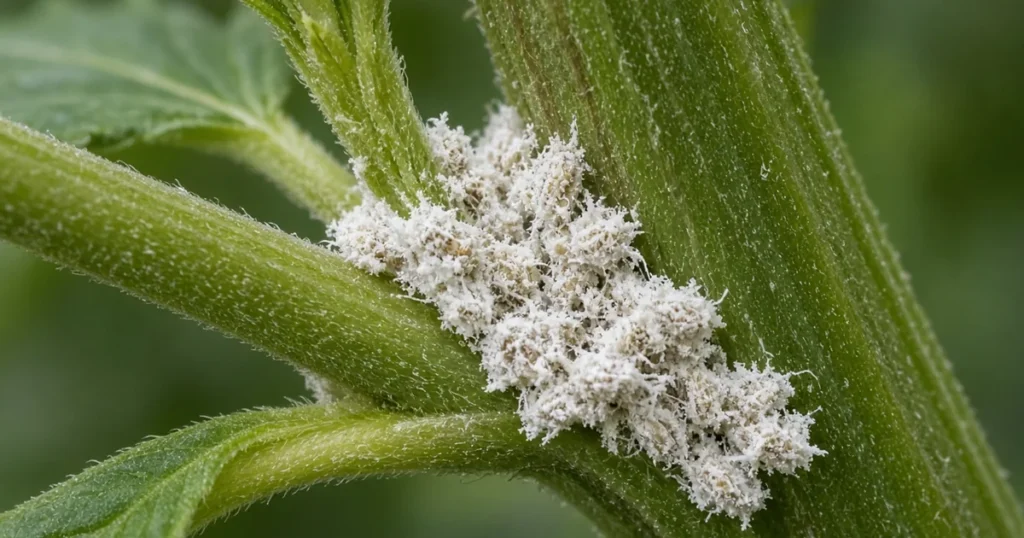
Quick answer: Mealybugs are small, slow insects covered in white, cottony wax that cluster on stems, leaf joints and sometimes roots of indoor cannabis. They suck sap, leave sticky honeydew and can stunt plants. UC IPM advises inspecting and rejecting infested plants, hand picking or pruning colonies, rinsing hard with water every few days, and on small spots dabbing with a solution of 70 percent or weaker isopropyl alcohol after a test on one leaf.
What Are Mealybugs?
UC IPM describes mealybugs as soft, oval, segmented insects coated in wax. Most of the ones you see are wingless females. Males have wings, but you will rarely spot one. Nymphs are bare when they first hatch and crawl around before they settle and build their own waxy coat.
UW Madison Extension notes they range from 1/20 to 1/5 inch, look pink under the wax and often have waxy threads trailing from the rear like a tail. Unlike their scale insect relatives, mealybugs keep their legs and can move slowly all their lives.
UC IPM says mealybugs favor warm weather and thrive indoors or where winters are mild. That makes a heated grow room or tent a comfortable home for them all year.
Where Do Mealybugs Hide on Cannabis?
They prefer sheltered spots. UC IPM lists plant crowns, branch crotches and stems near the soil. UW Madison adds stem tips and the joint where a leaf meets the stem. Check:
- Leaf joints along the main stem
- The lowest part of the stem right at the soil line
- Inside tight new growth at the top
- Drainage holes, where UW Madison advises looking for white cottony masses that can signal root feeding
Signs of Mealybugs on Cannabis
UC IPM lists these signs:
- White, cottony egg masses on stems or leaves
- Wax coated patches
- Sticky honeydew on leaves and surfaces below
- Black sooty mold growing on that honeydew
- Ants feeding on the honeydew
UW Madison describes plant symptoms as stunting, yellowing, leaf drop and wilting. Yellow, wilted plants with no visible bugs may have a root infestation.
How Fast Do Mealybugs Spread?
UW Madison reports females lay up to 600 eggs in a cottony mass over five to 10 days, then die. Depending on temperature, a new generation can come along every one to three months. Some species, such as the long tailed mealybug, give birth to live young instead. Because young females stay mobile, a colony can creep from plant to plant on touching leaves.
Clearing Mealybugs From Cannabis
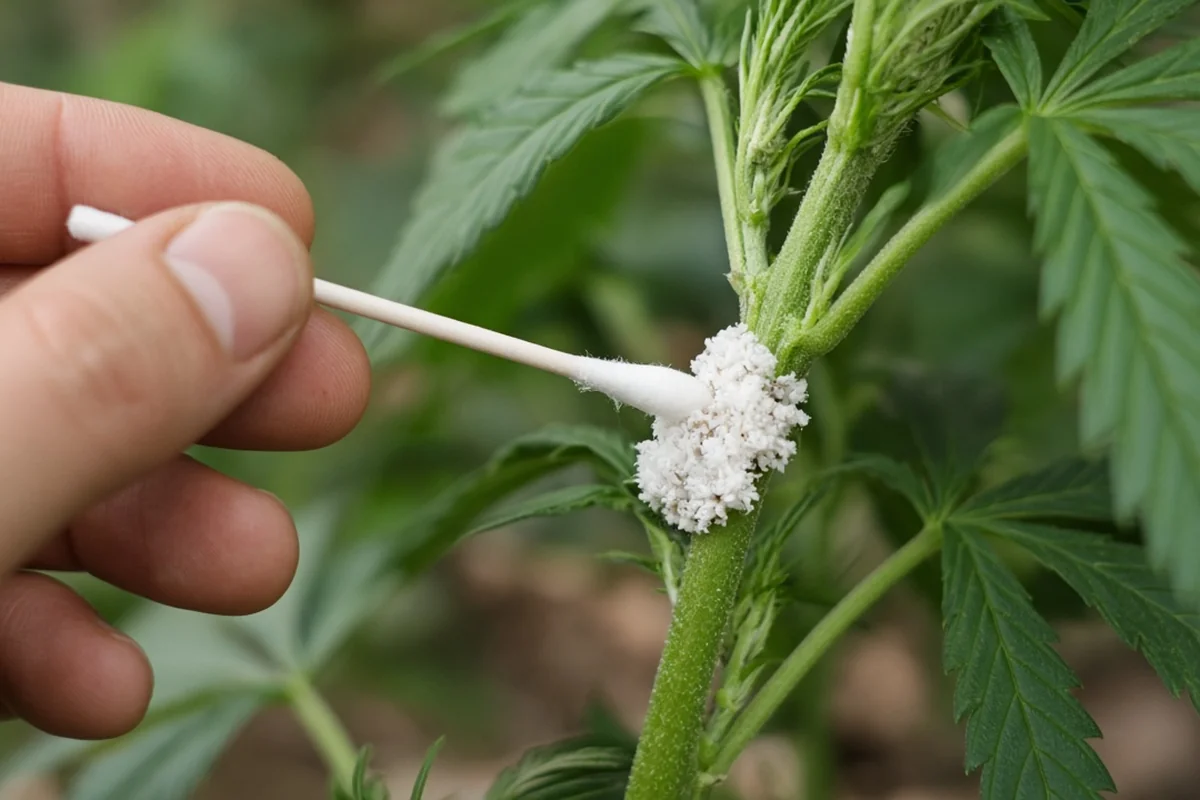
- Isolate the plant. Move it away from others so crawlers cannot spread.
- Hand pick or prune. UC IPM recommends picking off or pruning out colonies. Snip leaf stems with heavy wax and seal them in a bag.
- Rinse with water. UC IPM suggests a hard spray of plain water to knock back exposed colonies, repeated every few days.
- Dab small spots with alcohol. For serious problems on houseplants, UC IPM suggests dabbing with 70 percent or weaker isopropyl alcohol. Use a cotton swab, test on a small area first and watch for leaf burn. Do this in veg only, never on buds.
- Spray young stages in veg. The UC IPM page says the waxy coat makes contact sprays less effective, but neem oil, horticultural oils and insecticidal soaps sprayed straight onto nymphs can cut numbers down. Only use products whose label allows your crop and state.
- Check the root zone. Tip the plant out of its pot and look for white wax on roots. If roots are heavily infested, replacing the plant is often faster than fixing it.
- Cull serious cases. UC IPM advises removing the whole plant when infestation is serious. UW Madison says heavily infested plants can be very hard and costly to clean up.
- Keep checking. UC IPM recommends ongoing checks of plants, pots and stakes after you find them.
Our soap spray guide covers spray coverage.
Natural Enemies of Mealybugs
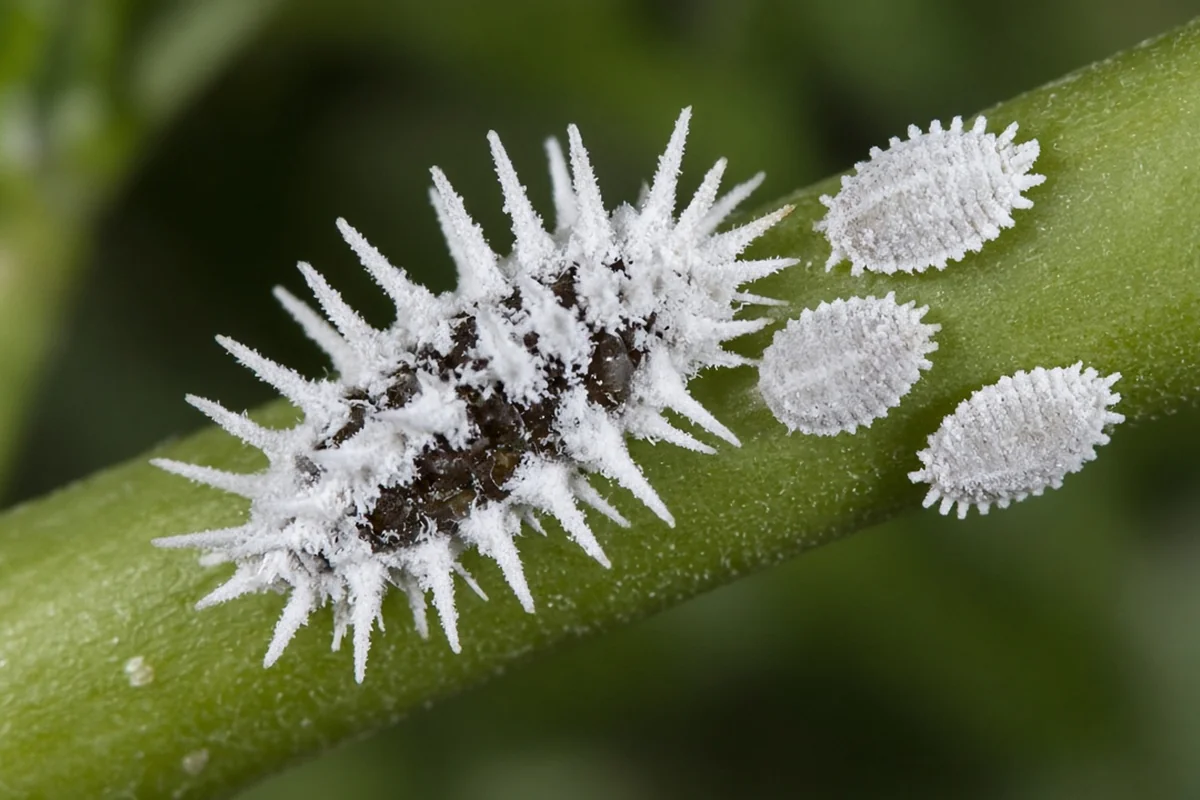
UC IPM lists parasitic wasps, lady beetles, lacewings and spiders as outdoor natural enemies. UW Madison mentions the mealybug destroyer, a lady beetle that can be very effective in the right conditions. Its larvae are also covered in white wax, so look closely before you remove a fuzzy white insect. If it moves quickly and is larger than the rest, it may be a helper. Our beneficial insect roundup covers sourcing beneficials.
Mealybugs and Look Alike Pests
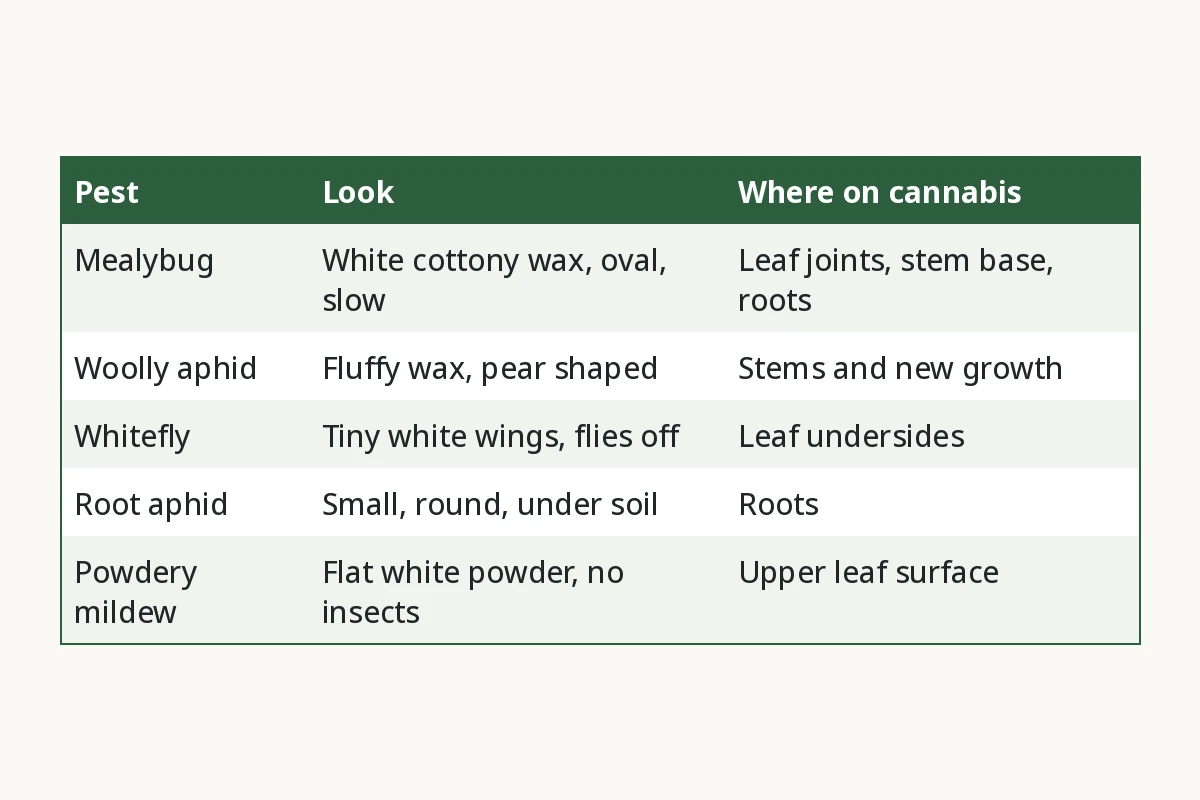
| Pest | Look | Where on cannabis |
|---|---|---|
| Mealybug | White cottony wax, oval, slow | Leaf joints, stem base, roots |
| Woolly aphid | Fluffy wax, pear shaped | Stems and new growth |
| Whitefly | Tiny white wings, flies off | Leaf undersides |
| Root aphid | Small, round, under soil | Roots |
| Powdery mildew | Flat white powder, no insects | Upper leaf surface |
Compare with our guides to root aphids on cannabis and mildew on weed plants.
Why Mealybugs Are a Clone Problem
Many mealybug outbreaks in home grows start with a single plant that came from somewhere else. Clones, cuttings shared by a friend, or a houseplant parked next to the tent can all carry a few hidden females and egg masses. Because mealybugs settle in tight crevices and at the soil line, a quick glance at the leaves often misses them. That is why the two extension sources cited here put so much weight on inspection and on rejecting infested plants outright. Starting from seed in fresh mix avoids the most common route in.
How to Prevent Mealybugs
- UC IPM and UW Madison both say avoidance is the best defense. Inspect every new clone or plant and reject any with wax.
- Keep new plants in a separate space until you have inspected them closely.
- Too much nitrogen with regular irrigation spurs soft growth that mealybugs like, the UC IPM page warns. Feed at a steady, moderate rate.
- UW Madison advises clearing extra soil and any compost piles out of the growing area.
- Clean pots, stakes and trays between grows. See cleaning and disinfecting pots.
Troubleshooting Mealybugs
White fuzz returns a week after cleaning. Egg masses or crawlers were missed. Check leaf joints and the stem near the soil again and repeat rinses every few days.
Alcohol dabs burned leaves. The mix was too strong or the plant was stressed. Dilute it and test first, as UC IPM advises.
Plants wilt with no bugs on top. Look at roots and drainage holes. UW Madison links that pattern to root feeding.
Ants are everywhere. They tend mealybugs for honeydew. Keep ants off the plants, since UC IPM notes they protect mealybugs from natural enemies.
A large fuzzy insect moves fast. It may be a mealybug destroyer larva. Leave it.
Sooty mold coats lower leaves. Per UW Madison, mealybug honeydew feeds sooty mold, which does not attack the plant directly but can block light when heavy. Wipe leaves with a damp cloth after the colony is gone.
Sources
- UC Statewide IPM Program, University of California, Mealybugs, Home and Landscape: https://ipm.ucanr.edu/home-and-landscape/mealybugs/
- University of Wisconsin Madison Extension, Wisconsin Horticulture, Mealybugs: https://hort.extension.wisc.edu/articles/mealybugs/
FAQ
What do mealybugs look like on cannabis?
Small, oval insects covered in white, cottony wax, often clustered at leaf joints and near the soil, as UC IPM and UW Madison describe.
Can rubbing alcohol kill mealybugs on cannabis?
UC IPM suggests dabbing with 70 percent or weaker isopropyl alcohol for serious houseplant cases, after testing a small spot. Avoid it on buds.
Why don't sprays work well on mealybugs?
The waxy coat and hiding habit make contact sprays less effective, per UC IPM, so aim at young nymphs.
Should I throw out a plant with mealybugs?
UC IPM advises removing the whole plant if the infestation is serious.
Do mealybugs live in soil?
Some feed on roots. UW Madison suggests checking drainage holes for white cottony masses.
Can mealybugs survive on empty pots and stakes?
UC IPM recommends keeping an eye on pots and stakes, not just plants, once you have found mealybugs. Wash or replace them before reuse.
Do mealybugs lay eggs?
Most do. UW Madison says females lay up to 600 eggs in a cottony mass, while long tailed mealybugs bear live young.


