
Scale Insects on Cannabis: Spot Honeydew, Bumps and Crawlers
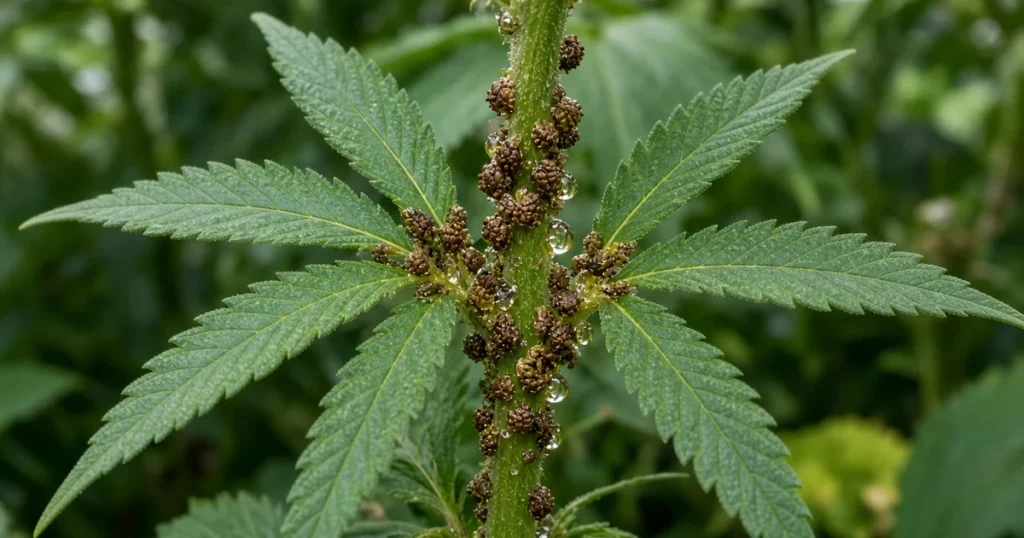
Quick answer: Scale insects are small sap feeders that settle on stems and leaves and look more like bumps than bugs. Sticky honeydew, black sooty mold, yellow leaves and leaf drop are the usual warning signs. UC IPM in California and University of Maryland Extension both suggest checking new plants closely, scraping scales off by hand, controlling ants and using horticultural oil or insecticidal soap only when needed, applied only to leaves and stems.
What Are Scale Insects?
Scales are sucking insects that push tiny, strawlike mouthparts into a plant and drink its sap. UC IPM explains that adults have no obvious head or legs, so they rarely look like insects at all. They show up as round, oval or long bumps on bark, leaves or fruit, with covers that UC IPM measures at 1/25 to 1/4 inch long.
The young are the mobile stage. UC IPM calls them crawlers and describes them as often yellow to orange. Once they settle, their legs drop off and they stay in one spot for life. Maryland Extension notes that very few scale species show up on indoor plants, and they often go unnoticed until the plant shows damage.
Neither source lists cannabis as a host. Maryland Extension does say brown soft scale feeds on an enormous range of plants, about 400 genera in 133 families, so a cannabis plant sharing space with infested houseplants is worth watching.
Armored Scale vs Soft Scale
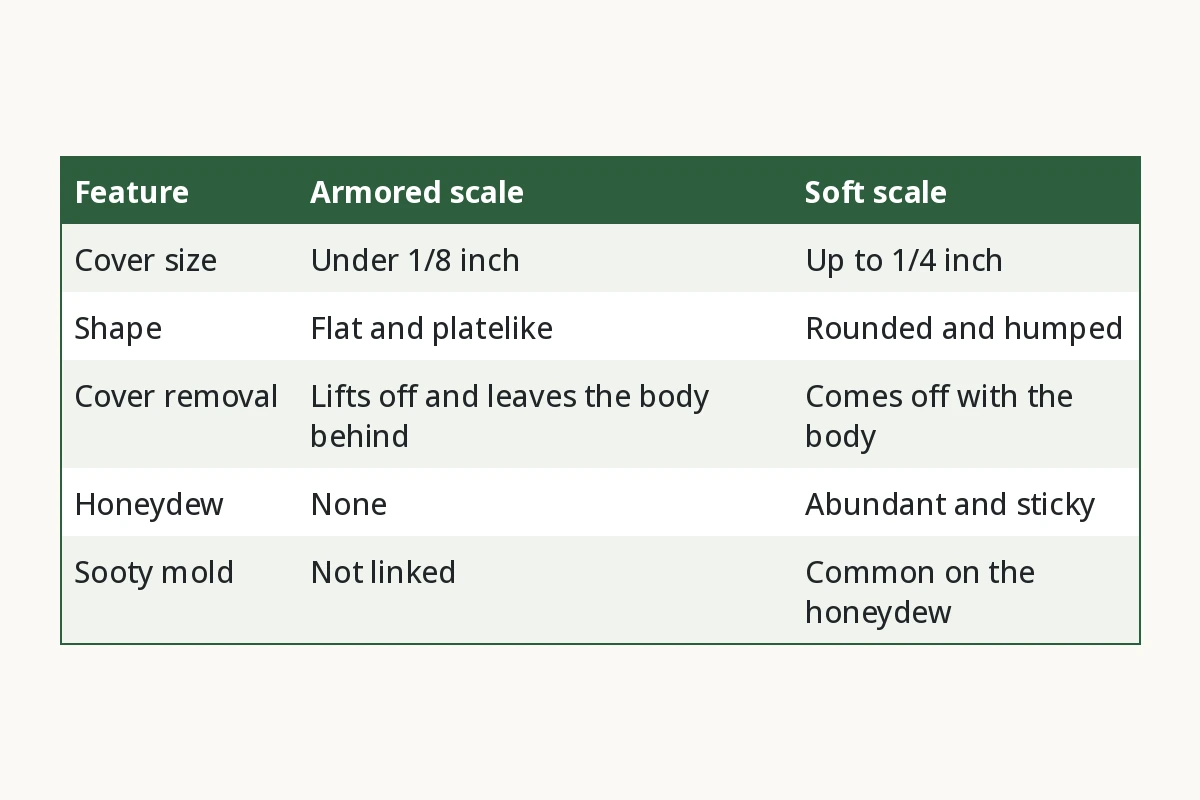
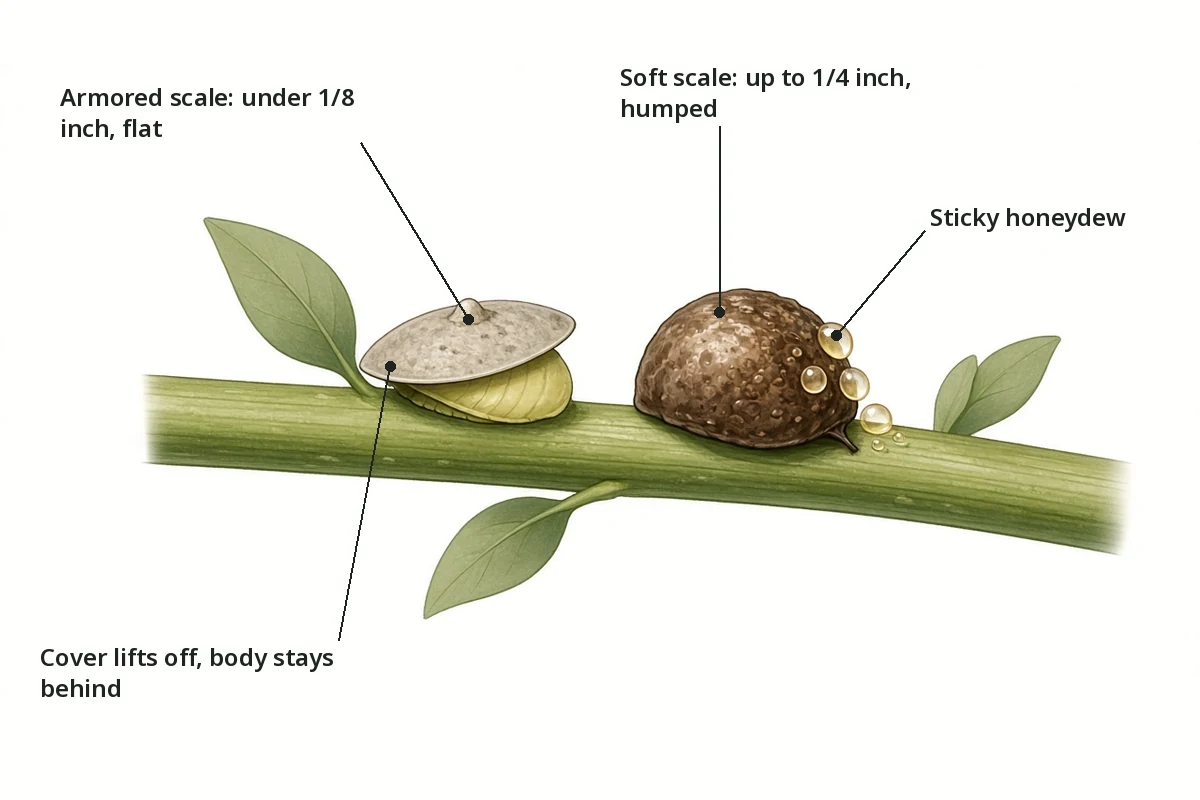
The two common types behave differently. UC IPM gives the key differences:
| Feature | Armored scale | Soft scale |
|---|---|---|
| Cover size | Under 1/8 inch | Up to 1/4 inch |
| Shape | Flat and platelike | Rounded and humped |
| Cover removal | Lifts off and leaves the body behind | Comes off with the body |
| Honeydew | None | Abundant and sticky |
| Sooty mold | Not linked | Common on the honeydew |
UC IPM says knowing the type matters because control choices and timing differ. It notes that the systemic product imidacloprid controls soft scales but not armored scales. That product is not a good fit for cannabis, and Maryland Extension says systemic products are not labeled for edible indoor plants.
How Do You Know Your Cannabis Has Scale?
Look for sticky leaves first. Maryland Extension calls sticky honeydew on the leaves, or on surfaces below the plant, the main sign of soft scale. Black sooty mold then grows on that honeydew, UC IPM explains.
Check these spots with a hand lens:
- Along leaf veins on the underside of fan leaves
- On leaf stalks, called petioles
- On young stems and branch joints
- In tight gaps where new leaves emerge
Maryland Extension lists those locations for brown soft scale. Damage signs include yellow leaves, early leaf drop, stunted growth and dieback in heavy cases. Aphids and whiteflies also leave honeydew, so UC IPM notes the damage can look similar. Our post on common cannabis plant problems can help rule out other causes.
Why Do Ants Show Up With Scale?
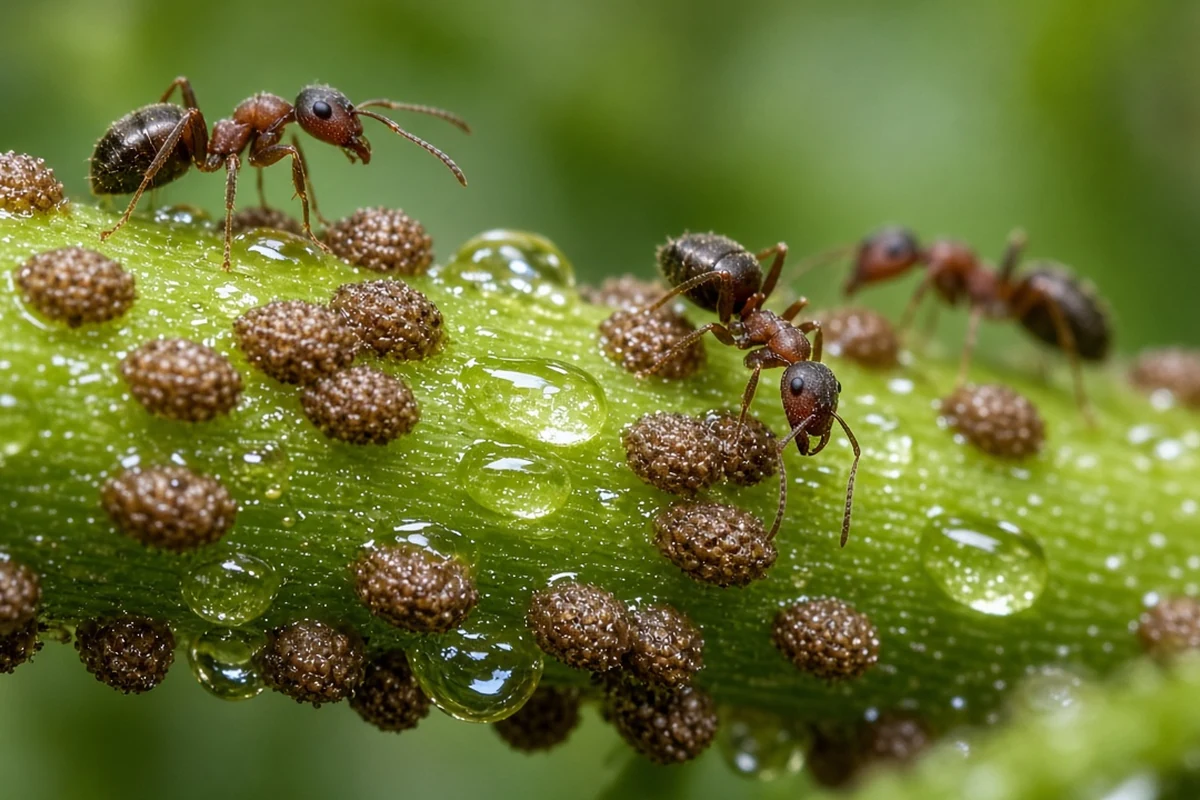
Ants farm the honeydew. UC IPM explains that ants attack the parasites and predators that would otherwise keep scales down, so controlling ants is part of controlling scale. Maryland Extension notes that honeydew on indoor plants can draw ants, and outdoors it can also attract flies and wasps.
UC IPM suggests pruning any branches or weeds that bridge the ground to the plant and using a sticky barrier band on woody trunks over a protective wrap. On soft cannabis stems, a barrier on the pot or stake is a safer choice than putting sticky material directly on the plant. Our guide to ants on cannabis covers more options.
How to Get Rid of Scale on Cannabis
- Quarantine the plant. Maryland Extension advises isolating plants with scale and says heavily infested plants are best discarded.
- Inspect neighbors. Check houseplants and other potted plants nearby, since Maryland Extension says brown soft scale uses many hosts.
- Scrape them off. Maryland Extension says scales should flake off with a fingernail, toothpick, cotton swab or soft toothbrush.
- Look for parasites first. Maryland Extension and UC IPM both say tiny holes in scale covers point to parasitic wasps. Leave those scales alone.
- Control ants. Follow the ant steps in the section above.
- If hand removal falls short, try oil or soap. Maryland Extension lists horticultural oil and insecticidal soap. UC IPM notes these have low toxicity to people and pets.
- Target the crawlers. UC IPM says oil works best when crawlers are active. Cover the leaf undersides and stem tips thoroughly.
- Keep sprays off buds. Apply only to leaves and stems in vegetative growth, and never on flowers or buds you plan to harvest. Our post on insecticidal soap for cannabis explains safe timing.
- Recheck weekly. Maryland Extension says repeat applications are usually needed and plants should be watched afterward.
How Do You Time Control for Crawlers?
Use sticky tape to see when they hatch. UC IPM describes wrapping infested twigs with clear tape that is sticky on both sides and changing it weekly. Crawlers stick to it and show up as yellow or orange specks under a hand lens. That tells you when the young are out and most exposed.
Generations overlap indoors. Maryland Extension says one brown soft scale generation takes about 60 days and that three to seven generations a year are typical, overlapping all year on indoor plants. Indoor grows without natural enemies need regular checks for that reason.
Do Beneficial Insects Control Scale?
Often, yes. UC IPM lists parasitic wasps and predators such as certain lady beetles, lacewings, bugs and mites as scale enemies, and it calls the wasps often the most important. UC IPM also suggests checking whether a good share of the scales are already dead or parasitized before using any pesticide. A dead scale fails to release fluid when squished.
Maryland Extension adds that parasitized scales may look darker, often black. Broad spectrum insecticides kill these helpers, so UC IPM advises avoiding them when possible. For more on helpful insects, see our guide to the best bugs for a cannabis grow.
Troubleshooting Scale on Cannabis
Leaves stay sticky after you scraped the scales. Some are still hiding in leaf joints or under the leaves. Recheck with a hand lens and wipe off honeydew so new drops are easy to spot.
Black film covers the lower leaves. That is sooty mold growing on honeydew, UC IPM says. Removing the scale stops the honeydew that feeds it, so new mold has nothing to grow on.
Scale keeps coming back on one plant. Maryland Extension says badly infested plants are best discarded. Removing one plant can protect the rest of the room.
Ants keep climbing the pots. Ants protect scale from natural enemies, in the UC IPM account. Break any bridges from walls or weeds and add a barrier at the base of the pot.
The oil spray burned leaves. Maryland Extension warns that not every plant tolerates every pesticide, so read the label for plant safety and spray a single leaf before covering the whole plant.
You cannot tell scale from a leaf spot. Try lifting it with a toothpick. A bump that lifts off whole or leaves a body behind is an insect.
Sources
- UC Statewide IPM Program, University of California, Pest Notes: Scales: https://ipm.ucanr.edu/home-and-landscape/scales/
- University of Maryland Extension, Scale Insects on Indoor Plants: https://www.extension.umd.edu/resource/scale-insects-indoor-plants
FAQ
Can scale insects kill a cannabis plant?
Heavy infestations can. Maryland Extension lists stunting, wilting, early leaf drop and dieback, and says some scales can lead to plant death over time.
Do scale insects fly?
Adult females do not. UC IPM says adult males have one pair of wings but are rarely seen. The crawlers walk to new spots.
Is rubbing alcohol safe for removing scale?
Neither source recommends it. Maryland Extension suggests a cotton swab, toothpick or soft toothbrush to flake them off.
Where does scale on indoor cannabis come from?
Usually from other plants. Maryland Extension advises inspecting new houseplants thoroughly because brown soft scale can arrive on shipments from anywhere.
Should I use a systemic insecticide?
No. Maryland Extension notes systemic products are not labeled for edible indoor plants, and UC IPM says imidacloprid misses armored scales.
Are sticky traps useful for scale?
Not for the adults, which stay put. UC IPM describes double sided tape around stems as a way to spot crawlers. See sticky traps for grow rooms for card placement.


