
Leafminers on Cannabis: Read the Trails and Protect New Leaves
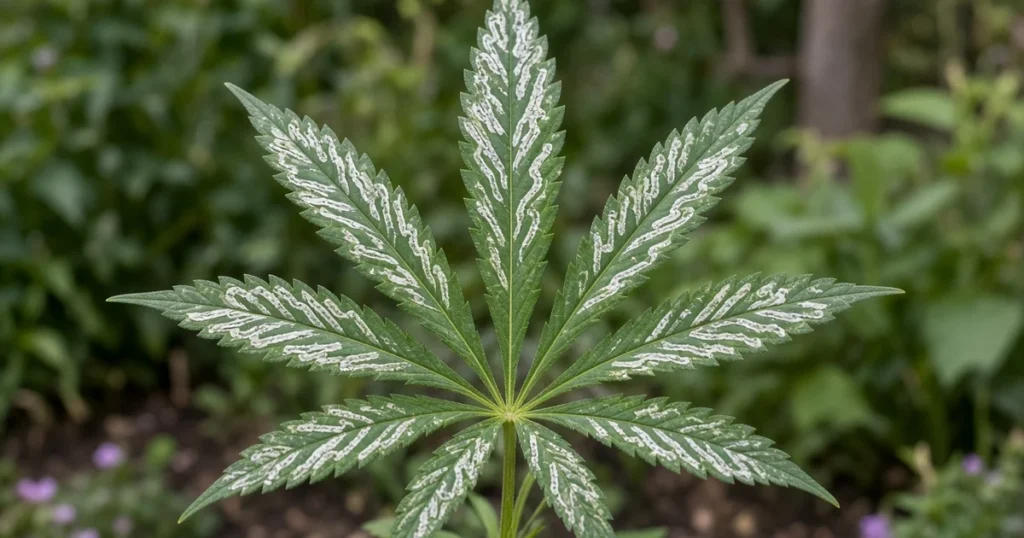
Quick answer: Pale, winding trails inside a leaf are the calling card of leafminers, the larvae of tiny flies that feed between the upper and lower leaf surfaces. The UC IPM guide on vegetable leafminers says mining rarely kills plants and seldom needs pesticides in gardens. University of Maryland Extension lists pinching mined leaves to crush the larvae, or removing them, as the primary control, along with row covers, weed removal and protecting the wasps that attack leafminers.
What Are Leafminers?
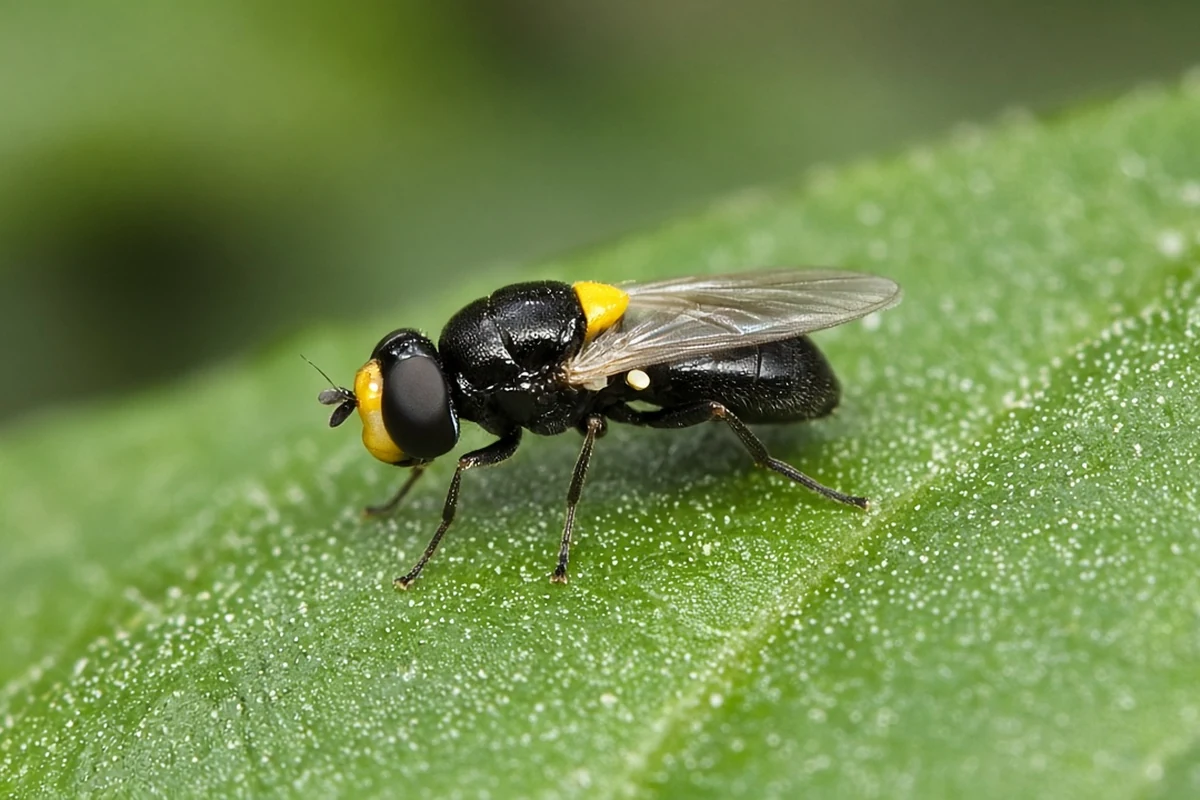
Leafminers are flies whose young live inside leaves. UC IPM describes the adult vegetable leafminer as a small, active black fly, often with a bright yellow triangle between the bases of its wings. The larvae are yellow, cylindrical maggots. Maryland Extension notes that several species are common in vegetable gardens, including the vegetable leafminer and the American serpentine leafminer.
Neither source names cannabis as a host. Both list wide host ranges, though. Maryland Extension says the vegetable leafminer feeds on beans, cucumbers, lettuce, peppers, tomatoes, squash and flowers such as marigold. UC IPM lists cole crops, tomatoes, peas, beans and many bedding flowers. If you find mines on cannabis, confirm a larva in the leaf before blaming leafminers.
How Can You Spot Leafminer Damage?
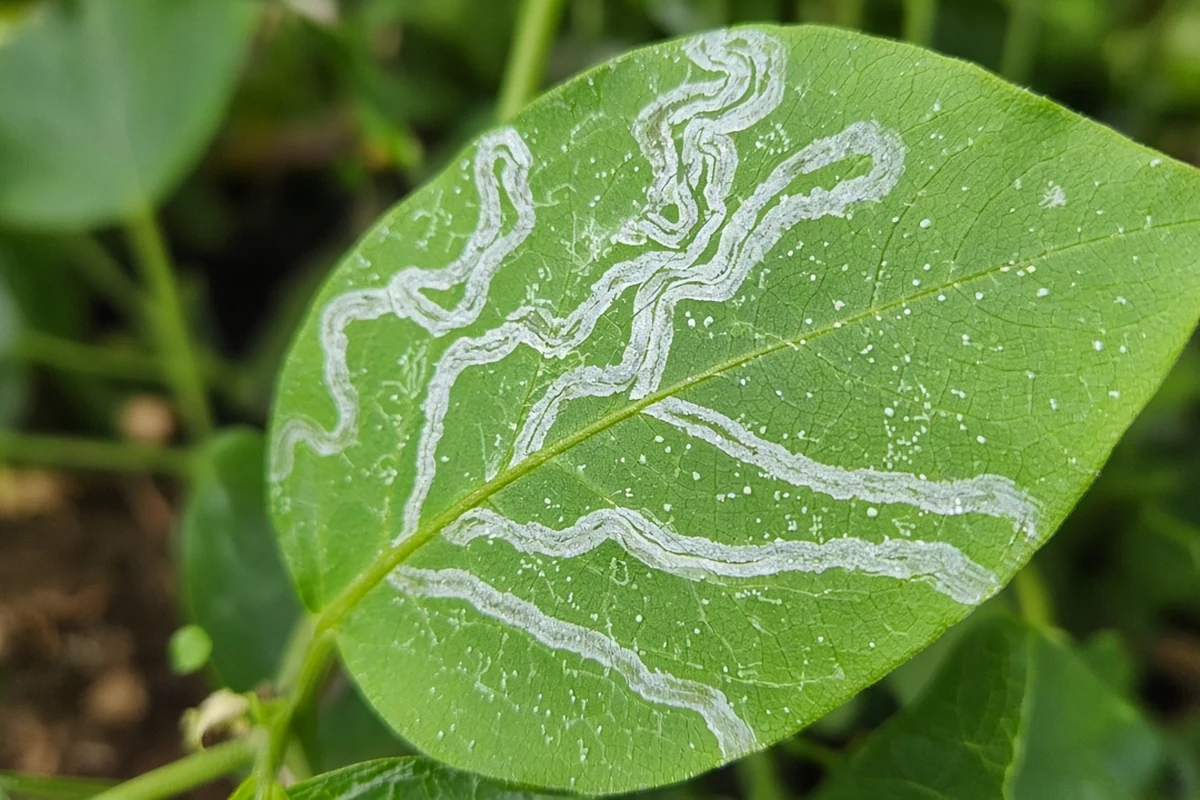
Look for trails just under the leaf surface. Maryland Extension describes wavy lines, tunnels, mines or blotches that are white, gray or paler than healthy tissue. UC IPM says each mine gets longer and wider as the larva grows.
Other clues to look for:
- Tiny white specks where females punctured the leaf to feed, which UC IPM says give leaves a stippled look
- A small larva or dark specks of frass visible inside the trail when held up to light
- Brown, seedlike pupae on the soil after larvae drop out
Maryland Extension adds that the larvae and their frass are sometimes visible inside the tunnels. Our guide to common cannabis plant problems can help with other look alikes.
Do Leafminers Hurt Cannabis Yield?
Usually only a little. UC IPM states that mining usually has little effect on plant growth and rarely kills plants. It adds that plants past the seedling stage seldom suffer serious damage, though unusually heavy mining can slow growth and cause leaves to drop. Maryland Extension calls leafminers minor pests but notes that heavy infestations can lower vegetable quality and yield.
For a cannabis plant, that means seedlings and young clones deserve the closest watch. A few mined fan leaves on a large plant are mostly cosmetic.
How Fast Do Leafminers Multiply?
Fast in warm weather. Maryland Extension explains that females puncture leaves to insert eggs, usually around midday, and that the larvae pass through several stages inside the mine before they pupate. UC IPM says the life cycle is only about 2 weeks long in warm conditions and that there can be five to ten generations a year. Maryland Extension gives 21 to 28 days for the vegetable leafminer, with several generations each growing season.
Development keeps going through the year, according to UC IPM, as the population moves from one host crop to the next. Maryland Extension notes that pupae can drop into the soil, where they overwinter in some species.
How to Get Rid of Leafminers on Cannabis
- Confirm the trails. Check for winding pale mines and larvae inside, as Maryland Extension describes.
- Pinch the mines. Maryland Extension calls squeezing the larvae inside the leaf the primary control.
- Remove badly mined leaves. UC IPM suggests clipping off older infested leaves. Bag them for the trash rather than leaving them on the soil, where larvae could finish and pupate.
- Clear host weeds. Maryland Extension recommends pulling chickweed, lambsquarters, nightshade and plantain around the garden. Our post on weed control in outdoor cannabis has methods.
- Cover seedlings. UC IPM and Maryland Extension both suggest row cover to keep flies from laying eggs. See our guide to row covers for cannabis.
- Keep plants vigorous. UC IPM advises proper care, especially watering, so plants outgrow minor damage.
- Spare the parasites. UC IPM says tiny Diglyphus wasps often keep garden leafminers under control.
- Cultivate after bad years. For severe repeat problems, Maryland Extension suggests working the top 2 inches of soil in early spring to kill overwintering pupae.
Why Sprays Often Make Leafminers Worse
The larvae are protected inside the leaf. Maryland Extension states that leafminers resist many insecticides and are hard to reach with sprays. UC IPM likewise rates insecticides as not very effective for leafminer control.
Sprays also harm the helpers. UC IPM warns that insecticides used against other pests often kill leafminer parasites, and that a secondary leafminer outbreak is not uncommon afterward. Maryland Extension advises avoiding pesticide use because it suppresses parasitoid activity. If you must manage another pest, choose the gentlest option and keep it away from flowers. For a list of helpers worth protecting, see the best bugs for a cannabis grow.
Leafminer Controls Compared
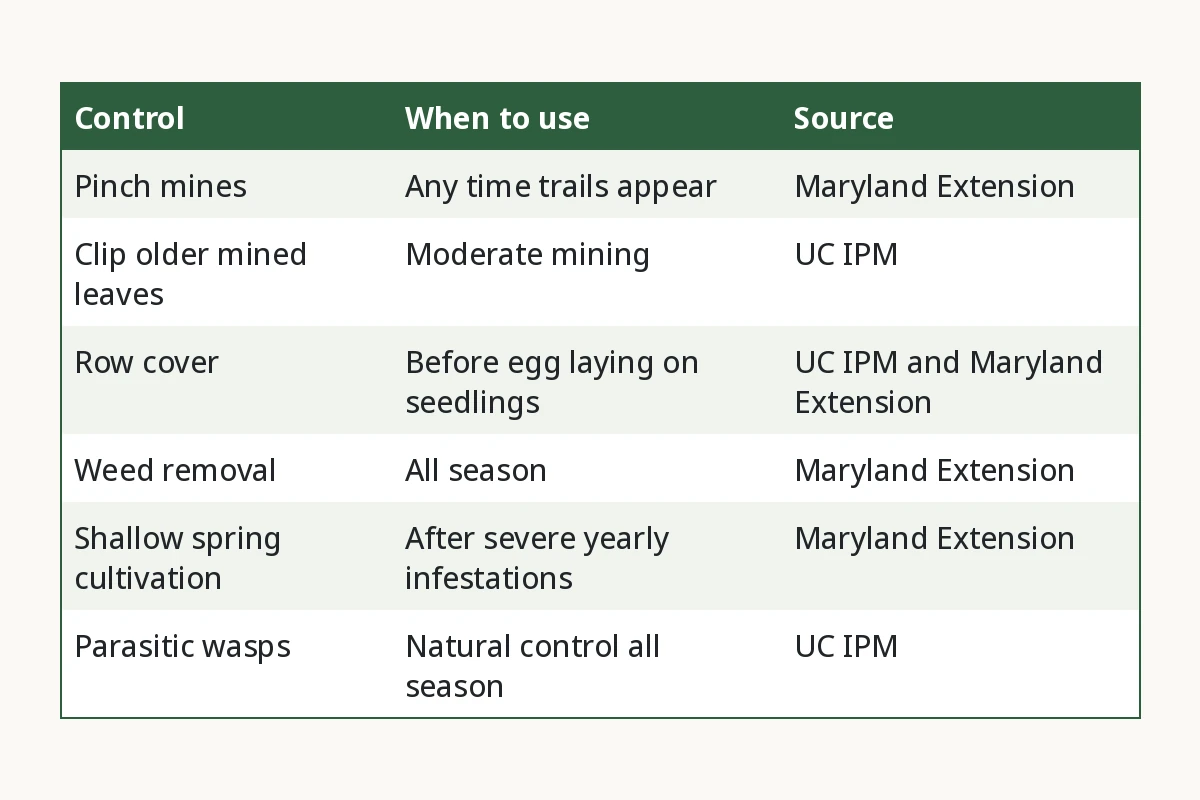
| Control | When to use | Source |
|---|---|---|
| Pinch mines | Any time trails appear | Maryland Extension |
| Clip older mined leaves | Moderate mining | UC IPM |
| Row cover | Before egg laying on seedlings | UC IPM and Maryland Extension |
| Weed removal | All season | Maryland Extension |
| Shallow spring cultivation | After severe yearly infestations | Maryland Extension |
| Parasitic wasps | Natural control all season | UC IPM |
Can You Prevent Leafminers Indoors?
Yes, mostly by keeping them out. Maryland Extension notes that the vegetable leafminer adult is less than 2 millimeters long, under 1/10 inch, so careful checks of new plants matter more than spotting flies. Inspect clones and starts from other gardens for winding trails before they join the grow, and hold back any plant with fresh mines until you have pinched or removed them. Our post on sticky traps for grow rooms covers monitoring for small flies in general, but a fly on a card does not confirm leafminers until you also find mines.
Pinching and removing leaves works the same indoors. Maryland Extension notes the larvae drop to pupate, so clean fallen leaves and debris off the medium surface.
Troubleshooting Leafminers
New mines keep appearing every week. Flies are still laying eggs. Pinch new trails at once and check for host weeds or nearby crops that feed the flies.
Mines are only on bottom leaves. That fits normal leafminer patterns. Remove those leaves if they are heavily damaged and watch new growth.
Damage got worse after spraying for another pest. UC IPM describes this exact pattern, since sprays kill the parasites. Stop broad sprays and let natural enemies recover.
Seedlings look stippled but have no trails. The white specks may be feeding punctures from adult flies, as UC IPM points out. Cover the seedlings and watch for mines over the next week.
Row cover trapped pests inside. Maryland Extension warns that covering plants already carrying leafminers can trap flies under the fabric. Check plants before covering.
Trails are brown and dry. The larva has likely left. Check the soil surface for pupae.
Sources
- UC Statewide IPM Program, University of California, Vegetable Leafminers: https://ipm.ucanr.edu/home-and-landscape/vegetable-leafminers/
- University of Maryland Extension, Leafminers on Vegetables: https://www.extension.umd.edu/resource/leafminers-vegetables
FAQ
Are leafminers dangerous to cannabis?
Rarely. UC IPM says mining seldom kills plants and has little effect on most plants older than seedlings.
Can I spray neem oil for leafminers?
It is not the first step. Maryland Extension lists neem oil and spinosad for allium leafminers on onion crops, but for other vegetable leafminers it calls pinching leaves the main control and advises avoiding pesticides.
What do leafminer flies look like?
UC IPM describes small black flies, often with a yellow triangle between the wings.
Should I throw away mined leaves?
Yes, bag them. Removing mined leaves takes the larvae out before they drop to pupate.
Do leafminers live in the soil?
Their pupae can. Maryland Extension notes pupae may drop into the soil, and in some species they overwinter there.
How do I protect a new cannabis transplant?
Use row cover from the start, as both sources suggest, and keep weeds pulled around the bed.


