
Seedcorn Maggot and Cannabis Seedlings: Prevent Losses
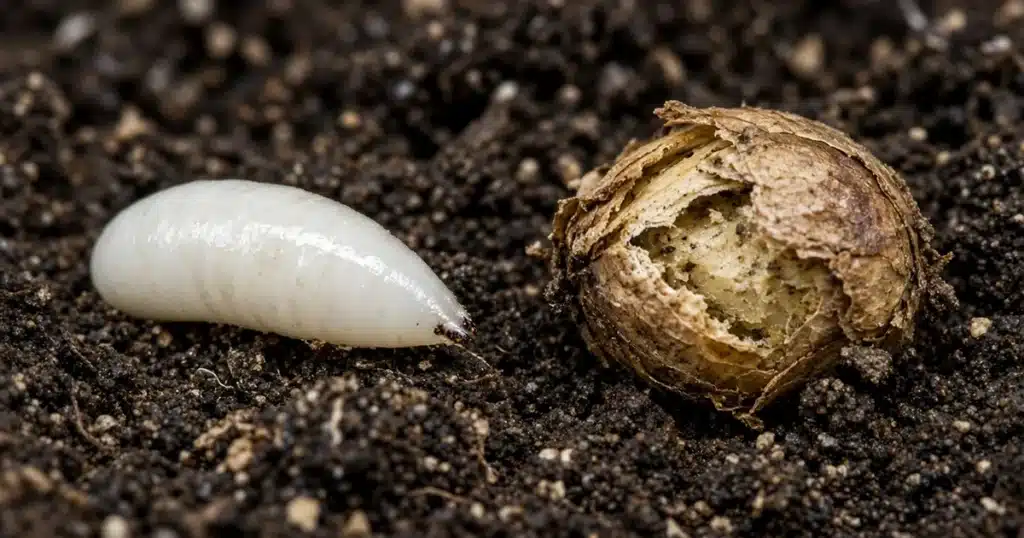
When cannabis seeds go straight into an outdoor bed in early spring and only a few come up, the usual suspects are cold soil, rot or old seed. There is another cause that many growers never consider. Seedcorn maggot is the larva of a small fly that lays its eggs in moist, freshly worked soil, and the maggots tunnel into seeds just as the seed coat splits. UMass Amherst Extension notes that it attacks the seeds and young seedlings of a wide range of vegetable crops, and UC IPM says the maggots kill germinating seeds and very small seedlings. Kind Seed Co’s advice here starts with recognizing the problem and, more importantly, planting so it never gets started.
What is a seedcorn maggot?
The pest has two stages a grower might see. The fly is easy to overlook, and the maggot is small and hidden in the soil.
- The fly. UMass Amherst Extension describes a delicate, hump-backed brown fly about 5 to 7 mm long that looks like a small housefly. UC IPM describes the adults as dark gray flies about half the size of a common housefly.
- The maggot. UMass Amherst Extension says the larvae are about a quarter inch long, yellowish white and legless, with a pointed head. UC IPM notes they are usually less than a third of an inch when full grown, with a pointed head end and a blunt rear.
- The pupa. UC IPM describes brown, egg-shaped pupae found in roots or in the surrounding soil.
- Where to look. UMass Amherst Extension says maggots can usually be found in the soil around and inside seeds and seedlings.
Because the maggots are tiny and pale, it helps to dig up a few failed seeds and look closely, ideally with a hand lens.
Why are early sowings most at risk?
Several features of this insect line up with the way many people start outdoor plants.
It is active in cool weather. UMass Amherst Extension explains that the fly can develop at a base temperature of about 39 degrees F, far lower than the 50 to 55 degree F threshold of many other insects. That lets it get going early in spring, before most pests. It also notes that the first generation of the year causes the most damage, and that seedcorn maggot becomes active two or more weeks earlier than related maggot flies.
It likes freshly worked, organically rich soil. According to UMass Amherst Extension, the flies are attracted to volatiles released from freshly tilled soil and to buried plant residue, rotting manure and unfinished compost. Moist, freshly turned soil is preferred over dry or saturated soil. UC IPM adds that maggots prefer to lay eggs in rich soil.
Slow germination gives it time. Both sources stress that cool, wet conditions favor damage. UMass Amherst Extension explains that seeds and seedlings that grow quickly in warmer soil can escape injury, while seeds sitting in cold, wet soil stay exposed for longer.
Eggs hatch quickly. UMass Amherst Extension reports that eggs hatch in 2 to 4 days at soil temperatures of 60 degrees F and in 7 to 9 days at 41 to 45 degrees F. Maggots then burrow down and enter seeds as the seed coat splits open.
What does the damage look like?
The first sign is usually a patchy stand. UMass Amherst Extension says the first signs are poor germination or wilting of transplants that have lost their roots to feeding larvae. Damage can be to the seed itself or to roots, stems or seed leaves.
- Seeds that never emerge. Dig one up and you may find it hollowed or soft, sometimes with a maggot inside or nearby.
- Seedlings that emerge weak, then wilt or collapse.
- Seed leaves with chewed or scarred areas.
- Gaps in a row while seeds sown later or in a warmer spot come up fine.
Several other problems look much the same. UMass Amherst Extension notes that they can be hard to tell apart from damping off caused by soilborne fungi, or from wireworm feeding. If seedlings come up and then fall over at the soil line with a pinched, water-soaked stem, damping off in cannabis seedlings is the more likely cause. A hard, shiny, jointed larva in the soil points to the pest described in wireworms in cannabis soil.
How do you sow cannabis seeds to avoid seedcorn maggot?
UMass Amherst Extension is direct about this pest. Prevention is key, because by the time you see damage it is too late to control it. Every step below aims to get seeds up and growing quickly, in soil that is less attractive to egg-laying flies.
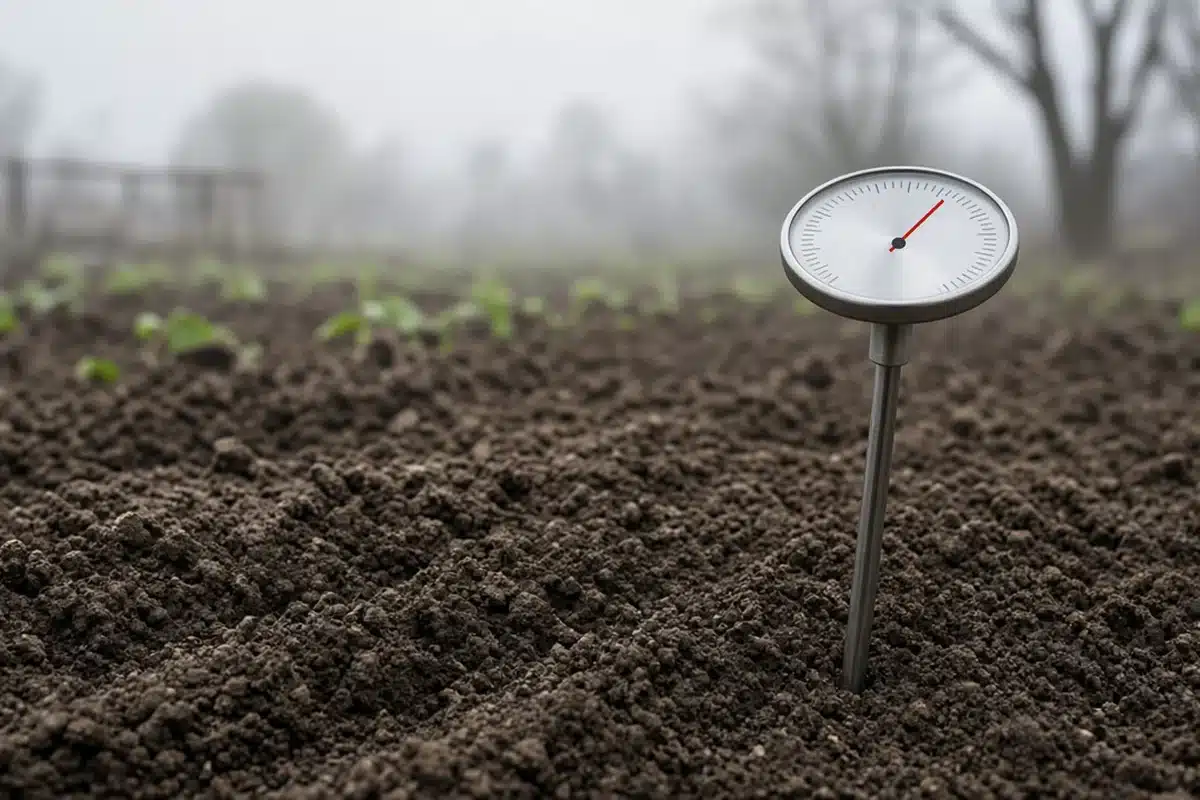
- Wait for warm soil. UMass Amherst Extension advises against seeding too early, especially in wet ground, because seeds germinate faster and are less vulnerable in warmer soil. Check soil temperature with a thermometer and use the forecast. Timing for outdoor planting is covered in detail in when to plant cannabis seeds outdoors.
- Prepare beds early. UMass Amherst Extension recommends working in plant residue or a cover crop at least 4 weeks before seeding so it has time to break down. UC IPM suggests turning weeds under at least 2 weeks before planting.
- Go easy on fresh organic material. UMass Amherst Extension advises against applying manure or unfinished compost in late fall or early spring to heavy soils that you plan to plant early. UC IPM likewise advises avoiding overfertilization with manure.
- Pick the warmest, best-drained bed for the earliest sowings. UMass Amherst Extension notes that lighter, well-drained, sandy soils are less likely to have problems because they warm up faster.
- Start seeds indoors or sprout them first. UC IPM recommends planting transplants or pregerminated seeds, which spend less time in the vulnerable stage.
- Cover the bed. UC IPM suggests covering seedbeds with protective fabric to keep flies from laying eggs near plants.
- Water carefully. Keep the bed evenly moist for germination but not soggy.
When do row covers fail?
A fabric cover is a barrier, so it only helps if the flies come from outside the bed. UMass Amherst Extension warns that damage can still occur when flies have overwintered in the soil and end up underneath the cover. It also advises against covering seedlings that were planted into a recently worked, lush cover crop. In practice, a cover works best on a bed that was prepared weeks ahead and has had time to settle.

What should you do if seedlings are already damaged?
Once the damage is visible, the best option is usually to replant, but timing matters.
- Dig up a few failed seeds and check for maggots, to confirm the cause before replanting.
- Measure the maggots you find. UMass Amherst Extension advises waiting at least 5 days to replant if maggots are about a quarter inch long, and at least 10 days if they are smaller, so they have time to pupate and will not attack the new seeds.
- Replant into the warmest part of the bed, or switch to transplants started indoors.
- Keep an eye on surviving seedlings. UMass Amherst Extension notes that seedlings can sometimes recover, depending on how many larvae are present and how well conditions favor growth.
UC IPM adds an encouraging point. Once the stand is established and seedlings have developed a few leaves, maggots are unlikely to cause economic damage. The risk window is short, which is why getting seeds up quickly matters so much.
Troubleshooting a poor stand
If a sowing fails and you are not sure why, work through these checks.
- Seeds are soft and empty with small white larvae nearby. That points to seedcorn maggot. Replant after the waiting period above.
- Seeds are intact but swollen and rotten, with no larvae. Cold, waterlogged soil is a likely cause. Wait for warmer weather and check drainage.
- Seedlings emerged and then toppled at the soil line. Look at damping off first.
- Seedlings are cut off cleanly at the base. A chewing caterpillar may be at work rather than a maggot.
- Seeds were dug up and missing. Birds or rodents are a more likely cause than insects.
Sources
- UMass Amherst Extension Vegetable Program. Seedcorn Maggot. https://www.umass.edu/agriculture-food-environment/vegetable/fact-sheets/seedcorn-maggot
- UC Statewide IPM Program. Seedcorn Maggot. https://ipm.ucanr.edu/home-and-landscape/seedcorn-maggot/
FAQ
What does seedcorn maggot damage look like on cannabis seedlings?
Most often, seeds simply fail to come up. Dug-up seeds may be hollowed or soft, with small white legless maggots in or near them. Seedlings that do emerge may be weak, wilt early or have scarred seed leaves. Damage is worst in cool, wet, freshly worked soil, especially in the earliest sowings of spring.
Can I grow cannabis from seed outdoors without seedcorn maggot problems?
Yes. Wait for warm soil so seeds germinate quickly, prepare beds several weeks before sowing, and avoid fresh manure or unfinished compost in early beds. Starting seeds indoors or sprouting them before planting shortens the vulnerable stage. A fabric cover over a well-prepared bed also keeps egg-laying flies away from new seedlings.
How long should I wait before replanting after seedcorn maggot damage?
UMass Amherst Extension advises waiting at least 5 days if the maggots you find are about a quarter inch long, and at least 10 days if they are smaller. That gives them time to finish feeding and pupate so they will not attack the new seeds. Replant into the warmest part of the bed if possible.
Are older cannabis plants at risk from seedcorn maggot?
Very little. UC IPM explains that once seedlings have developed a few leaves, maggots are unlikely to cause economic damage. The pest is a problem for germinating seeds and very young seedlings. Transplants with a healthy root system are far less vulnerable, which is one reason starting plants indoors helps avoid it.


