
Spittlebugs on Cannabis: What the White Foam Means
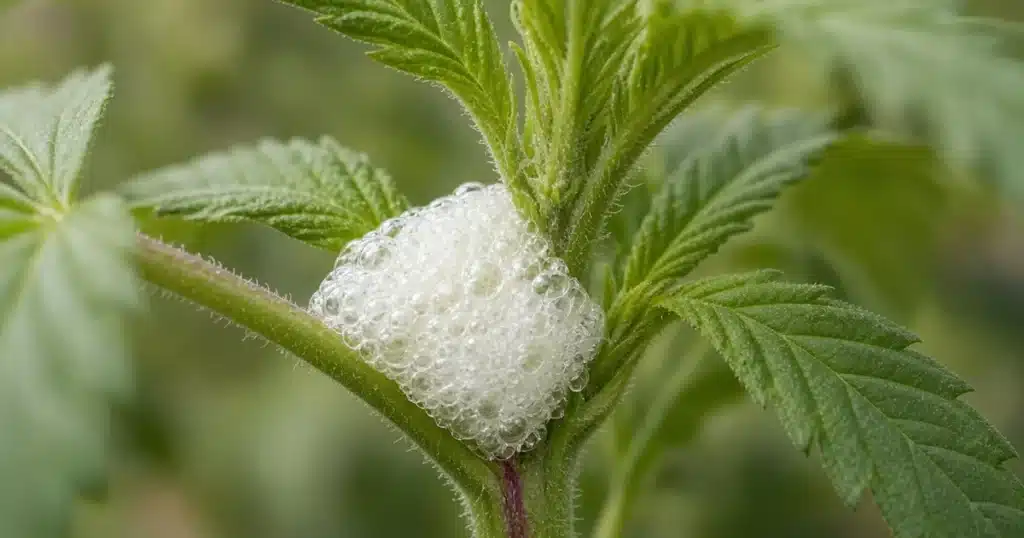
Finding a blob of white foam on a cannabis stem in late spring is unsettling. It looks like someone spat on the plant, and it often turns up in the same spots each year. The cause is almost always a spittlebug nymph, a small sap-feeding insect that hides inside its own bubbles. The good news is that this is one of the milder pests in an outdoor garden. University of Minnesota Extension states that in most cases spittlebug feeding does not damage plants. Identifying spittlebugs, knowing when they matter and dealing with them simply are the three jobs Kind Seed Co tackles below.
What is the white foam on cannabis stems?
The foam is a shelter made by a young spittlebug. University of Minnesota Extension explains that nymphs pierce plant stems and suck plant juices, then pump bubbles into fluid they secrete, which forms the foamy mass. UC IPM describes the froth as excrement produced while the nymph feeds on plant sap in the water-conducting tissue.
The spittle has a purpose. University of Minnesota Extension says it protects the nymph from enemies and keeps it from drying out. It also makes the insect easy to find. If you gently wipe the foam away, you will usually see one or more small, soft nymphs inside. UC IPM notes that one or more nymphs can share a single mass.
How do you identify spittlebugs?
There are two life stages to know, and they look quite different.
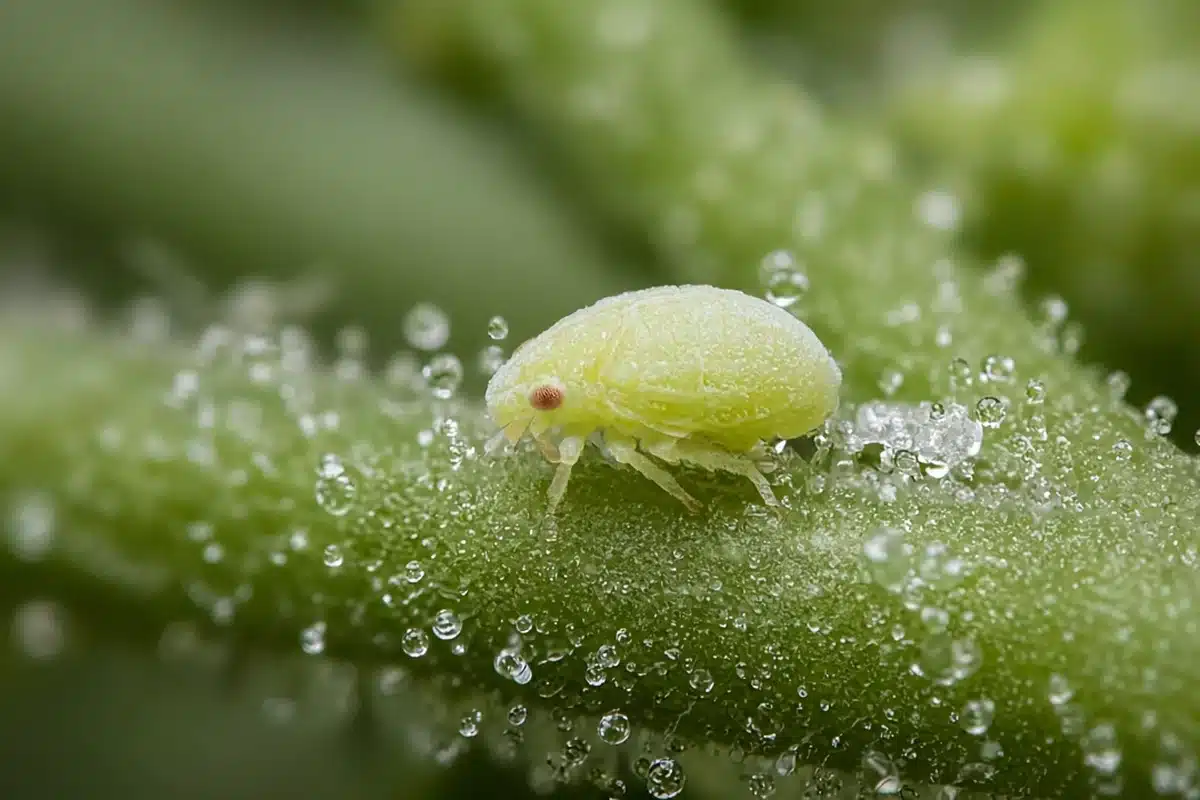
- Nymphs. University of Minnesota Extension describes soft, elongated bodies up to a quarter inch long that change from orange to yellow to green as they grow, with large red eyes on the sides of the head. UC IPM describes them as stout and commonly pale green, orange or yellow.
- Spittle masses. University of Minnesota Extension notes that masses can be up to three quarters of an inch across.
- Adults. Adult meadow spittlebugs are about a quarter inch long, start out green and turn brown or gray. UC IPM describes adults as stout brownish, gray or tan insects about a third of an inch long or less that fly or jump when disturbed.
- Another name. Adults are also called froghoppers. University of Minnesota Extension notes they have enlarged hind legs for jumping, and UC IPM says they rest with the head raised.
- Common species. University of Minnesota Extension names the meadow spittlebug as the most common species in its area. UC IPM says the meadow spittlebug feeds mainly on broadleaved herbaceous plants and has at least 400 known hosts.
How are spittlebugs different from leafhoppers?
Adult spittlebugs resemble leafhoppers, which also feed on sap and jump when disturbed. University of Minnesota Extension notes that spittlebug adults are fatter. UC IPM points to a detail on the hind legs. Leafhoppers have long, continuous rows of spines along the hind leg, while spittlebugs have only two stout, thornlike spines along its outer length, plus a ring of spines near the foot.
The easiest clue, though, is the foam. Leafhopper nymphs do not make spittle. If you find small wedge-shaped insects on leaf undersides with no foam, you are probably looking at leafhoppers, so turn to leafhoppers on cannabis instead.
How much damage do spittlebugs do to cannabis?
In most gardens, very little. University of Minnesota Extension explains that feeding usually does not damage annuals and perennials, though if many spittlebugs are present, leaves can lose their shape. UC IPM says abundant spittlebugs can distort plant tissue and slow growth, mainly on herbaceous plants.
For a cannabis grower, that means a handful of spittle masses on a healthy plant is mostly a cosmetic concern. Heavier populations on young plants are worth managing because distorted new growth can slow early development.
UC IPM also notes that in certain crops, spittlebugs can carry plant pathogens, while adding that leafhoppers are the main carriers of those pathogens and that the importance of spittlebugs in gardens may be unknown. There is no need to treat a few spittle masses as an emergency.
When do spittlebugs show up?
Knowing the timing helps you check at the right moment and avoid surprises.
- Winter. University of Minnesota Extension says eggs survive the winter in leaf litter. UC IPM notes they overwinter on or in stems.
- Mid to late spring. University of Minnesota Extension reports that nymphs come out in late April or early May in its area and start feeding at the base of plants, moving upward toward tender leaves and flowers.
- Late spring into early summer. University of Minnesota Extension says nymphs mature in five to eight weeks. UC IPM notes each nymph feeds for 1 to 3 months.
- Summer. Adults move to nearby grassy areas, pastures or broadleaf weeds, according to University of Minnesota Extension.
- Fall. Females return in September and October to lay eggs in plant debris or in leaves and stems.
University of Minnesota Extension notes there is one generation per year. UC IPM says there may be one or two per year where it works. Timing varies with local climate, so use these windows as a guide rather than a fixed calendar.
The life cycle explains much of what you see on the plant. UC IPM notes that nymphs start making spittle in their second growth stage and pass through four stages in all, with the last one darkening and growing wing pads before it becomes an adult. Nymphs stay mobile and move to a new feeding spot if the part they are feeding on declines, which is why fresh foam can appear somewhere new on the same plant. Adults can live and feed for up to 6 months. UC IPM adds that the meadow spittlebug needs cool, humid or moist conditions, which is why it has long been most common in coastal areas.
How do you get rid of spittlebugs on cannabis?
University of Minnesota Extension says managing spittlebugs is often unnecessary because they occur in small numbers, are on plants for a short time and cause little damage. If you want them gone, the options are simple.
- Check regularly. University of Minnesota Extension suggests checking every two weeks in late spring for foam and nymphs at the base of plants, and later on the undersides of young leaves.
- Remove them by hand. Wipe away the foam with a gloved finger or a damp cloth and pick off the nymph.
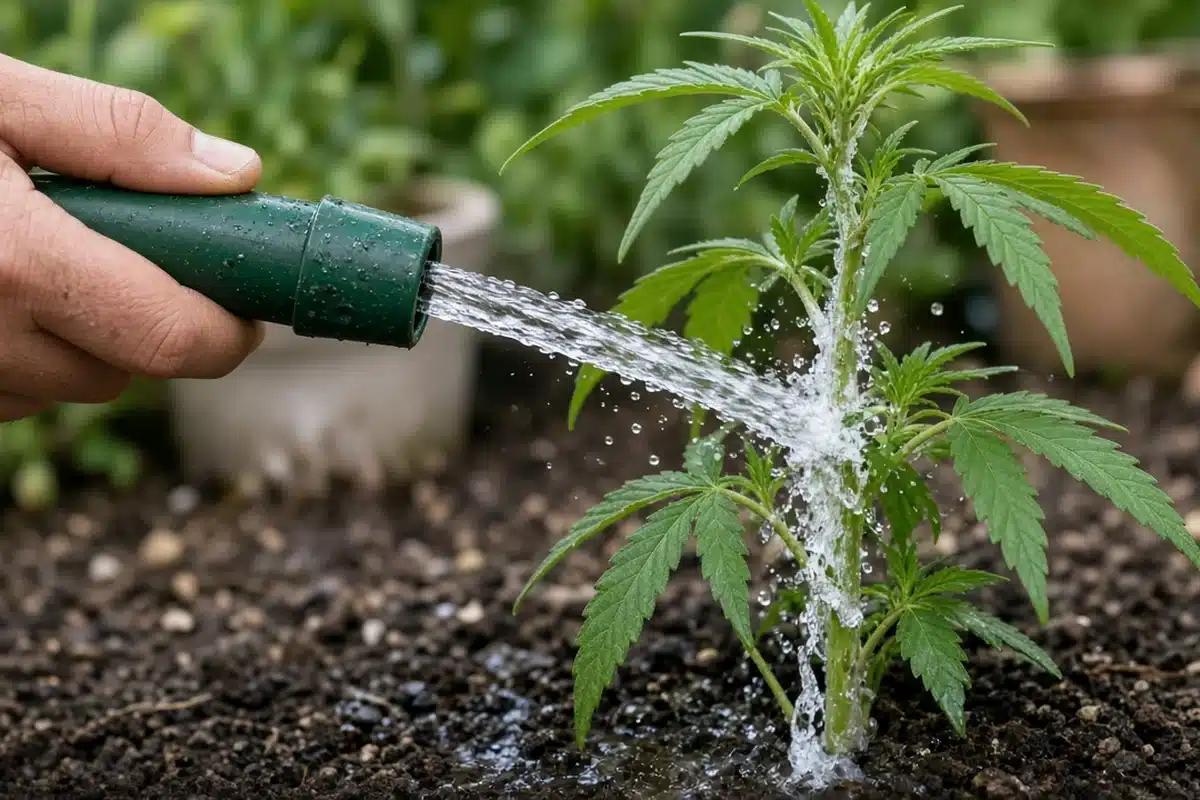
- Rinse them off. Both sources recommend a strong stream of water to wash nymphs off the plant. Use a firm but not damaging spray on young stems.
- Clear nearby weeds. University of Minnesota Extension suggests removing weeds near the garden. UC IPM recommends cutting infested weeds in spring before the insects mature and spread.
- Skip sprays. University of Minnesota Extension explains that pesticides are not effective because the nymphs are protected inside the spittle.
Natural enemies do some work, too. UC IPM lists birds, assassin bugs, minute pirate bugs, hover fly larvae, harvestmen and spiders among the predators of spittlebugs, and notes that tiny parasitic wasps attack eggs and nymphs. Encouraging those helpers fits the approach described in the best bugs for a cannabis grow.
Troubleshooting foam and stem problems
If what you see does not quite match the picture above, consider these possibilities.
- Foam returns a day after removal. A nymph was missed, or a second one was nearby. Check the same stem again and look in leaf joints.
- Leaves near the foam are twisted. Heavy feeding can distort growth. Remove the nymphs and the new growth should come in normally.
- No foam, but many small jumping insects. These may be leafhoppers or adult spittlebugs. Look at the shape and the hind legs.
- Sticky leaves with no foam. Spittle is wet but not sticky. Sticky leaves point to other sap feeders, such as aphids.
- Spittle masses every year in the same corner. Look at weeds and grassy edges nearby, where adults spend the summer and eggs may overwinter.
Sources
- University of Minnesota Extension. Spittlebugs in home gardens. https://extension.umn.edu/garden-and-home/yard-and-garden/yard-and-garden-insects/spittlebugs
- UC Statewide IPM Program. Spittlebugs. https://ipm.ucanr.edu/home-and-landscape/spittlebugs/
FAQ
Are spittlebugs harmful to cannabis plants?
Usually not. University of Minnesota Extension says spittlebug feeding does not damage most annual and perennial plants. Large numbers can make leaves lose their shape, and UC IPM notes heavy feeding can slow growth. A few spittle masses on a healthy cannabis plant are mostly cosmetic and easy to remove by hand or with water.
What is the white foam on my cannabis stems?
It is almost always a spittlebug nymph. The young insect feeds on plant sap and surrounds itself with a frothy mass that protects it from predators and from drying out. Wipe the foam away and you will usually find a small, soft green, yellow or orange nymph inside. One mass can hold several nymphs.
Should I spray spittlebugs with insecticide?
No. University of Minnesota Extension explains that pesticides are not effective because the nymphs are protected inside their spittle. Hand removal or a strong stream of water works better. Removing nearby weeds, where spittlebugs also feed, helps reduce the number that return to the garden the following year.
When do spittlebugs appear on outdoor plants?
Nymphs typically appear in mid to late spring, starting at the base of plants and moving up toward tender growth. University of Minnesota Extension reports they mature in five to eight weeks. Adults then leave for grassy areas and weeds, and females return in fall to lay eggs that survive the winter.


