
Sticky Traps for Grow Rooms: Yellow vs Blue
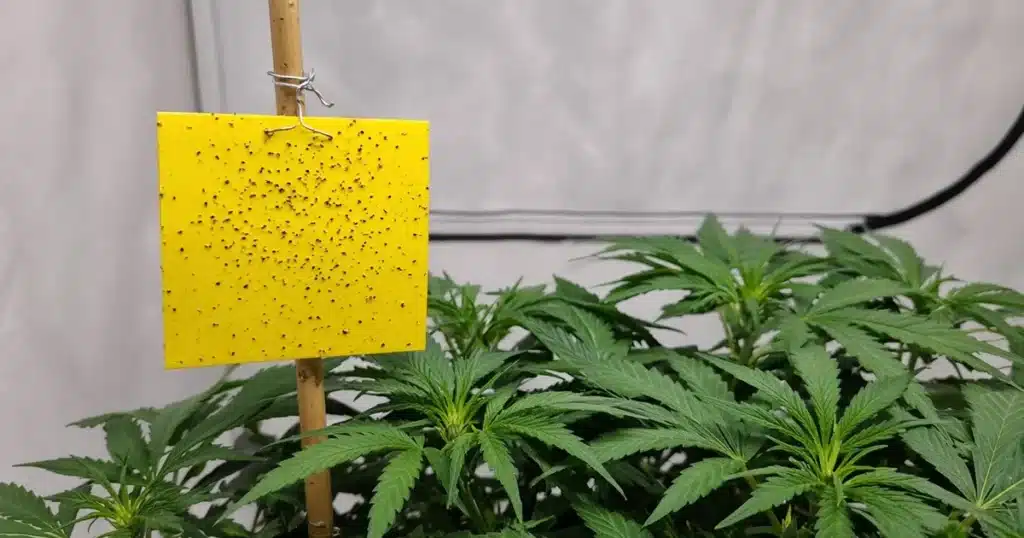
Sticky traps are colored cards coated in glue that catch flying pests such as fungus gnats, whiteflies and thrips, so growers can see what is in the room and how numbers change. Yellow catches the widest range. In 2016 Ontario trials in three commercial chrysanthemum greenhouses, yellow sticky tape caught over 2.5 times more thrips than blue.
What Do Sticky Traps Catch?
UC IPM lists adult fungus gnats, thrips, whiteflies, aphids, psyllids and sharpshooters on yellow traps, along with leafminers, shore flies and some parasites and predators (UC IPM). Ohio State notes that spider mites and caterpillars are not generally caught on traps (Ohio State). Traps add to, not replace, the steps in our pest prevention guide.
Are Yellow or Blue Sticky Traps Better?
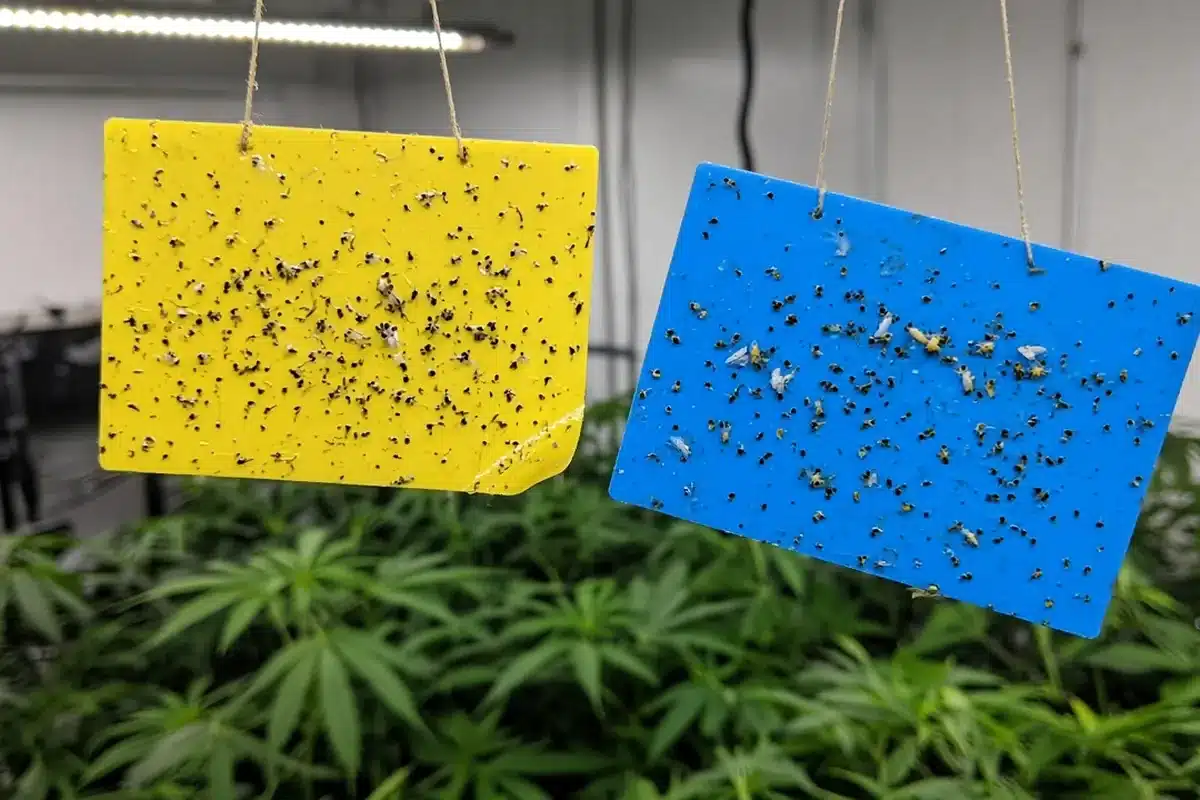
Sources differ for thrips. Ohio State says most studies show blue traps catch more western flower thrips, but suggests yellow when whiteflies and fungus gnats are also targets (Ohio State). UC IPM says blue is sometimes used for thrips but insects are harder to count on blue, and recommends yellow for most situations (UC IPM). In Ontario greenhouse trials on floriculture crops, blue was never best for thrips (OMAFRA).
Source: OMAFRA / Ontario Floriculture thrips workshop deck, trials in commercial chrysanthemum greenhouses.
Thrips catch on yellow versus blue sticky traps in Ontario greenhouse trials
| Comparison | Ratio | Crop and setting | Source |
|---|---|---|---|
| 2016 patterned tape, yellow vs blue | Over 2.5 times | Commercial chrysanthemum greenhouses | OMAFRA |
| 2017 best yellow vs worst blue | 3.6 times | Commercial pot mum greenhouses | OMAFRA |
| 2017 worst yellow vs best blue | About equal | Commercial pot mum greenhouses | OMAFRA |
Where Should Sticky Traps Go in a Grow Room?
UC IPM says to hang traps vertically with the bottom even with the top of the canopy, and to move them up as plants grow (UC IPM). For density, Ohio State suggests about one trap per 10,000 sq ft for thrips and up to one per 1,000 sq ft for whiteflies in greenhouses (Ohio State). UC IPM says each pest management unit should have traps, so even a small tent should have at least one. Check the product label and local rules.
Can Sticky Traps Control Pests on Their Own?
They are mainly a monitoring tool. Ohio State says the number of thrips on traps may not match the number on plants, and advises at least weekly plant inspections alongside traps (Ohio State). UC IPM says to always combine traps with visual checks for damage and pest stages (UC IPM). Beneficial bugs can get stuck too, so see our beneficial insects page. Some soil bugs seen near pots are covered in our springtails guide.
Sources
Some sources below studied hemp or other crops, or give general garden guidance, rather than studying drug-type cannabis. Their findings are reported as results for those crops or settings.
- UC IPM: Monitoring with Sticky Traps (floriculture and nurseries)
- Ohio State University Floriculture: Using Yellow Sticky Traps (PDF)
- Ontario Floriculture / OMAFRA: Yellow or Blue? Mass Trapping Western Flower Thrips (PDF)
Greenhouse extension sources inform this sticky trap page, which stays general growing information from Kind Seed Co.
FAQ
How often should you change sticky traps?
UC IPM says to inspect each trap at least once or twice weekly, and notes it is easiest to replace traps at each inspection. Otherwise, replace them when they are too fouled to catch insects or to count quickly. If traps are reused, keep a note, because counts become cumulative.
Do sticky traps catch beneficial insects?
Yes. Ohio State says sticky traps catch pests and beneficials, and names the whitefly parasitoid Encarsia formosa as one that is caught at times. UC IPM also lists adults of certain parasites and predators among insects found on yellow traps, which matters if you release beneficial bugs.
How many sticky traps does a grow room need?
Extension guidance is written for greenhouses. Ohio State suggests about one trap per 10,000 square feet for western flower thrips and up to one per 1,000 square feet for whiteflies. UC IPM says each pest management unit should have traps, so even a small tent or room should have at least one.
Do sticky traps catch spider mites?
Not usefully. Ohio State Floriculture says spider mites and caterpillars are not generally caught on sticky traps, so a clean card does not mean a plant is free of mites. Check leaf undersides directly, and use at least weekly plant inspections alongside traps, as Ohio State advises.


