
Wildfire Smoke and Ash in Cannabis Gardens: What to Do After
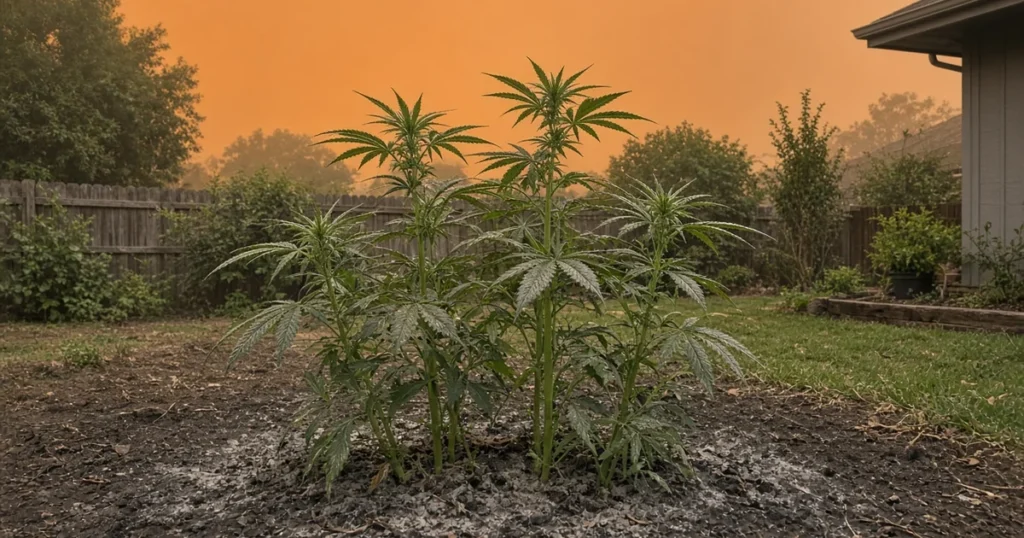
Quick answer: When wildfire smoke and ash reach your outdoor cannabis garden, protect yourself first, then clean up gently. Oregon State University Extension advises staying out of the garden while smoke lingers, wearing an N95 mask when you return and never using a leaf blower on ash. The UC ANR Fire Network adds that drip irrigation, mulch and soil covers cut down on ash and soil splash. If the garden sat close to a fire or under heavy ash, both sources suggest testing the soil for heavy metals before you plant again.
How Does Wildfire Ash Affect Garden Plants?
Mostly through what settles on leaves and soil. The UC ANR Fire Network explains that during wildfires, plants pick up chemicals and metals through ash deposited on leaf surfaces and through uptake from the soil by roots. It notes that large leaves collect airborne particles like smoke and ash, as well as soil splash, and that all plants can take on airborne deposits through their leaves.
Oregon State says ash and smoke are unlikely to work their way deep into intact fruits and vegetables, but risk climbs the closer a garden is to the fire. Both sources describe fires near buildings as a bigger concern. Oregon State points out that burning buildings release different toxins than a forest fire does.
Neither source studied cannabis directly. Their guidance comes from vegetable and fruit gardens, so use it as a general framework for any outdoor plant you grow at home.
Is It Safe to Work in a Smoky Garden?
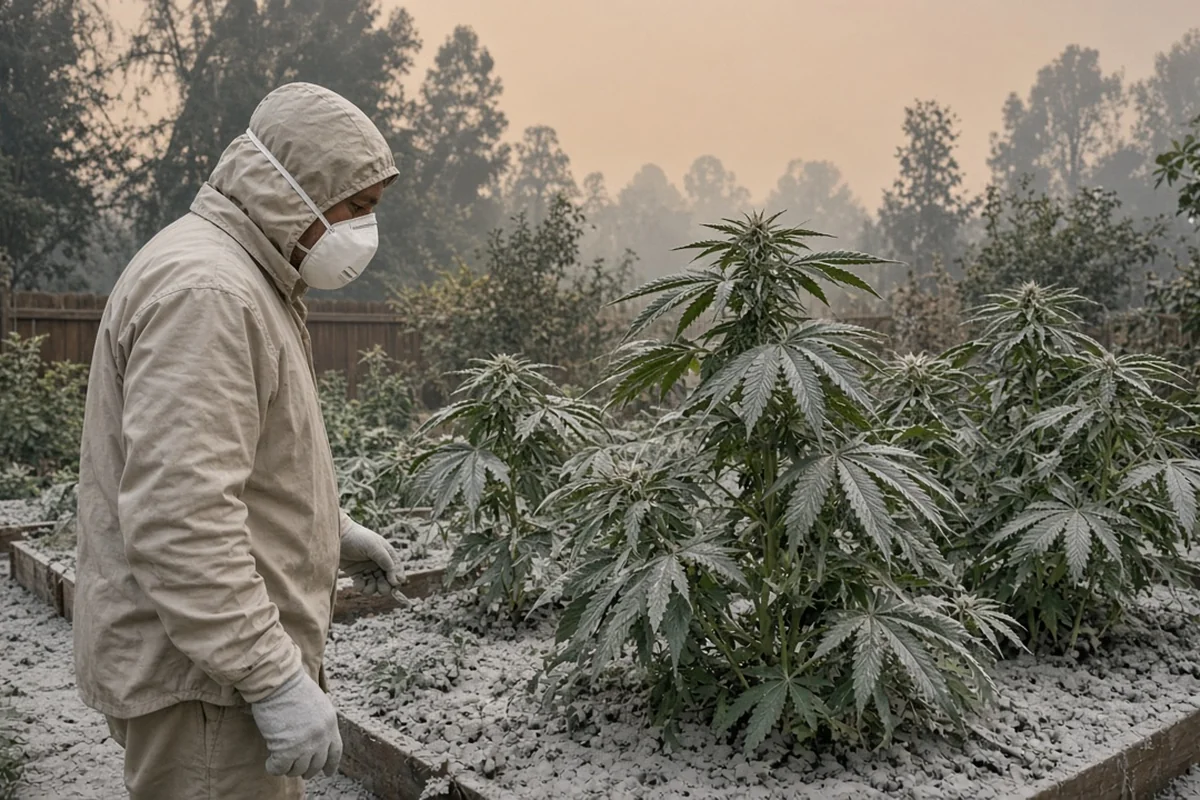
Wait for clean air if you can. The UC ANR Fire Network says the best way to limit exposure to smoke and ash is to restrict time outdoors, and it notes that people are exposed mostly by breathing smoke, touching contaminants with bare skin and moving them from hand to mouth. Oregon State recommends checking current conditions on AirNow before heading out.
When you do go out, both sources list similar protection:
- An N95 or KN95 mask, which Oregon State calls the best choice
- Gloves, long sleeves, long pants and closed shoes or boots
- Goggles for sensitive eyes, as the UC ANR Fire Network suggests
- Removing shoes and outer clothes before going inside
- Bagging or washing those clothes right away
- Washing your hands before and after garden work
How to Clean Up Ash in a Cannabis Garden
- Check the air first. Oregon State advises against harvesting or garden work while smoke lingers. Use AirNow to see when conditions improve.
- Suit up. Put on a mask, gloves and covering clothes, following the lists above.
- Skip the leaf blower. Both sources warn against blowers. The UC ANR Fire Network says blowers and vacuums lift contaminated dust into the air.
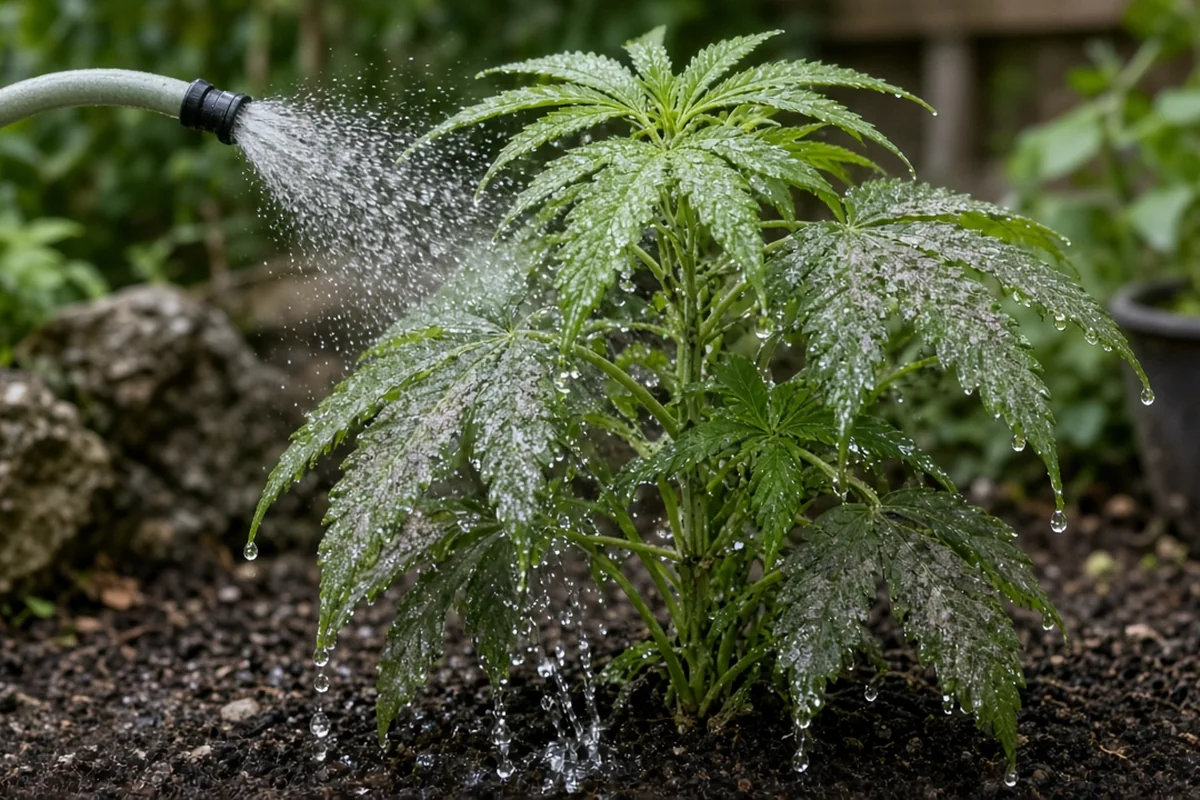
- Rinse leaves and stems in veg only. Oregon State lists hosing ash off plants as a care step. Use a soft spray on leaves and stems of plants that are still in vegetative growth.
- Switch to drip. Both sources suggest drip lines or soaker hoses to stop soil from splashing up onto plants. Our guide to drip irrigation for cannabis explains setup.
- Cover the soil. Oregon State and the UC ANR Fire Network both recommend mulch, and Oregon State also suggests a barrier of weed cloth or landscape fabric. See mulch for cannabis for depth and timing.
- Leave the soil alone. Oregon State advises avoiding soil disturbance after ash falls.
- Discard badly damaged plant material. The UC ANR Fire Network says to throw out any produce that is burnt or covered in soot, ash or chemicals used to fight the fire.
Should You Test Garden Soil After a Wildfire?
Yes, if the fire came close or the ash was heavy. Oregon State says soil contamination becomes more likely as the distance between a garden and the fire shrinks, and that gardeners may want to test before planting again in spring. It suggests collecting samples from several spots, labeling each by location and sending them to a lab.
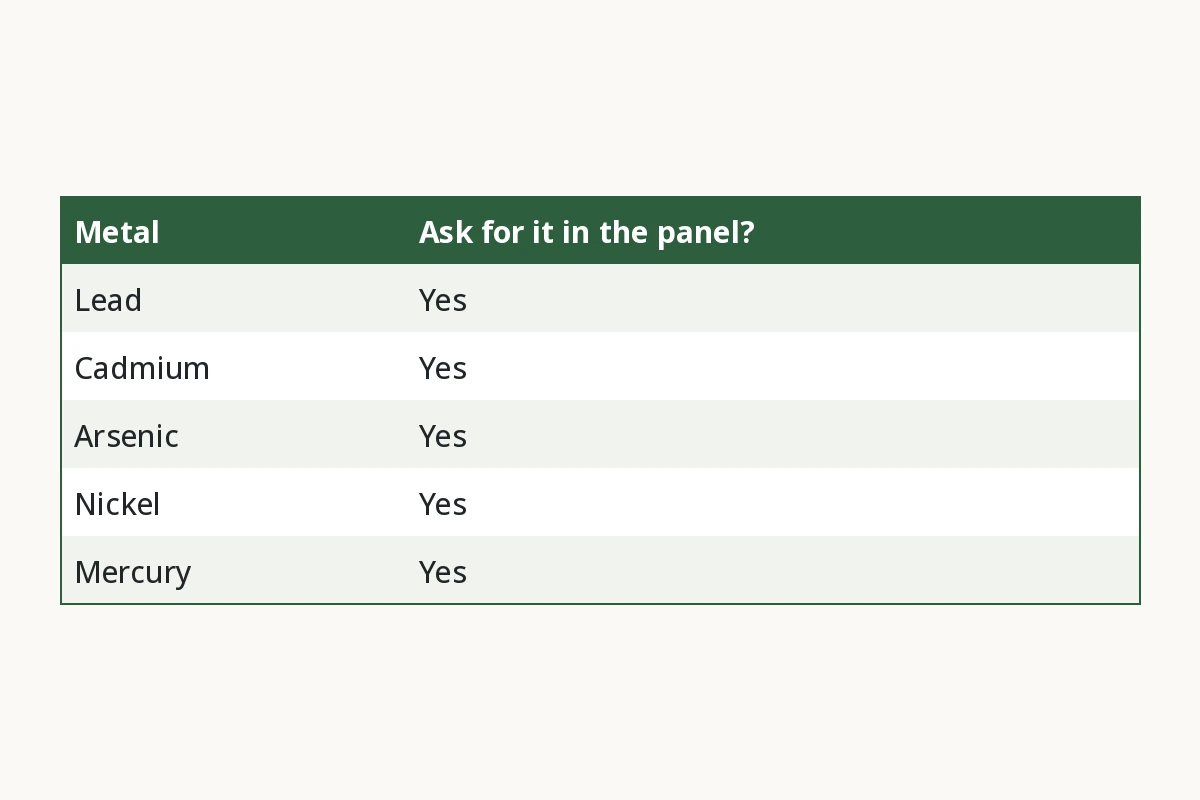
Oregon State lists the heavy metals to ask the lab about:
| Metal | Ask for it in the panel? |
|---|---|
| Lead | Yes |
| Cadmium | Yes |
| Arsenic | Yes |
| Nickel | Yes |
| Mercury | Yes |
Oregon State also suggests mapping where each sample came from so you can find problem areas if more testing is needed. The UC ANR Fire Network recommends learning your site history to uncover older sources of contamination. Our post on soil testing for cannabis explains how standard soil tests work and how to take a good sample.
What If the Soil Test Shows Contamination?
You have a few options. The UC ANR Fire Network suggests amending marginally contaminated soil with compost or other suitable amendments, which can support the breakdown of chemicals and reduce short term plant uptake of heavy metals. For more serious cases, it suggests replacing the soil with clean soil and installing raised beds.
Oregon State notes that where ash piled up thickly, mixing in compost or clean bagged soil may help bring soil life back, but that amendments are not needed for most gardens. Our guide to raised beds for cannabis can help if you decide to build above the old soil.
Wildfire Ash vs Burned Plant Ash
These are not the same thing. Wildfire ash can carry residue from burned buildings and fire suppression chemicals, which is why both sources stress caution near structure fires. The ash left from burning cannabis is a different question. Our post on whether weed ash is good for plants covers that topic. Neither wildfire source suggests adding wildfire ash to soil on purpose.
Do Smoke and Ash Change How You Water?
Somewhat. The UC ANR Fire Network recommends low impact watering, such as drip irrigation and soft sprayers, to keep soil particles from splashing onto plants. It notes that mulches and soil covers reduce splash and dust and also save water.
Oregon State adds that until fall rains arrive, you may keep seeing ash. Keep watering at the base, and refresh mulch where it has thinned so bare soil is not exposed.
Troubleshooting After Wildfire Smoke
Leaves still look gray after rinsing. On plants still in veg, rinse leaves and stems again on another day once the air is clear. Oregon State lists hosing off plants as a normal step.
You only have overhead sprinklers. The UC ANR Fire Network suggests soft sprayers or drip to limit splash. Lay a soaker hose along the bed as a quick fix.
The garden is next to a burned building. Both sources say the risk is higher near structure fires. Test the soil before planting there again, and consider raised beds with clean soil.
Your soil lab does not list heavy metals by default. Oregon State says to request a heavy metals panel and to make sure it covers lead, cadmium, arsenic, nickel and mercury.
Ash blows back in after cleanup. Mulch or landscape fabric holds it down, according to Oregon State. Avoid digging or tilling while ash is present.
You feel unwell while working outside. Go inside and limit outdoor time, as the UC ANR Fire Network advises.
Sources
- UC ANR Fire Network, University of California Agriculture and Natural Resources, Home Garden Produce and Fruit Tree Safety: https://www.ucanr.edu/program/uc-anr-fire-network/home-garden-produce-and-fruit-tree-safety
- Oregon State University Extension Service, Is wildfire ash on garden produce safe to eat?: https://extension.oregonstate.edu/news/wildfire-ash-garden-produce-safe-eat
FAQ
Can I use a leaf blower to clear ash?
No. Both Oregon State and the UC ANR Fire Network say not to, because it raises fine particles into the air you breathe.
What mask should I wear in a smoky garden?
An N95 or KN95. Oregon State calls an N95 the best choice, and a cloth mask with a filter is the next option down.
Does all wildfire ash contain heavy metals?
Not always. Oregon State says risk rises the closer the garden is to the fire, especially near burned buildings. A soil test tells you what is present.
When should I test my soil after a fire?
If the fire was close or ash was heavy, test before you plant again in spring, as Oregon State suggests.
Should I till ash into the soil?
No. Oregon State advises avoiding soil disturbance after ash falls.
Will compost help a soil exposed to ash?
It can. The UC ANR Fire Network says compost can help with marginally contaminated soil, and Oregon State says compost may help bring soil life back after thick ash.


