
Leaf Mold for Cannabis Beds: Turn Fall Leaves Into Soil Food
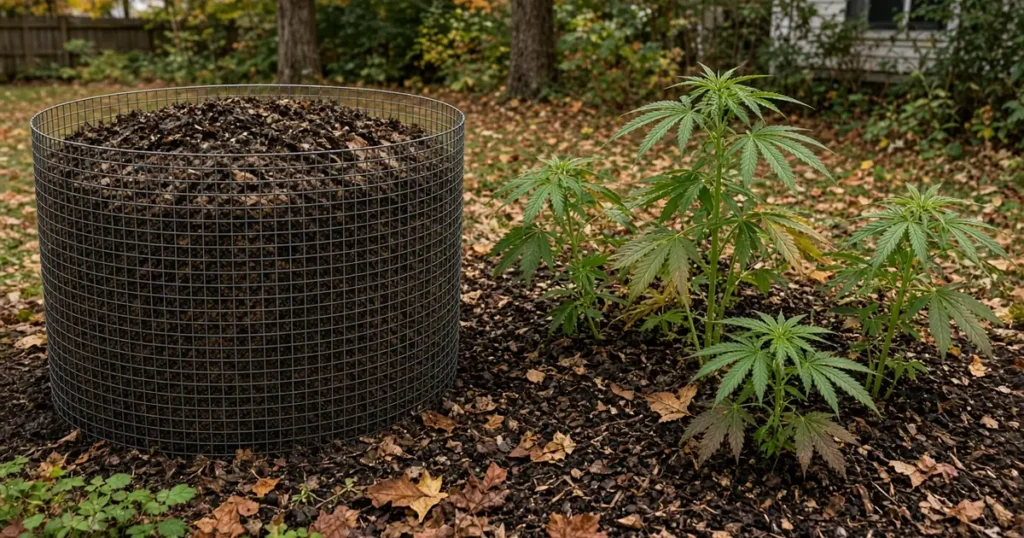
Quick answer: Leaf mold is simply tree leaves left to decay until they turn dark, crumbly and earthy. Penn State Extension says it is low in nutrients but an excellent soil amendment that improves soil structure, helps soil hold water and feeds soil life. To make it, pile moist leaves in a bin or bag and wait. Shredding them first speeds it up. University of Illinois Extension says shredded leaves can be ready in about 6 months, while whole leaves take 9 to 12 months.
What Is Leaf Mold?
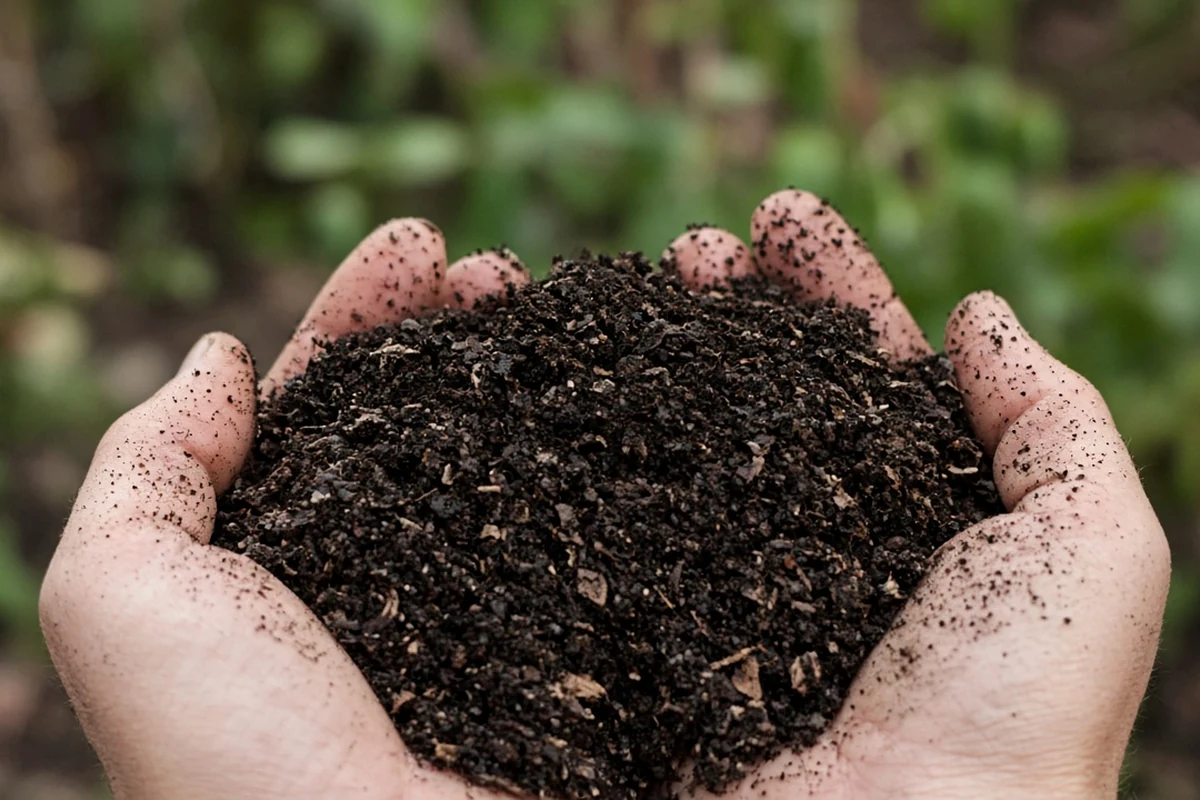
Leaf mold is the end product of leaves breaking down on their own. Penn State Extension describes it as similar to compost, dark brown and crumbly, with a pleasant smell of earth. Unlike a regular compost pile, a leaf mold pile is usually just leaves, with no kitchen scraps or grass mixed in.
Penn State lists several benefits for garden soil. Leaf mold improves soil structure, increases water retention, returns essential elements and supports the fungi, bacteria, mites and small insects that break down organic matter. Gardeners can spread it as mulch or mix it into potting soil. Penn State also notes that leaf mold is mostly free of weeds, which is not always true of compost or manure.
Why Use Leaf Mold in Cannabis Beds?
It builds better soil without adding much fertilizer. Penn State is clear that leaf mold is not high in nutrients, so think of it as a conditioner rather than a feed. That makes it useful in beds where you want more organic matter and water holding without pushing nitrogen.
Beds with heavy or very light soil can benefit most. Leaf mold improves structure and helps hold water, per Penn State, which matters in both clay soil for cannabis and sandy soil for cannabis. Illinois Extension adds that tilling leaves into a garden improves tilth, drainage and organic matter.
Does Leaf Mold Change Soil pH?
Not much. Illinois Extension reports that leaf mulch has no significant effect on soil pH in most soil types because of natural soil buffering and breakdown. It notes that even oak leaves, which are acidic at pH 4.5 to 4.7 when fresh, break down to neutral or slightly alkaline.
Penn State cites Michigan State University research that found that mowing oak or maple leaves into turf left soil pH unchanged. If you are worried about pH in a cannabis bed, test the soil rather than avoiding leaves. Our guide to understanding pH in cannabis plants explains the target range.
How to Make Leaf Mold Step by Step
- Gather leaves in fall. Rake leaves from your yard into one spot.
- Shred them if you can. Penn State says shredded leaves decay much faster than whole ones. A lawn mower does the job, and Penn State notes a mulching mower works best.
- Mow dry, thin layers. Penn State says shredding is easier when leaves are fairly dry and not piled too thickly, and that a second pass in a cross direction chops them finer.
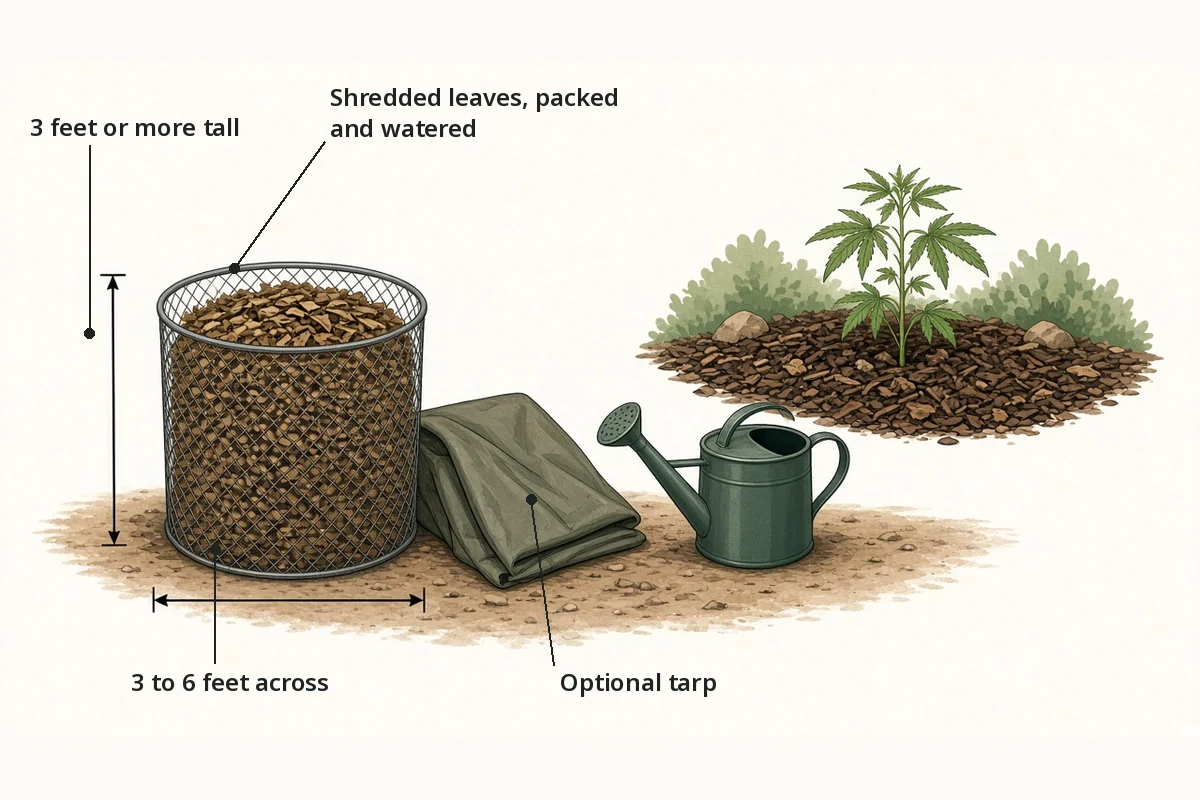
- Build a pile or bin. Penn State suggests a bin of wire or wood measuring 3 to 6 feet across and 3 feet or more in height, though a bin is not required.
- Pack and water the pile. Penn State says to pack the leaves down and water them.
- Or use a bag. Penn State suggests filling a large plastic bag or old trash can with leaves, moistening them and closing it loosely so some air gets in.
- Speed it up if you like. Penn State says turning the pile, adding water now and then or covering it with a tarp can cut decay time from years to 6 to 12 months.
- Wait. Penn State notes the leaves will break down in time even with no help from you.
How Long Does Leaf Mold Take?
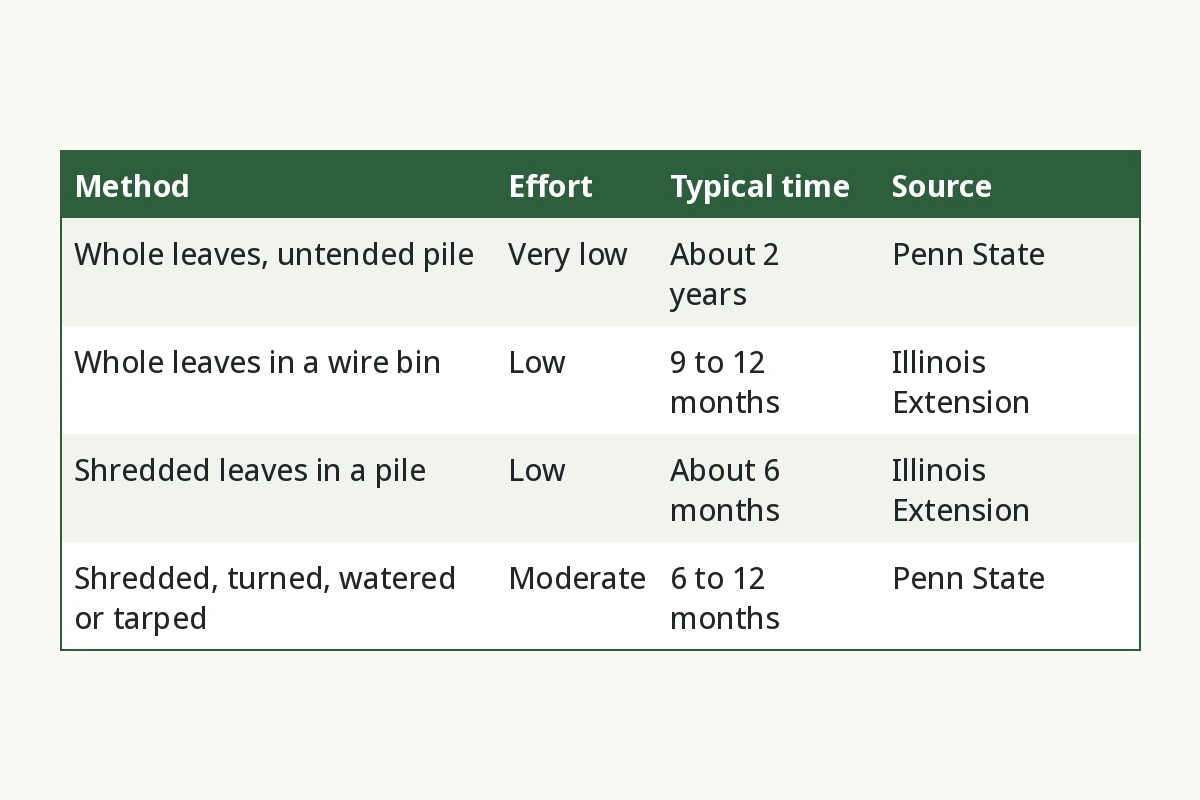
It depends on leaf size and care. Illinois Extension says leaves shredded first and piled over winter can be ready in 6 months, while whole leaves take longer, about 9 to 12 months. Penn State says a simple, untended pile of whole leaves may take a couple of years.
| Method | Effort | Typical time | Source |
|---|---|---|---|
| Whole leaves, untended pile | Very low | About 2 years | Penn State |
| Whole leaves in a wire bin | Low | 9 to 12 months | Illinois Extension |
| Shredded leaves in a pile | Low | About 6 months | Illinois Extension |
| Shredded, turned, watered or tarped | Moderate | 6 to 12 months | Penn State |
Plan ahead. Leaves raked in fall become a bed amendment for the following season or the one after. Our post on fall garden cleanup after cannabis harvest fits well with starting a leaf pile.
How to Use Leaf Mold in Cannabis Beds
Use it as an amendment or a mulch, both of which Penn State lists as good uses. For beds, mix finished leaf mold into the planting area before transplanting to boost organic matter.
Shredded leaves that are not yet fully broken down still have a job. Penn State says shredded leaves can go down as a mulch layer 2 to 4 inches thick around trees, shrubs and perennial beds, and that they mat down less than whole leaves. It adds that leaf mulch helps moderate soil temperature, hold moisture and keep weeds down. Illinois Extension says a 2 inch layer of shredded leaves on a bed turns into a soft brown mulch by spring. Our guide to mulch for cannabis covers how close to keep mulch to the stem.
Illinois Extension describes another option for empty beds in fall. Spread 6 to 8 inches of whole leaves over the garden and till them in, which improves tilth, drainage and organic matter by the next season.
Leaf Mold vs Compost
Leaf mold and compost do different jobs. Penn State calls leaf mold similar to compost but lower in nutrients. A regular compost pile mixes greens and browns to break down faster and supply more nutrients.
Penn State suggests stockpiling extra fall leaves in a separate pile and adding them to the compost bin in spring and summer whenever you need brown material to layer with fresh greens. The rest slowly turns into leaf mold. Illinois Extension notes that leaves can also be composted with kitchen fruit and vegetable scraps to make a garden amendment by the next summer. Our post on composting cannabis garden waste explains how to balance a pile.
Which Leaves Should You Use?
Most common yard leaves work. Penn State mentions oak and maple leaves in the research it cites, and Illinois Extension says oak leaves, though acidic when fresh, break down to near neutral.
Penn State adds a caution about where you pile them. If you have a wooded area with its own leaf layer, do not dump more leaves there. Many insects, firefly larvae, amphibians, birds and small mammals use that layer, and Penn State says extra leaves can disrupt the natural depth of 6 to 12 inches they rely on.
Troubleshooting Leaf Mold
The pile is still whole leaves after a year. It may be too dry or the leaves were not shredded. Penn State says adding water occasionally, turning the pile and shredding leaves all speed decay.
Leaves blow out of the pile. Illinois Extension notes shredded leaves are less likely to blow away. Use a wire bin or bags, as Penn State suggests.
The bag smells sour. The bag may be sealed too tightly. Penn State advises closing bags loosely to allow some airflow.
Mulch of whole leaves mats into a crust. Penn State says shredded leaves mat down less than whole leaves. Shred them before spreading.
Plants look hungry after adding leaf mold. Leaf mold is low in nutrients, Penn State notes. Keep feeding your plants on their usual schedule.
The pile shrank to almost nothing. That is normal. Penn State says a leaf stockpile gradually shrinks as the leaves decay.
Sources
- Penn State Extension, Leaves Are Treasure, Not Trash: https://extension.psu.edu/leaves-are-treasure-not-trash
- University of Illinois Extension, Don’t Bag Your Fall Leaves, Use Them: https://extension.illinois.edu/blogs/know-how-know-more/2025-10-27-dont-bag-your-fall-leaves-use-them
FAQ
Is leaf mold a fertilizer?
No. Penn State says leaf mold is not high in nutrients. Its value is in soil structure and water retention.
Can I put leaf mold in cannabis pots?
Yes. Penn State lists potting soil as one place to use leaf mold. Mix it in rather than using it as the whole mix.
Will oak leaves make my soil too acidic?
No, according to Illinois Extension. Oak leaves break down to neutral or slightly alkaline.
Do I need a shredder?
No. Illinois Extension says a lawn mower works, and Penn State notes even a regular mower shreds leaves, though a mulching mower is better.
How big should a leaf mold bin be?
About 3 to 6 feet wide. Penn State suggests 3 to 6 feet across and at least 3 feet tall.
Does leaf mold bring weeds?
Rarely. Penn State says leaf mold is mostly weed free, unlike some compost or manure.


