
Woodchucks and Cannabis Gardens: Fences That Stop Groundhogs
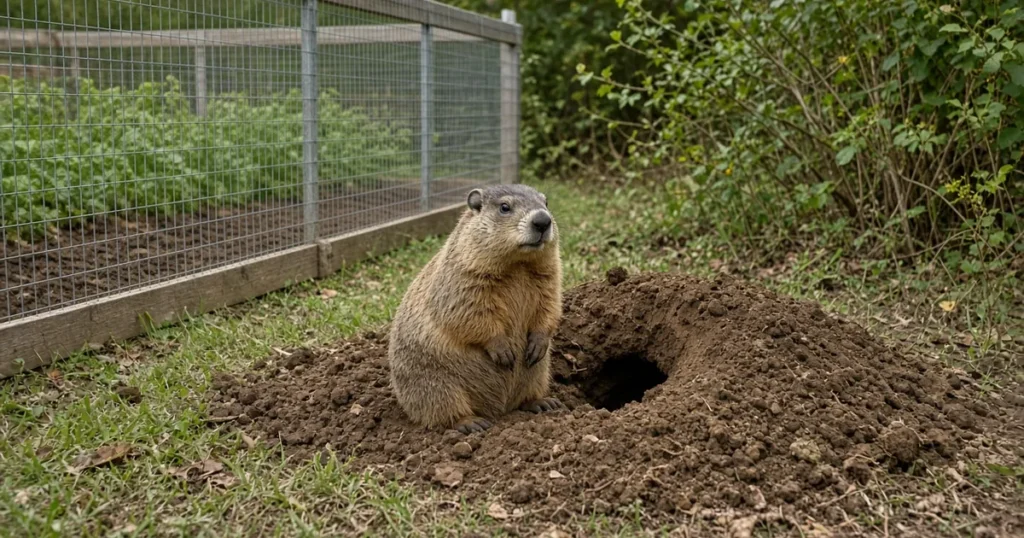
Quick answer: Woodchucks, also known as groundhogs, are large burrowing rodents that eat a wide range of garden plants and usually feed within about 150 feet of their den. Penn State Extension and the University of Maryland’s extension service both say the most permanent fix is a sturdy wire fence buried 12 inches deep, plus one hot wire set 4 to 5 inches above the soil and 4 to 5 inches out from the fence. Live trapping is an option, but relocation rules differ by state.
What Is a Woodchuck?
A woodchuck is a heavy bodied member of the squirrel family. Maryland Extension says groundhogs can grow to almost 2 feet long and weigh 10 pounds or more. Penn State describes a compact body on short, strong legs, with long curved claws on the front feet that are built for digging, and fur that is usually a grizzled brownish gray.
Penn State notes that woodchucks are strict plant eaters. They feed mostly in the early morning and evening and may bask in the sun during the warmest part of the day. They are also good climbers and are sometimes seen in low tree branches, so a low fence may not stop one.
Do Woodchucks Eat Cannabis?
They may. Neither source names cannabis, but both describe woodchucks as broad plant eaters. Maryland Extension says they will eat nearly any plant and have a special taste for tomatoes. Penn State names grasses, clover, alfalfa, peas, beans, soybeans and carrot tops among their favorite foods, and says a homeowner can lose an entire tomato patch.
Young cannabis transplants are soft and close to the ground, so they are the most exposed. Penn State notes that woodchuck damage to garden crops can be costly and extensive, so protect seedlings from the day they go in. Our guide to rabbits and cannabis covers a smaller herbivore that leaves similar clipped stems.
How Do You Know a Woodchuck Is Nearby?
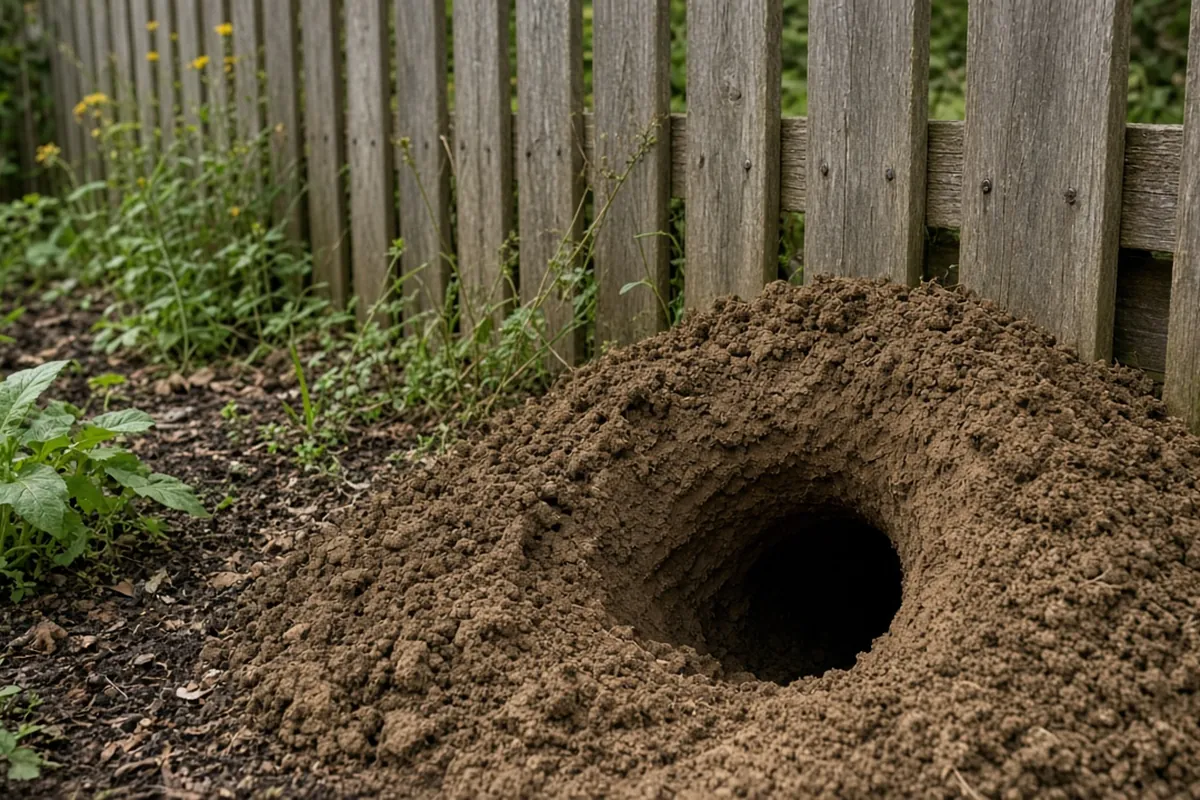
Look for the burrow. Penn State says the main entrance is 10 to 12 inches across with a large mound of fresh soil beside it, and that the woodchuck often sits on this mound to watch for danger. Maryland Extension says burrows can reach 5 feet deep and usually have more than one entrance.
Other signs from the two sources:
- One to three secondary holes without dirt mounds, which Penn State says are often well hidden
- Burrows along fence rows, stone walls, building foundations or the base of trees
- Burrows under sheds or other outdoor structures, as Maryland Extension notes
- Large bites taken out of tomatoes or other soft produce
- Feeding damage within about 50 to 150 feet of a den, the range Penn State gives
Burrow size helps separate woodchucks from smaller diggers. Our post on squirrels and chipmunks in cannabis gardens covers animals with much smaller holes.
When Are Woodchucks Active?
From late winter through fall. Penn State says woodchucks are among the few mammals that truly hibernate. Hibernation usually starts in late October or the first part of November and runs to late February or March.
They breed in March and April, according to Penn State, while the Maryland guide puts the single yearly litter at two to six young. Penn State adds that the young are weaned around the end of June or start of July and leave soon after. That means new animals may show up in your garden in midsummer, right when outdoor cannabis is growing fast.
How to Build a Woodchuck Fence
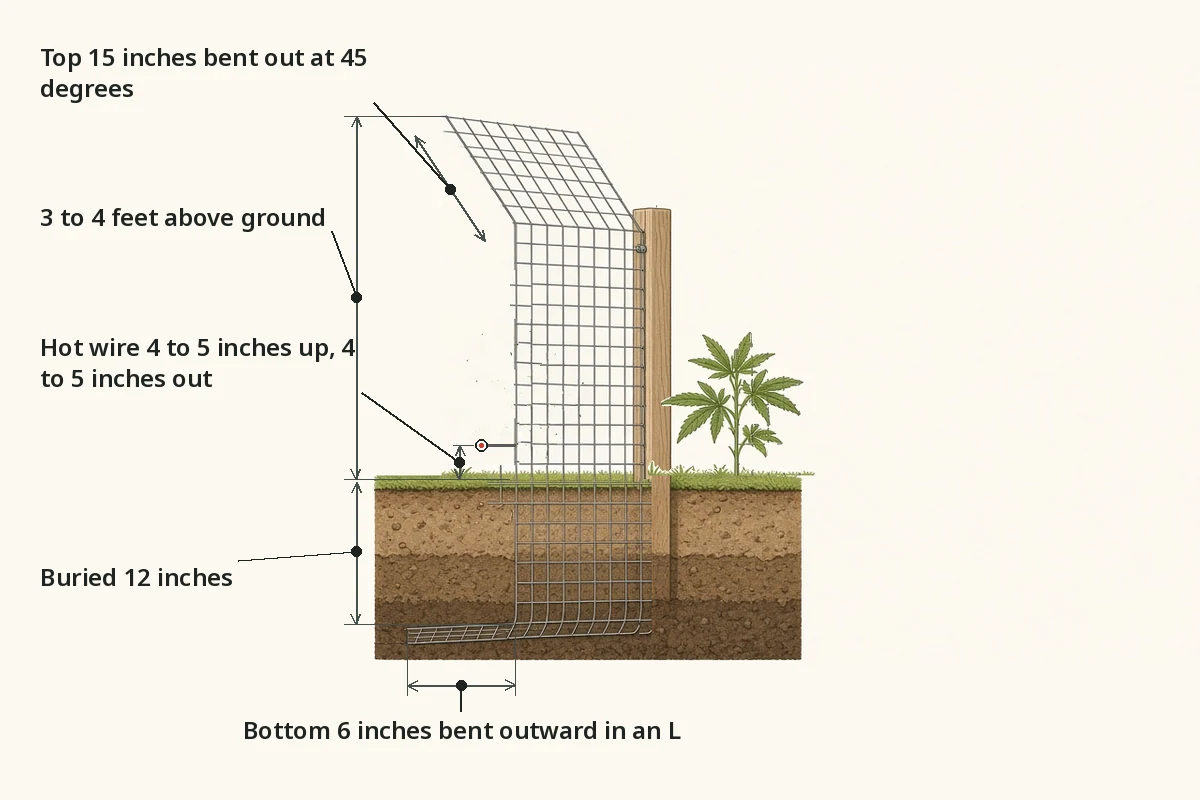
- Choose the wire. Penn State recommends 2 inch woven mesh or a heavy grade of poultry wire.
- Set the height. Maryland Extension calls for a strong 4 foot fence. Penn State says the fence should stand 3 to 4 feet above ground.
- Bury the bottom. Both sources say to bury the lower edge 12 inches deep. Penn State adds that the bottom 6 inches should bend outward in an L shape to stop digging.
- Bend the top out. Penn State says bending the top 15 inches of wire outward at a 45 degree angle helps stop climbing.
- Add a hot wire. Both sources suggest running an electric strand 4 to 5 inches high, set 4 to 5 inches outside the mesh.
- Keep the hot wire clear. Penn State says to remove plants growing near an electric fence so it does not short out.
- Walk the line often. Check for new holes along the fence and fill them right away.
Woodchuck Fence Specs at a Glance
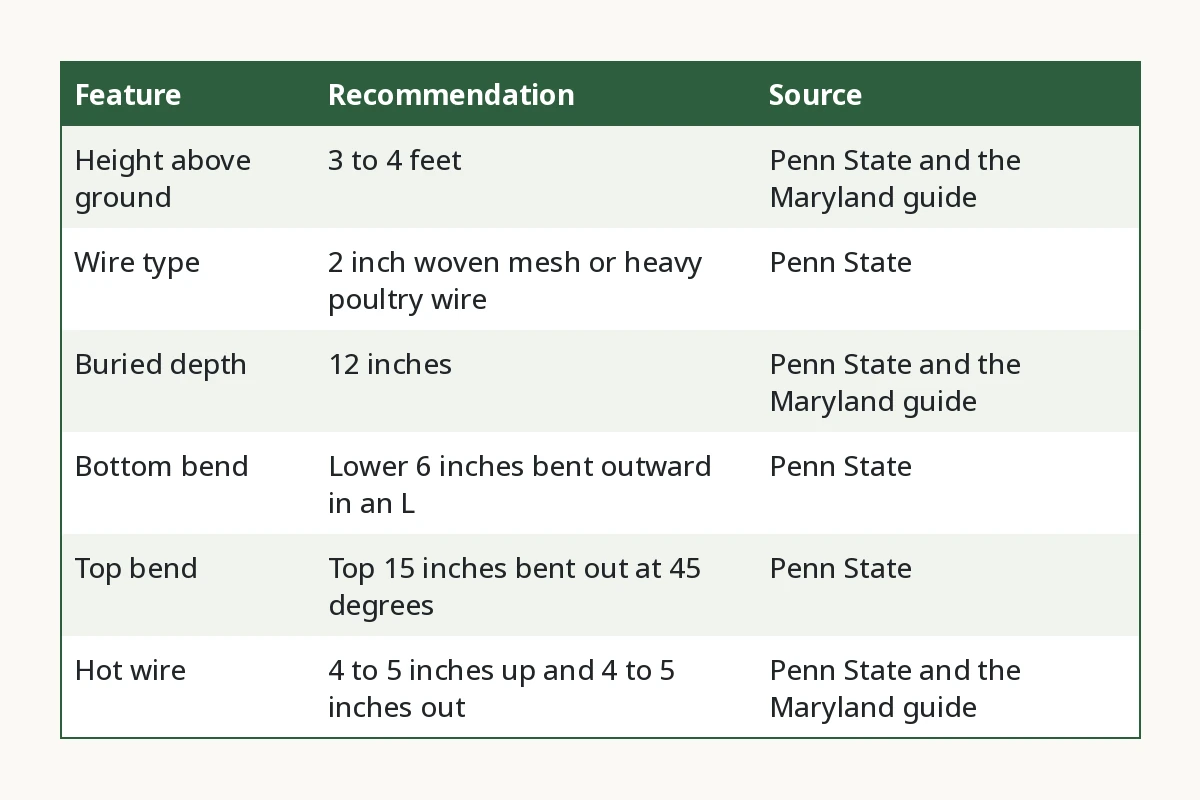
| Feature | Recommendation | Source |
|---|---|---|
| Height above ground | 3 to 4 feet | Penn State and the Maryland guide |
| Wire type | 2 inch woven mesh or heavy poultry wire | Penn State |
| Buried depth | 12 inches | Penn State and the Maryland guide |
| Bottom bend | Lower 6 inches bent outward in an L | Penn State |
| Top bend | Top 15 inches bent out at 45 degrees | Penn State |
| Hot wire | 4 to 5 inches up and 4 to 5 inches out | Penn State and the Maryland guide |
Penn State notes that a good garden fence also keeps rabbits, dogs and cats out. If you also need to guard single plants inside the fence, our post on plant cages for cannabis shows sturdy designs.
Can You Trap and Relocate a Woodchuck?
Check your state first. Maryland Extension says no permit is needed there to trap a groundhog, but landowner permission is required before releasing it into suitable habitat. Penn State says Pennsylvania does not allow relocating woodchucks to other properties because they are a potential rabies vector, so a trapped animal must stay on the landowner’s property or be humanely euthanized.
If trapping is allowed, Penn State suggests a live trap at least 10 by 10 by 24 inches, placed at the burrow entrance, in a travel lane or at the damage site. It lists baits such as apple slices, carrots with tops, cantaloupe, lettuce or fresh peas. Maryland Extension advises leaving the trap unset for several days so the animal gets used to feeding there, then setting it.
Timing matters too. Maryland Extension suggests placing traps near the burrow just before daylight and removing them before dark to avoid catching other animals. It also advises against relocating groundhogs in spring while young are in the den, or in fall right before hibernation.
Do Repellents or Scare Tactics Work?
Only briefly. Penn State says scarecrows and other effigies may give temporary relief if you move them often and keep people active in the area. It also states that no repellents are registered for woodchucks in Pennsylvania.
Burrow fumigants exist, but Penn State warns they are toxic to other wildlife and must never be used under sheds, buildings or near materials that can burn. Most home growers are better off with a fence or a licensed wildlife control operator.
Troubleshooting Woodchuck Problems
Plants keep disappearing inside the fence. The animal may be climbing over. Add the outward 45 degree top bend Penn State describes, or install the hot wire.
New holes show up along the fence line. The bottom may not be buried deep enough. Both sources call for 12 inches, and Penn State adds the outward L bend.
The trap stays empty. Penn State notes woodchucks may ignore traps when food is plentiful. Prop the door open for a few days so they take the bait first, as both sources suggest.
The electric wire stopped working. Weeds may be touching it. Penn State says vegetation near the wire must be removed regularly.
A burrow sits under the shed next to the garden. Maryland Extension says groundhogs often burrow under outdoor structures. Contact a wildlife professional rather than using fumigants near buildings.
Damage starts again in late summer. Penn State says young woodchucks strike out on their own after weaning, and many new burrows appear in late summer. Recheck the fence.
Sources
- University of Maryland Extension, Groundhogs: https://www.extension.umd.edu/resource/groundhogs
- Penn State Extension, Woodchucks: https://extension.psu.edu/woodchucks
FAQ
Is a groundhog the same as a woodchuck?
Yes. Both sources use the names for the same animal, and Penn State adds whistle pig as another common name.
How far do woodchucks travel to eat?
Not far. Maryland Extension says usually no more than 150 feet from the den, and Penn State gives 50 to 150 feet.
Can woodchucks climb fences?
Yes. Penn State calls them good climbers, which is why it suggests bending the top of the fence outward.
What time of day do woodchucks feed?
Early and late in the day. Penn State says mostly in the early morning and evening.
Are woodchucks dangerous?
They can be risky to handle. Penn State says they are considered a potential rabies vector. Keep your distance and never handle one by hand.
Will a woodchuck leave on its own?
Maybe not. Maryland Extension says one burrow system can stay in use for years.


