
Cucumber Beetles on Cannabis: Spotted Beetles in Mixed Gardens
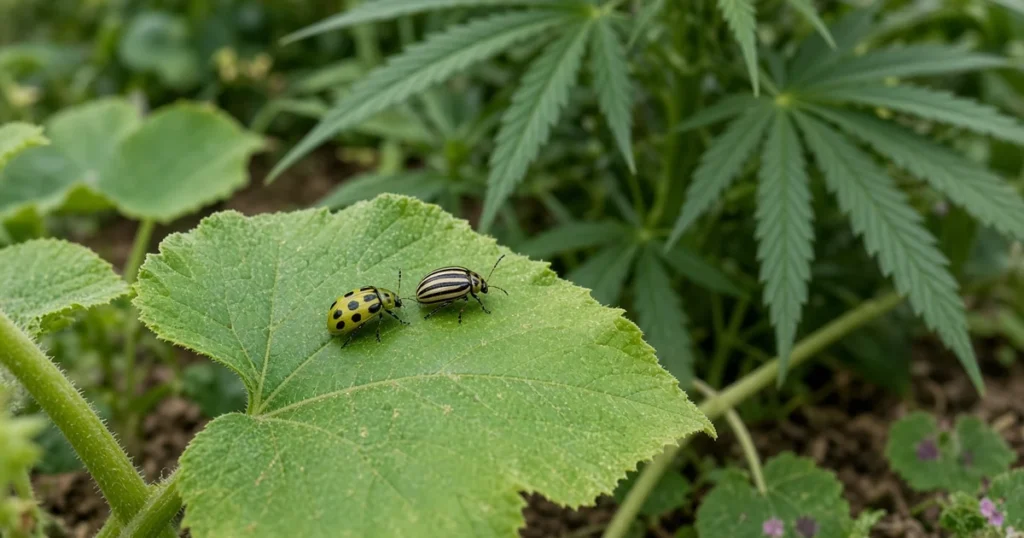
Quick answer: Cucumber beetles are small yellow green beetles with black spots or stripes that feed on many garden plants, especially squash, cucumbers and melons. The UC IPM guide says the spotted kind feeds on the leaves of many vegetables, along with shoots and blossoms, while the striped kind sticks mostly to vine crops. In a mixed garden where cannabis grows near cucurbits, the sources point to row cover on young plants, fall cleanup and knocking beetles into soapy water as the main home garden controls.
What Do Cucumber Beetles Look Like?
They are small, shiny and brightly marked. UC IPM describes adults as about 1/4 inch long with black heads and long antennae. The University of Wisconsin Madison extension service gives a size of 3/16 to 1/4 inch.
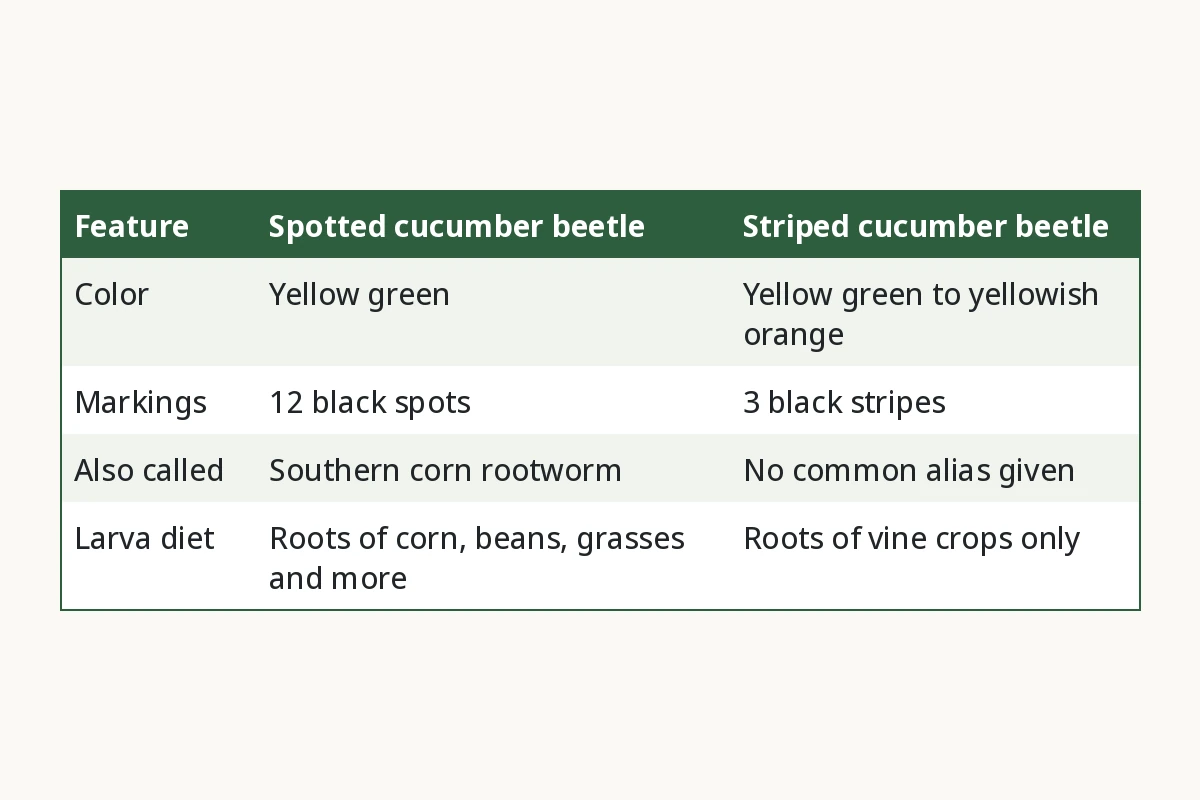
There are two common types:
| Feature | Spotted cucumber beetle | Striped cucumber beetle |
|---|---|---|
| Color | Yellow green | Yellow green to yellowish orange |
| Markings | 12 black spots | 3 black stripes |
| Also called | Southern corn rootworm | No common alias given |
| Larva diet | Roots of corn, beans, grasses and more | Roots of vine crops only |
The UC IPM page says the spotted beetle feeds on a wide range of crops, while the striped beetle larva feeds only on cucurbit roots. Wisconsin notes the striped beetle is often confused with the western corn rootworm beetle, which has a yellow green belly instead of a black one.
Are Cucumber Beetles the Same as Lady Beetles?
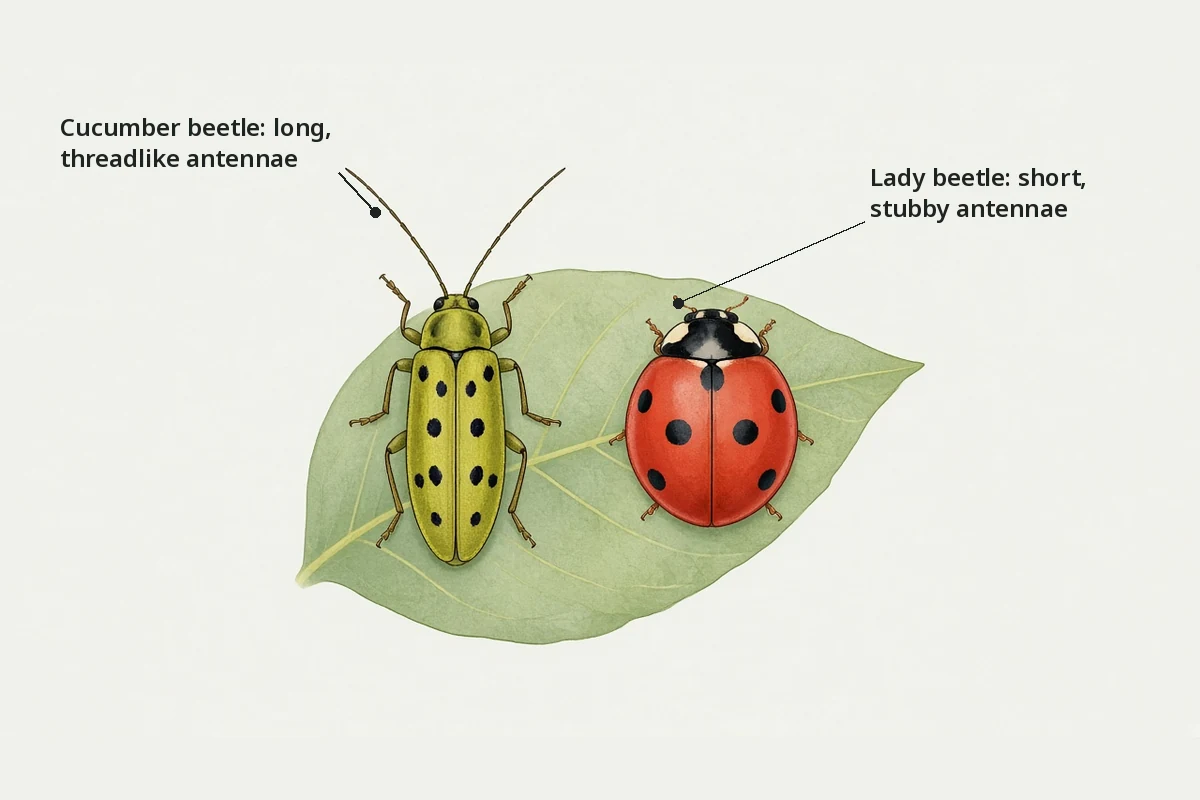
No. UC IPM says cucumber beetles are sometimes mistaken for predatory lady beetles, but the antennae give them away. Lady beetles have short, stubby antennae, while cucumber beetles have long, threadlike ones. That difference is worth checking before you remove anything, since lady beetles are allies. Our guide to beneficial insects for cannabis lists other helpers.
Do Cucumber Beetles Damage Cannabis?
They can visit, but cucurbits are their main target. None of the three sources lists cannabis as a host. UC IPM says adults chew the foliage of many vegetable crops and also eat soft fruit, and that shoots and blossoms may also be eaten. Wisconsin adds that the adults eat pollen, petals, fruit and foliage.
UC IPM points out that most older plants can support large numbers without serious damage. Young plants are the concern. Wisconsin says plants from the seed leaf stage to the three leaf stage are especially vulnerable, and Iowa State University Extension reports that early larval feeding can stunt or kill seedlings and small transplants.
How Do You Spot Cucumber Beetle Damage?
Look for chewed and skeletonized leaves. Wisconsin describes leaves that are chewed down to the veins, and UC IPM notes holes chewed in leaves. Watch for:
- Bright yellow green beetles with spots or stripes on leaves and blossoms
- Holes or lacy, skeletonized leaf patches
- Beetles clustered at the edges of the garden, where Wisconsin says they gather
- Wilting vine crops nearby, which may point to bacterial wilt carried by the beetles
Other chewing pests leave different marks, so confirm the beetle before acting. See armyworms on cannabis if you find caterpillars instead of beetles.
When Do Cucumber Beetles Appear?
In late spring. UC IPM says adults spend the winter in weedy areas and move into gardens as soon as plants come up. Wisconsin says striped beetles come out from the middle to the end of May and lay eggs at the base of vine crops, with eggs hatching in 14 to 21 days.
The larvae live underground. UC IPM says they feed on roots for 2 to 6 weeks, pupate, and then emerge as adults that feed above ground. UC IPM reports several generations a year in California, while the Wisconsin source reports one generation a year in Wisconsin and notes that spotted beetles migrate north in early to mid July.
How to Manage Cucumber Beetles in a Mixed Garden
- Identify the beetle. Check the antennae and markings using the UC IPM and Wisconsin descriptions above.
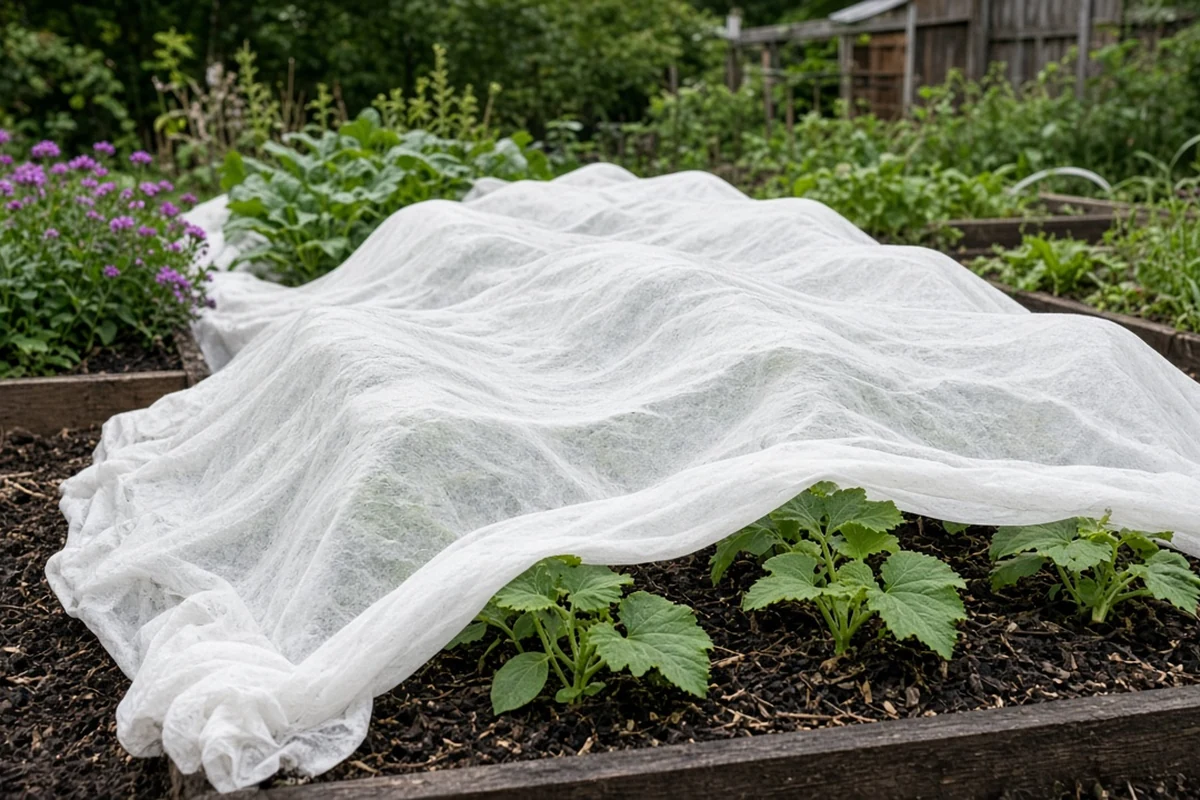
- Cover young plants. UC IPM suggests protective cloth over young plants until they are old enough to handle damage. Our guide to using row covers on cannabis explains setup.
- Install cover early. Wisconsin says floating row cover works best when installed right after planting.
- Uncover cucurbits for bees. Iowa State and Wisconsin both say to remove covers from vine crops when they flower so they can be pollinated.
- Scout often. Wisconsin suggests checking two to three times a week early in the season and weekly after that, focusing on garden edges.
- Hand pick. Wisconsin says small plantings can be cleared by knocking the beetles into soapy water.
- Try a trap crop. Wisconsin suggests planting blue Hubbard squash at garden edges a week or two before other cucurbits, then controlling beetles on those plants.
- Clean up in fall. Wisconsin says removing plant debris at season end takes away overwintering sites.
Wisconsin offers two more planning tips for the vine crops that draw these beetles in. Rotate cucurbits with grains, tomatoes or a cover crop that the beetles do not use, which can delay infestations. When you choose cucumber varieties, less bitter types tend to attract fewer beetles, and some varieties tolerate the feeding better than others.
Should You Spray for Cucumber Beetles?
Not on cannabis flowers. UC IPM calls cucumber beetle management difficult and says the best strategy for most gardens may simply be covering young plants. Wisconsin lists neem, other horticultural oils and insecticidal soap as organic options for home gardens, and notes they must contact the insect directly to work.
Wisconsin also warns that pyrethrins can harm pollinators and beneficial insects. Use only products labeled for your crop and state, and keep any spray off buds and flowers. Our post on insecticidal soap for cannabis explains timing and coverage.
Can Cucumber Beetles Spread Plant Disease?
Yes, in vine crops. Wisconsin says cucumber beetles can carry the bacterium behind bacterial wilt, which is typically fatal to cucurbits, as well as squash mosaic virus. Iowa State says the striped beetle matters most for this reason. UC IPM also reports that they can carry wilt diseases and cucumber mosaic virus to cucurbits.
None of the sources links these diseases to cannabis. The practical point is to keep beetle numbers down in a mixed garden so neighboring vine crops stay healthy. Wisconsin advises pulling cucurbits with bacterial wilt right away to limit spread.
Troubleshooting Cucumber Beetles
Beetles keep returning to one corner. Wisconsin says they gather at garden edges. Focus scouting and hand picking there.
Seedlings wilted after transplant. Iowa State says larvae feeding on roots can stunt or kill small transplants. Check roots and replant under cover.
Row cover blocked squash fruit set. Iowa State and Wisconsin both say to uncover cucurbits at flowering so bees can reach them.
The trap crop became a beetle factory. Wisconsin warns that you must control beetles on the trap plants or they will spread.
You found yellow beetles with short antennae. Those may be lady beetles, in the UC IPM description. Leave them alone.
Leaves look skeletonized but no beetles are visible. Search the garden edges, where Wisconsin says the beetles congregate, and look under leaves and inside blossoms.
Sources
- UC Statewide IPM Program, University of California, Cucumber Beetles: https://ipm.ucanr.edu/home-and-landscape/cucumber-beetles/
- University of Wisconsin Madison Extension, Wisconsin Horticulture, Cucumber Beetle: https://hort.extension.wisc.edu/articles/cucumber-beetles/
- Iowa State University Extension and Outreach, Yard and Garden, How do I control cucumber beetles?: https://yardandgarden.extension.iastate.edu/faq/how-do-i-control-cucumber-beetles
FAQ
Do cucumber beetles fly?
Yes. UC IPM says adults move from weedy areas into gardens as plants come up, and Wisconsin notes spotted beetles migrate north in summer.
What attracts cucumber beetles?
Vine crops. Wisconsin says compounds called cucurbitacins in cucurbit flowers draw them in.
Are cucumber beetle larvae a threat to cannabis roots?
Not likely. UC IPM says spotted beetle larvae feed on roots of corn, beans and grasses and seldom do visible harm in home gardens.
When should I remove row cover?
Once plants can handle some feeding, says UC IPM. For vine crops, remove it at flowering, as Iowa State advises.
Do cucumber beetles overwinter in the garden?
Yes. UC IPM says adults overwinter in weedy areas, and Wisconsin says plant debris shelters them.
Is soapy water enough?
In a small garden it can help. Wisconsin lists knocking beetles into soapy water as a home garden option.


