Autoflower light schedule from seed to harvest
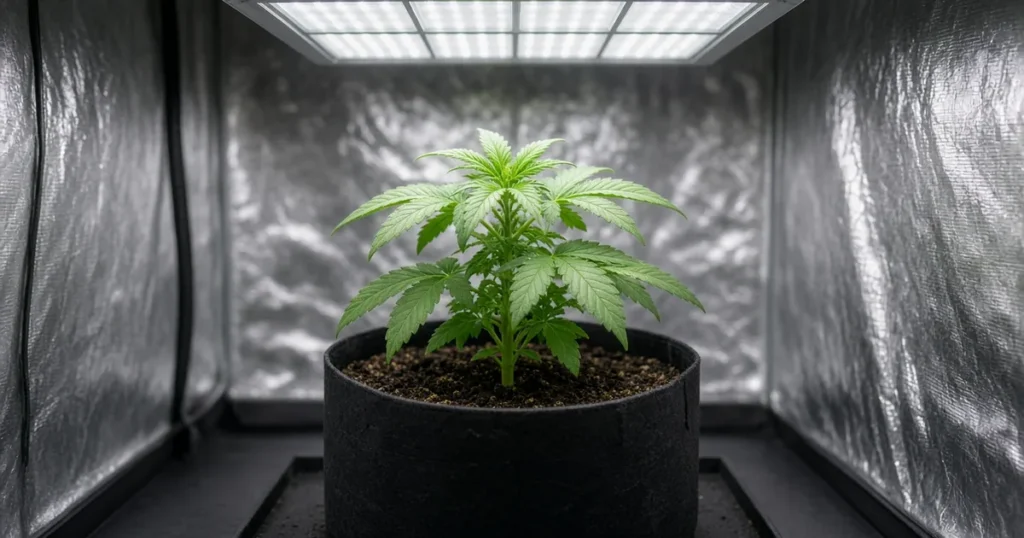
Autoflowers do not need a change in day length to start flowering. They switch to flower based on age, which means you can keep the same light schedule from seed to harvest. That makes them simple to grow, but it also raises a question every new grower asks: how many hours of light should an autoflower get? This guide covers the most common autoflower light schedules, how light needs change by stage, and how to set up your timer and light for a smooth run.
Quick answer
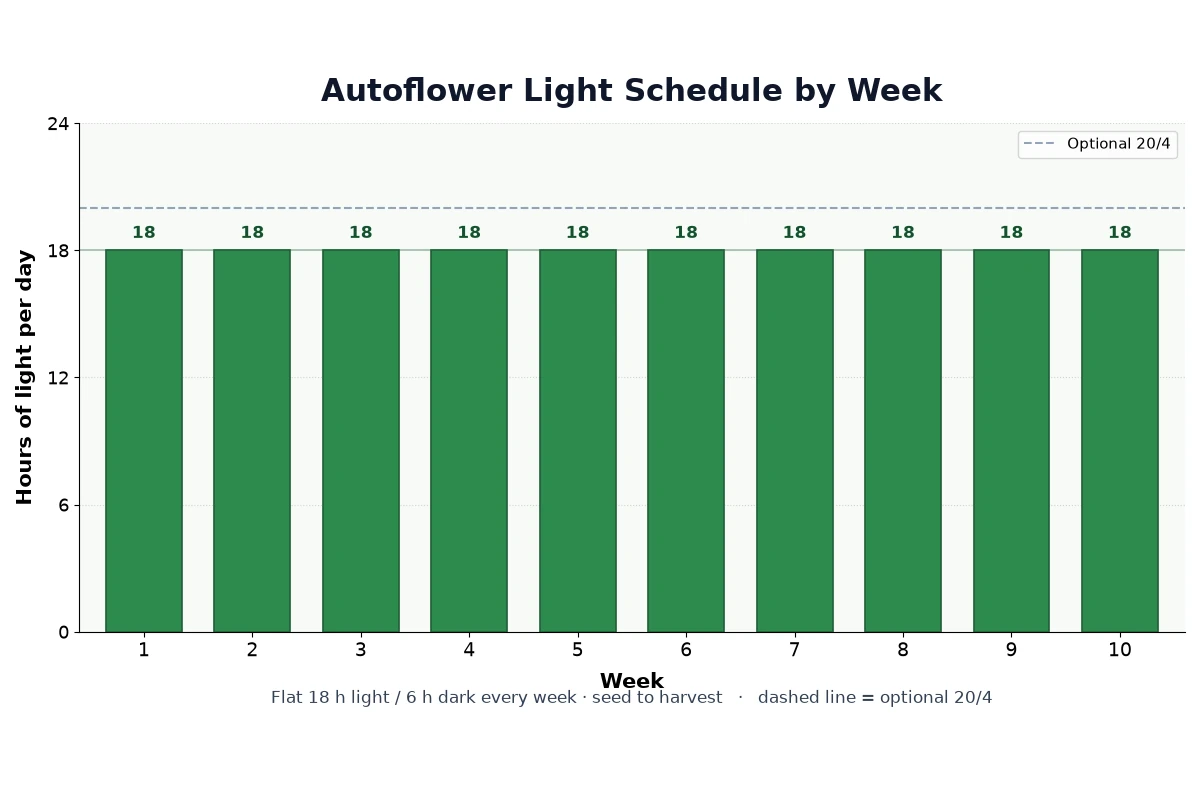
Most growers run autoflowers on 18 hours of light and 6 hours of dark, written 18/6, or 20 hours on and 4 off, written 20/4, for the whole grow. Both work well for many growers. Some run 24 hours of light, and some use 12/12, but each has tradeoffs. Choose a schedule that fits your power costs, heat, and setup, then keep it steady.
Why autoflowers are different
Photoperiod cannabis plants stay in veg while days are long and start flowering when they get about 12 hours of darkness. Autoflowers carry genetics from ruderalis, so they move into flower on their own, often around three to five weeks after sprouting. Changing the light schedule does not trigger flowering for an auto, so you can keep lights long the whole time.
Because autos live on a fixed timeline, every day of light counts. They cannot be held in veg to recover from mistakes, so a steady schedule and good light intensity matter more than with photoperiods.
Common autoflower light schedules
| Schedule | Hours on / off | Pros | Cons |
|---|---|---|---|
| 18/6 | 18 on, 6 off | Popular, balanced, lower power use than 20/4 | Slightly less total light per day |
| 20/4 | 20 on, 4 off | More daily light, popular with many growers | Higher power cost and heat |
| 24/0 | Always on | Maximum light hours | Highest power cost, no rest period, extra heat |
| 12/12 | 12 on, 12 off | Lowest power use | Much less light, often smaller plants |
There is no single best schedule. Many growers prefer 18/6 as a balance between light and cost. Others prefer 20/4 for a bit more daily light. Results depend on your strain, light, and room.
Light by stage: seed to harvest
Seedling (week 1 to 2)
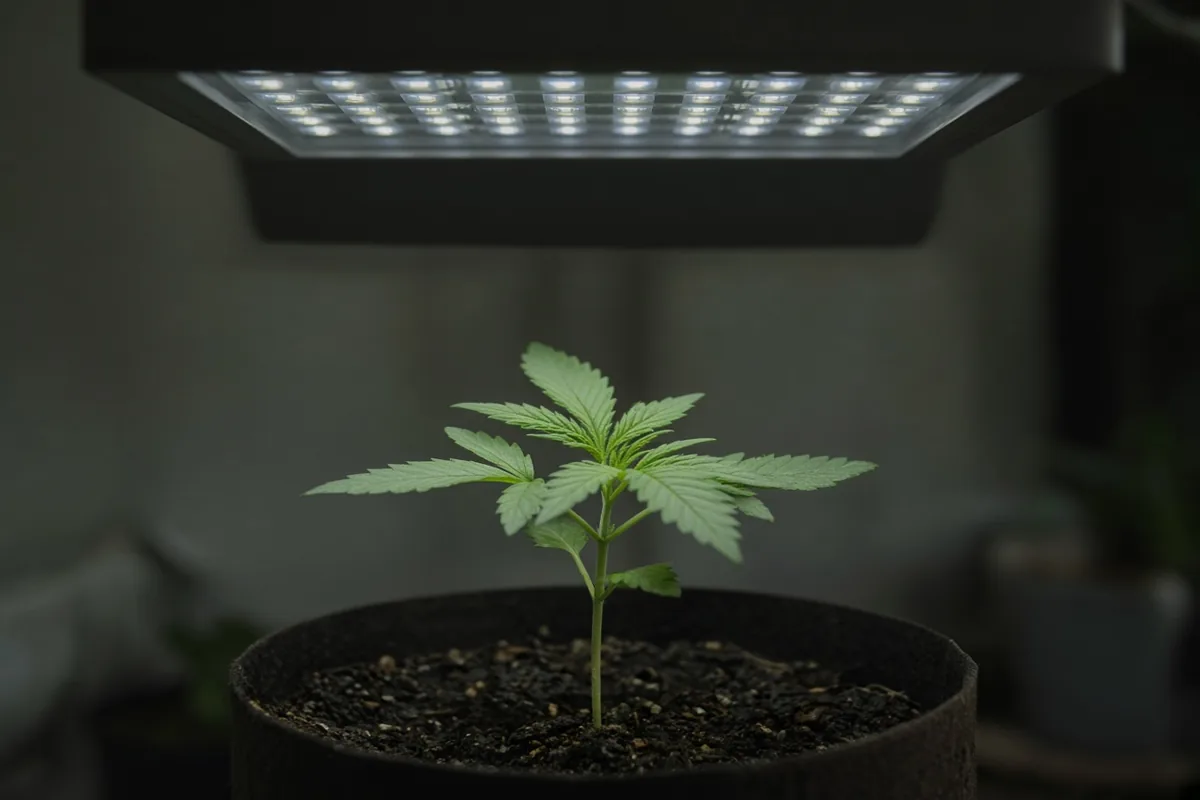
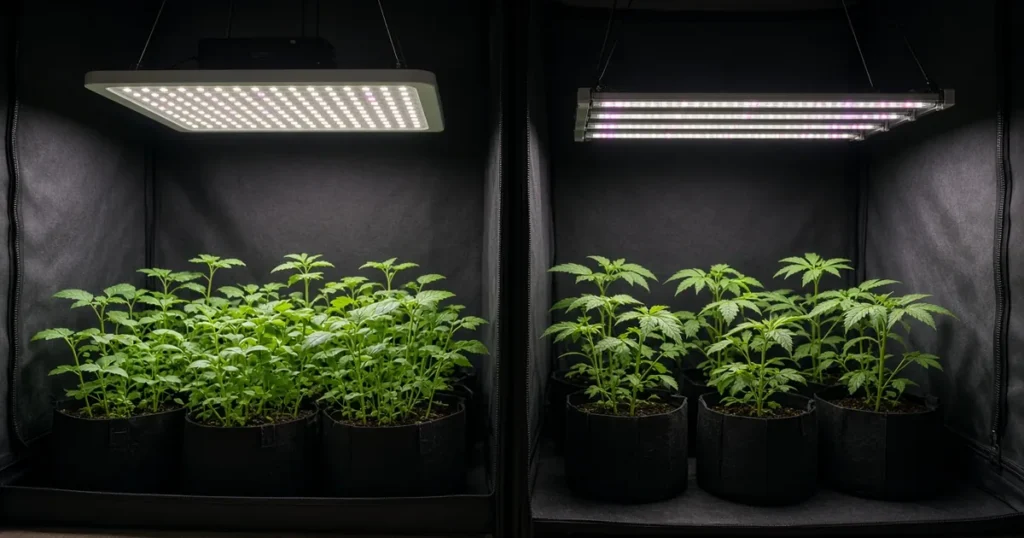
Seedlings need light but not too much intensity. Keep the schedule at 18/6 or 20/4, and dim your LED or raise it higher than you would later. Check our LED light distance guide for spacing tips. Too little light can cause stretching, while too much can bleach or stress young plants.
Vegetative (week 2 to 4)
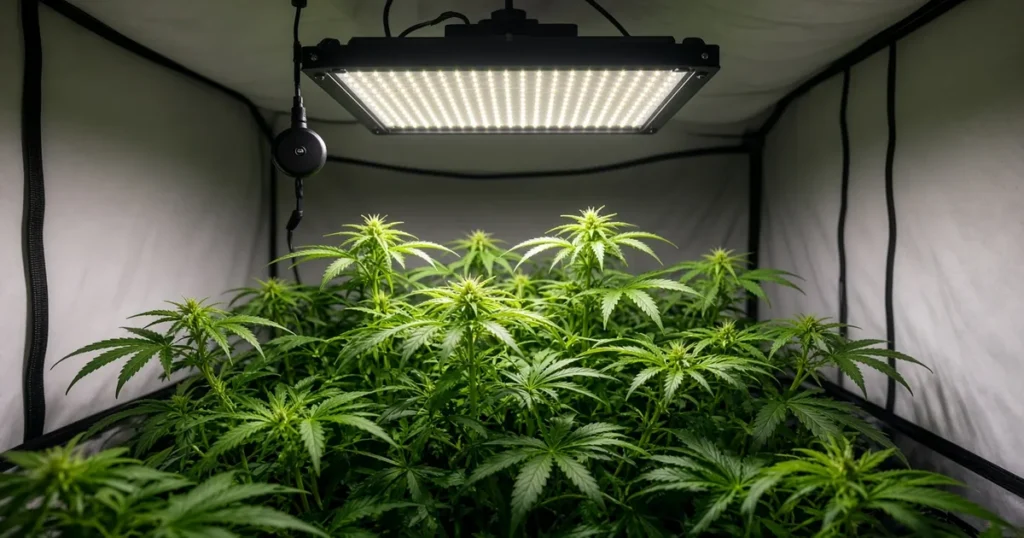
Autos grow fast in this stage. Keep the same schedule and raise intensity gradually. Watch the top leaves. If they curl up or look pale, the light may be too close or too strong.
Flowering (week 4 to harvest)
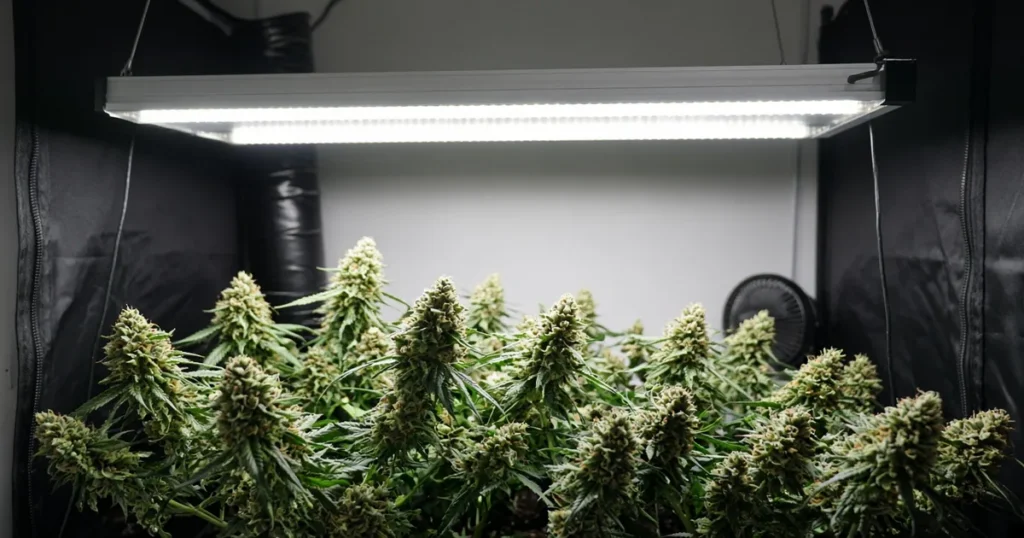
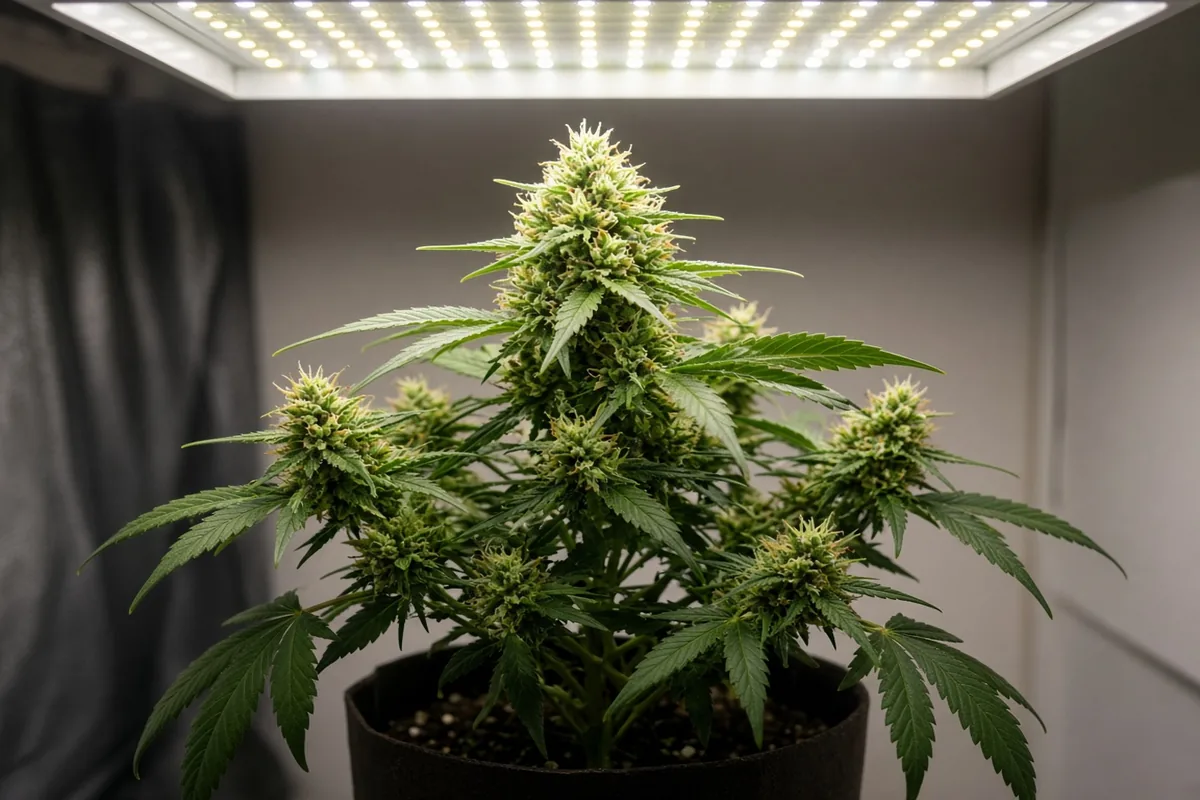
Keep the same schedule. Do not switch to 12/12. Many growers raise light intensity to its highest safe level during flower. Keep an eye on heat, because more light means more heat in a small space.
Harvest
Some growers give plants a period of darkness before harvest. There is little evidence it makes a big difference, so it is a personal choice.
Light intensity matters as much as hours
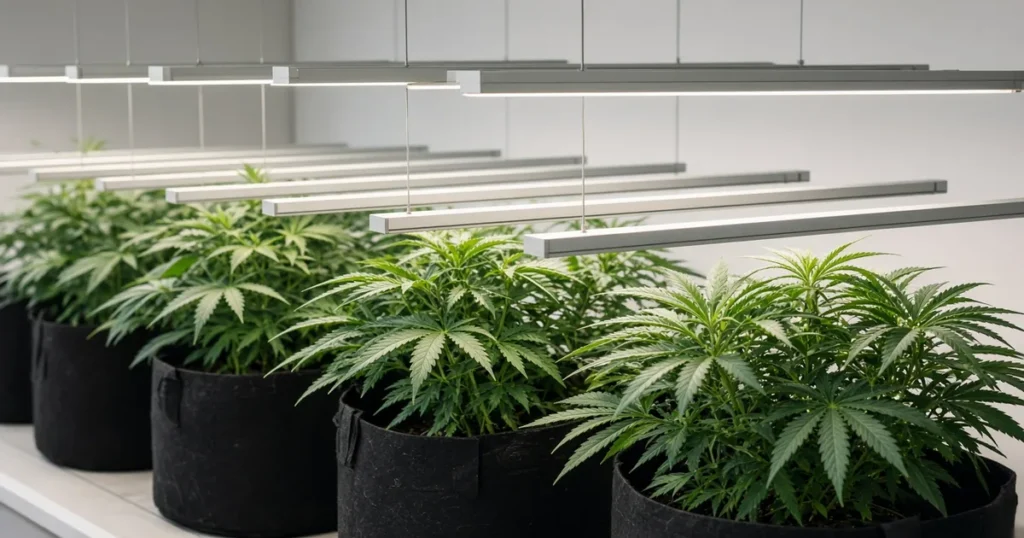
Hours of light are only half the story. Intensity, measured as PPFD, and the total daily light, called DLI, also matter. A strong light on 18/6 can deliver more usable light than a weak light on 24/0.
General ranges many growers use, taken as starting points only:
- Seedlings: low intensity, about 200 to 400 PPFD
- Veg: moderate, about 400 to 600 PPFD
- Flower: higher, about 600 to 900 PPFD or more with good conditions
Check your light maker’s charts and adjust for your plants. Our guide on how to choose the right LED lights for your cannabis grow explains what to look for.
A simple week by week plan
Here is one example plan on an 18/6 schedule for a typical ten week autoflower. Timelines vary by strain, so treat this as a guide only.
| Weeks | Stage | Light focus |
|---|---|---|
| 1 to 2 | Seedling | Low intensity, light kept higher above plants |
| 3 to 4 | Veg | Raise intensity step by step |
| 5 to 8 | Flower | Highest safe intensity, watch heat |
| 9 to 10 | Ripening | Keep schedule steady until harvest |
Autoflowers outdoors
Outdoors, you cannot pick the schedule. The sun sets it for you. Autoflowers still flower on age, so they can be grown in spring, summer or even late season in many climates. Longer summer days give the most light. Many outdoor growers plant autos when days are long and nights are warm. See our outdoor seeds for options.
Setting up your timer
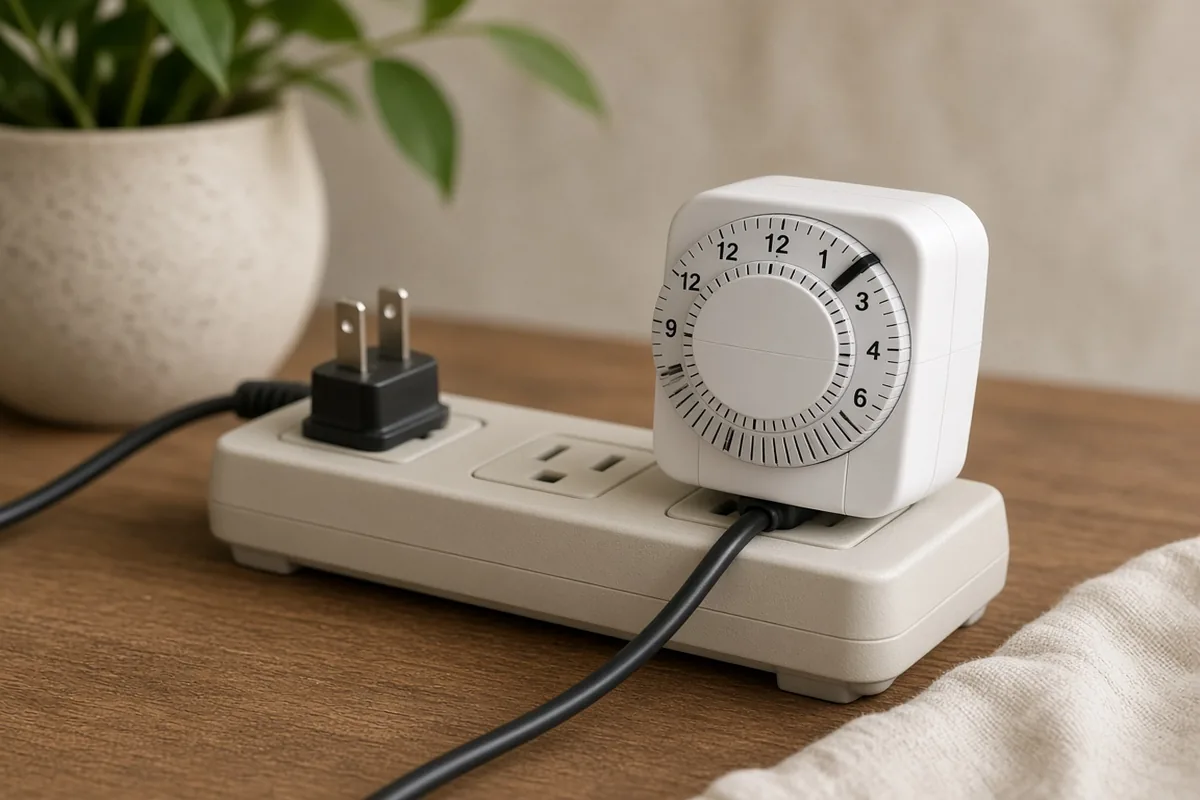
- Use a reliable timer, either mechanical or digital.
- Plug the light into the timer and the timer into a grounded outlet or a quality power strip.
- Set your dark period for when it suits you. Many growers run the dark period during the hottest part of the day to lower heat.
- Check the timer often to make sure it has not slipped.
Does the dark period matter?
Some growers believe a few hours of dark help plants rest and use energy well. Others run 24/0 with good results. The dark period also gives your equipment and electric bill a break. If you choose 24/0, watch heat and humidity closely.
Light leaks and autoflowers
Light leaks during the dark period are less of a problem for autos than for photoperiods, because autos do not depend on darkness to flower. Still, a steady schedule is easier on plants, so try to keep the dark period dark.
Choosing a schedule for your setup
Ask yourself:
- How much does electricity cost where you live?
- How hot does your grow space get with the light on?
- Is your light strong enough to make the most of each hour?
- Do you share the grow space with photoperiod plants?
If you also grow photoperiods in flower, you can run autos on 12/12 in the same room, but expect smaller plants. Many growers keep autos in their own space on 18/6 or 20/4.
Signs your light schedule or intensity is off
Your plants will tell you when something is wrong. Watch for these signs and adjust one thing at a time:
- Tall, thin seedlings with long gaps between nodes often point to too little light.
- Pale or bleached tops near the light often mean the light is too strong or too close.
- Leaves curling up like a taco can signal heat or light stress.
- Slow growth with healthy color may mean the plant needs a bit more intensity.
Fix the cause gently. Raise or dim the light first, then give the plant a few days before making another change.
Common mistakes
- Switching to 12/12 in flower like a photoperiod plant
- Running a weak light for long hours instead of upgrading the light
- Placing the light too close to seedlings
- Changing schedules often during the grow
- Ignoring heat from long light hours
Fast autos and short timelines
Some autoflowers finish very fast. Our 45 day autoflower seeds are bred for quick runs. With short timelines, a consistent schedule and strong light from day one help the plant make the most of its life cycle.
Frequently asked questions
What is the best light schedule for autoflowers?
Many growers use 18/6 or 20/4 for the whole grow. Both are common choices, and results vary by setup.
Can autoflowers grow on 24 hours of light?
Yes, some growers run 24/0, but it costs more in power and adds heat. Many prefer to give plants a few hours of dark.
Should I switch autoflowers to 12/12 for flowering?
No. Autoflowers flower on their own based on age, so there is no need to switch.
Can I change my autoflower light schedule mid grow?
You can, but sudden changes can stress plants. Pick a schedule at the start and keep it.
Do autoflowers need darkness before harvest?
It is optional. Some growers do it, but there is little evidence it makes a large difference.
Start your autoflower grow
Ready to try autos? Browse our autoflower seeds or start with easy picks from our beginner seeds. You can also shop the full Kind Seed Co shop. Kind Seed Co sells only to adults 21 and older. Always follow the home grow laws where you live.