
Chinese Evergreen Leaves Turning Yellow: Water Plus Cold
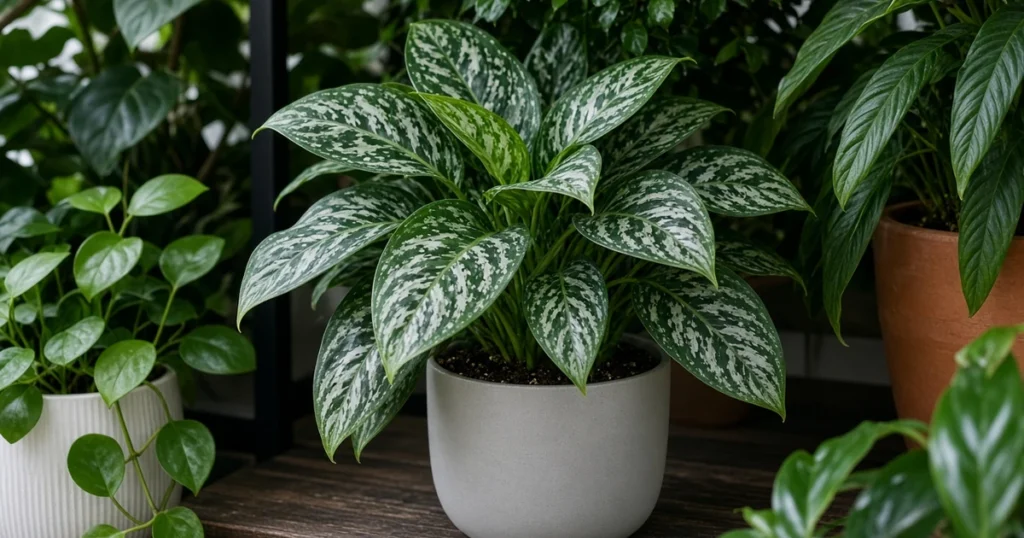
Chinese evergreen leaves turning yellow usually call for a look at watering plus room temperature first. UF IFAS Gardening Solutions notes that aglaonema has low water needs plus prefers 68 to 77°F. Start with the soil, then check for cold drafts plus light.
The short answer
Check watering first. UF IFAS Gardening Solutions advises watering aglaonema only when the top inch of soil feels dry, since overwatering may trigger other problems. NC State Extension notes that root rots can occur with overwatering plus that the plant is intolerant of cold. Hold the room between 68 and 77°F.
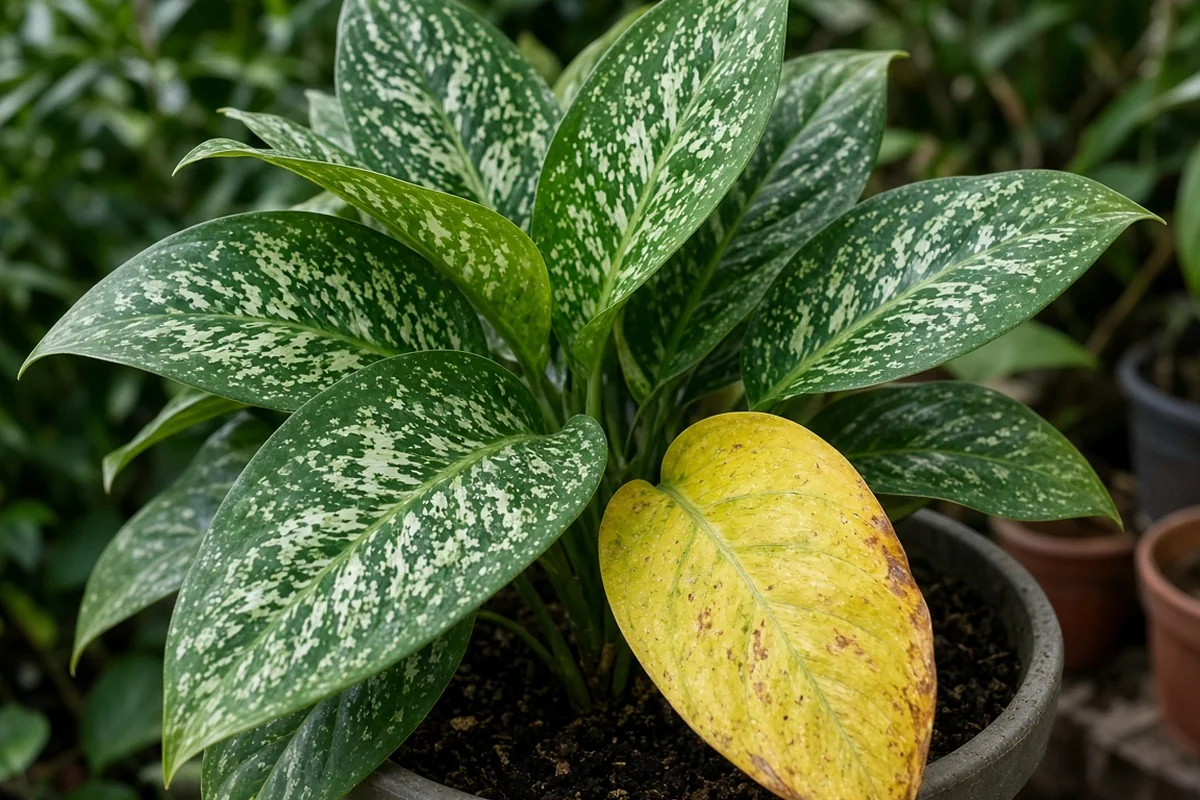
Is overwatering the cause?
UF IFAS Gardening Solutions notes that aglaonema plants have low water requirements. Overwatering may trigger other problems, so water only when the top inch of soil feels dry to the touch.
NC State Extension adds that root rots can occur with overwatering. Allow the medium to dry between waterings plus avoid using cold water.
The same NC State page notes that the plant prefers a reduction in watering during winter. It needs no winter dormancy period.
Could cold air be the problem?
NC State Extension describes aglaonema as intolerant of cold temperatures. It prefers a daytime temperature in the 70 to 80°F range.
UF IFAS Gardening Solutions gives a preferred range of 68 to 77°F. The plant can tolerate temperatures down to 55°F, the same source notes.
NC State Extension adds that leaves may turn brown in very dry air or a drafty location. Shift pots away from cold windows plus doors.
| Cause to check | What to look for | Source note |
|---|---|---|
| Overwatering | Soil wet at the top inch | Water when the top inch is dry |
| Root rot | Soggy medium | Let it dry between waterings |
| Cold | Room below 68°F | Prefers 68 to 77°F |
| Drafts plus dry air | Browning leaves | Move away from drafts |
Source: UF IFAS Gardening Solutions plus NC State Extension.
Does light play a role?
UF IFAS Gardening Solutions notes that aglaonema can be grown in areas that receive medium to low light. NC State Extension says it does well in diffuse sun or good indirect light.
University of Illinois Extension notes that both the amount plus the quality of light matter. Indoors, only a small amount of the outdoor light enters the room.
In low light conditions, plants can benefit from increasing the duration of light, the same source notes. A few added hours under a lamp can help a dim spot.
How to: step by step
- Touch the top inch of soil before watering.
- Let the medium dry between waterings.
- Use room temperature water instead of cold water.
- Run the room at 68 to 77°F.
- Move the pot away from drafts.
- Water sparingly in winter.
Troubleshooting
Wet soil plus yellowing: overwatering. Let the top inch dry.
Browning leaves: dry air or drafts. Move the pot.
Slow growth: low light. Add hours under a lamp.
For related reading see a guide to overwatering and cannabis growth, frost damage on cannabis plus what factors affect relative humidity control for cannabis. Kind Seed Co also stocks cannabis seeds.
Sources
- Aglaonema, UF IFAS Gardening Solutions
- Aglaonema (Chinese evergreen), NC State Extension Gardener Plant Toolbox
- Lighting, houseplants, Illinois Extension
- Leaf tipburn on houseplants, University of Missouri IPM
FAQ
How often should Chinese evergreen be watered?
UF IFAS Gardening Solutions advises watering aglaonema only when the top inch of soil feels dry to the touch. The plant has low water requirements. NC State Extension adds that it prefers less water during winter plus that the medium should dry between waterings.
What temperature does Chinese evergreen like?
UF IFAS Gardening Solutions notes a preferred range of 68 to 77°F, with tolerance down to 55°F. NC State Extension gives a daytime range of 70 to 80°F plus describes the plant as intolerant of cold. Avoid cold windows plus drafty spots in winter.
Does Chinese evergreen need humidity?
NC State Extension notes that aglaonema prefers high humidity but will tolerate dryer air. Leaves may turn brown in very dry air or a drafty location. The same source notes that high humidity is a condition the plant is particularly resistant to, so a humid room suits it well.
Can tap water cause leaf tip problems?
University of Missouri IPM notes that tipburn most often comes from excess fertilizer, improper watering or fluoride. It also advises never watering houseplants with water that has passed through a water softener. Flush the medium with clear water if a whitish residue appears on top.
Can Chinese evergreen grow in low light?
Yes. UF IFAS Gardening Solutions notes that aglaonema adds interest in low light areas plus can grow in medium to low light. University of Illinois Extension adds that plants in low light can benefit from more hours of light each day.



