Coneflowers Drooping? Rich Soil, Crowding and Heat
The short answer
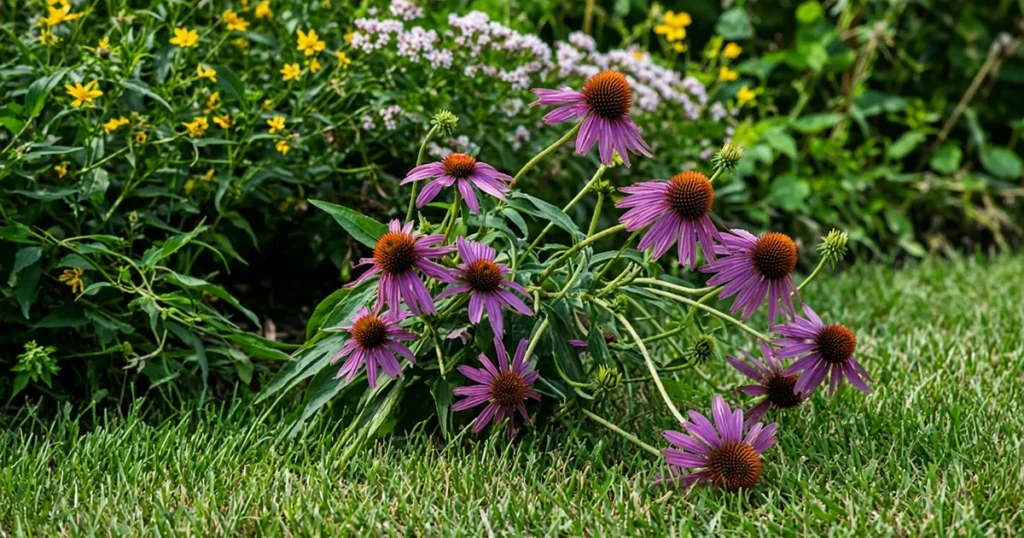
Coneflowers drooping usually point to soft growth. University of Maryland Extension says plants grown in rich soil with high fertilizer and moisture produce lush growth with weaker stems. NC State Extension describes purple coneflower as drought tolerant once established. Skip heavy feeding, stake early and divide crowded clumps.
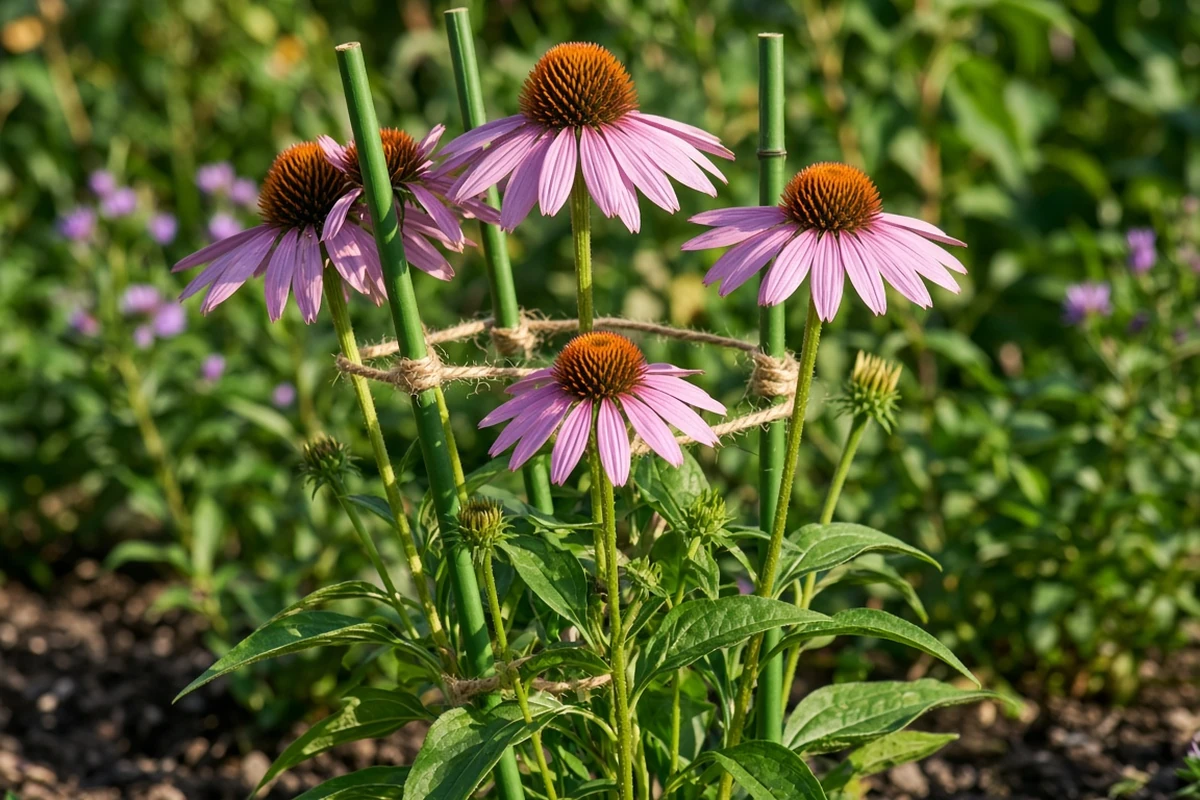
Why are my coneflowers drooping?
University of Maryland Extension ties weak stems to rich soil, high fertilizer and moisture. University of Minnesota Extension says older perennials may need staking to stop stems falling over, a sign it is time to divide. Learn about stress in the effects of environmental stresses on weed plants.
How do soil and shade cause flopping?
Soil is the clear factor. Maryland Extension notes the same species may flop in rich soil and stand up in leaner ground. NC State lists full sun to partial shade for this plant and does not tie shade to flopping. Heat and light notes are in cannabis heat stress and shade cloth for cannabis.
What helps coneflowers stand upright?
Feed less, divide crowded clumps and stake early. Maryland Extension says to stake when plants are one third their mature size, with stakes about 6 inches shorter than the mature plant.
Coneflower basics
| Factor | Guide | Source |
|---|---|---|
| Light | Full sun to partial shade | NC State |
| Soil | Well drained, adaptable | NC State |
| Water | Drought tolerant once established | NC State |
| Staking | At one third mature size | Maryland |
| Division | When not flowering | UMN |
Sources: University of Maryland Extension, NC State Extension, University of Minnesota Extension.

How to: step by step
- Check whether the soil is rich or heavily fed.
- Stop extra fertilizer.
- Check that soil drains well.
- Water young plants in long dry spells.
- Divide crowded clumps when not flowering.
- Stake early at one third mature size if stems still flop.
Troubleshooting
Floppy stems in rich soil: soft growth. Stop feeding.
Dead center: an old clump. Divide it.
Wilting young plants: dry soil before rooting. Water deeply.
Coneflowers are tough once rooted. Kind Seed Co shares more perennial notes on the blog.
Sources
- Why some flowering plants fall over, University of Maryland Extension
- Echinacea purpurea (purple coneflower), NC State Extension Gardener Plant Toolbox
- Dividing perennials, University of Minnesota Extension
FAQ
Do coneflowers need staking?
Not usually in lean soil. University of Maryland Extension says plants in rich soil with high fertilizer and moisture grow weaker stems that may need staking. Stake when plants are about one third their mature size.
Should I fertilize coneflowers?
Go lightly. University of Maryland Extension notes high fertilizer gives lush growth with weaker stems. NC State Extension says purple coneflower adapts to various soils and is low maintenance.
Do coneflowers wilt in heat?
NC State Extension says purple coneflower is drought tolerant once established. Young plants have not rooted in yet, so water them in dry spells until they settle.
When should I divide coneflowers?
University of Minnesota Extension advises dividing when the plant is not flowering. Spring division gives a full season to recover, and fall division should be four to six weeks before the ground freezes.
Should I cut back coneflower stems?
NC State Extension notes native bees nest in dead hollow stems and suggests cutting dead stems back to 12 to 24 inches and leaving them standing.