
Planting a Rugosa Rose Hedge: A Tough Hedge With Hips for Wildlife
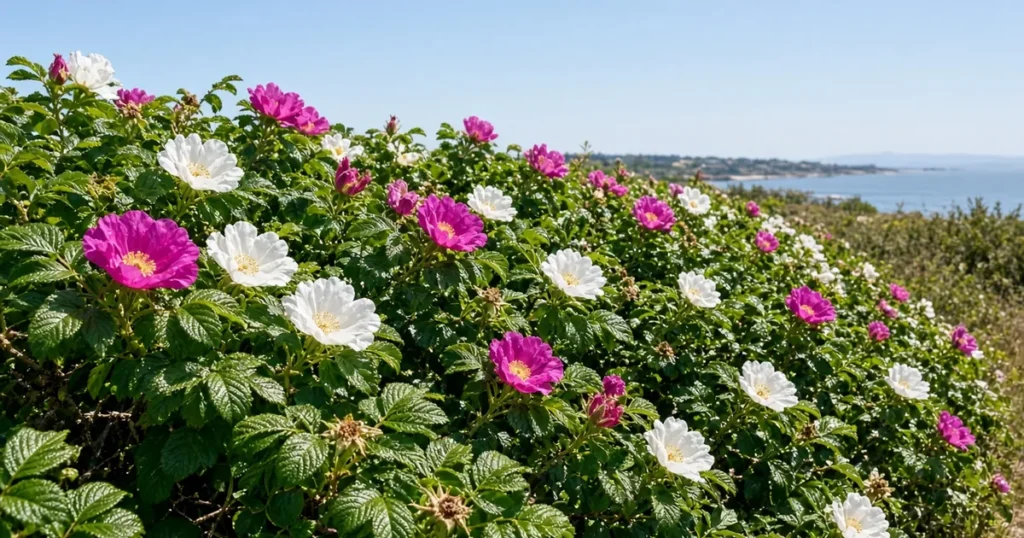
Planting a rugosa rose hedge gives you a dense, thorny screen. NC State Extension says Rosa rugosa grows 4 to 6 feet tall and wide and tolerates drought and salt. Birds eat its hips in summer. It suckers into thickets and is invasive in some coastal regions. Space plants by mature size and edge the row.
The short answer
Rugosa rose makes a dense, thorny hedge that tolerates salt and drought, with fragrant flowers and hips that birds eat in summer. NC State Extension says it grows 4 to 6 feet tall and wide and spreads by suckers into thickets. Space plants by mature size and edge the row to hold it in place.
Why choose rugosa rose for a hedge?
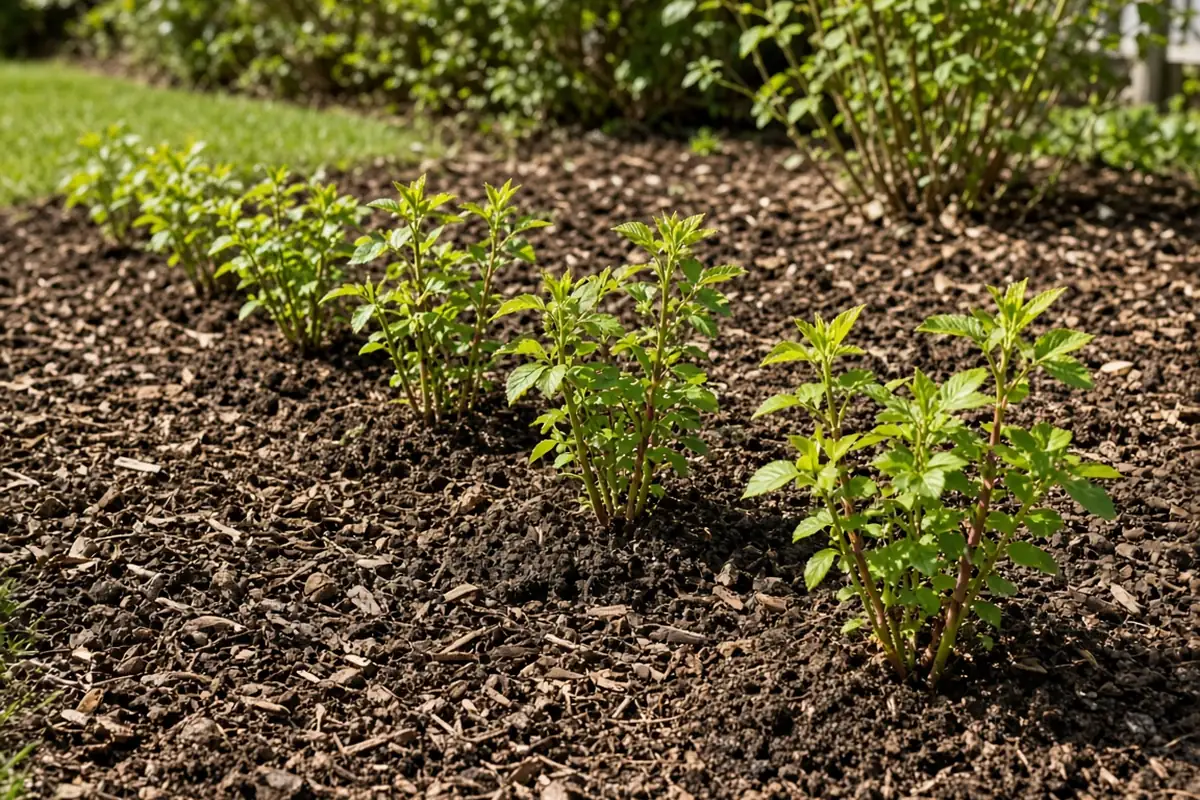
NC State Extension lists it as salt tolerant, plus deer and rabbit resistant. It’s also a pollinator plant with edible hips. Iowa State Extension notes hedges provide privacy, reduce wind and offer habitat for birds. Site ideas are in garden microclimates for cannabis and bird notes in birds and cannabis symptoms and solutions.
How far apart should you plant rugosa roses?
Iowa State Extension says to space informal hedges by mature size, with medium shrubs of 6 to 8 feet set 2 to 4 feet apart. Formal sheared hedges go 1 to 2½ feet apart. Cut bare root stems to 4 to 6 inches at planting to spur low branching. Plan the row with planning an outdoor cannabis garden layout.
How do you care for the hedge after planting?
Iowa State Extension says informal hedges need only occasional thinning to remove dead wood or correct shape. Prune right after flowering if grown for blooms. NC State rates rugosa high maintenance, mostly for its suckers.
Rugosa hedge basics
| Factor | Guide | Source |
|---|---|---|
| Size | 4 to 6 feet tall and wide | NC State |
| Tolerance | Drought and salt | NC State |
| Spread | Suckers and forms thickets | NC State |
| Spacing | 2 to 4 feet for medium shrubs | Iowa State |
| Bare root planting | Late March to mid May | Iowa State |
Sources: NC State Extension, Iowa State University Extension, Washington State University Extension.

How to: step by step
- Plan an edge to hold the suckers.
- Pick a sunny site.
- Mark the row.
- Space plants 2 to 4 feet apart.
- Plant bare root shrubs late March to mid May and cut stems to 4 to 6 inches.
- Thin dead wood occasionally once established.
Troubleshooting
Spreading suckers: rugosa runs. Edge the row.
Thin hedge: wide spacing or no hard cut at planting. Fill gaps with new plants.
Few hips: pruning before fruit forms. Prune right after flowering.
Rugosa hedges suit open, sunny spots. Kind Seed Co shares more hedge notes on the blog.
Sources
- Rosa rugosa (rugosa rose), NC State Extension Gardener Plant Toolbox
- Rosa rugosa plant profile, USDA NRCS PLANTS Database
- Selecting and planting hedges, Iowa State University Extension
- Selecting plants for screens and hedges (EM089E), Washington State University Extension
FAQ
Do rugosa roses spread?
Yes. NC State Extension says rugosa will sucker and form thickets, crowding out other plants. It has become invasive in New England, Virginia and parts of Canada, especially along coasts, so edge the row to hold it in bounds.
Do birds eat rugosa hips?
NC State Extension says birds enjoy the fruits in summer and tags the shrub as bird friendly. Iowa State Extension adds that hedges give birds and other wildlife valuable habitat.
Is rugosa rose salt tolerant?
Yes. NC State Extension lists it as drought and salt tolerant and notes resistance to road salt.
How tall does a rugosa hedge get?
NC State Extension says the shrub grows 4 to 6 feet tall and wide. Iowa State Extension lists shrub roses at about 1.5 to 6 feet as a natural hedge.
Can you use rugosa hips?
NC State Extension says the hips are used to make jams and jellies. The seeds sit inside the hips.


