
Cutworms on Cannabis Seedlings: Collars, Night Checks and More
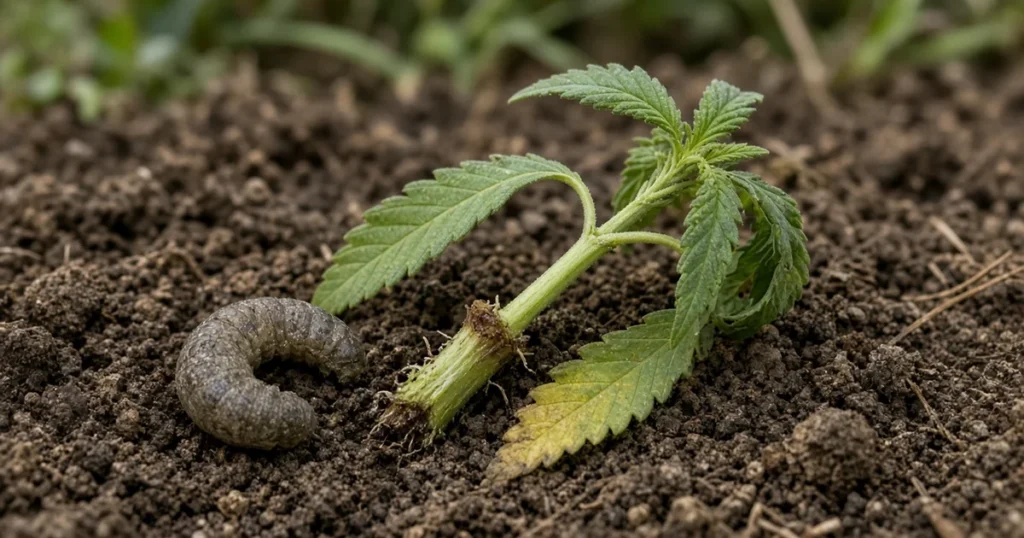
Quick answer: If a cannabis seedling is cut clean through at the soil line overnight and left lying on the ground, a cutworm is the usual suspect. These dull brown caterpillars hide in the soil by day and feed at night. University of New Hampshire Extension recommends a stem collar that reaches at least 1 inch into the soil and 2 inches above it. UC IPM adds that picking them off by hand at night, with a flashlight, works very well.
What Are Cutworms?
Cutworms are the larvae of many kinds of night flying moths. UC IPM describes them as dull brown caterpillars 1 to 2 inches long when grown, with smooth skin and markings that blend into the soil. Both UC IPM and UNH Extension note they curl into a tight C or ball when disturbed, which is the easiest way to tell one from other grubs.
UNH Extension sorts them by habit:
- Surface cutworms chew stems just above or below the soil, often just enough to topple the plant.
- Climbing cutworms crawl up stems and feed on buds, leaves and shoots.
- Army cutworms move in large groups and can strip whole areas.
- Subterranean cutworms stay below ground and feed on roots and buried stems.
Surface cutworms cause most of the trouble for young cannabis. Armyworms, which feed on foliage in groups later in summer, are covered in our guide to armyworms on cannabis.
What Does Cutworm Damage Look Like?
UC IPM says cutworms cut through seedling stems at the soil surface or just under it. On cannabis you may see:
- A seedling lying flat with its stem cut through
- A stem chewed partway, so the plant wilts and leans
- A seedling pulled partly into the soil, which UC IPM links to the black cutworm
- Holes chewed in low leaves of young plants
Damage nearly always appears overnight. If the cut plant is missing entirely, a black cutworm may have dragged it into its tunnel. UC IPM notes this species tunnels beneath the soil and pulls plant parts with it.
When Are Cutworms a Problem?
UC IPM says cutworms are mainly a spring pest. UNH Extension explains that most species overwinter in soil or under plant debris as partly grown larvae and start feeding in early spring. They grow until early summer, then pupate in the soil and come out as moths. That puts peak risk right when cannabis seedlings and fresh transplants go outside. Plants with thicker, woody stems are much less at risk, which is one reason to harden off seedlings and transplant sturdy plants.
How to Find Cutworms
- Go out after dark with a flashlight. UNH Extension recommends looking around the base of plants that were just cut and in the upper layer of soil.
- Gently scratch the soil within a few inches of a damaged stem. Cutworms often rest just below the surface.
- Look for curled caterpillars that match the soil color.
- Hand pick each one and drop it in soapy water or squash it.
- Check again the next night, since more may come in from nearby weeds.
How to Protect Cannabis Seedlings From Cutworms
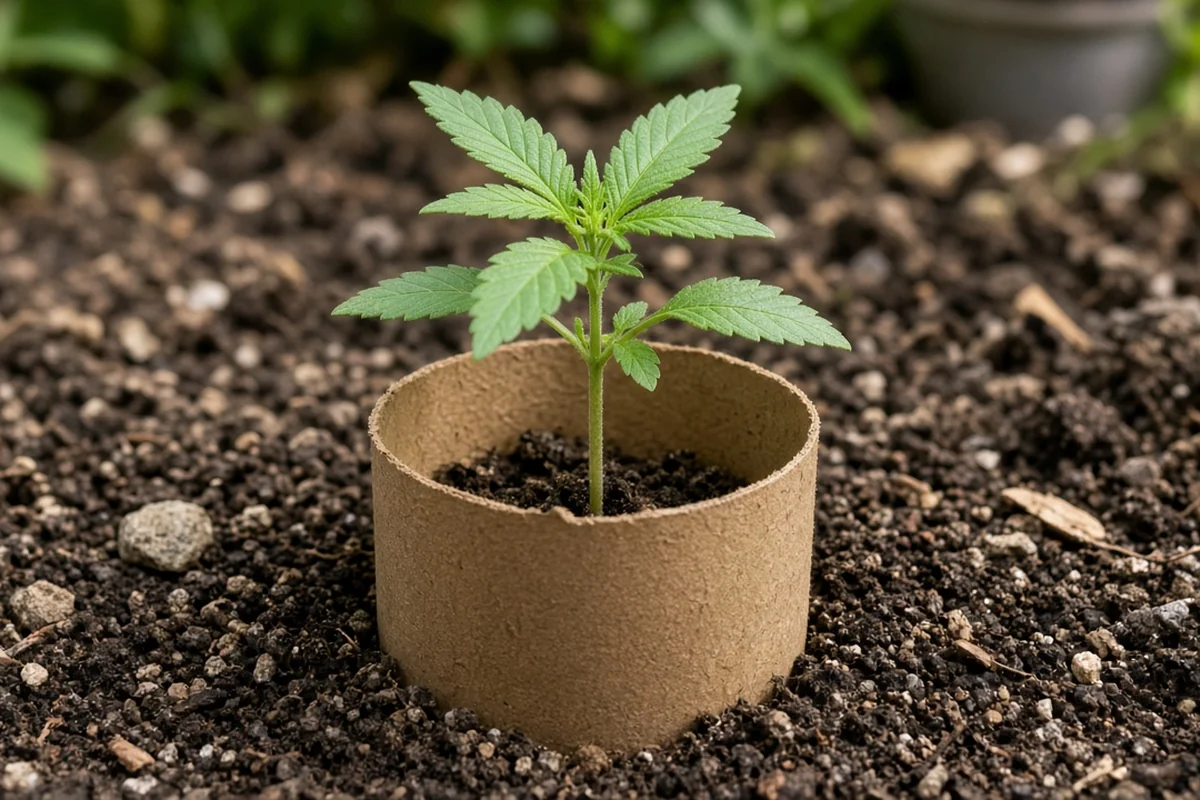
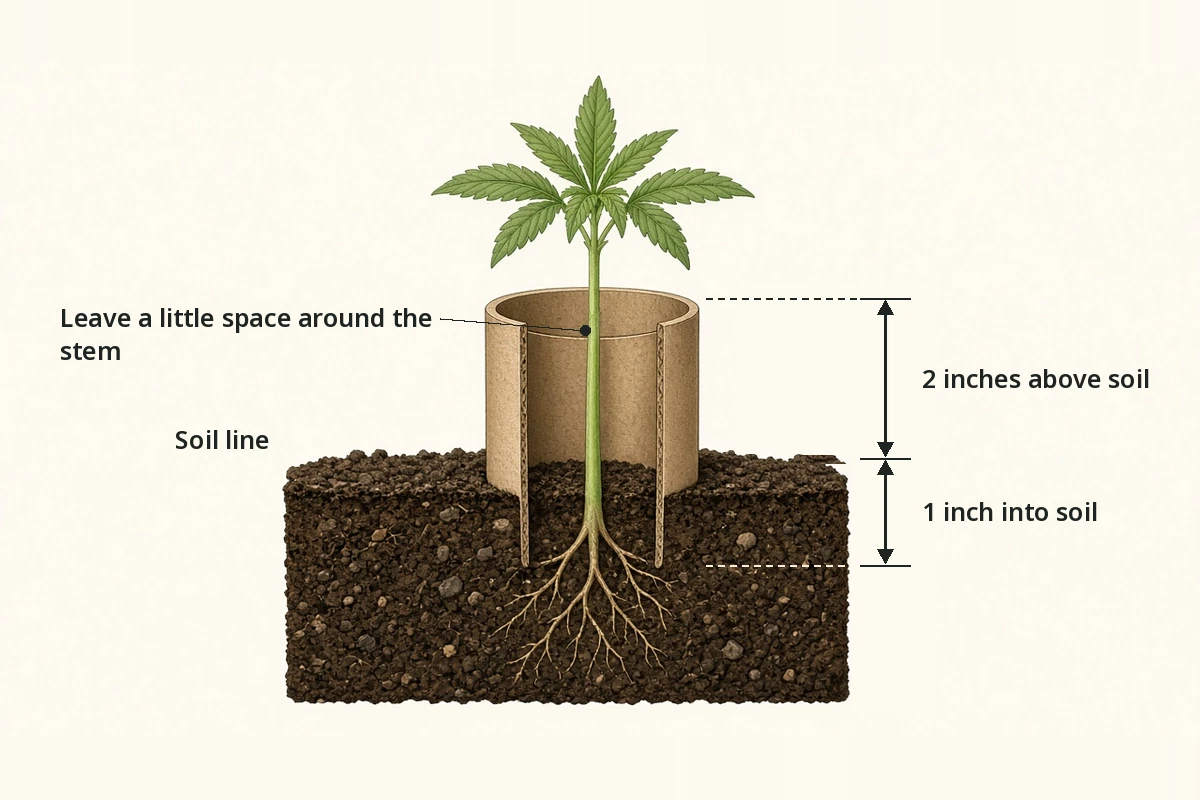
- Fit a collar at planting. UNH Extension says collars can be made from plastic, sturdy cardboard, cut drink bottles, milk cartons or toilet paper rolls. Push the collar at least 1 inch into the soil and leave 2 inches above.
- Keep collars loose. Leave a little space around the stem so it can thicken.
- Hand pick nightly in spring. UC IPM calls this very effective.
- Clear weeds and debris. UNH Extension notes moths lay eggs in fall, so removing weeds and mowing grass short helps prevent next year’s problem. UC IPM also advises destroying crop residues and keeping the garden weed free in winter.
- Plant a few extras. UC IPM suggests planting more than you need to allow for losses to seedling pests.
- Use hardy transplants. UC IPM notes some damage can be avoided by setting out sturdy transplants instead of tiny seedlings.
- Consider Bt for larger plants. UC IPM lists Bacillus thuringiensis or spinosad sprays for protecting larger garden plants. Use a product labeled for your crop and state, and do not spray flowers.
Why Cutworms Pick on Young Cannabis
UC IPM says cutworms cut through seedling stems at or just under the soil surface, and UNH Extension adds that surface cutworms feed on young seedlings and fresh transplants from early to late spring. A young cannabis plant fits that profile exactly. UC IPM points out some damage can be avoided simply by planting hardy transplants rather than tiny seedlings. Setting out sturdier plants with collars already in place is the practical way to follow that advice.
Easy Collar Options
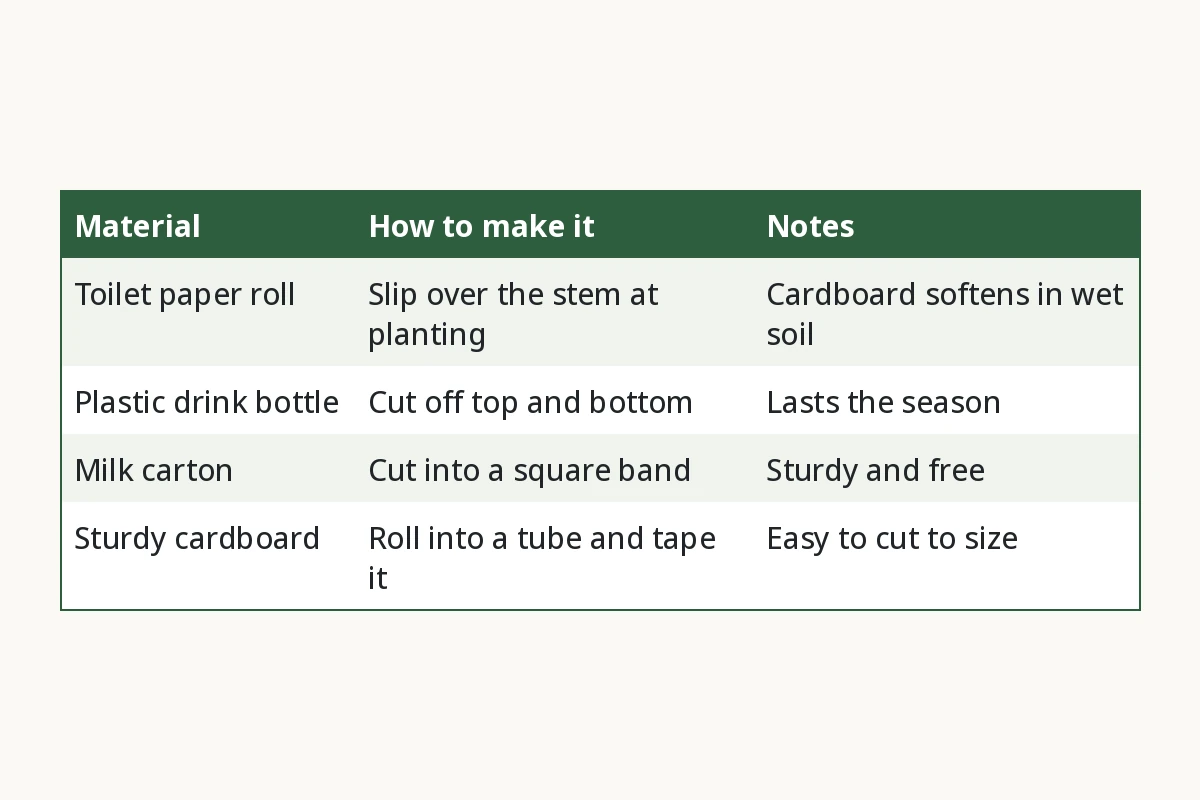
| Material | How to make it | Notes |
|---|---|---|
| Toilet paper roll | Slip over the stem at planting | Cardboard softens in wet soil |
| Plastic drink bottle | Cut off top and bottom | Lasts the season |
| Milk carton | Cut into a square band | Sturdy and free |
| Sturdy cardboard | Roll into a tube and tape it | Easy to cut to size |
Cutworms in Raised Beds and Pots
Containers filled with fresh potting mix are less likely to hold overwintering larvae, since UNH Extension notes cutworms spend winter in the soil or under plant debris. Beds that were left weedy last fall, or that were recently turned from lawn, carry more risk. If you are building new beds this season, our page on raised beds for cannabis can help, and our post on weed control in outdoor cannabis covers keeping edges clean.
Troubleshooting Cutworms
Seedlings still get cut with collars on. The collar may not be deep enough. Push it at least an inch into the soil, as UNH Extension advises.
Leaves are chewed high on the plant. That may be a climbing cutworm. Check stems at night and remove larvae by hand.
Plants are wilting with no visible cut. Subterranean cutworms or other soil pests may be feeding below ground. Dig carefully and look at roots. Our page on wireworms in cannabis soil covers a similar pest.
Several transplants were clipped in a single night. Go out after dark with a flashlight, which UC IPM calls a very effective way to find and pick larvae, and dispose of any chewed foliage. Paper or cardboard collars can also be swapped for screen or protective cloth, both of which UC IPM lists for guarding seedlings in vegetable gardens.
Damage stops by early summer. That fits the cutworm life cycle. UNH Extension says larvae pupate in early summer.
You find a curled gray grub but no cut stems. It may be a white grub instead. Check our page on white grubs in cannabis soil.
Gray moths gather at the porch light in spring. Many are cutworm moths. UNH Extension notes they are night fliers with wingspans of 1.5 to 3 inches. Seeing them is a cue to collar new transplants and step up night checks.
Sources
- UC Statewide IPM Program, University of California, Cutworms, Home and Landscape: https://ipm.ucanr.edu/home-and-landscape/cutworms/
- University of New Hampshire Cooperative Extension, Cutworms Fact Sheet: https://extension.unh.edu/resource/cutworms-fact-sheet
FAQ
What kills cutworms naturally?
Hand picking at night is the most direct method UC IPM recommends. Clearing weeds and debris reduces the next generation.
How tall should a cutworm collar be?
UNH Extension says it should reach at least 1 inch into the soil and 2 inches above it.
Do cutworms attack indoor cannabis?
Rarely. They usually come in with garden soil or plants that spent time outdoors. Fresh, bagged mix is a safer start.
Can a cut seedling be saved?
If the stem is fully severed, the seedling will not recover. A stem chewed partway may survive if you mound soil around it and protect it with a collar.
When should I put collars on?
At transplant time, before the first night outdoors. Leave them on until stems are thick and woody.
Do cutworm moths damage cannabis?
No. UNH Extension says only the larvae harm plants. Adult moths feed on flower nectar.
How long do cutworm eggs take to hatch?
UNH Extension says hatching takes anywhere from a few days up to about two weeks, varying by species. Most are laid on grass and weed stems, which is why tidy edges help.


