
Whiteflies on Cannabis: Find the Nymphs and Break the Cycle
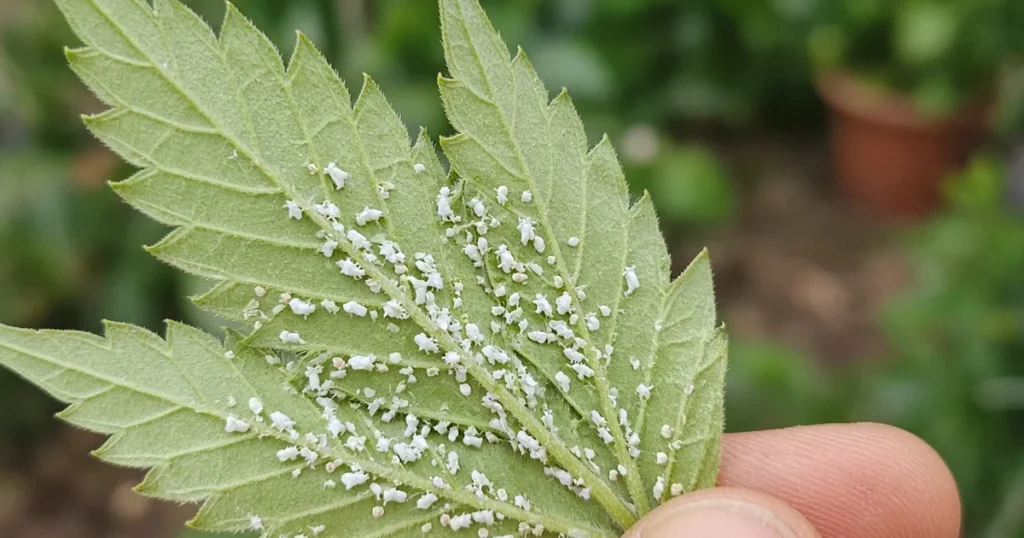
Quick answer: Whiteflies are tiny white insects that feed on sap from the undersides of cannabis leaves and fly up in a little cloud when the plant is bumped. The UC IPM program says the flat, oval nymphs do most of the damage. Manage them by checking leaf undersides, hanging yellow sticky cards, hosing adults off, pruning infested leaves early, protecting lacewings and lady beetles, and in veg using insecticidal soap or oil with full coverage under each leaf.
What Are Whiteflies?
Despite the name, whiteflies are not true flies. Both UC IPM and the horticulture team at UW Madison place them in the same group as aphids, scales and mealybugs. Adults look like tiny white moths dusted with powder. UC IPM notes the nymphs are oval, legless and do not move once they settle.
The common species in indoor gardens across northern states is the greenhouse whitefly, UW Madison says. The sweetpotato and silverleaf whiteflies also show up as greenhouse pests. You do not need the species to act, since management is broadly the same.
How Fast Do Whiteflies Multiply?
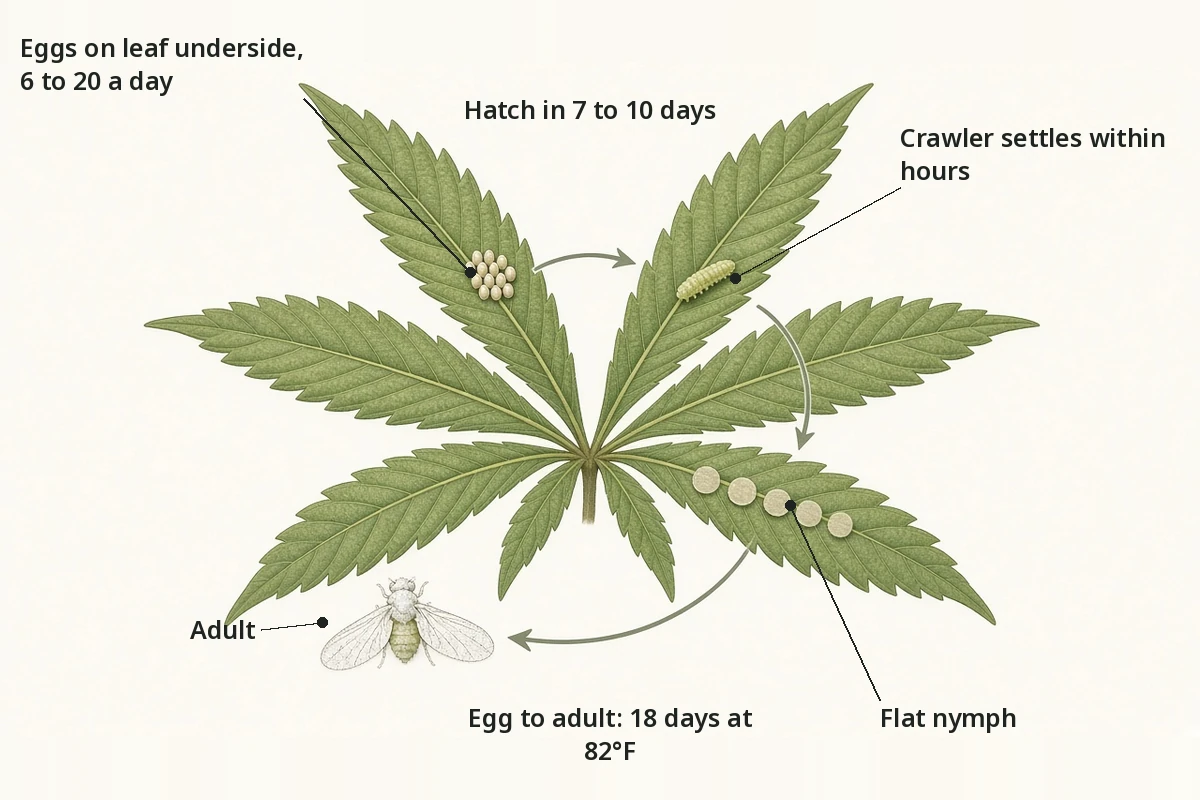
UW Madison reports that a female lays six to 20 eggs a day on the lower leaf surface. Eggs hatch in seven to 10 days into mobile crawlers that settle within hours. At 82°F, the full cycle from egg to adult takes just 18 days. Warm grow tents suit them, so indoor numbers can climb fast.
Signs of Whiteflies on Cannabis
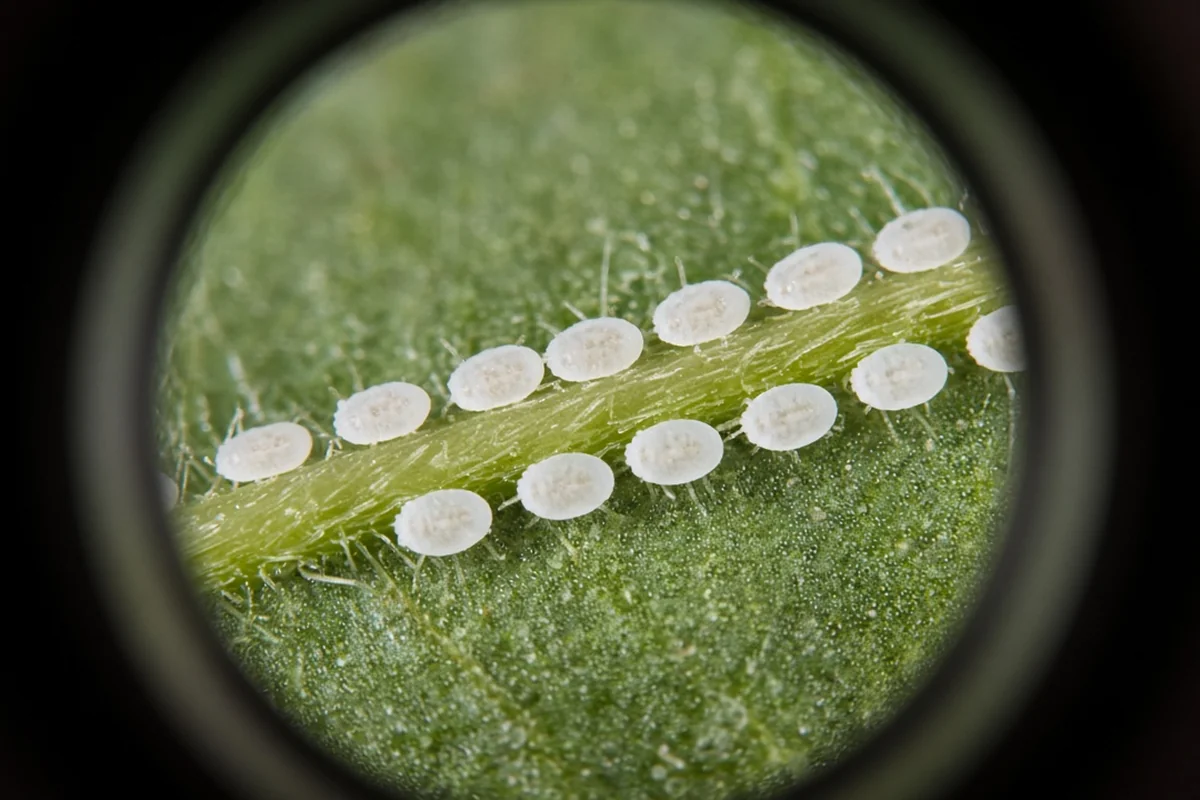
UC IPM lists these signs:
- Tiny nymphs fixed in place beneath the leaves
- Sticky honeydew on foliage or the floor below, often topped by black sooty mold
- Leaves that yellow, silver or dry out where nymphs are feeding
- White wax deposits with some species
You will also see adults lift off in a puff when you brush the plant. UW Madison notes that heavy feeding causes yellowing and wilting, and in severe cases the plant can die.
How to Check for Whiteflies
- Gently shake a branch and watch for white specks flying up. UW Madison lists this as a quick check.
- Flip several lower and middle leaves and look along the veins for flat, pale ovals.
- Hang yellow sticky cards just above the canopy, as UW Madison recommends, and count catches each week.
- Check weeds and any houseplants nearby, which can host whiteflies too.
- Inspect new clones and plants before they join your space.
Our guide to sticky traps for a grow room covers how many cards to hang. Outdoors, UC IPM suggests about one trap per vegetable plant of medium size.
How to Control Whiteflies on Cannabis
- Prune early. UC IPM recommends removing isolated infested leaves as soon as you find them. Seal them in a bag.
- Hose adults off. A strong stream of water knocks adults away, according to UC IPM. Rinse in the morning and keep airflow up so leaves dry.
- Trap adults. Keep yellow cards up the whole time.
- Protect natural enemies. UC IPM notes lacewings, lady beetles and tiny parasitic wasps help control whiteflies. Look for nymphs with round exit holes or a color change, which signal parasites at work.
- Keep ants off. UC IPM says ants protect whiteflies from their enemies.
- Use soap or oil in veg. UC IPM recommends insecticidal soaps and oils because they are least harmful to natural enemies. Coverage of leaf undersides is essential and repeat sprays may be needed.
- Skip broad spectrum sprays. UC IPM warns that even the most toxic insecticides only partly control whiteflies, and they wipe out the predators that help you.
- Stop all sprays once buds form. In flower, rely on pruning, cards and beneficials.
See insecticidal soap for cannabis for spray tips and the best bugs for a cannabis grow for buying predators.
Can Reflective Mulch Help Outdoors?
UC IPM says reflective mulch, such as shiny metallic paper or reflective plastic, repels whiteflies while plants are small. Lay it on bare soil, bury the edges, and set transplants into holes. Plastic versions need drip irrigation underneath. Remove the mulch when plants grow large and the weather turns hot. This works well for young outdoor cannabis set out in late spring.
Whiteflies Compared With Other Sap Feeders
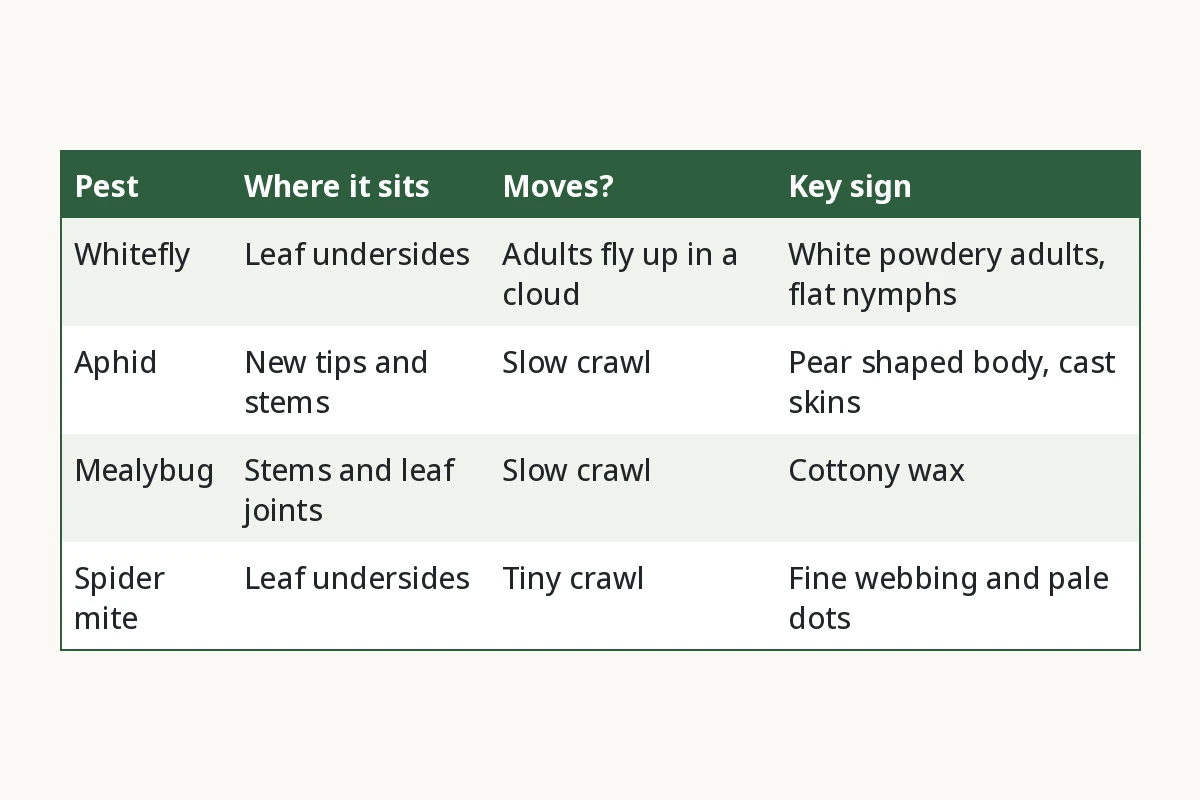
| Pest | Where it sits | Moves? | Key sign |
|---|---|---|---|
| Whitefly | Leaf undersides | Adults fly up in a cloud | White powdery adults, flat nymphs |
| Aphid | New tips and stems | Slow crawl | Pear shaped body, cast skins |
| Mealybug | Stems and leaf joints | Slow crawl | Cottony wax |
| Spider mite | Leaf undersides | Tiny crawl | Fine webbing and pale dots |
If you see webbing, read our guide to spider mites.
Why Indoor Grows Get Hit Hardest
Outdoors, whitefly numbers are often held in check by weather and by the predators and parasites UC IPM describes. A tent or spare room removes most of those limits. It is warm all year, there is no rain to wash adults away, and there are no wasps unless you buy them. UC IPM notes outbreaks often follow a disruption of natural biological control, and an indoor room is about as disrupted as it gets. That is why prevention and early detection carry so much weight indoors. A single card check each week, plus a look under a few leaves while you water, can catch a problem while it is still one plant and a handful of insects rather than the whole room.
How to Prevent Whiteflies
- UW Madison advises clearing out every plant, weeds and pet plants included, and waiting at least a week before you start a new indoor crop.
- Screen intake vents so adults cannot drift in.
- Inspect every new plant, as both sources advise.
- UC IPM notes dusty conditions harm beneficial insects, so keep dust down outdoors.
- Clean the room between runs. Our page on cleaning and disinfecting pots helps with reset days.
Troubleshooting Whiteflies
Adults vanish after spraying, then return. Nymphs and eggs survived. Repeat soap or oil on a short schedule and keep pruning.
Sticky cards fill with whiteflies but leaves look clean. Adults may be coming in from outside. Check doors, vents and nearby plants.
Black film on lower leaves. That is sooty mold on honeydew. Wipe it off once whitefly numbers drop.
Nymphs look brown and have tiny holes. Parasitic wasps have hit them. Leave those leaves in place a little longer so the wasps can emerge.
Spray burned the leaves. Avoid spraying in heat or on thirsty plants, and test on one leaf first.
Whiteflies return to a freshly cleaned room. Weeds or pet houseplants nearby may be hosting them. UW Madison advises a plant free gap of at least a week, with weeds and pet plants cleared out, before a new crop goes in, and it also cautions against heavy fertilizing and watering, which favor soft new growth.
Reflective mulch stopped helping. UC IPM notes it works while plants are small. Once the canopy shades it, pull it up, especially when summer heat arrives.
Sources
- UC Statewide IPM Program, University of California, Whiteflies, Home and Landscape: https://ipm.ucanr.edu/home-and-landscape/whiteflies/
- University of Wisconsin Madison Extension, Wisconsin Horticulture, Whiteflies: https://hort.extension.wisc.edu/articles/whiteflies/
FAQ
Are whiteflies bad for cannabis?
Yes, in large numbers. UW Madison notes they cause yellowing and wilting, and severe infestations can kill plants.
What kills whitefly nymphs?
Insecticidal soaps and oils that reach the undersides of leaves, plus parasitic wasps and predators, according to UC IPM.
Why do whiteflies keep coming back?
Their life cycle can be as short as 18 days at 82°F, says UW Madison. Eggs and nymphs left behind restart the population.
Can I spray whiteflies during flowering?
Avoid it. Prune affected leaves, use sticky cards and release predators once buds form.
Do whiteflies live in soil?
No. They live on leaves. If small flies rise from the soil instead, they are likely fungus gnats, or you may be seeing springtails and other soil insects.
Do whiteflies spread disease to cannabis?
UW Madison notes whiteflies can carry viruses to some hosts but calls that a minor concern right now. Their sap feeding and honeydew are the bigger issue.
How many whiteflies is too many?
UW Madison says there are no set thresholds and that plants often tolerate more than growers do. Act when you see yellowing leaves or when card counts keep rising week to week.


