
Earwigs on Cannabis: Are They Pests or Helpers?
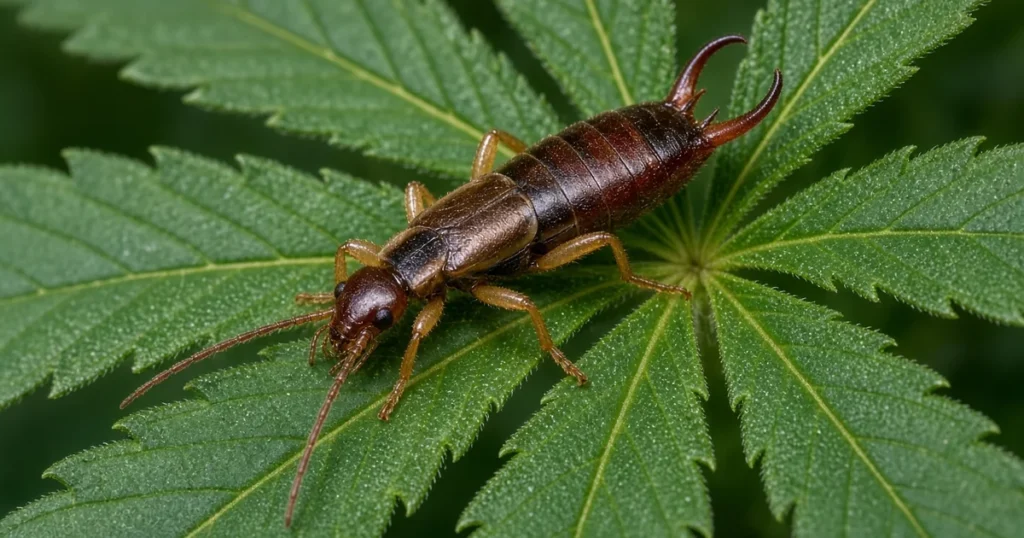
Quick answer: Earwigs are reddish brown insects with pincers at the tail that feed at night and hide by day in damp, dark spots. They can chew ragged holes in cannabis seedlings and soft new leaves, but they also eat aphids. UC IPM recommends reducing hiding places and moisture, then trapping daily with rolled newspaper, bamboo tubes or short lengths of hose until numbers drop. Insecticides should rarely be needed.
What Do Earwigs Look Like?
UC IPM describes the adult as reddish brown and roughly 3/4 inch long, with a pair of forceps at the rear. The pincers are curved in males and straighter in females, and they are used for defense. The species most gardeners meet is the European earwig, which arrived in North America in the early 1900s.
Young earwigs look like small, pale adults without wings, according to the Wisconsin Horticulture article from UW Madison. They hatch in spring from eggs laid in a soil chamber the fall before, and the mother tends them until they can leave the nest.
Do Earwigs Eat Cannabis?
They can. UC IPM warns that earwigs can seriously damage seedlings. The UW Madison article says serious feeding can occur on roots and leaves of tender young plants, and it describes the damage as many small, irregular holes that leave leaves ragged.
The other side of the story matters too. Both sources call earwigs partly beneficial. UC IPM notes they are important predators of aphids, and UW Madison adds they eat small insect pests and decaying plant matter. On a large, healthy cannabis plant, a few earwigs may be doing more good than harm.
Earwig Damage or Slug Damage?
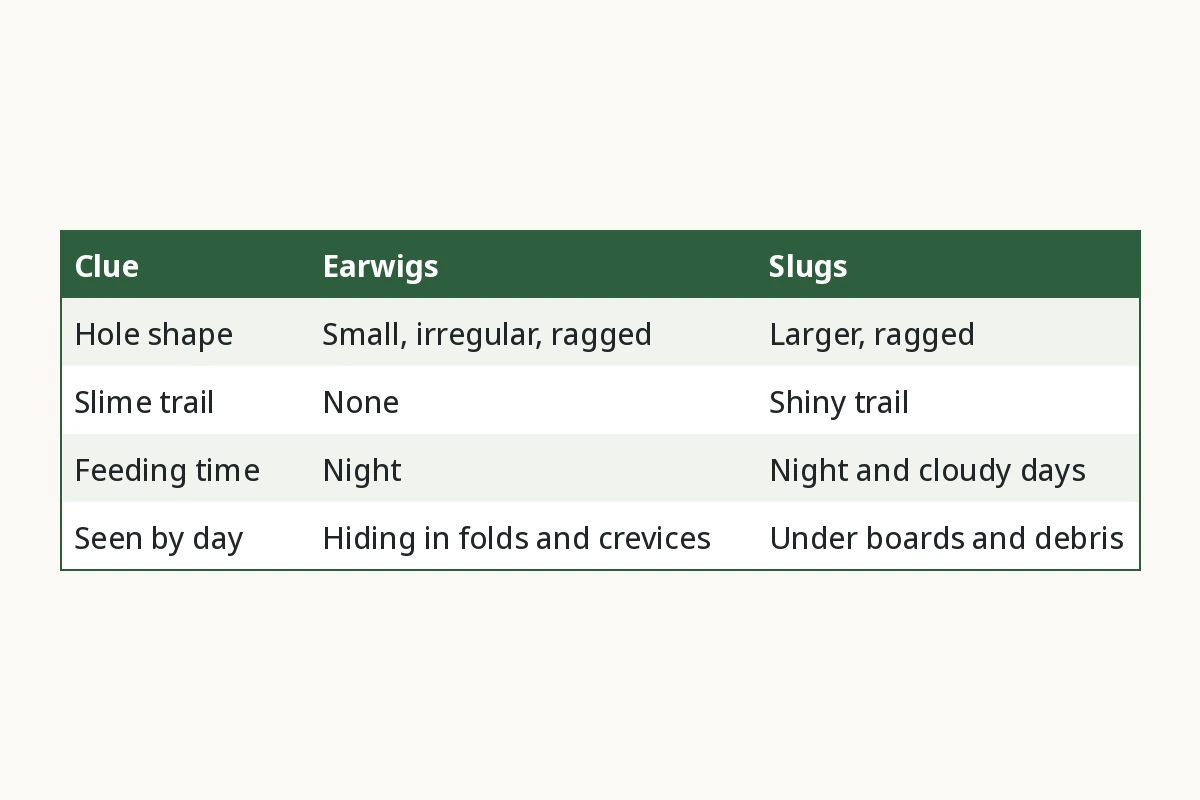
UW Madison points out that earwig holes resemble slug damage but come with no slime trail. A quick comparison:
| Clue | Earwigs | Slugs |
|---|---|---|
| Hole shape | Small, irregular, ragged | Larger, ragged |
| Slime trail | None | Shiny trail |
| Feeding time | Night | Night and cloudy days |
| Seen by day | Hiding in folds and crevices | Under boards and debris |
To be sure, go out with a flashlight after dark. UW Madison recommends checking the garden at night before acting.
When Should You Control Earwigs?
UC IPM gives simple guidance. Act if you grow vegetables, soft flowers or tender young plants. A garden of mostly lawn, trees and shrubs usually does not need control. For cannabis, that means paying attention in spring when seedlings and fresh transplants are out, and easing off once plants are big and leafy.
UW Madison notes numbers tend to fall by August, since the old females die before midsummer. Moist summers favor higher populations.
How to Trap Earwigs

- Roll a sheet of newspaper into a loose tube and secure it with a rubber band. UC IPM also suggests bamboo tubes or short pieces of hose.
- Set the traps on the soil next to plants just before dark.
- Pick them up first thing in the morning. Earwigs crawl inside to hide at dawn.
- Shake the traps over a container of soapy water.
- For a second type of trap, UC IPM mentions a can with low sides that holds vegetable oil plus a drop of fish oil or bacon grease.
- Repeat every day. UC IPM reports daily trapping brings numbers down to tolerable levels.
How to Reduce Earwig Hiding Spots
UC IPM recommends removing dense ground cover, weeds, boards, boxes, leaves and other debris near garden beds, and moving pots or objects that shelter them. UW Madison lists stones, boards, woodpiles, fence lines and mulch as favorite resting sites.
You do not have to give up mulch, but UC IPM warns that mulches often harbor earwigs, so check under it when you scout and pull it back if counts stay high. Our mulch for cannabis post explains timing. Watering in the morning, or switching to drip irrigation as UC IPM suggests, also keeps the soil surface drier at night.
Protecting Seedlings From Earwigs
Seedlings are the stage that needs the most help. Practical steps:
- Start seeds indoors and transplant larger plants. Our guide to potting up cannabis seedlings explains timing.
- Set two or three traps around each new transplant for the first few weeks.
- Lift pots onto stands so earwigs cannot hide under them.
- Use a row cover pinned to the soil for direct sown beds.
Where Earwigs Spend the Year
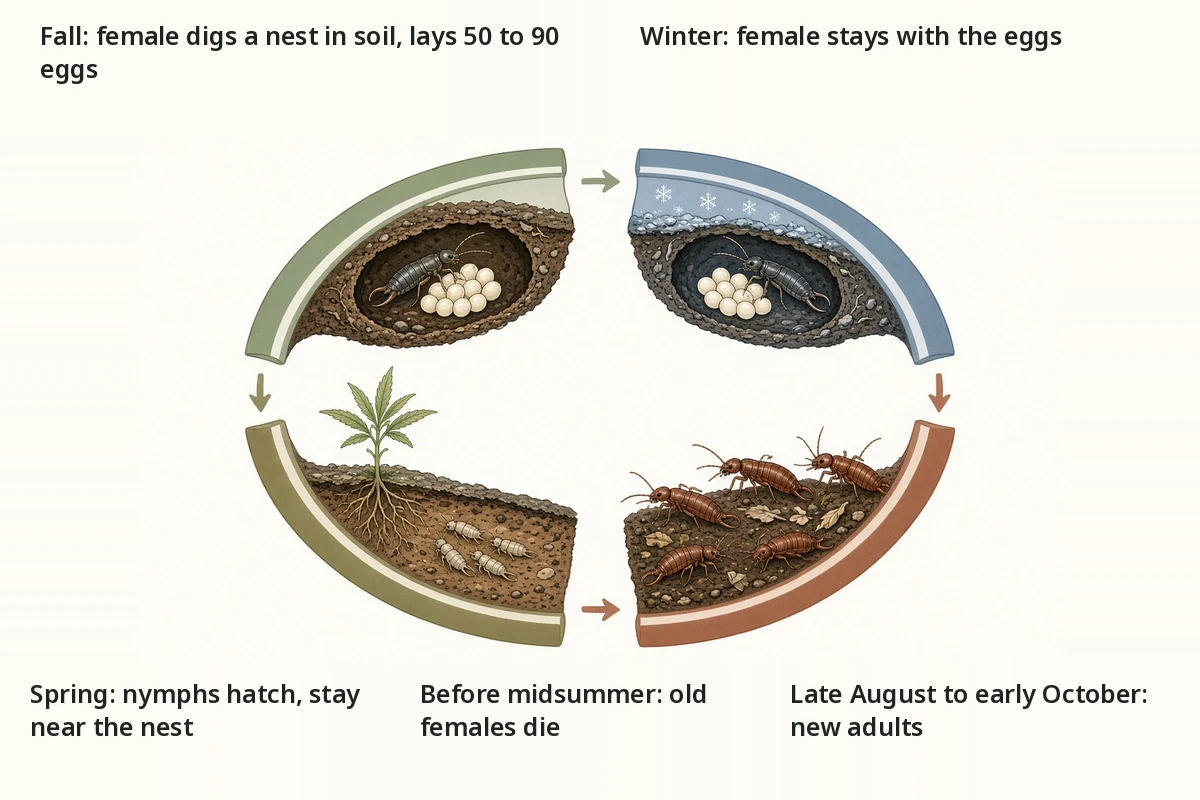
Knowing the earwig calendar helps you time your effort. The UW Madison article explains that females dig a nest chamber in the soil in fall, lay 50 to 90 eggs, and stay with them through winter, sometimes deep below the frost line. Nymphs hatch in spring and stay near the nest at first. The old females die before midsummer, and the young reach adulthood from late August into early October. UW Madison adds that earwigs like to nest in rich garden soil that faces south. For a cannabis grower, that means the spring seedling window lines up with a new batch of hungry young earwigs, and late season numbers often drop on their own.
Earwigs Indoors and in Grow Rooms
UC IPM explains earwigs may come inside when it is too dry, hot or cold outdoors, and that large numbers are annoying but not a health hazard. UW Madison adds they rarely multiply indoors because there is little to eat. Sweep or vacuum them up, seal gaps around doors and pipes, and keep mulch and leaves away from the foundation. UC IPM also suggests swapping white outdoor lights for yellow ones, which draw fewer earwigs. Indoor pesticide sprays are not recommended by either source.
A Simple Weekly Earwig Routine
For most home gardens, a short routine is enough. On Monday evening, set out fresh paper traps by every young plant. Each morning that week, empty them into soapy water and count what you catch. On the weekend, walk the beds and pull any weeds or debris that crept back in. Keep trapping daily until the traps come up empty, as UC IPM advises. If the count stays high, look for a large hiding place nearby that you have missed.
Troubleshooting Earwigs
Traps catch only a few. Place them right against the plant stems and the soil, and set them out just before dark.
Damage continues after trapping. Check for slugs or pill bugs, which feed at the same hours.
Earwigs are hiding in buds. Gently shake colas over a bucket in the morning. On big plants they often do little harm.
Numbers spike in a wet summer. That fits UW Madison’s note about moist years. Increase trapping and cut back evening watering.
Earwigs keep coming from one spot. Look for a woodpile, dense ivy or a stack of pots nearby and clear it.
Sources
- UC Statewide IPM Program, University of California, Earwigs, Home and Landscape: https://ipm.ucanr.edu/home-and-landscape/earwigs/
- University of Wisconsin Madison Extension, Wisconsin Horticulture, Earwigs: https://hort.extension.wisc.edu/articles/earwigs/
FAQ
Are earwigs bad for cannabis?
They can hurt seedlings and tender leaves. On mature plants they are often a minor issue and may help by eating aphids, as UC IPM notes.
Do earwigs pinch people?
They may pinch if handled, but they are not a health hazard, according to UC IPM.
What is the best earwig trap?
UC IPM lists rolled newspaper, bamboo tubes and short hose pieces set out before dark and emptied each morning, plus an oil can trap.
When are earwigs most active?
At night. They hide by day in dark, damp places, as both UC IPM and UW Madison describe.
Should I spray for earwigs?
UC IPM says insecticides should rarely be needed. Trapping and removing hiding places usually work.
Can earwigs ride indoors on harvested plants?
Yes. UW Madison notes earwigs hide among petals and leaves, which lets them get carried inside. Shake branches outdoors before you bring them in to dry.
Do earwigs breed indoors?
UW Madison says they find little to eat inside and probably will not multiply there. Sweep up strays and seal entry gaps.


