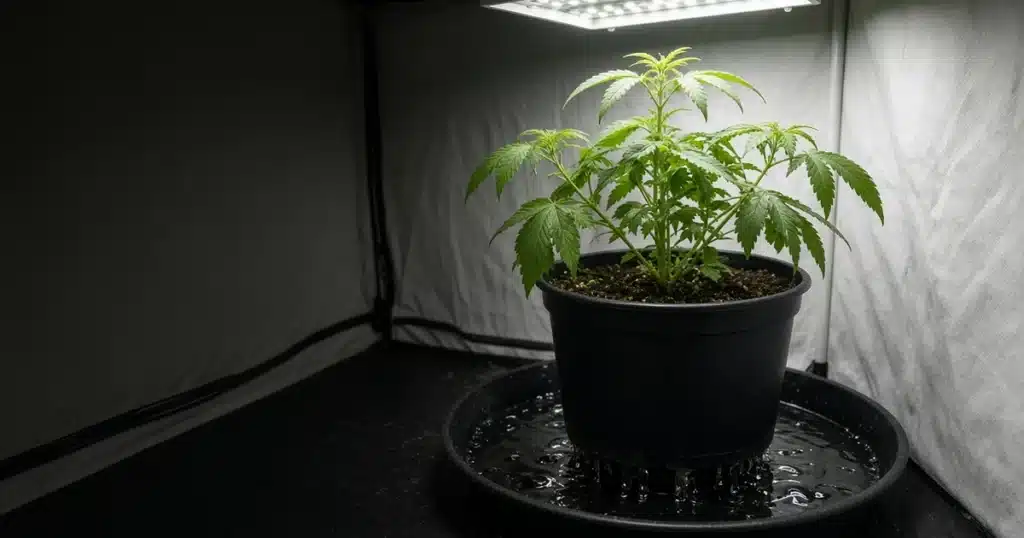
Distilled Water for Cannabis: Pros and Cons
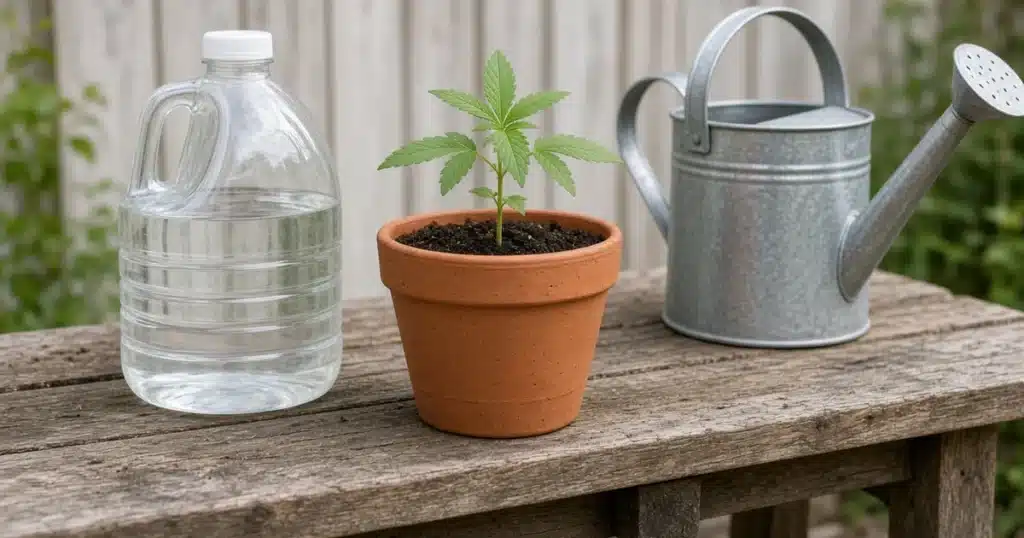
Quick answer: Distilled water is almost pure water with nearly all minerals removed. That makes it useful for avoiding salt crusts and mineral buildup in pots, a benefit UMD Extension points out when it suggests mineral free water for container plants. The downside is that it carries no nutrients. Virginia Tech Extension notes that distilled water lacks dissolved nutrients and that long term use can lead to deficiencies. For cannabis, distilled water works well when you add a complete fertilizer that supplies calcium and magnesium, and it is rarely worth the cost if your tap water is already decent.
What Is Distilled Water?
Distilled water is made by boiling water and collecting the steam as it condenses. Minerals, salts and most other dissolved matter stay behind. What comes out has almost nothing dissolved in it.
That sets it apart from tap, well, rain and spring water. The Virginia Tech Extension guide to watering houseplants describes distilled water as free of minerals and chemicals. It contrasts this with rain and spring water, which carry some natural minerals, though not enough to feed plants on their own over time.
What Are the Benefits of Distilled Water for Cannabis?
The main benefit is control. Because distilled water starts near zero, everything the roots take up comes from your potting mix and fertilizer. Feeding gets more predictable as a result, especially in containers.
It also prevents mineral buildup. UMD Extension advice on watering indoor plants explains that all water contains dissolved minerals, and that salts can build up in pots over time. Signs include slow growth, brown leaf tips, dropped lower leaves, damaged root tips and wilting, along with a white crust around the pot rim or drainage hole. UMD suggests choosing mineral free water to prevent this, and lists dehumidifier water, which is distilled, as one option.
UMD also warns against softened water for container plants, since it carries more dissolved salts than other sources. If your home has a water softener, distilled water avoids that problem entirely.
What Are the Drawbacks of Distilled Water?
Distilled water feeds nothing. Virginia Tech says plainly that distilled water is not right for every houseplant because it lacks dissolved nutrients, and that prolonged use may lead to deficiencies.
Cannabis needs calcium and magnesium like any crop, and distilled water supplies neither. Switch to distilled water without adjusting your feeding and you remove that background supply. Our cal mag for cannabis article covers how growers fill that gap.
Then there is the cost. Store bought distilled water adds up quickly, especially once large plants reach full size and drink several gallons a week in summer. Home distillers use a lot of energy and produce water slowly.
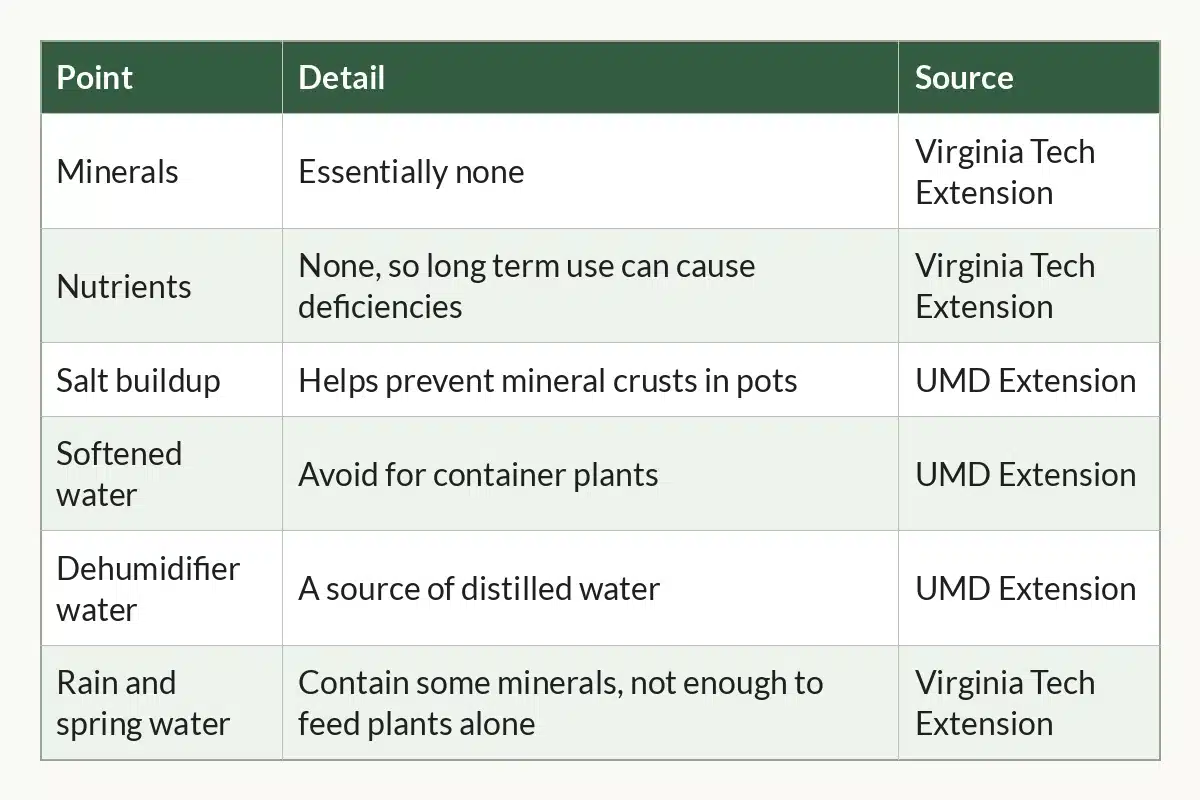
Distilled Water at a Glance
| Point | Detail | Source |
|---|---|---|
| Minerals | Essentially none | Virginia Tech Extension |
| Nutrients | None, so long term use can cause deficiencies | Virginia Tech Extension |
| Salt buildup | Helps prevent mineral crusts in pots | UMD Extension |
| Softened water | Avoid for container plants | UMD Extension |
| Dehumidifier water | A source of distilled water | UMD Extension |
| Rain and spring water | Contain some minerals, not enough to feed plants alone | Virginia Tech Extension |
How Do You Feed Cannabis When Using Distilled Water?
Think of distilled water as a starting point with nothing in it. Since it adds no minerals, your fertilizer must supply everything, including calcium and magnesium.
Many growers who use distilled or reverse osmosis water add a calcium and magnesium supplement first, then their regular fertilizer. Others choose a fertilizer made for soft or purified water. Read the label to see whether calcium and magnesium are included. The fertilizer label guide helps decode the numbers.
A meter that reads dissolved solids makes this easier. Distilled water reads near zero, so the number you see after mixing reflects only what you added. Our ppm for cannabis article shows what those readings mean.
Is Distilled Water Better Than Reverse Osmosis Water?
Both remove most minerals, and plants respond to them in much the same way. Where they differ is in the practical details. Reverse osmosis systems filter water at home on demand, while distilled water is usually bought by the jug or made slowly in a countertop unit.
For a grower with a few plants, a case of distilled water may be simplest. For a larger garden, an RO system usually costs less over time. The reverse osmosis guide for home growers compares filtered options in more detail.
When Does Distilled Water Make Sense for Cannabis?
Distilled water is most useful in a few situations:
- Very hard tap water. If your water leaves heavy white crusts, distilled water avoids adding more minerals.
- Softened water at home. UMD advises against softened water for pots.
- Small grows. A few plants make the cost manageable.
- Flushing salt buildup. Plain water low in minerals helps rinse out excess salts.
- Testing a feeding plan. Starting from zero shows exactly what your fertilizer delivers.
For outdoor plants in the ground, distilled water rarely makes sense. Native soil holds minerals, and the volumes needed are large.
How Do You Flush Salts From a Pot?
Distilled water works well for leaching. UMD guidance on mineral and fertilizer salt deposits suggests rinsing pots with plenty of clean water poured over the mix surface. It recommends rinsing houseplants every 4 to 6 months with at least three times the pot’s volume of fresh water, letting it drain completely.
UMD also advises removing any salt crust from the mix surface before you start, and avoiding bottom watering when salts are a problem, since water drawn up from below does not wash salts out.
Does Distilled Water Change pH?
Pure water has almost no buffering, which means it holds very little dissolved material to resist pH change. Distilled water often reads slightly acidic after sitting open, because it absorbs carbon dioxide from the air. That reading can drift, and basic pens have a hard time measuring it accurately.
Once you add fertilizer, the mix takes on the character of the nutrients rather than the water. Check pH after mixing, not before. Because there is so little buffering, small additions can move pH more than they would in tap water, so adjust in small steps.
Is Distilled Water Worth the Cost?
Run the numbers before you commit. A large cannabis plant growing outdoors in a big container can use many gallons a week in hot weather. At store prices, the water alone may cost more than the fertilizer itself.
If your tap water is moderate, a better plan is often to use it as is, flush now and then and save distilled water for seedlings, clones or occasional rinses. If your water is very hard or softened, distilled or filtered water becomes easier to justify.
How to Use Distilled Water for Cannabis
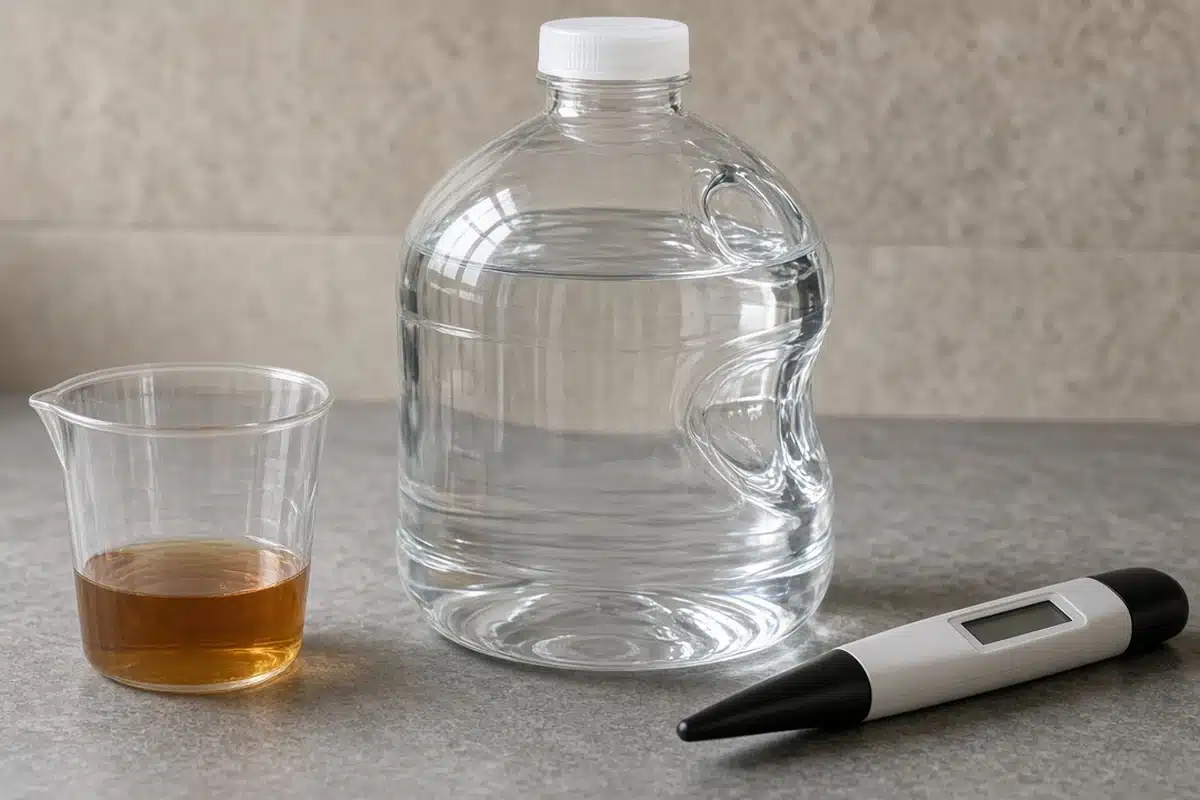
- Check your tap water first. A water report or meter shows whether you need distilled at all.
- Choose a complete fertilizer. Make sure it lists calcium and magnesium, or add a supplement.
- Add minerals before nutrients. Mix calcium and magnesium in first if you use them separately.
- Measure the result. Read the mix with a meter so you know what plants receive.
- Water until some drains out. This keeps salts from building up.
- Watch new leaves. Pale or spotted growth can signal a missing mineral.
- Flush when needed. Use plain distilled water to rinse built up salts.
Troubleshooting Distilled Water Problems
New leaves look pale or spotty. Calcium or magnesium may be low. Add a supplement.
Plants grow slowly after switching. The fertilizer may not supply enough. Review the label and meter readings.
Leaf tips turn brown. Salts may still be high in the mix. Flush with plain distilled water.
Cost is too high. Consider an RO system or rainwater instead.
Meter reads high after mixing. Too much fertilizer was added. Dilute with more distilled water.
Sources
- Virginia Tech Extension, Watering Houseplants (SPES 804): https://www.vt.edu/content/dam/pubs_ext_vt_edu/spes/spes-804/SPES-804.pdf
- UMD Extension, Watering Indoor Plants: https://www.extension.umd.edu/resource/watering-indoor-plants
- UMD Extension, Mineral and Fertilizer Salt Deposits on Indoor Plants: https://www.extension.umd.edu/resource/mineral-and-fertilizer-salt-deposits-indoor-plants
FAQ
Is distilled water good for cannabis?
It can be, as long as your fertilizer supplies every nutrient, including calcium and magnesium.
Can I use only distilled water with no fertilizer?
No. Virginia Tech notes long term use without nutrients can cause deficiencies.
Does distilled water prevent salt buildup?
It helps, since it adds almost no minerals to the pot.
Is dehumidifier water the same as distilled?
UMD describes it as distilled water, though collection containers should be kept clean.
Should I use softened water instead?
UMD advises against softened water for container plants.