Dieffenbachia Leaves Yellow? Watering plus Light Causes
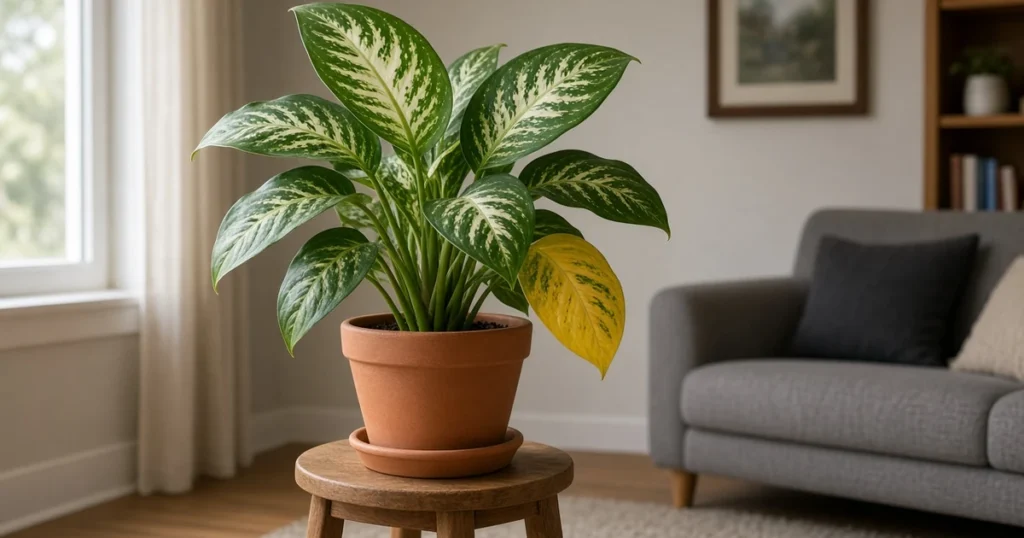
When dieffenbachia leaves yellow, start with where the yellow sits. UF/IFAS notes the lowest leaves may turn yellow plus droop as part of normal growth. University of Illinois Extension notes dieffenbachia is often overwatered, causing roots plus cane bases to rot quickly, so soil moisture is the next check.
The short answer
Yellowing on the lowest leaves alone is usually normal aging, so remove them. Many yellow leaves with wet soil point to overwatering. University of Illinois Extension suggests letting soil dry between waterings plus giving bright, indirect light. Never let the pot sit in water, plus hold the room above 55 F.
Why do lower dieffenbachia leaves yellow?
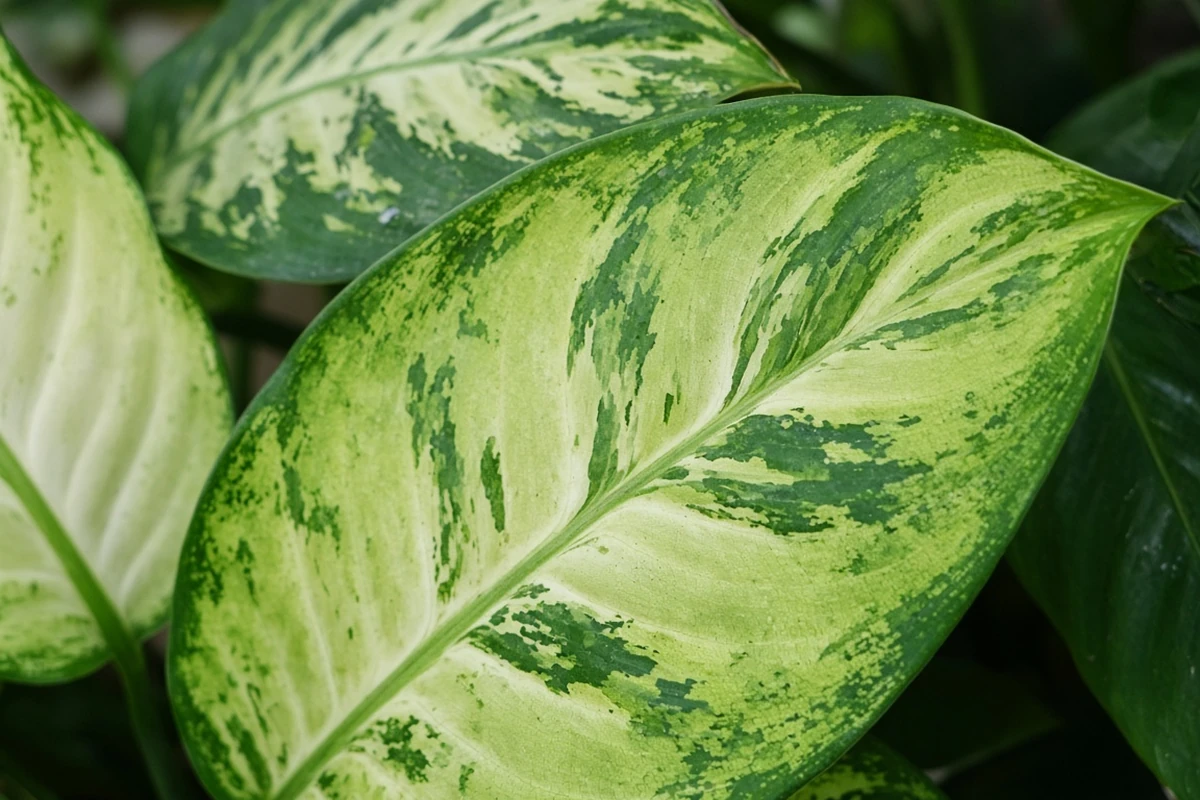
UF/IFAS notes the lowest leaves may yellow plus droop as part of the normal growth pattern, so simply remove them during routine care. University of Illinois Extension also says to remove lower leaves once they turn yellow.
| Sign | Likely cause | Source note |
|---|---|---|
| Lowest leaves yellow slowly | Normal aging | UF/IFAS |
| Yellowing with soggy soil | Overwatering plus root rot | University of Illinois Extension |
| Yellow leaves that drop with crusty soil | Excess fertilizer salts | Mississippi State University Extension |
| Droop then drop without yellowing | Too cold | Below 55 F, UF/IFAS |
| Little new growth | Too little light | UF/IFAS |
Source: UF/IFAS Gardening Solutions, University of Illinois Extension plus Mississippi State University Extension.
How does watering affect the leaves?
University of Illinois Extension notes dieffenbachia is often overwatered, which rots roots plus cane bases quickly. It suggests checking soil with a finger to two inches, soaking thoroughly, then emptying the saucer. Mississippi State University Extension notes root rot is the most common houseplant disease, with wilting leaves as the main symptom.
How can a leggy dieffenbachia be refreshed?
University of Illinois Extension notes a bare stem can have its top cut off plus rooted in sand or water, or air layered. UF/IFAS notes taller varieties should be pruned back occasionally for a fuller form, plus turning the pot a quarter turn every few days evens out growth toward light.
How to: step by step
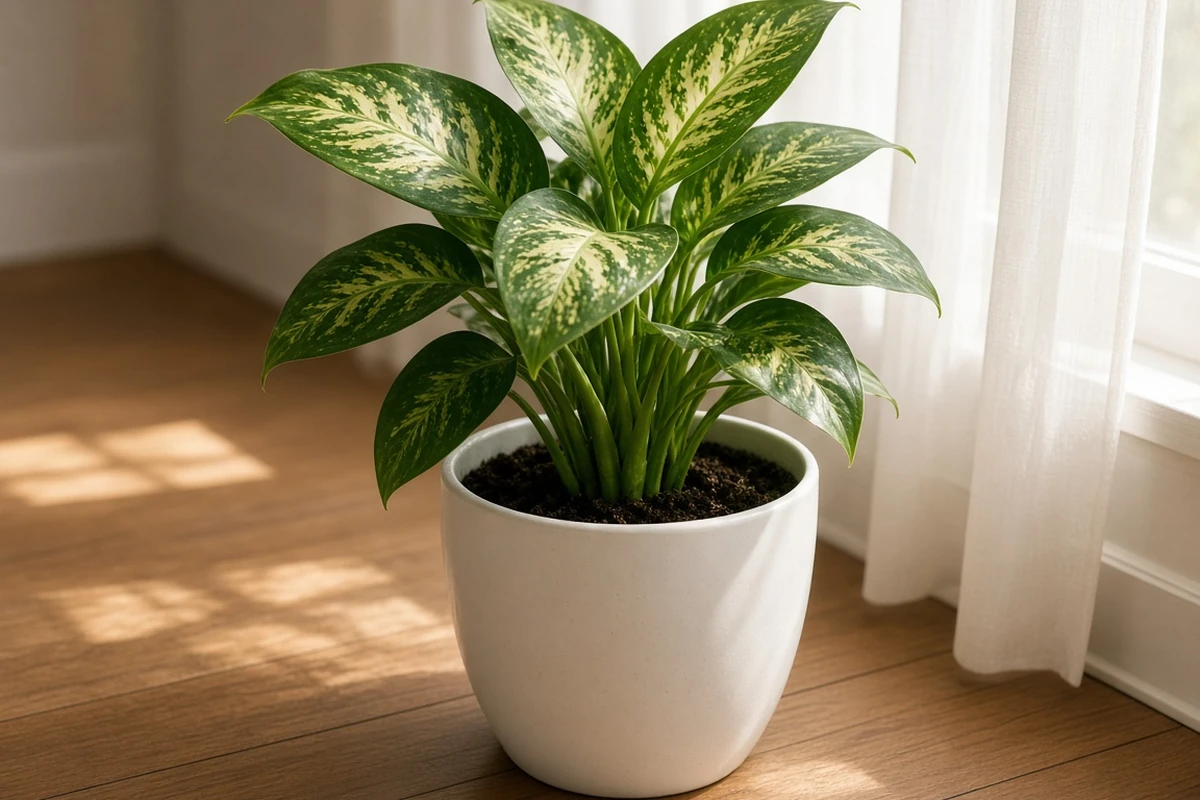
- Note whether the yellow leaves are low on the stem or new.
- Feel soil moisture two inches down.
- Water only after the soil has dried.
- Drain the saucer after watering.
- Move the plant to bright, indirect light.
- Snip yellow lower leaves at the stem.
Troubleshooting
Lower leaves yellow slowly: normal aging. Remove them as part of routine care.
Many leaves yellow with wet soil: overwatering. Allow drying between waterings.
Yellow leaves plus crusty white soil: excess salts. Mississippi State University Extension suggests watering thoroughly several times to wash salts out.
For related reading see the guide to overwatering and cannabis growth, underwatering cannabis plus what cannabis leaves can tell you. Kind Seed Co also stocks cannabis seeds.
Sources
- Dieffenbachia, University of Illinois Extension
- Dieffenbachia, UF/IFAS Gardening Solutions
- Houseplants: watering, University of Illinois Extension
- Care and selection of indoor plants, Mississippi State University Extension
FAQ
Is lower leaf loss normal for dieffenbachia?
Yes. UF/IFAS notes the lowest leaves may turn yellow plus droop as part of the plant's normal growth pattern, so remove them during routine care. University of Illinois Extension also suggests removing lower leaves once they yellow. Many leaves yellowing at once, or yellow new growth, points to watering or light instead.
Can a tall, bare dieffenbachia be cut back?
Yes. University of Illinois Extension notes that when the stem becomes bare, the top can be cut off plus rooted in sand or water, or air layered. UF/IFAS notes taller cultivars, which can reach 6 to 8 feet, should be pruned back occasionally to encourage a fuller form.
How much light does dieffenbachia need?
University of Illinois Extension notes dieffenbachia tolerates lower light but grows most vigorously in brighter, indirect light. UF/IFAS notes it prefers diffused sunlight or partial shade plus tolerates full shade. If growth slows or stops, UF/IFAS suggests moving the plant somewhere brighter plus turning it a quarter turn every few days.
How often should dieffenbachia be watered?
There is no fixed schedule. University of Illinois Extension suggests watering by need rather than by calendar, checking soil with a finger to two inches. For dieffenbachia it advises letting soil dry between waterings. UF/IFAS notes brown leaf tips can come from uneven watering, so aim for a regular pattern.
What temperature suits dieffenbachia?
UF/IFAS notes dieffenbachia thrives between 60 plus 75 F. If leaves droop plus fall without yellowing first, the plant may be too cold, so move it where temperatures stay above 55 F. Mississippi State University Extension suggests lukewarm water near room temperature, since cold water may injure roots.