
Evergreen vs Deciduous: Plants That Hold or Drop Leaves
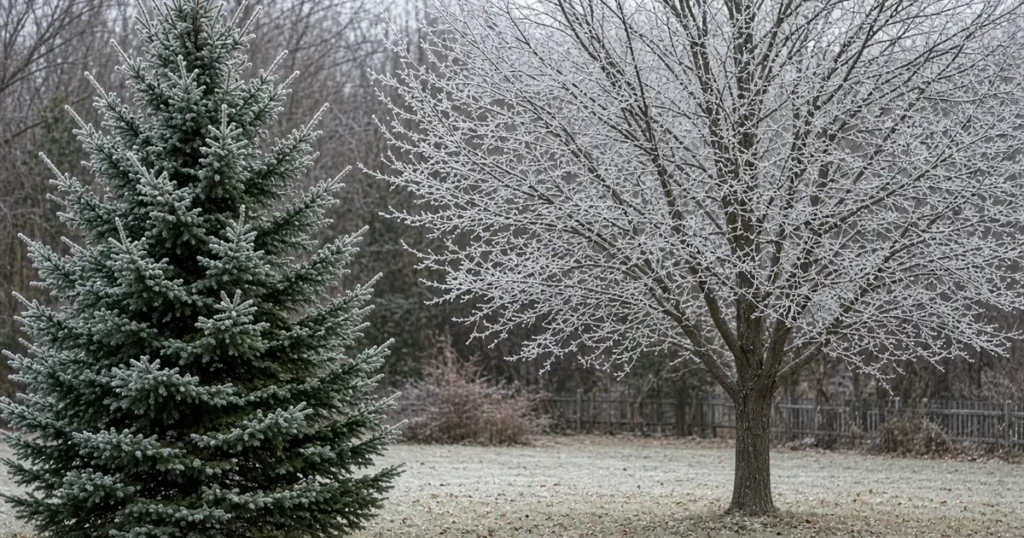
Evergreen vs deciduous describes whether a plant holds its leaves through winter. MU Extension notes deciduous plants shed their leaves plus are leafless for part of the year, while evergreen leaves persist all year. Utah State University Extension notes most conifers, such as pines, firs plus spruces, are evergreen.
The short answer
Evergreen plants hold green leaves all year, shedding old ones a few at a time. Deciduous plants drop all their leaves at the end of the season plus regrow them in spring. MU Extension defines both terms. Utah State University Extension notes most conifers are evergreen, while deciduous leaves last one season.
How do the two groups compare?
Extension glossaries define the groups plus give common examples.
| Trait | Evergreen | Deciduous |
|---|---|---|
| Leaves in winter | Persist all year (MU Extension) | Shed, plant leafless (MU Extension) |
| Leaf life | More than one season | One season (Utah State University Extension) |
| Conifers | Mostly evergreen (Utah State University Extension) | A few exceptions |
| Winter risk | Winter burn (University of Wisconsin Extension) | Few leaf issues |
Sources: MU Extension, Utah State University Extension plus University of Wisconsin Extension.
What is winter burn on evergreens?
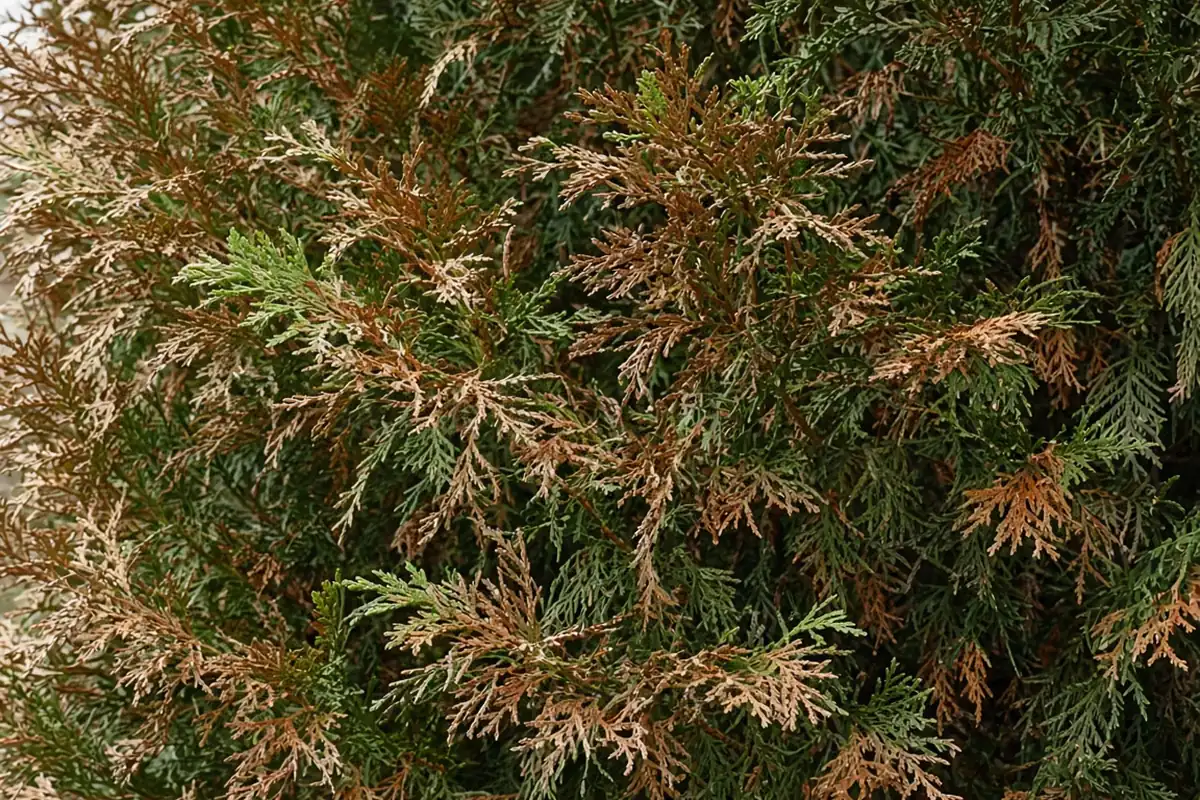
University of Wisconsin Extension notes winter burn shows as browning that starts at the tips plus moves inward. Evergreens lose water through their leaves in winter while frozen soil limits uptake. It advises watering established evergreens about 1 inch per week into mid to late November plus new conifers about 2 inches.
What does semi evergreen mean?
Penn State Extension notes some evergreen perennials, such as hellebore, may become semi evergreen in harsh winters, holding only part of their foliage. The same plant can stay fully green in a mild year. Expect some leaf loss in a cold winter before writing a plant off as damaged.
How to: step by step
- Read the plant tag for leaf habit.
- Place evergreens where winter wind is low.
- Water evergreens deeply each week in fall.
- Continue into mid to late November.
- Gather deciduous leaves for compost.
- Inspect evergreens for tip browning in spring.
Troubleshooting
Evergreen tips brown in spring: winter burn. Soak roots deeply through fall next year.
Hellebore loses leaves: harsh winter. It may be semi evergreen that year.
New conifer browns: low water. Supply about 2 inches weekly in fall.
For related reading see cannabis leaf anatomy, life cycle of a cannabis plant plus photosynthesis the process that makes cannabis grow. Kind Seed Co also stocks cannabis seeds.
Sources
- Plants and their environment (MG2), MU Extension
- Tree and botanical glossary, Utah State University Extension Forestry
- Evergreen perennials: the greening of winter, Penn State Extension
- Keep watering in fall to protect evergreens from winter burn, University of Wisconsin Extension Horticulture
FAQ
Are all conifers evergreen?
Most are. Utah State University Extension notes conifers are mostly evergreen, including pines, firs, spruces plus yews. A few conifers drop their needles each fall, so the two terms are not the same. Conifer describes cones plus needle or scale leaves, while evergreen describes how long the leaves last.
Do evergreens need water in fall?
Yes. University of Wisconsin Extension advises watering established evergreens at least 1 inch per week into mid to late November plus new conifers about 2 inches. Evergreens continue losing water through their leaves in winter, so going into cold weather with moist soil reduces winter burn.
Which plants are semi evergreen?
Penn State Extension notes some evergreen perennials, such as hellebore, may become semi evergreen in harsh winters. They hold part of their foliage plus drop the rest. In a mild winter the same plants can stay fully green. Expect the leaf habit to shift with the weather from year to year.
What is winter burn?
University of Wisconsin Extension describes winter burn as browning on evergreens that starts at the leaf tips plus moves inward. It shows up in late winter or early spring. Dry fall soil plus winter wind add to the damage, which is why it advises deep weekly watering until the ground freezes.
What kind of leaves does juniper have?
Utah State University Extension notes juniper has scale like leaves that overlap along the twigs, unlike the long needles of pines. Juniper is a conifer plus an evergreen, so it holds those scales through winter. Young growth on some junipers can look more like short needles before the scales form.



