
Compost vs Mulch: Feeding Soil vs Covering It
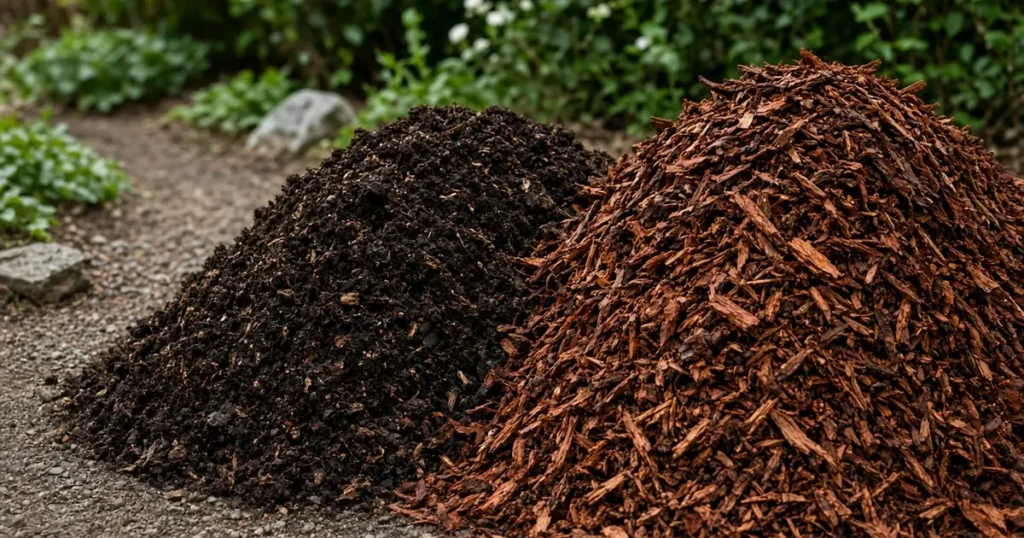
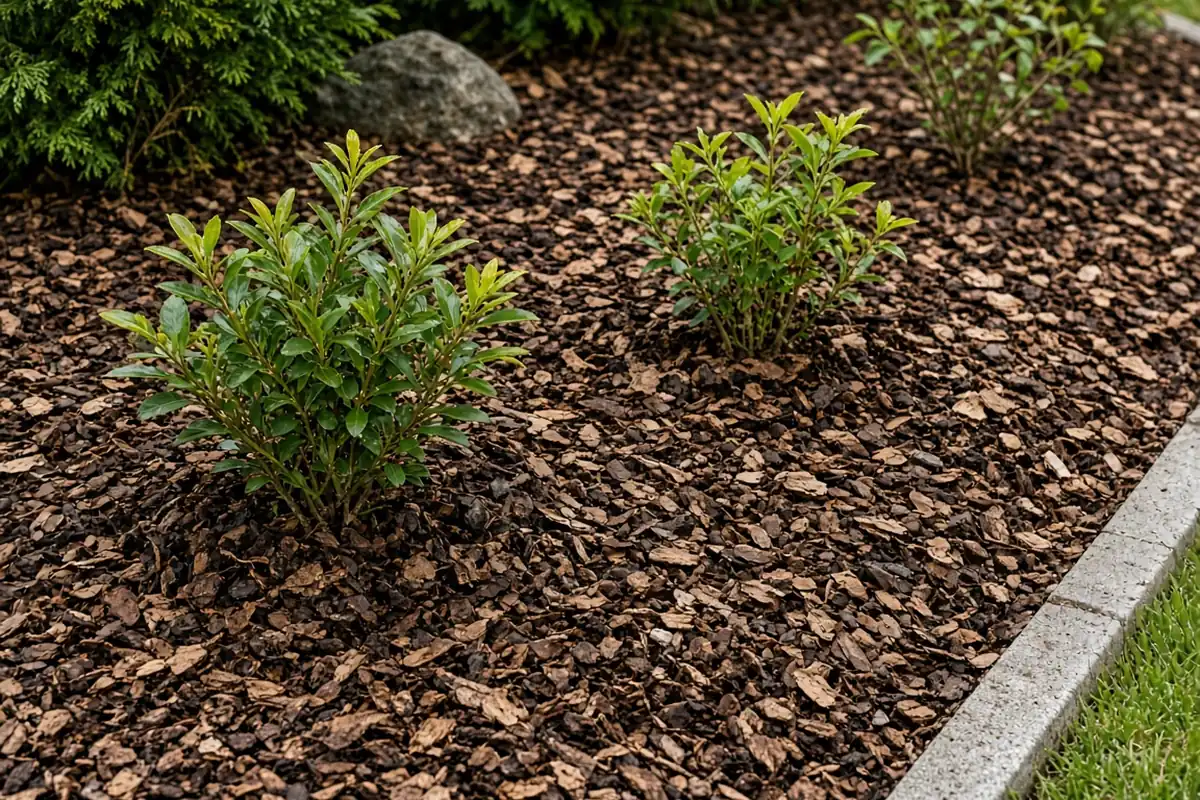
Compost vs mulch is about where the material goes. Compost is worked into the soil to add organic matter, while mulch is spread on the surface. University of Wisconsin Extension notes mulch controls weeds, regulates soil temperature, retains moisture plus reduces erosion. Many gardens use both in one bed.
The short answer
Use compost to improve soil plus mulch to cover it. UF/IFAS Extension Sarasota County advises working 1 to 3 inches of compost into the top 3 to 4 inches of soil. University of Wisconsin Extension advises applying most organic mulches 3 inches deep on the surface. Compost can also serve as a mulch.
How do compost plus mulch compare?
Extension services describe different jobs plus depths for each material.
| Trait | Compost | Mulch |
|---|---|---|
| Where it goes | Mixed into soil (UF/IFAS Extension Sarasota County) | On the soil surface (University of Wisconsin Extension) |
| Main job | Adds organic matter (UF/IFAS Extension Sarasota County) | Blocks weeds plus holds moisture (University of Wisconsin Extension) |
| Depth | 1 to 3 inches worked in (UF/IFAS Extension Sarasota County) | About 3 inches (University of Wisconsin Extension) |
| Timing | Before planting | After soil warms (Rutgers Cooperative Extension) |
Sources: UF/IFAS Extension Sarasota County, University of Wisconsin Extension plus Rutgers Cooperative Extension.
When should mulch go down?
Rutgers Cooperative Extension advises against mulching vegetable beds before the soil warms in spring, since mulch slows warming. University of Wisconsin Extension advises mulching young transplants about 1 inch deep at first, then raising the layer to 3 inches as they grow. Straw can go 4 to 6 inches deep.
Why does compost need to be finished?
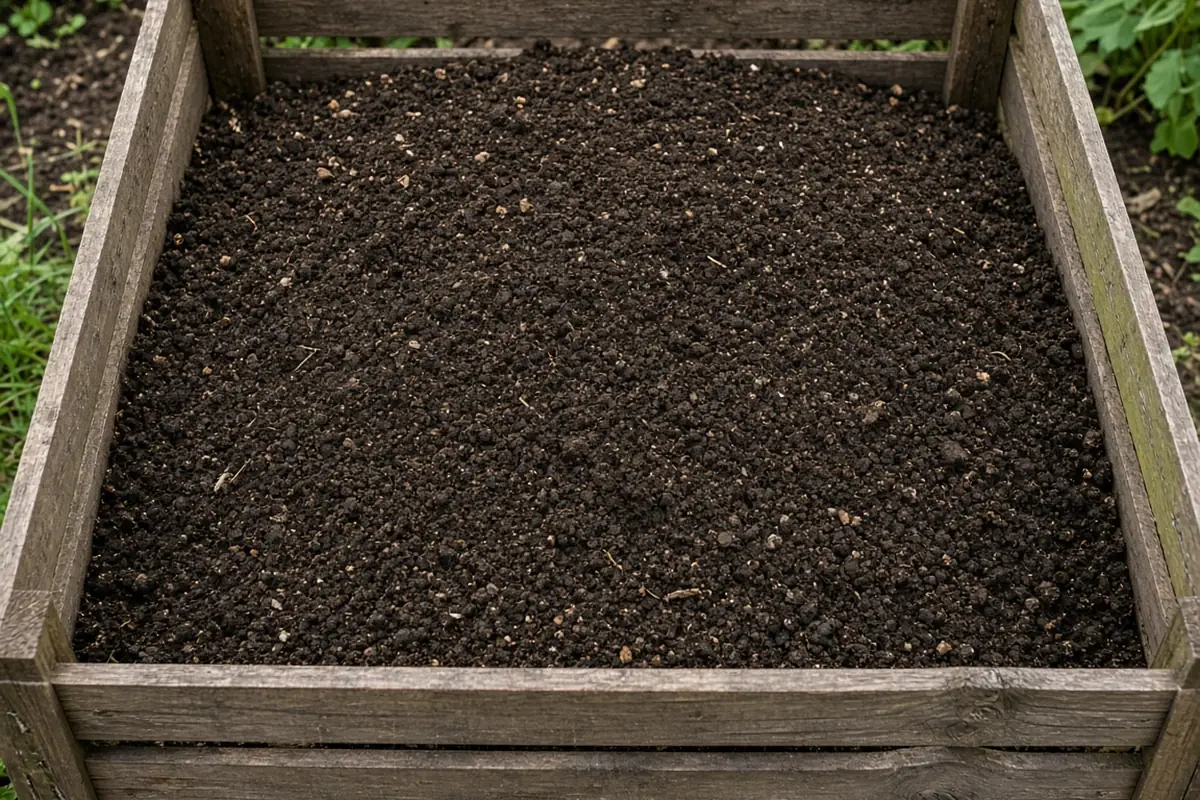
UF/IFAS Extension Sarasota County notes unfinished compost can turn plants yellow because microbes still breaking it down compete with roots for nitrogen. Colorado State University Extension notes finished compost has shrunk by about half, the original materials are unrecognizable plus it smells earthy. Wait for those signs before mixing it in.
How to: step by step
- Confirm the compost is finished.
- Work 1 to 3 inches into the soil.
- Set out your crops.
- Wait until the soil warms.
- Spread mulch about 3 inches deep.
- Add mulch as it breaks down.
Troubleshooting
Plants yellow after compost: unfinished compost. Let it age until it smells earthy.
Weeds push through mulch: thin layer. Thicken it to about 3 inches.
Seedlings slow in spring: mulch applied on cold soil. Rake it aside until soil warms.
For related reading see mulch for cannabis, composting cannabis garden waste plus leaf mold for cannabis beds. Kind Seed Co also stocks cannabis seeds.
Sources
- Mulches for home gardens and plantings, University of Wisconsin Extension Horticulture
- Making compost, Colorado State University Extension
- Mulches for vegetable gardens (FS058), Rutgers Cooperative Extension
- How to use compost, UF/IFAS Extension Sarasota County
FAQ
How thick should mulch be?
University of Wisconsin Extension advises applying most organic mulches 3 inches deep, plus Rutgers Cooperative Extension notes natural mulch needs at least 3 inches to block weeds. Straw is fluffy, so University of Wisconsin Extension advises 4 to 6 inches. Start young transplants with about 1 inch plus raise it as they grow.
Is it okay to use compost as mulch?
Yes. UF/IFAS Extension Sarasota County notes compost can be used as a mulch on the soil surface as well as mixed in. It breaks down faster than coarse mulches such as wood chips or straw, so it needs topping up more often. Use only finished compost so it does not tie up nitrogen.
Which mulch works for vegetables?
Rutgers Cooperative Extension notes natural mulches such as straw need at least 3 inches to work plus should go down after the soil warms. University of Wisconsin Extension advises straw 4 to 6 inches deep because it settles. Organic mulches break down over time, so top them up each season.
Can compost plus mulch go in the same bed?
Yes, plus many gardens do this. Work 1 to 3 inches of compost into the top 3 to 4 inches of soil before planting, as UF/IFAS Extension Sarasota County advises. After planting plus once the soil warms, spread mulch on top. University of Wisconsin Extension notes mulch then holds moisture plus blocks weeds.
How can I tell compost is finished?
Colorado State University Extension notes finished compost has shrunk to about half its original volume, the original materials are no longer recognizable plus it smells earthy. UF/IFAS Extension Sarasota County notes unfinished compost can yellow plants because it competes for nitrogen. If you still see food scraps, wait longer.



